Sand and Silence: Following the Footsteps of the Longest Day in Normandy
Some places stop you in your tracks the moment you arrive. Not because of their beauty, but because of the sheer weight of what happened there. Walking the endless rows of white crosses at the American Cemetery, and later standing on Omaha Beach with the wind off the Channel pulling at my jacket, I felt something I still struggle to put into words. Add in a quaint square in nearby Sainte-Mère-Église where a paratrooper once dangled from a church steeple, and you have a day in Normandy that will quietly rearrange something inside you.
In this post, I’ll take you through all three stops — the haunting stillness of the American Cemetery, the surprisingly emotional experience of standing on the actual beach, and the charming little town that played an outsized role in the liberation of Europe. I’ll share what to expect, what moved me most, and a few practical tips to help you make the most of your visit to Normandy. Whether you’re a history buff, a curious traveler, or someone simply honoring a family member who served, this is a journey worth making.
Three Stops, One Unforgettable Day in Normandy
One of the most memorable and somber places I have visited is Omaha Beach and Sainte-Mère-Église, in the Normandy region of France. I have wanted to visit the D-Day landing beaches in Normandy for many years, as my beloved Grampa Hersey was a proud WWII veteran and POW. To visit this area in June of 2024, mere days after the 80th anniversary of D-Day, just made it that much more special.
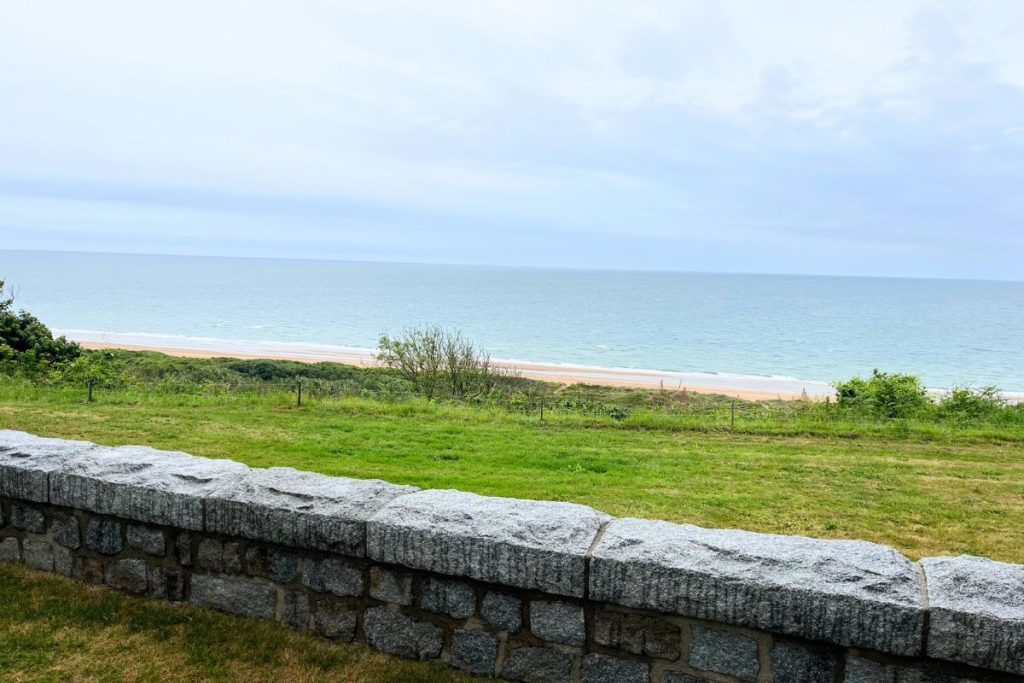
American Cemetery at Omaha Beach
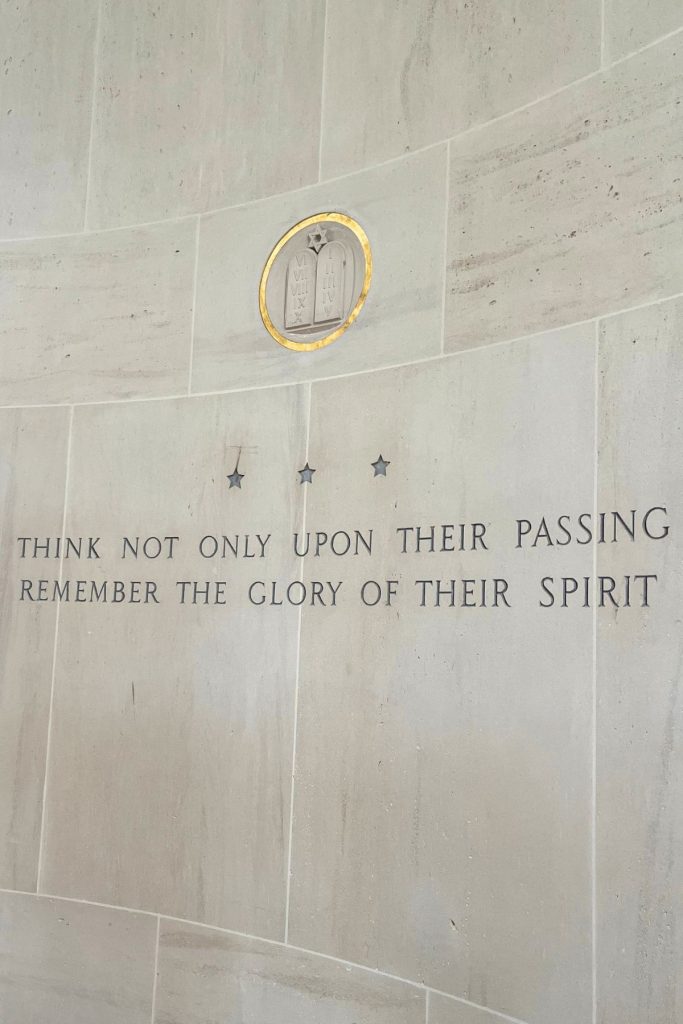
My first stop was the Normandy American Cemetery and Memorial at Omaha Beach. The entry area contains some striking quotes etched into the stone walls. Our guide then led us to the edge of the cemetery that overlooks Omaha Beach. Using the black granite orientation table here, he explained to us where the different landing beaches sit and walked us through a bit of the operations that took place on June 6, 1944.
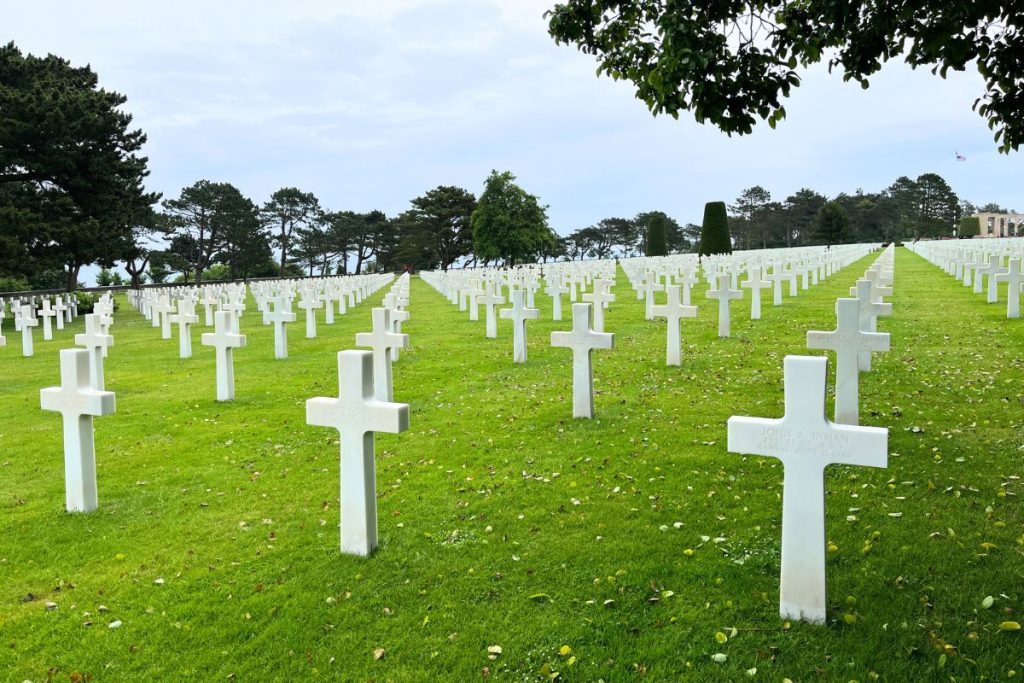
American Cemetery
The cemetery site covers 172.5 acres. It contains the graves of 9,388 of our military dead, most of whom lost their lives in the D-Day landings and ensuing operations. There are another 1,557 names of missing soldiers inscribed on the Walls of the Missing monument. Some of the notable burials here include 45 pairs of brothers (30 of whom are buried side-by-side), a father and son pair, an uncle and nephew pair, two pairs of cousins, three generals, four chaplains, four civilians, four women, 147 African Americans, and 20 Native Americans. There are also 304 unknown soldiers buried here.
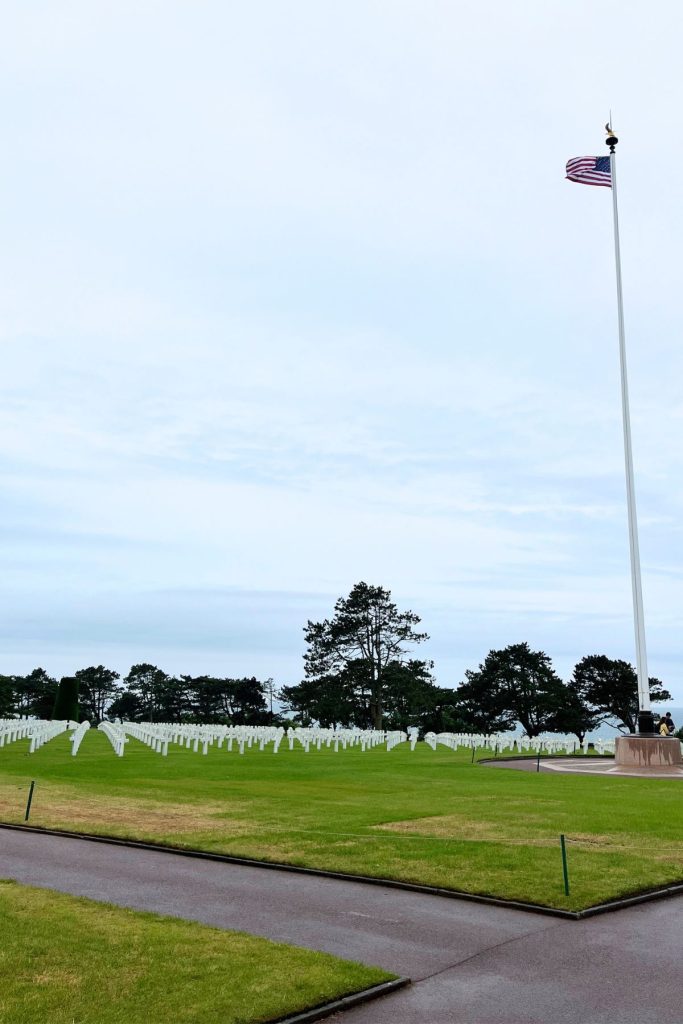
Dedicated in 1956, the Normandy American Cemetery and Memorial has more than one million visitors a year. There are striking white marble headstones marking each grave. There are 9,238 Latin crosses (for Protestants and Catholics) and 151 stars of David (for Jews). At the time, these were the only three religions recognized by the United States Army, so there are no other types of markers present. The cemetery itself is divided into ten plots, and it forms a Latin cross. The cemetery is aligned so that the rows of graves face west, toward home.
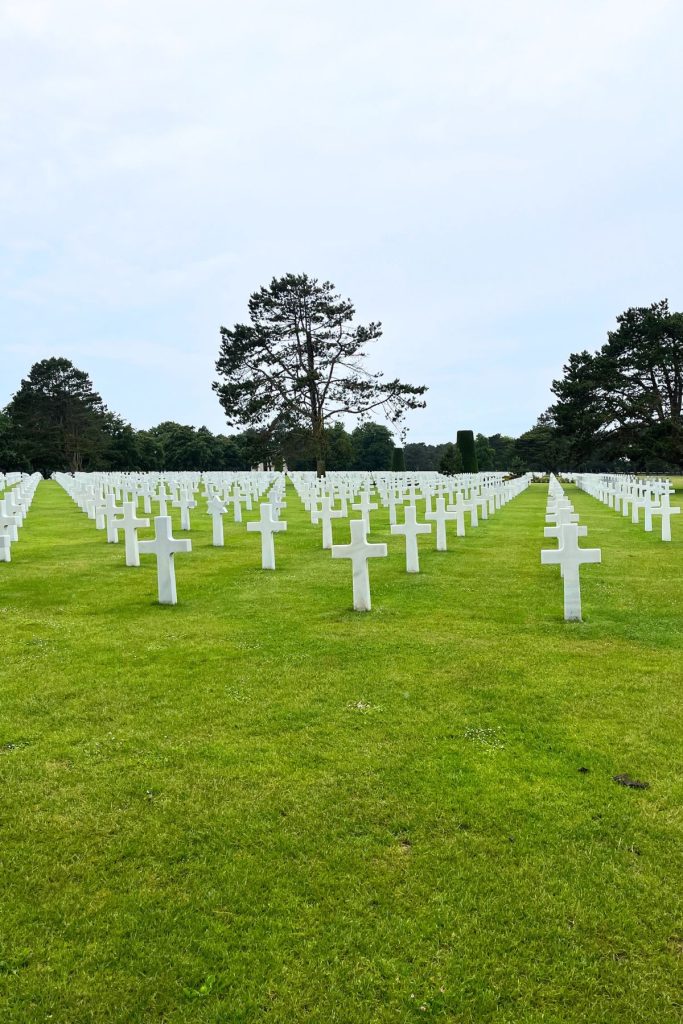
Our guide gave us a nice overview of the cemetery and then we had plenty of free time to explore the area on our own. I spent time walking through the plots and trying to take in the enormity of it all. Many of the soldiers buried here were just 18-20 years old. It was definitely a somber morning, but an important one.
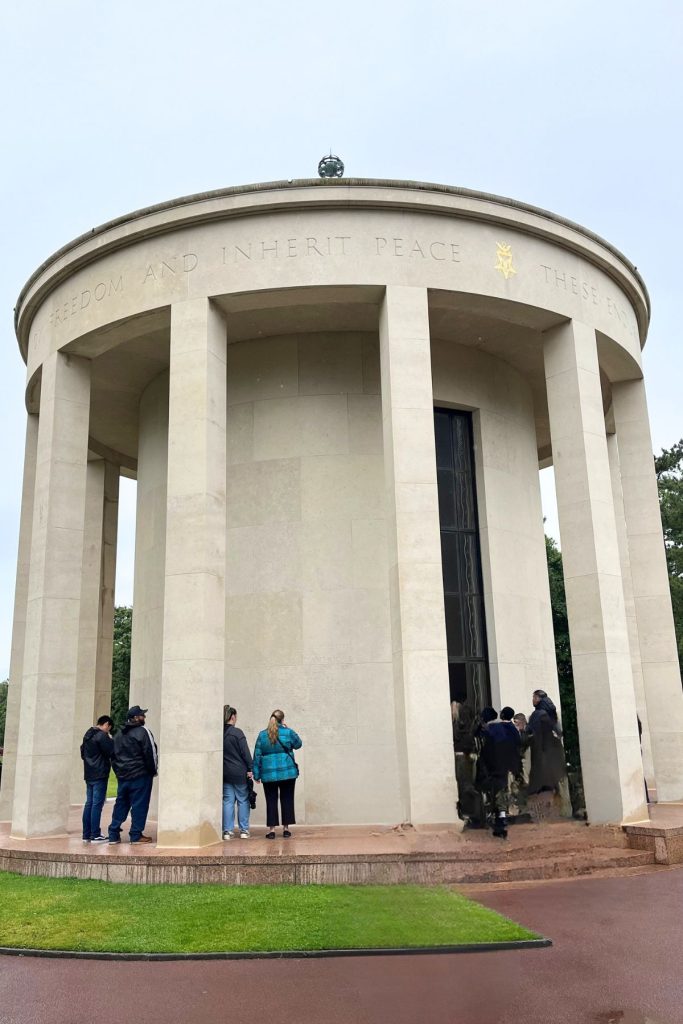
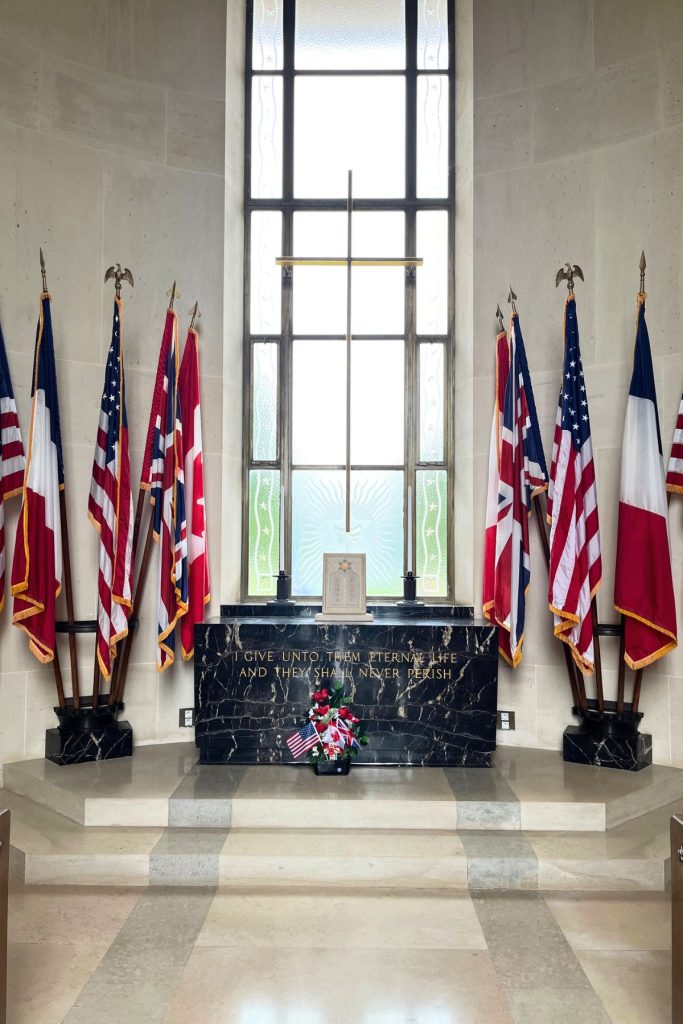
Chapel
A chapel sits at the center of the cemetery. This is a multi-denominational chapel, with stained glass bearing a Latin cross, a star of David, and an alpha and an omega symbol meant to represent all other religions.
Memorial
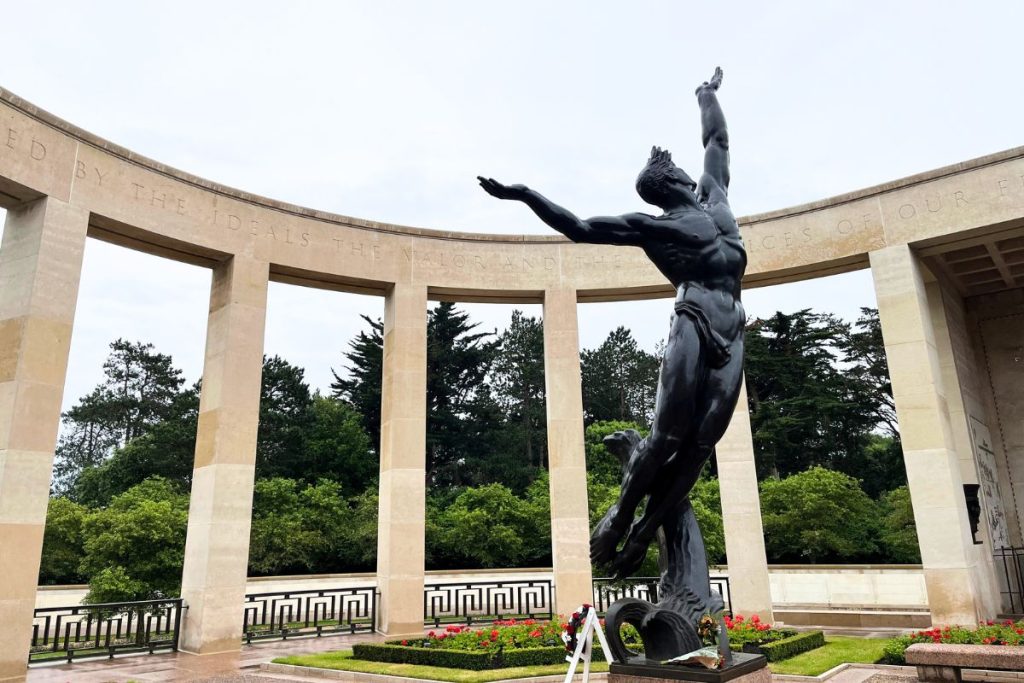
At the base of the cemetery sits the Memorial. It is a semi-circular limestone colonnade with a loggia at each end. Within each loggia there are maps and narratives of the military operations. A bronze statue sits at the center of the Memorial. The 22-foot bronze statue is entitled, The Spirit of American Youth Rising from the Waves, by Donald De Lue.
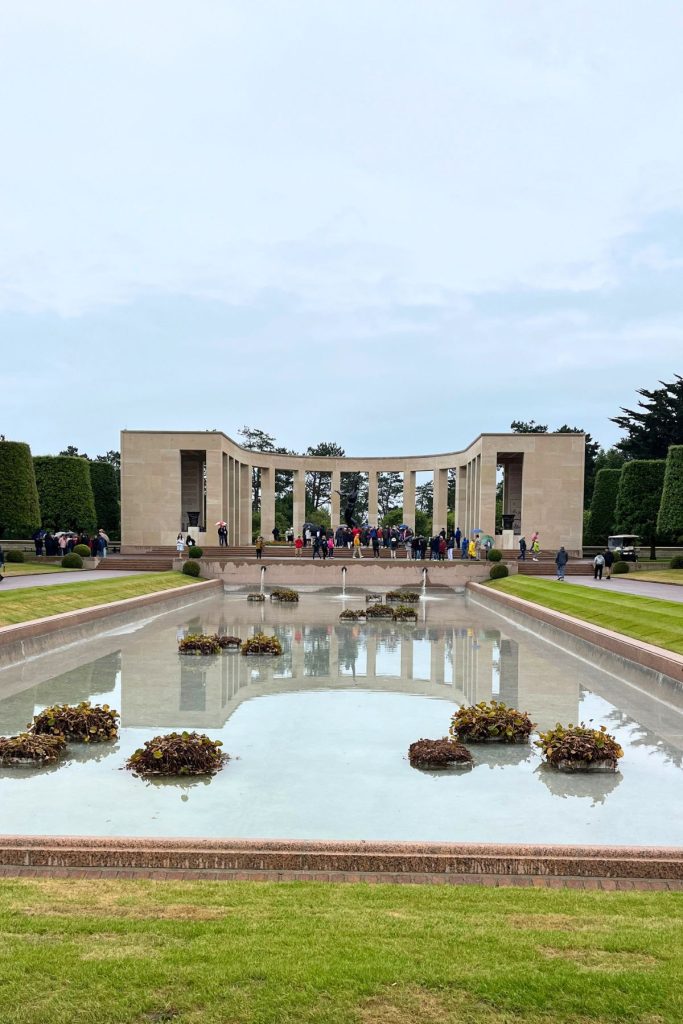
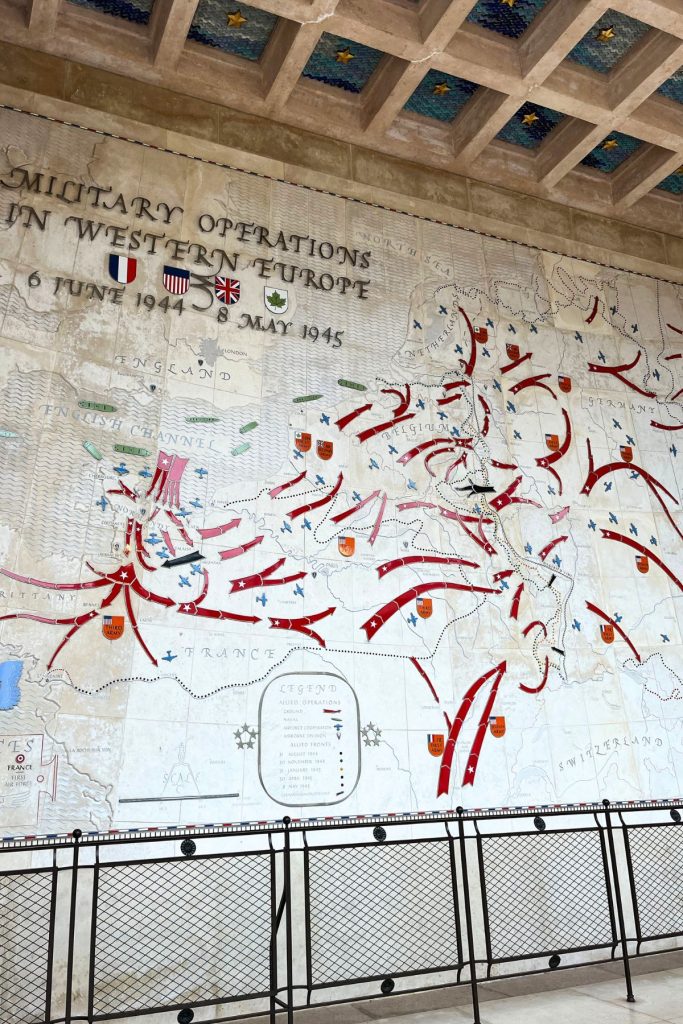
- The American Cemetery at Omaha Beach is free to visit. There are very knowledgeable rangers and staff on hand, and they are happy to answer any questions you may have during your visit.
- In addition to the sights highlighted above, be sure to also visit the excellent on-site museum and visitor center, which includes artifacts, maps, and personal stories.
- Try to time your visit for the early morning…a daily flag ceremony and moment of remembrance takes place at 9:00AM.
Omaha Beach
A short bus ride took us from the American Cemetery down to Omaha Beach itself. We drove through the beach area, and it immediately struck me how “normal” the area seems. Honestly, it looks just like the quaint beach areas near where I grew up in southern Maine. I had to keep reminding myself of the horrific things that actually occurred here 80 years ago. This beach was one of five beach landing sights of “Operation Overlord” during WWII.
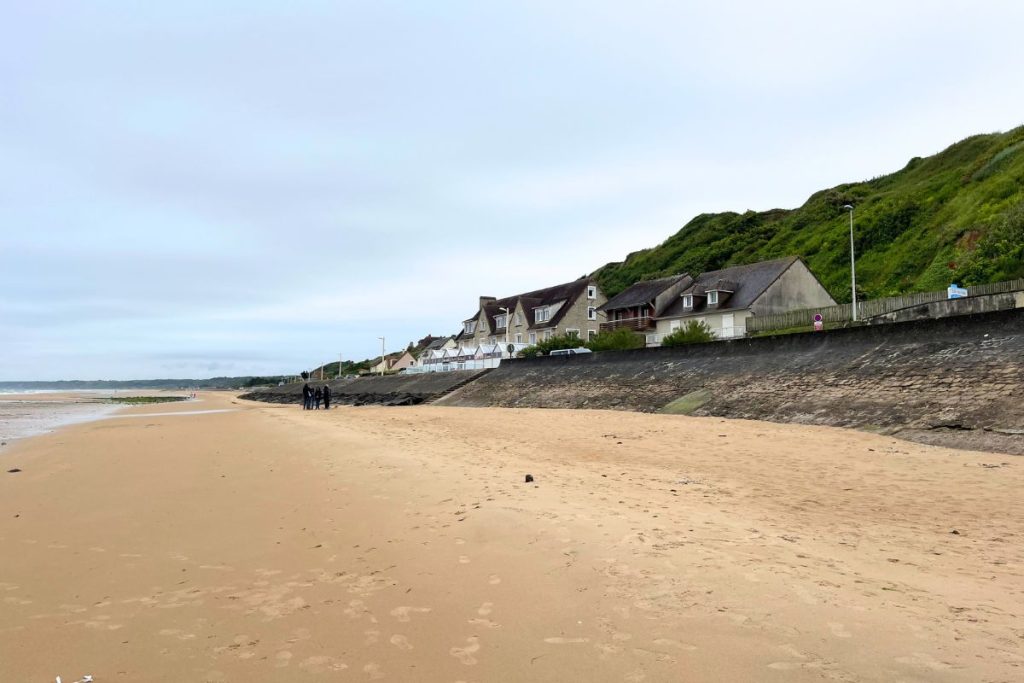
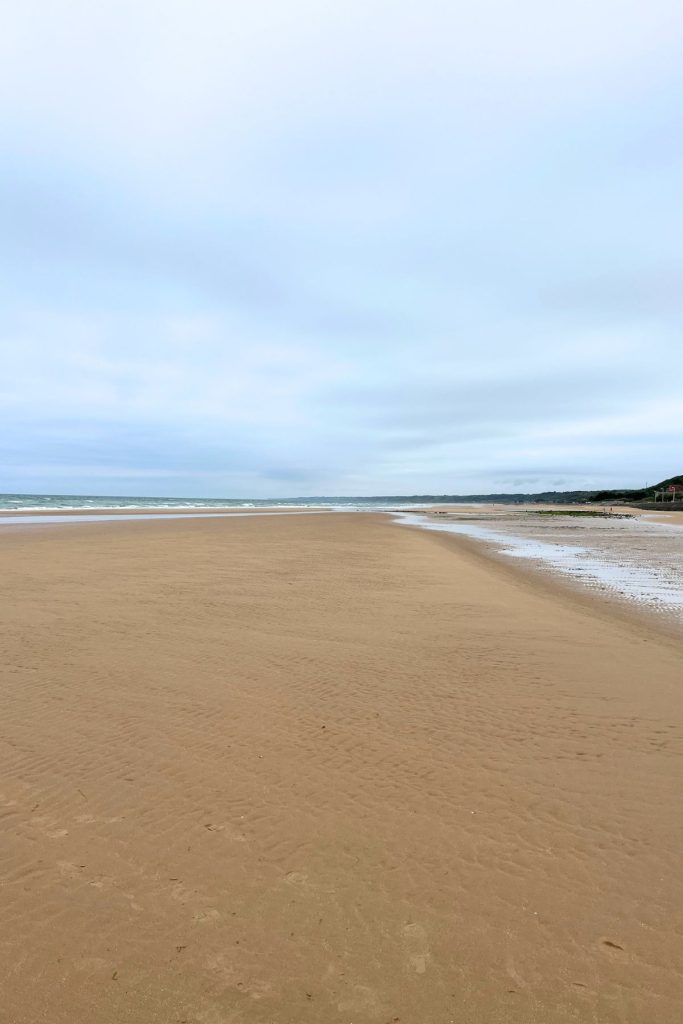
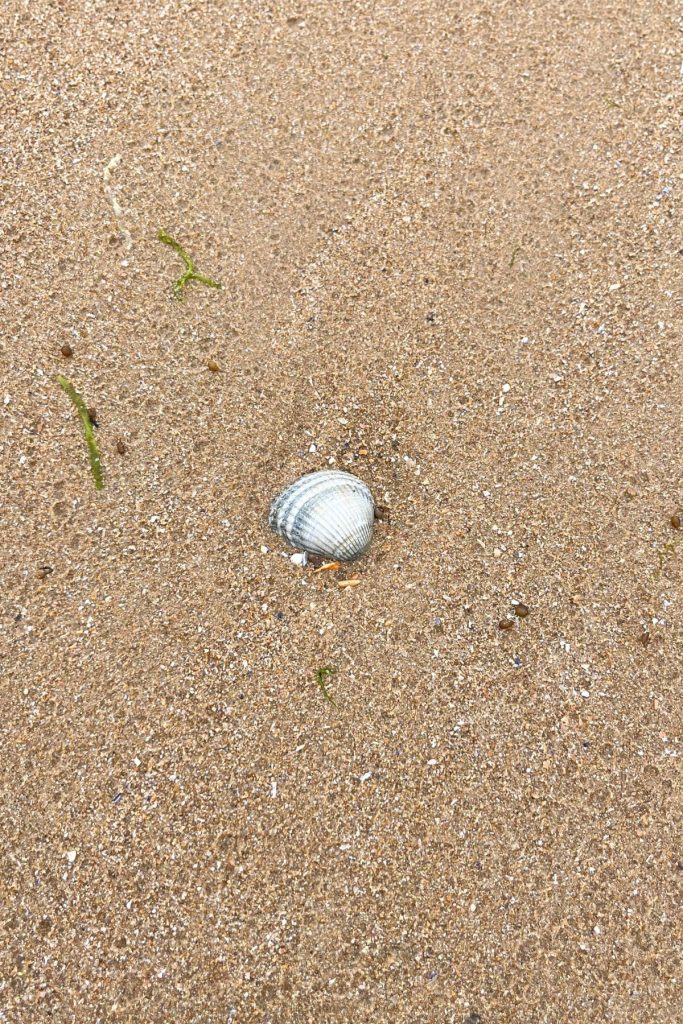
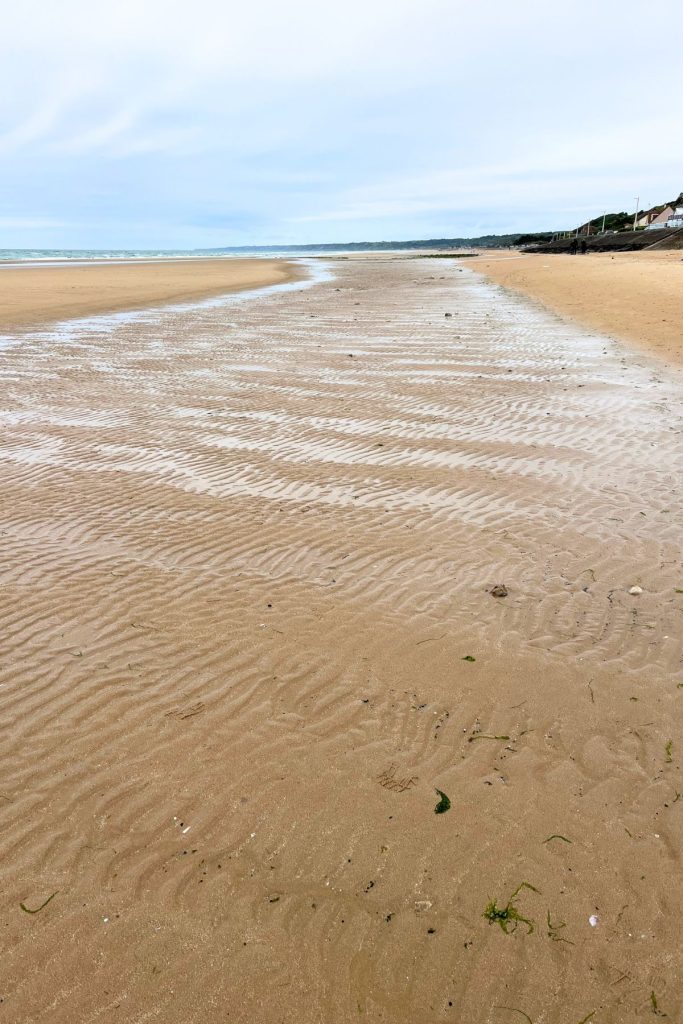
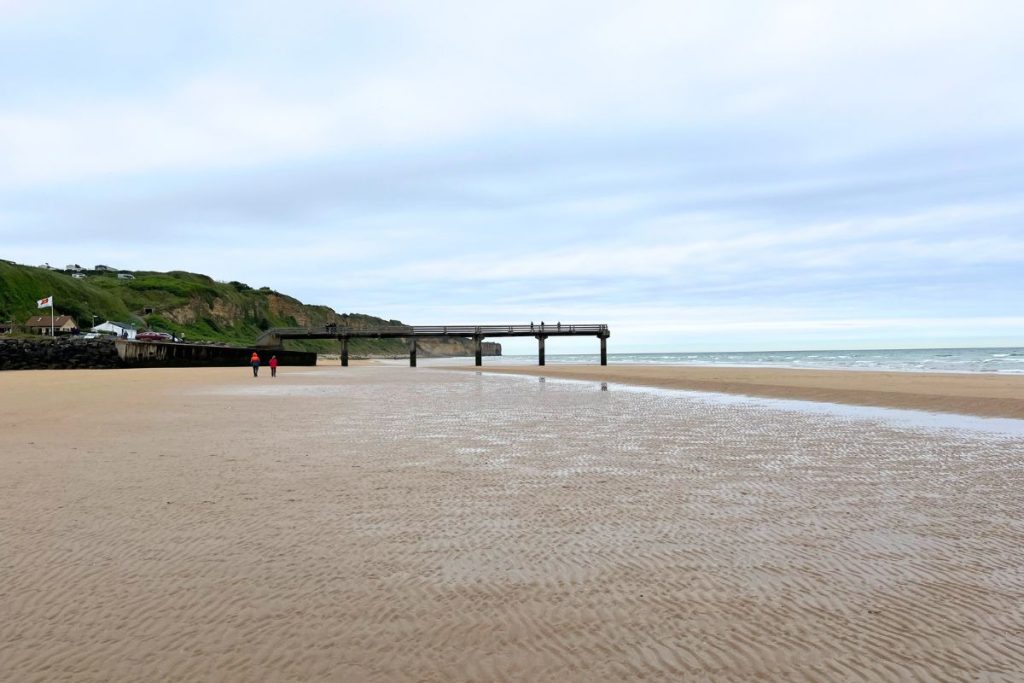
I also had the opportunity to walk on the beach itself. Omaha Beach is a 5-mile section of the coast here in Normandy, France. This was the bloodiest of the five D-Day beaches, with an estimated 2,000 American casualties on June 6, 1944. The average age of the soldiers who stormed the beach was a mere 22 years old. Actually standing on this beach, thinking of the brutal events that happened here, is a sobering thing.
National Guard Monument
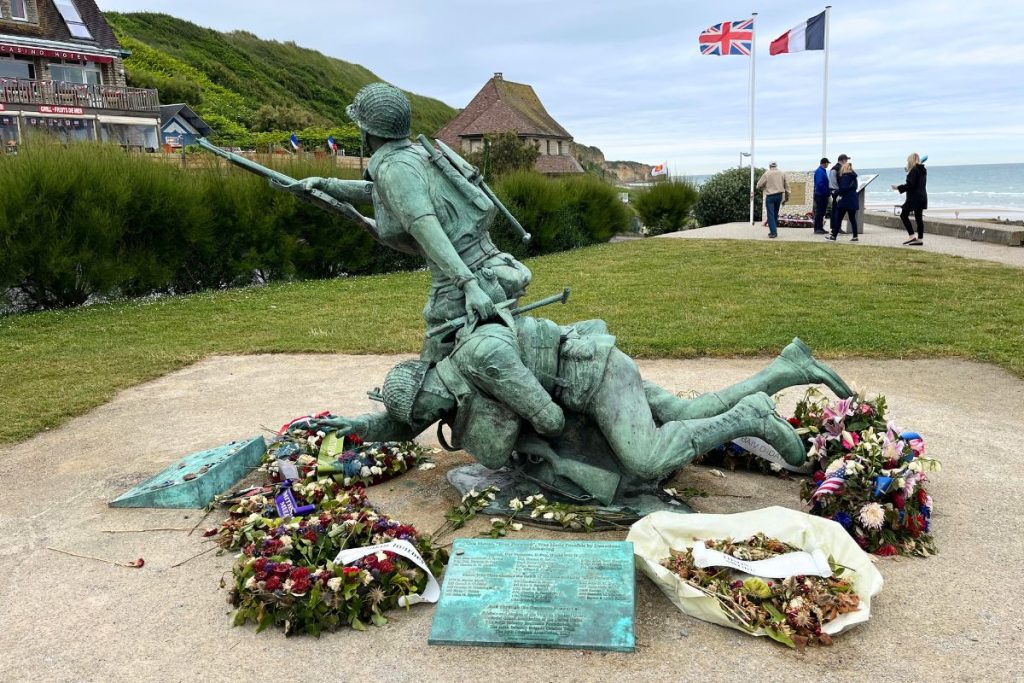
The National Guard Monument sits on a bluff overlooking Omaha Beach. It is an original bunker, which is now adorned with flags and memorial plaques. Because of the high winds in the area, the flags need to be changed approximately every 60 days.
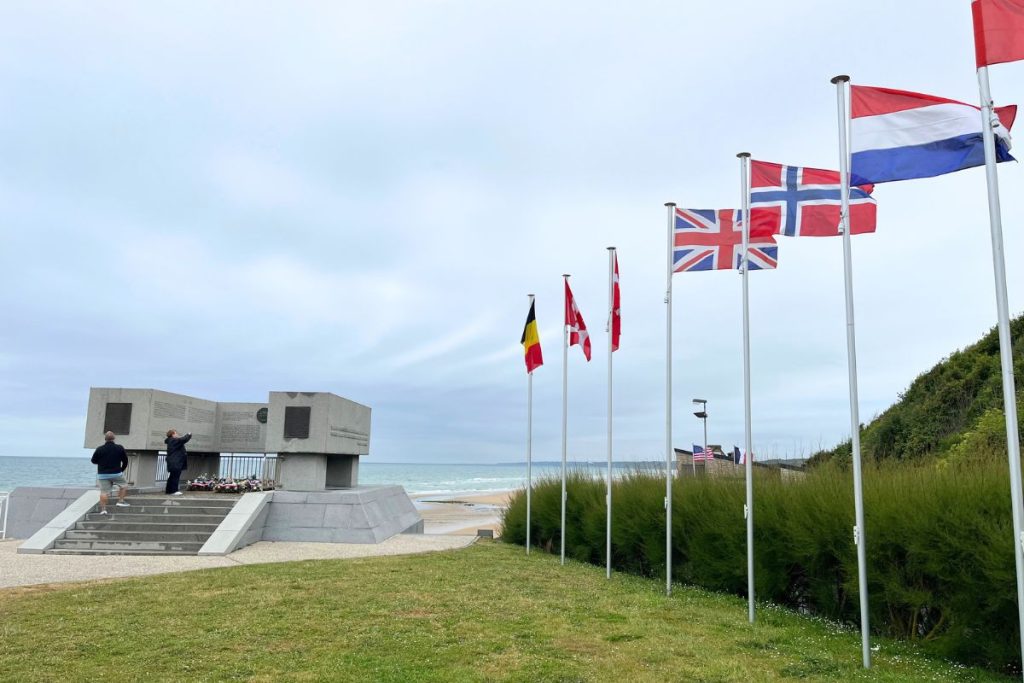
The National Guard Monument marks the area where the 29th National Guard Division broke through German defenses on June 6, 1944. The monument honors all National Guardsmen who fought in the European theater.
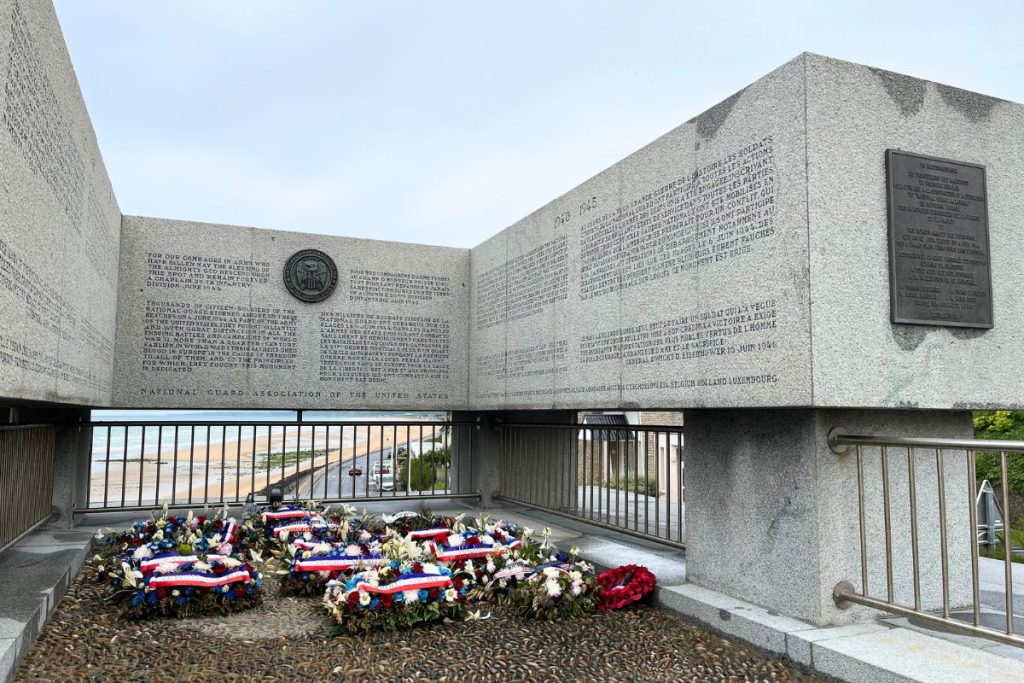
- Low tide is the best time to visit Omaha Beach because the beach opens up dramatically and you can walk quite far.
- When standing on the beach, be sure to turn around and look at all of the bluffs surrounding the beach…this very clearly showcases the tactical nightmare of the entire operation.
- The beach is wide and flat, with virtually no natural cover. Thinking about the courage required to cross it while under fire is something I had a difficult time comprehending.
Sainte-Mère-Église
I ended my D-Day landing beach excursion in the small village of Sainte-Mère-Église (which roughly translates to “Holy Mother Church”). The town played a significant role in the D-Day landings. It sits in the middle of route N13, which the Germans would have used to counterattack Allied landings on nearby Utah and Omaha Beaches. But early in the morning of June 6, 1944, mixed Airborne units occupied the town, making it one of the first towns liberated in the invasion. However, there were also heavy casualties here.
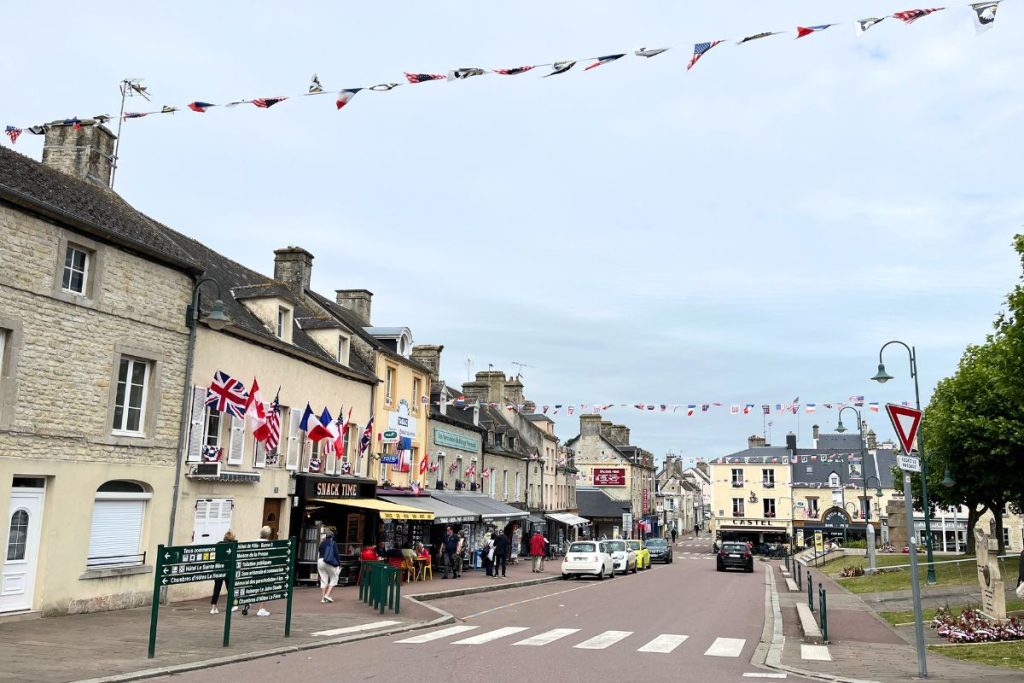
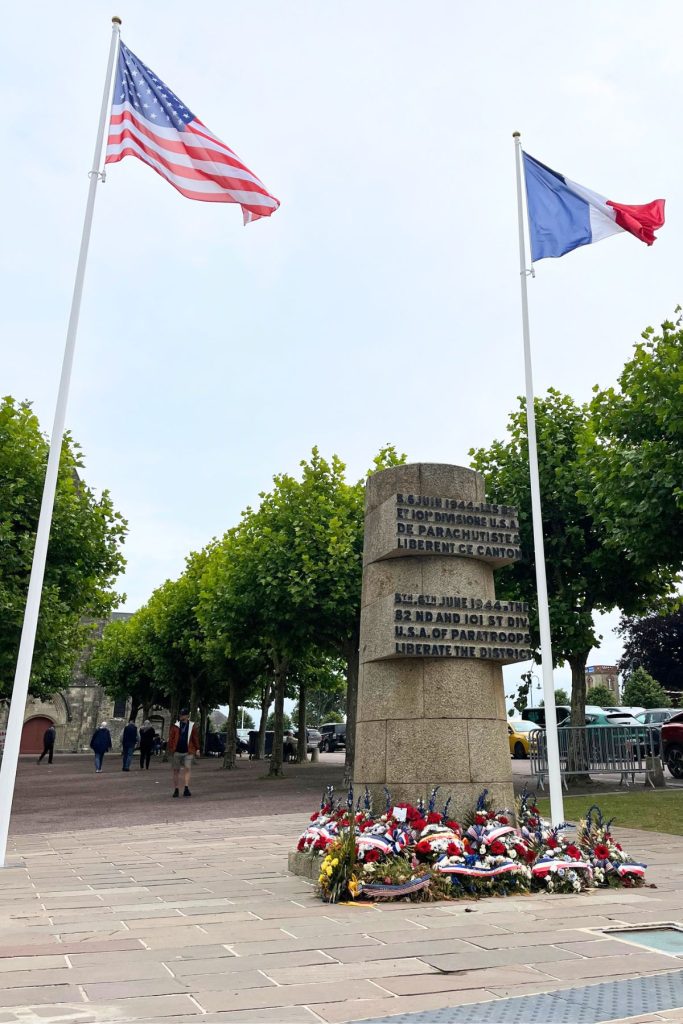
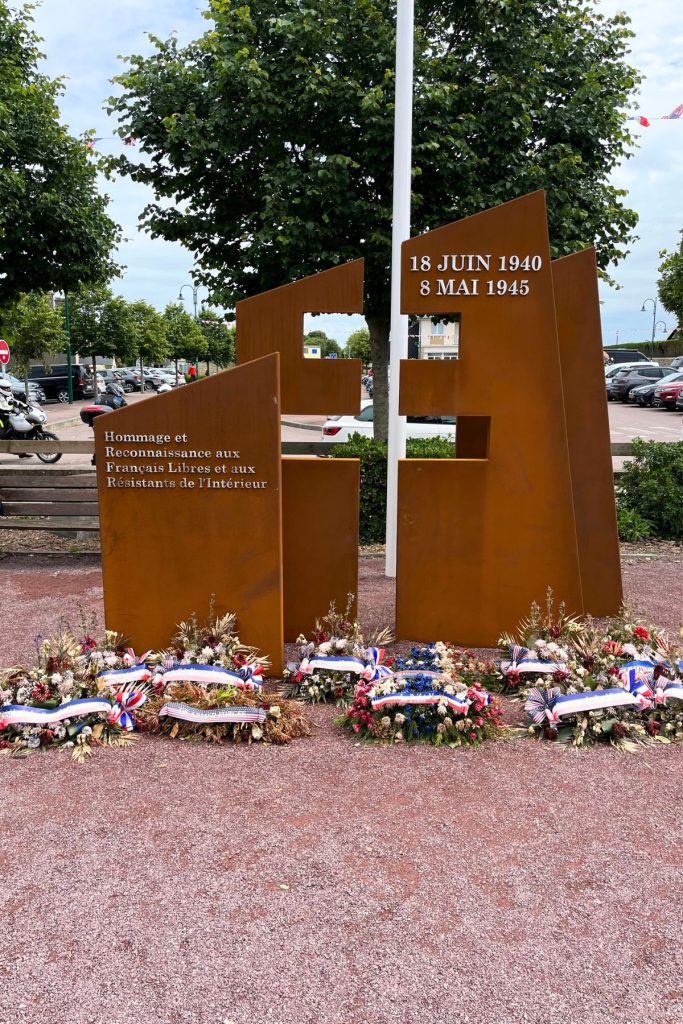
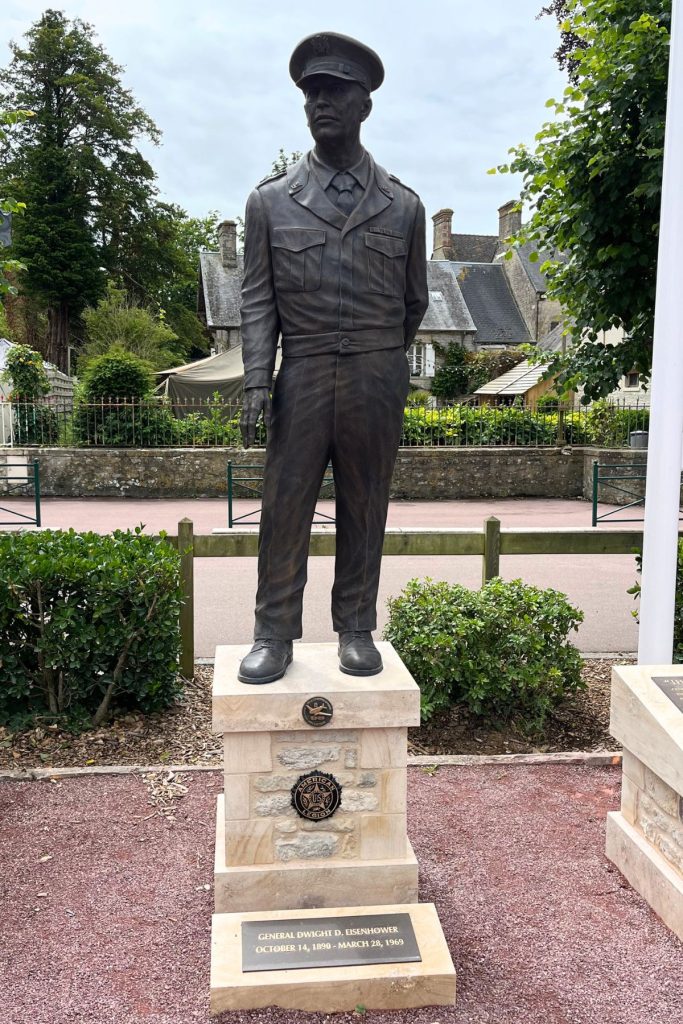
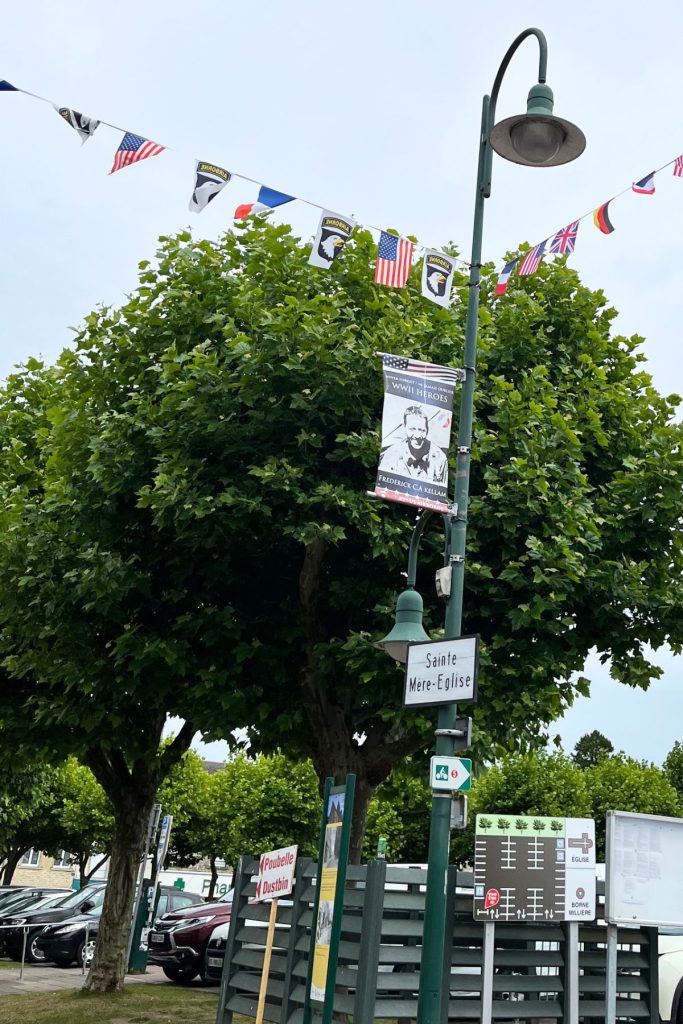
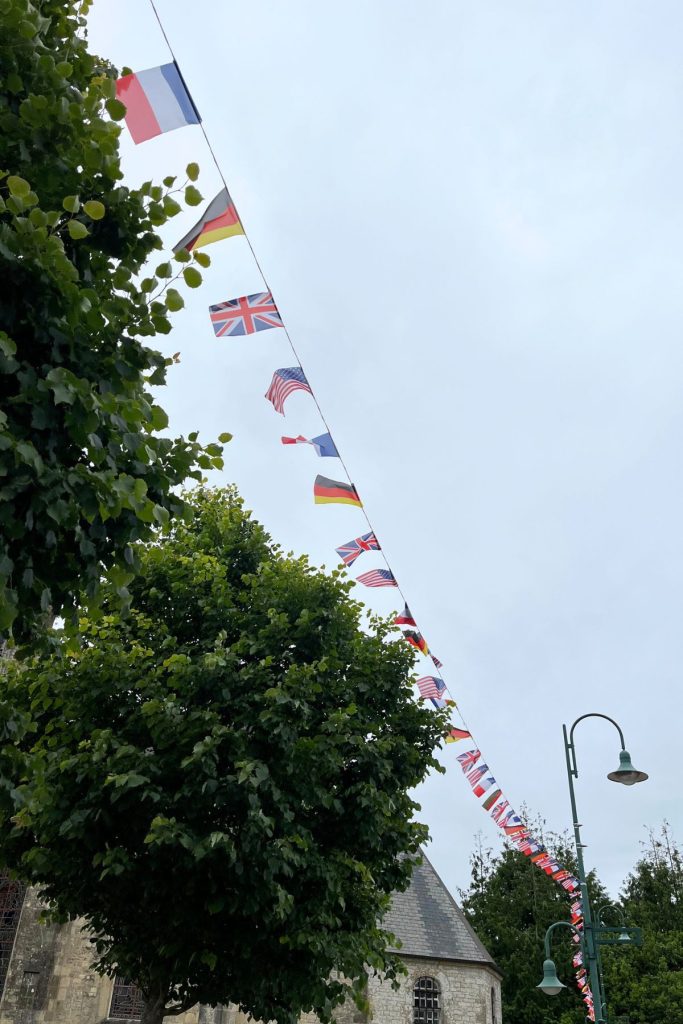
Today, this charming village has several monuments to events and historic figures of WWII. There are also festive flags and bunting hanging everywhere. Here, as well as many of the other small towns in the area, the light poles also include posters of individual WWII heroes.
Sainte-Mère-Église Church
The church also has some WWII memorials, commemorating the story of Private John Steele of the 505th Parachute Infantry Regiment. A famous incident on D-Day involved paratrooper John Steele. His parachute got caught on the spire and roof of the church. He stayed there, dangling from the roof and pretending to be dead, for two hours. Germans eventually took him prisoner. But Steele later escaped and rejoined his division. The entire incident was portrayed by actor Red Buttons in the movie, The Longest Day.
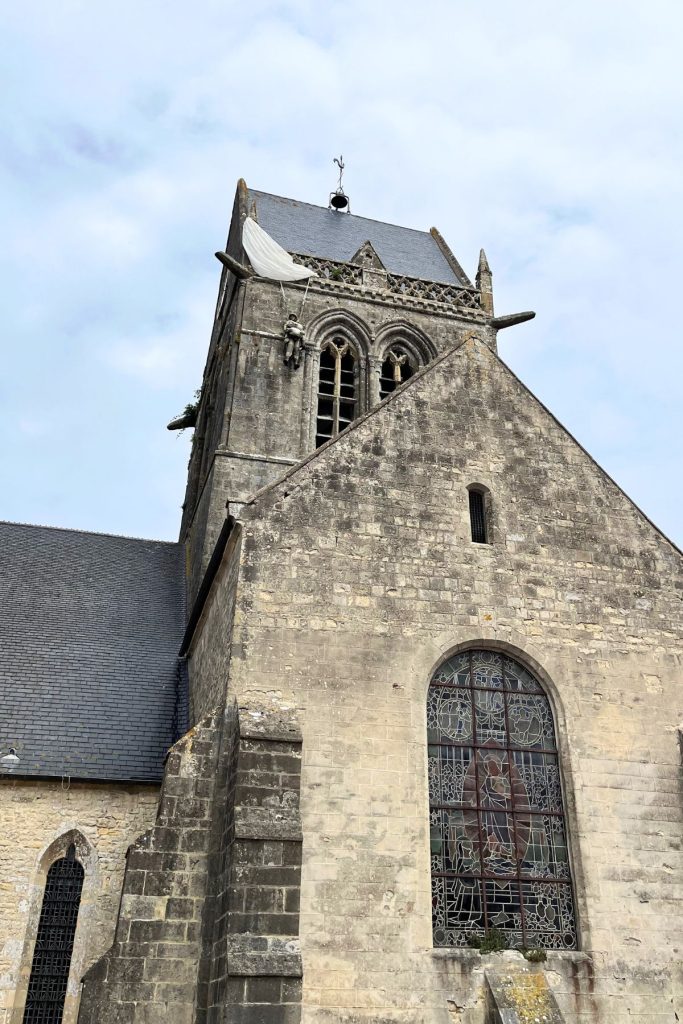
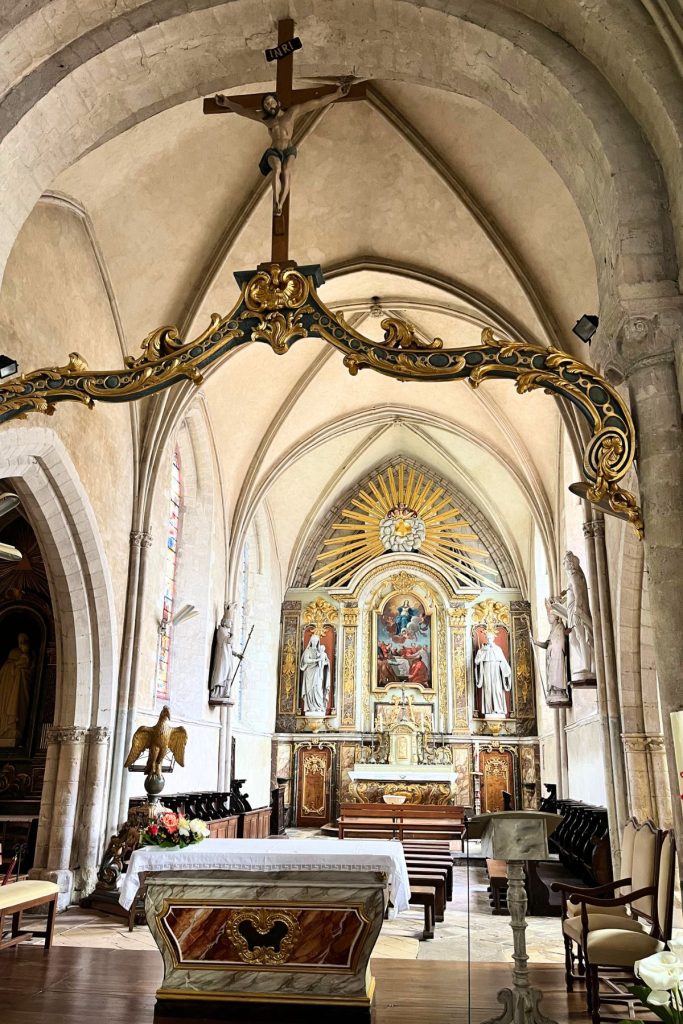
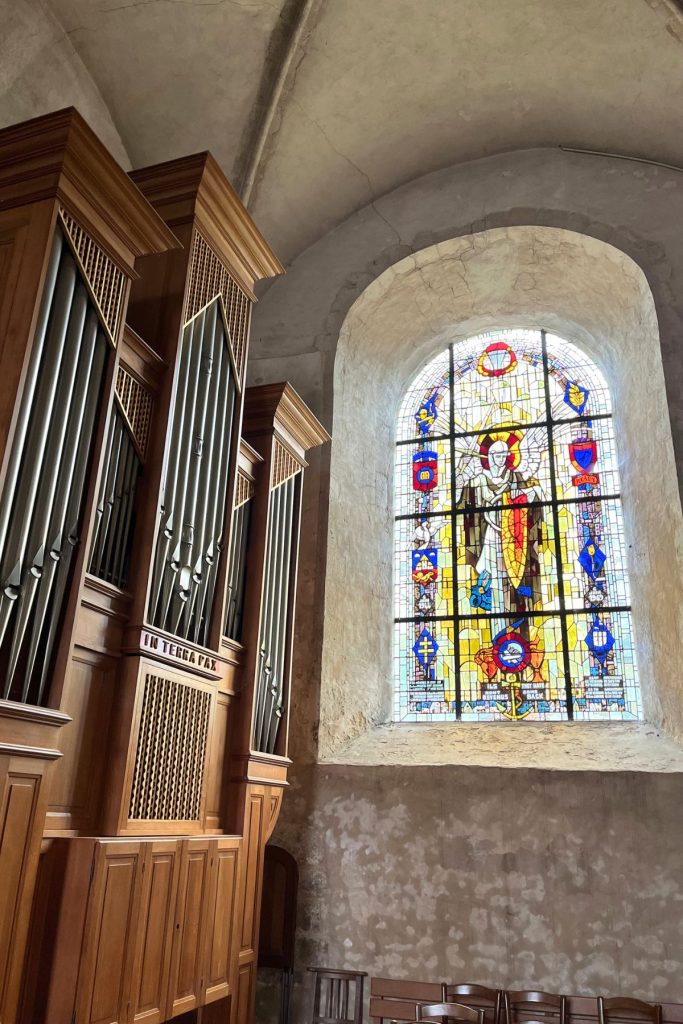
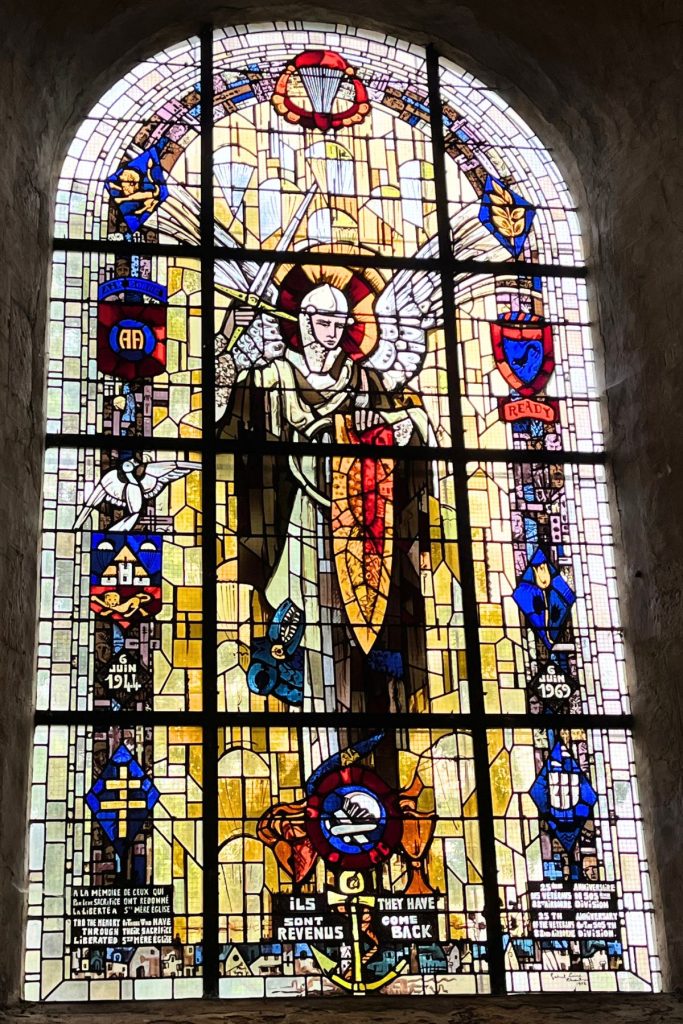
Today, a dummy paratrooper can be found hanging from the church spire, to commemorate the story of John Steele. There is also a stained-glass window in the church that includes images of parachutes and military insignia.
- The Airborne Museum (Musée Airborne) here is one of the best military museums in Normandy, housed partly in a building shaped like a parachute.
- Every June 6th, the town holds a massive commemoration with veterans, reenactors, and visitors from around the world.
- Many families in the area can still tell personal stories passed down from grandparents who witness the liberation themselves.
Lunch in the Mess Hall
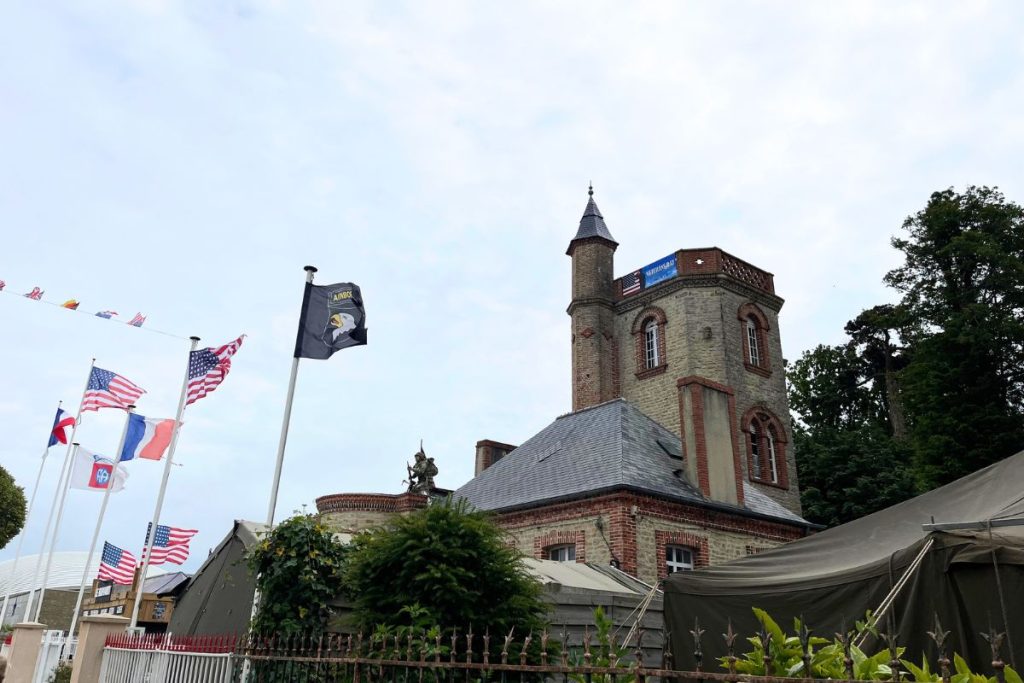
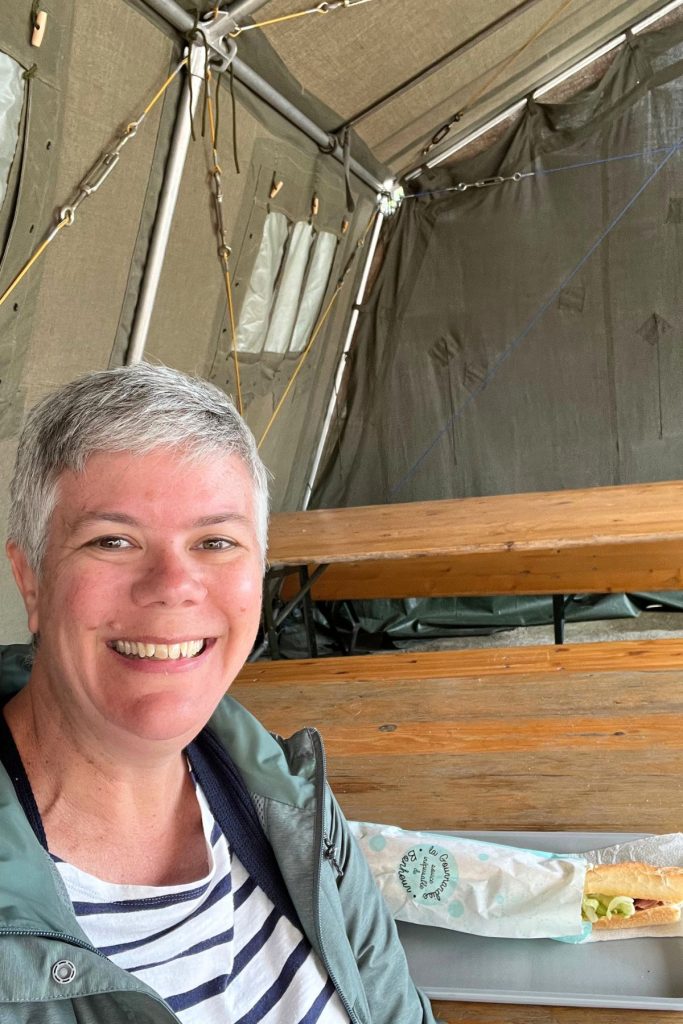
I had some free time in Sainte-Mère-Église, where I walked around the town center and popped into a few of the small shops. I also stopped at Le Normandy Restaurant for a quick lunch in a “mess hall.” My lunch was a delicious ham and cheese sandwich on a fresh baguette. It was served on a metal tray. I took my sandwich out to a tented area in front of the restaurant, so it was like I was eating my lunch in a military mess tent. Although, I can guarantee that my lunch was much tastier than anything the soldiers here at the time would have had to eat!

- The town square itself is charming and walkable, with many cafes and shops, making it a lovely place to simply sit and soak in the atmosphere.
Common Questions
Logistics
Technically, you could rush through all three in about four hours. But I’d strongly encourage you not to and recommend giving yourself a full day. We arrived at the American Cemetery early in the morning, spent a good two hours there, spent another hour or so on the beach itself, and then drove the short distance to Sainte-Mère-Église for another couple of hours for lunch and wandering. The three sites are close enough together that driving between them is easy, but the emotional weight of each one deserves real time and space. This isn’t a day for checking boxes, it’s a day for letting things sink in.
While it is possible, it makes for a very long and exhausting day that likely won’t do the experience justice. Paris to Normandy is about two and a half to three hours each way by car, or you can take a train to Bayeux and rent a car or join a guided tour from there. If you’re driving, you’re looking at leaving Paris by 6 AM to make the most of your time, and you’ll be back well after dark. Doable, but draining. My recommendation is to spend at least one night in the area. There are lovely little hotels and bed and breakfasts in Bayeux, which is only about 20 minutes from Omaha Beach, and waking up already in Normandy completely changes the feel of the day. You arrive rested, unhurried, and ready to actually absorb what you’re about to see rather than watching the clock the whole time.
Preparation
I’m not sure you fully can, and that’s okay. Some read a few books beforehand, or watch The Longest Day or parts of Band of Brothers. Nothing really prepares you for the moment you crest the hill and see those 9,000 white crosses stretching out toward the sea, or for standing on that wide open beach and looking up at the bluffs and understanding what it cost to cross it. What I will say is that going in with some historical context helps enormously. Even just reading a few articles about specific soldiers or units beforehand gives you something personal to hold onto while you’re there. I also think it helps to give yourself permission to feel whatever you feel, whether that’s tears, silence, gratitude, or just a kind of stunned quiet. There’s no wrong way to experience a place like this.
Even More Travel Ideas
Crafting an Effective Travel Itinerary
Six Tips for Successful Solo Travel
Good Trips Are Planned, Great Trips Have a Travel Advisor Behind Them