Seoul Much to See: A Cultural Guide to Korea’s Iconic Capital
Seoul has a way of stopping you in your tracks. One minute you’re standing in front of a 600-year-old palace, and the next you’re wandering lantern-lit alleyways and soaking in the views from a tower that doubles as an air quality forecast. If you are looking for a city that layers history, culture, and modern energy like nowhere else on earth, Seoul is it.
This guide covers four stops that together paint a surprisingly complete picture of Seoul. From its royal history to its artistic soul, from its architectural heritage to its modern identity, this itinerary is a great overview of Seoul. I have included some fascinating back stories, some practical logistics, and a few details that will ensure you don’t miss a thing.
Four Stops, Two Days, One Amazing City
I spent two days in Seoul after a cruise from Tokyo to Incheon. After debarking the ship, a driver picked me up and we drove the approximately 25 miles from Incheon to Seoul. With the traffic, it took over an hour in the morning on a weekday. But I arrived in Seoul safe and sound, and set out to start my exploration of this large and vibrant city.
Seoul is an old city with a modern flair. Seoul has served as a capital city since 1394 and people have called it home for over 2,000 years. There are currently around 26 million people living in the greater metro area, with about 10 million people within Seoul proper. Navigating the city is relatively easy. Many popular locations are within walking distance, and the subway system is an excellent way to travel to any locations that are further away.
Gyeongbokgung Palace
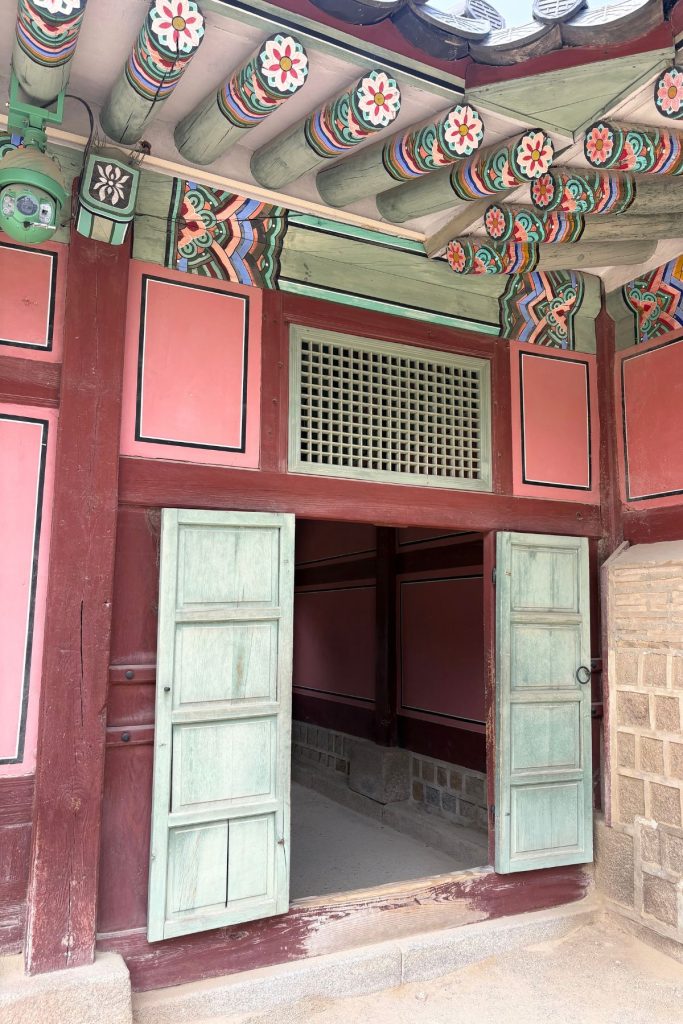
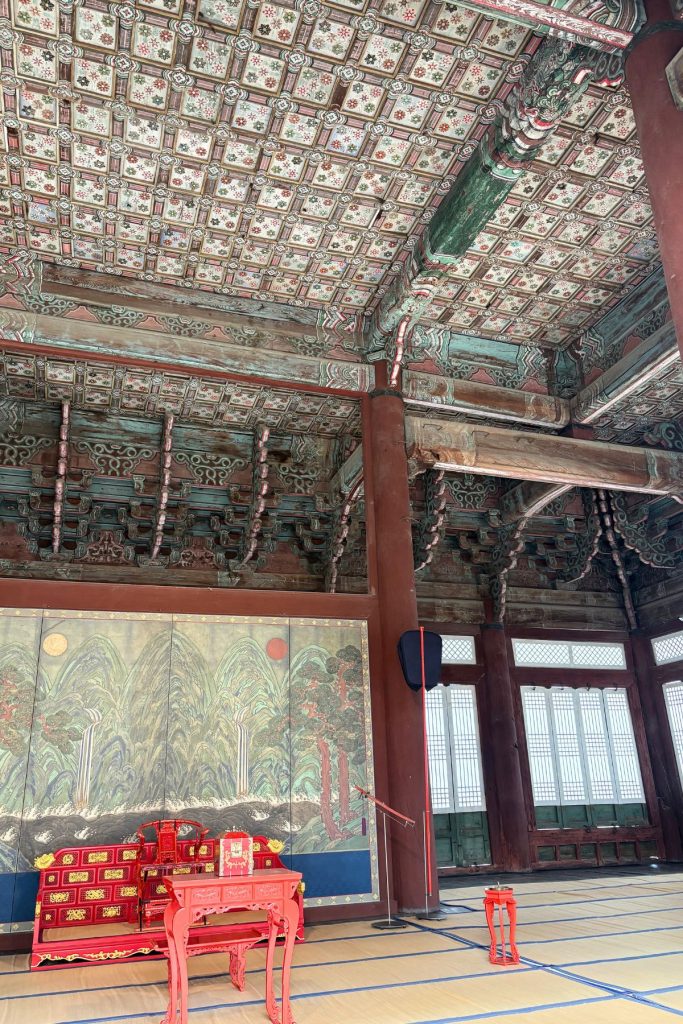
My first stop was the most famous of the five grand royal palaces within the city: Gyeongbokgung (which literally translates to “Palace Greatly Blessed by Heaven”). This sprawling palace complex covers more than 4.4 million square feet and included 7,700 rooms at its peak.
History of Gyeongbokgun Palace
King Taejo built Gyeongbokgung in 1395, three years after founding the Joseon Dynasty, as a symbol of the regime’s future prosperity. Japanese agents assassinated Empress Myeongseong in 1895, and the Joseon Imperial Family never set foot in the palace again.
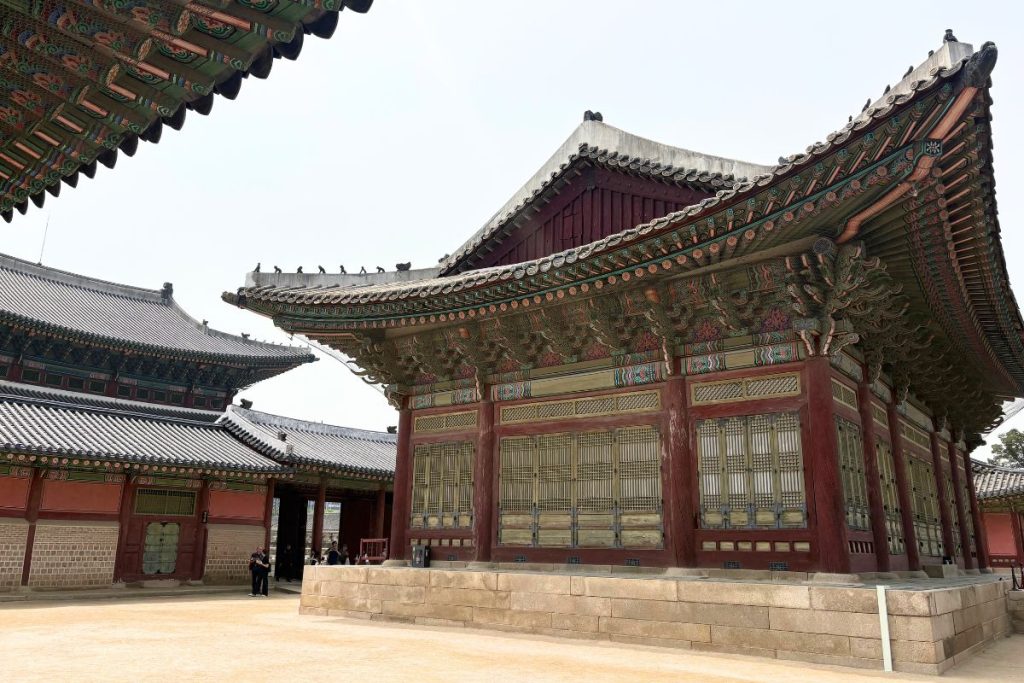
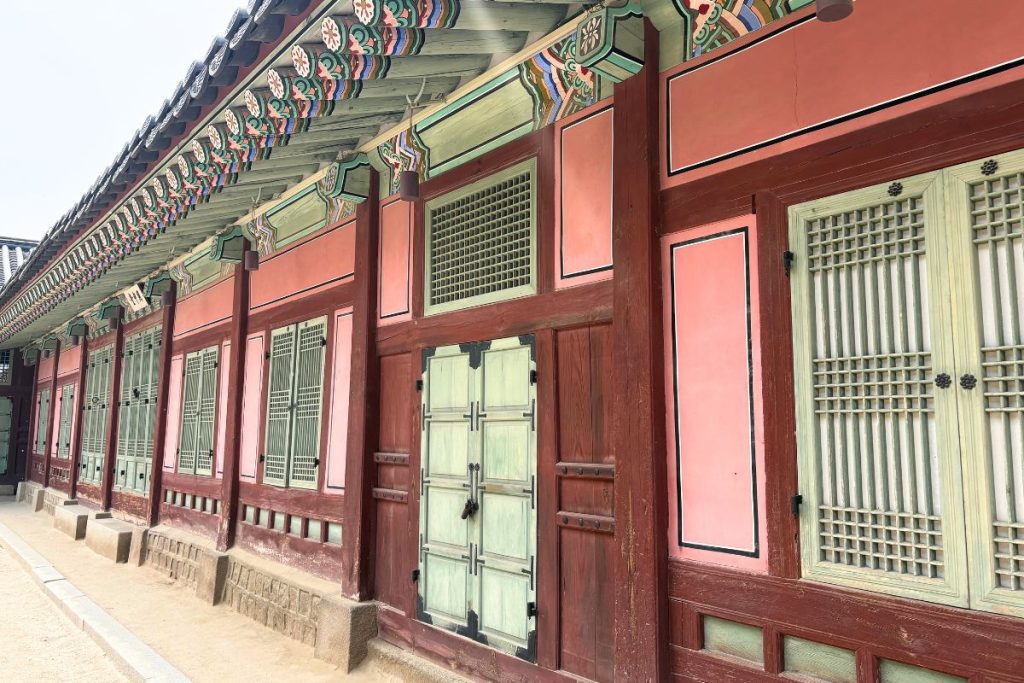
Fire destroyed the palace twice: first during the Japanese invasion of 1592, and again during the Japanese occupation in the early twentieth century. The latest round of restoration efforts began in the 1990s and continue today.
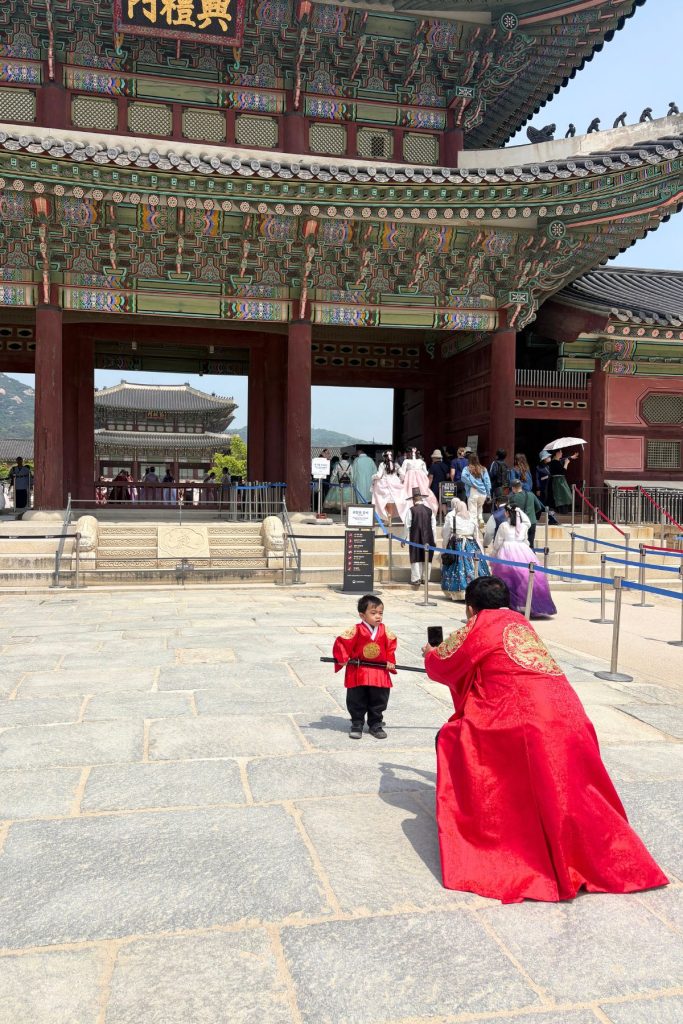
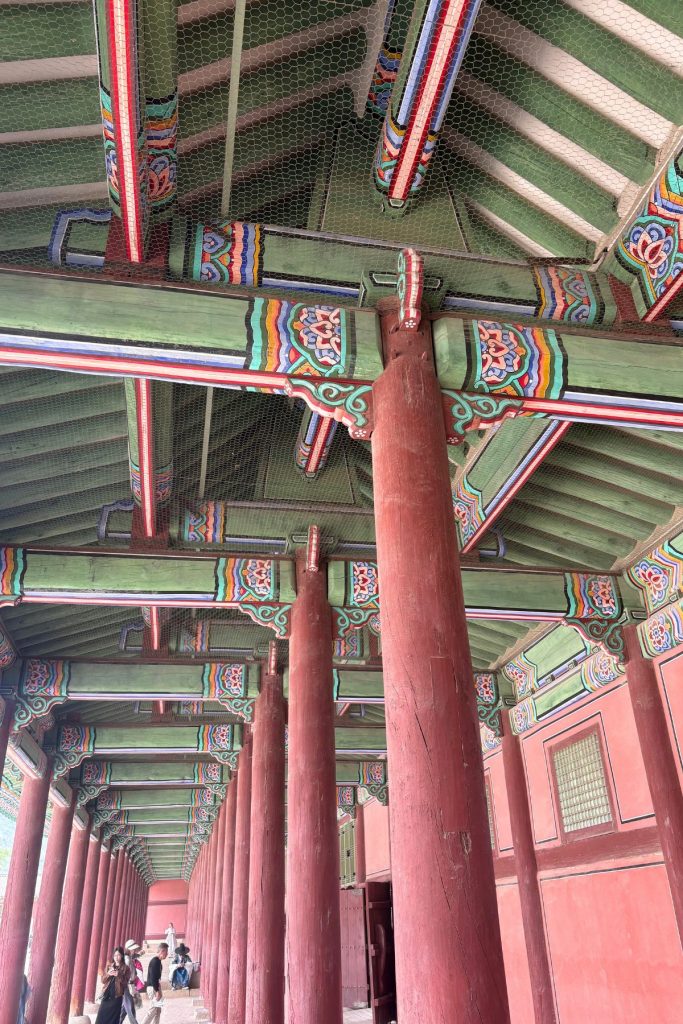
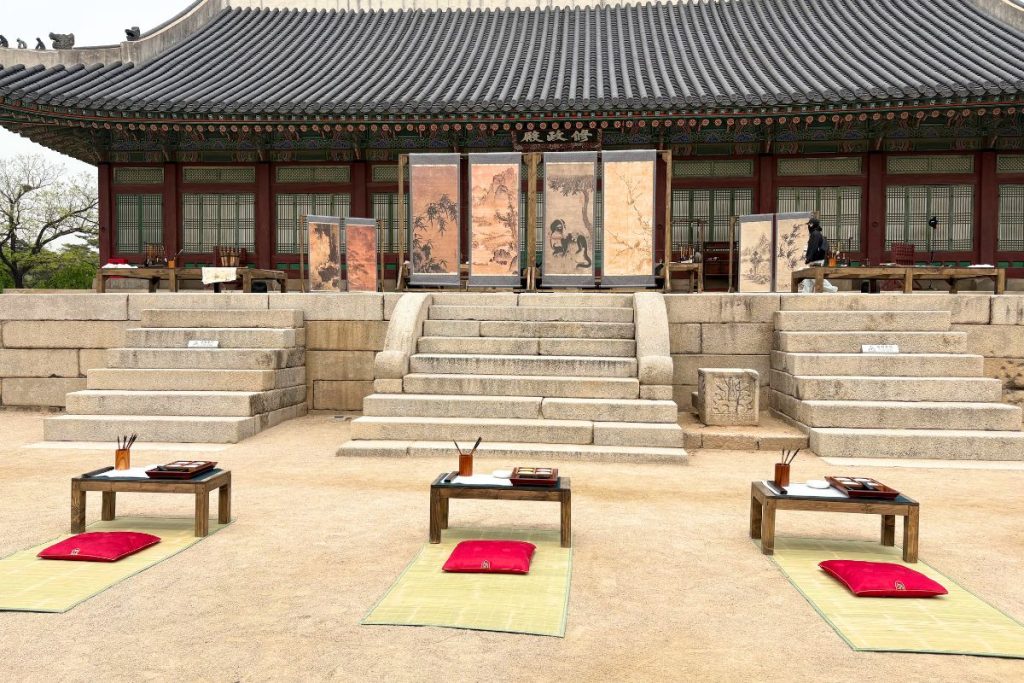
Geunjeongjeon Hall
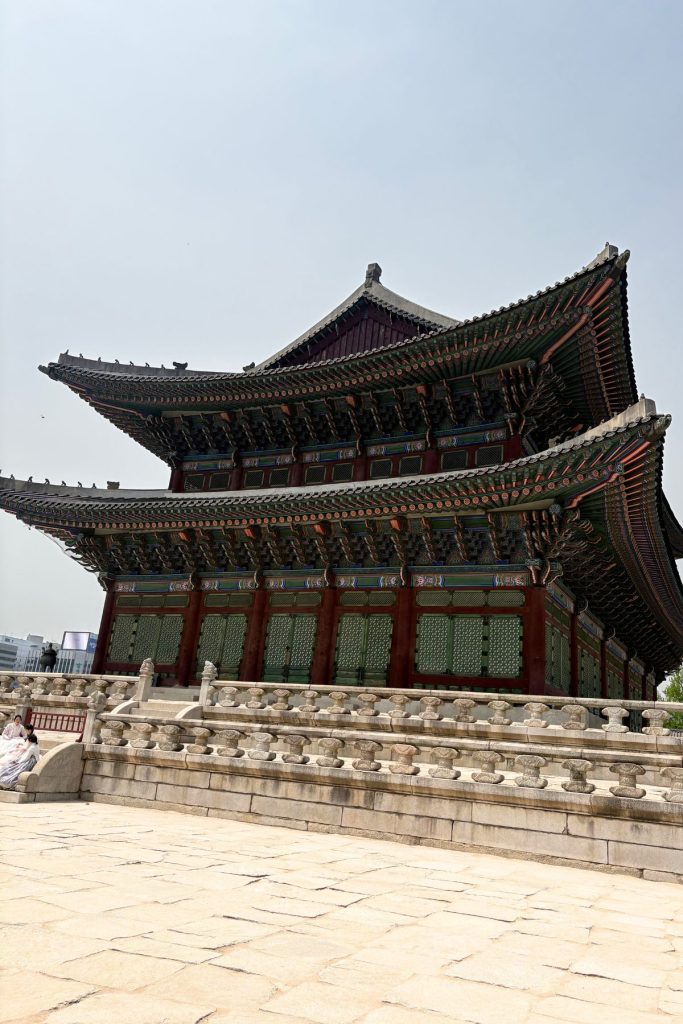
The massive stones pillars standing in front of Geunjeongjeon Hall aren’t just decorative. The Joseon people reportedly hollowed them out to store rice, turning royal architecture into emergency preparedness.
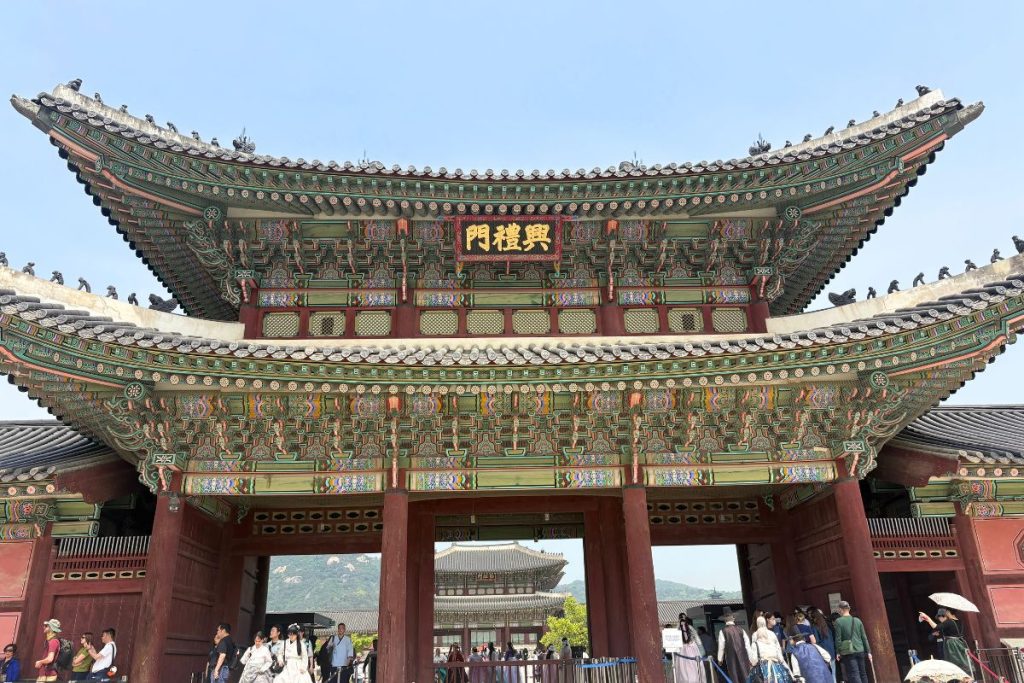
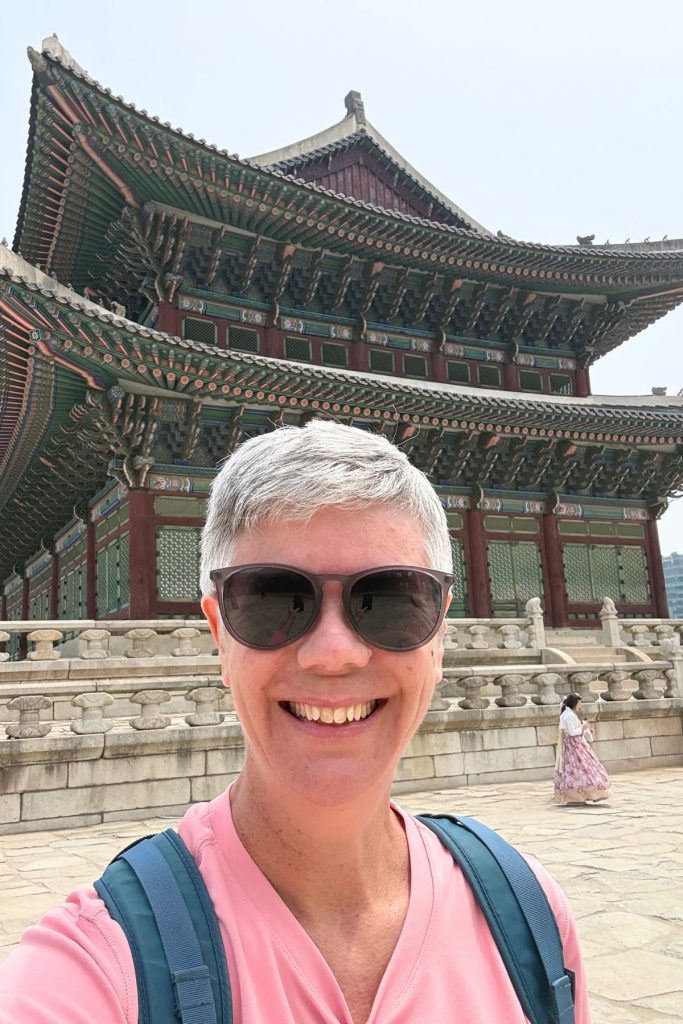
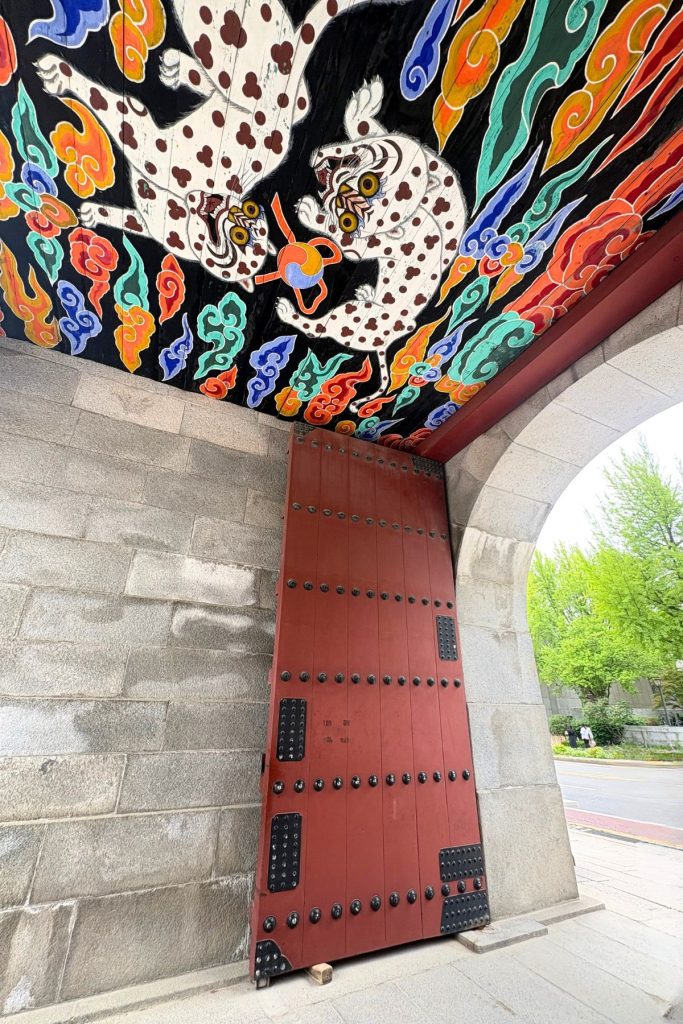
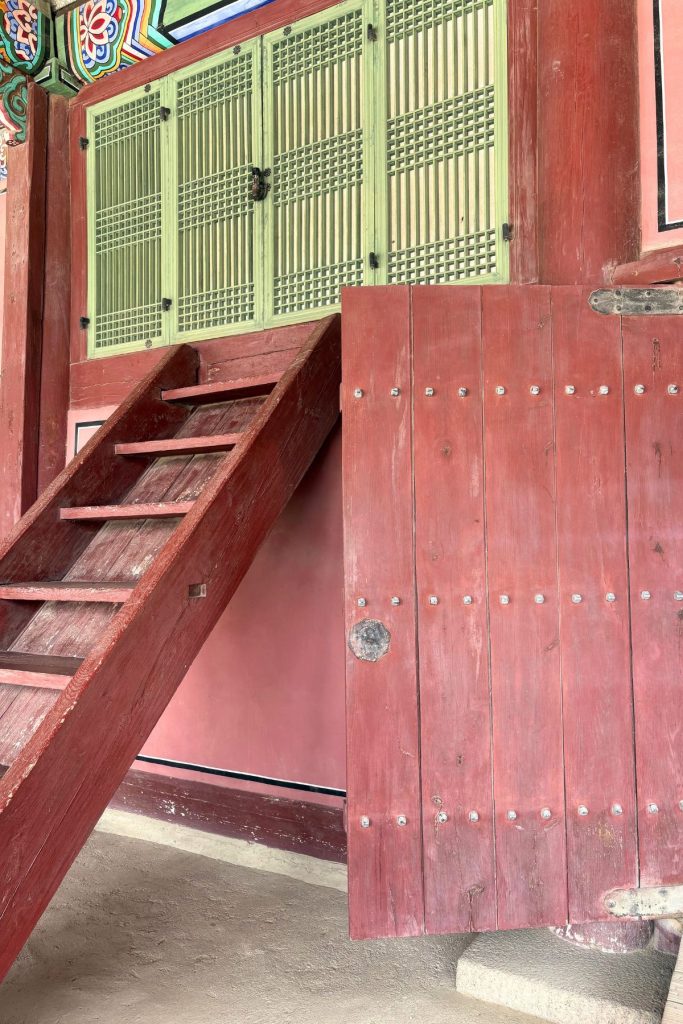
Geunjeongjeon Hall, the Throne Hall, is where kings conducted state affairs, held official functions, and received foreign envoys. Between 1399 and 1546, twelve kings rose to power in the Joseon Dynasty; seven of them did so standing right here.
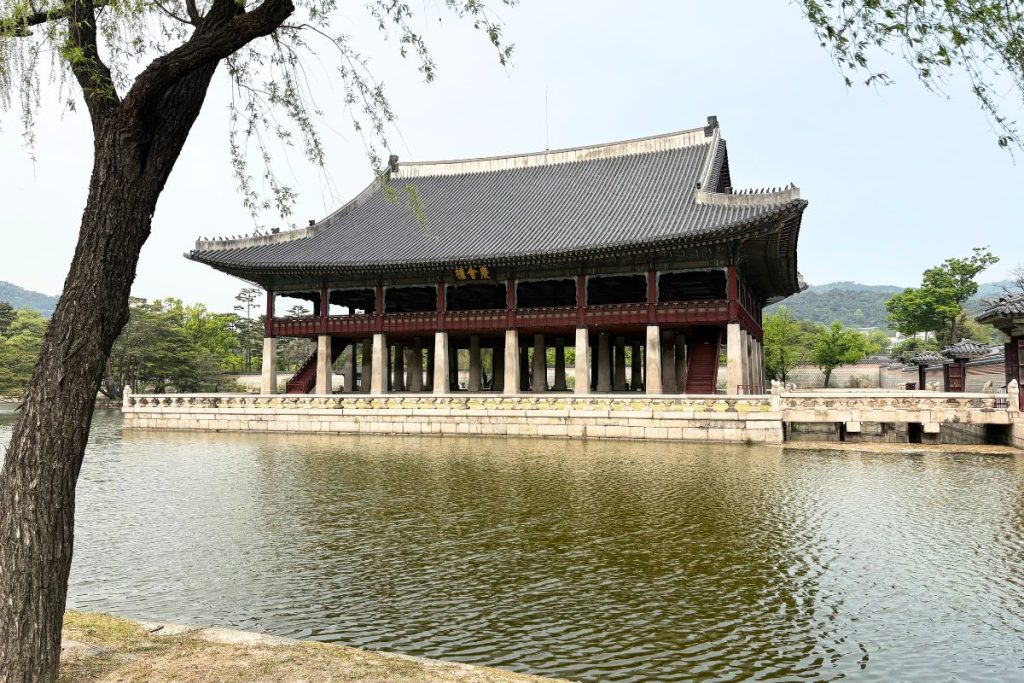
Gyeonghoeru Pavilion
A peaceful artificial pond surrounds the beautiful Gyeonghoeru Pavilion. Royal banquets, reception of foreign envoys, final state examinations, and seasonal religious rituals were all held here at this pavilion. The 48 pillars of Gyeonghoeru Pavilion represent the 48 months between state examinations. Their uneven spacing is believed to reflect musical rhythms.
Hanbok
Visitors who rent traditional dress, called hanbok, can enter the palace free of charge. There are several different shops around the palace that rent hanboks. So, you will see a lot of people of all ages walking around in hanboks, which adds a special feeling to the visit.
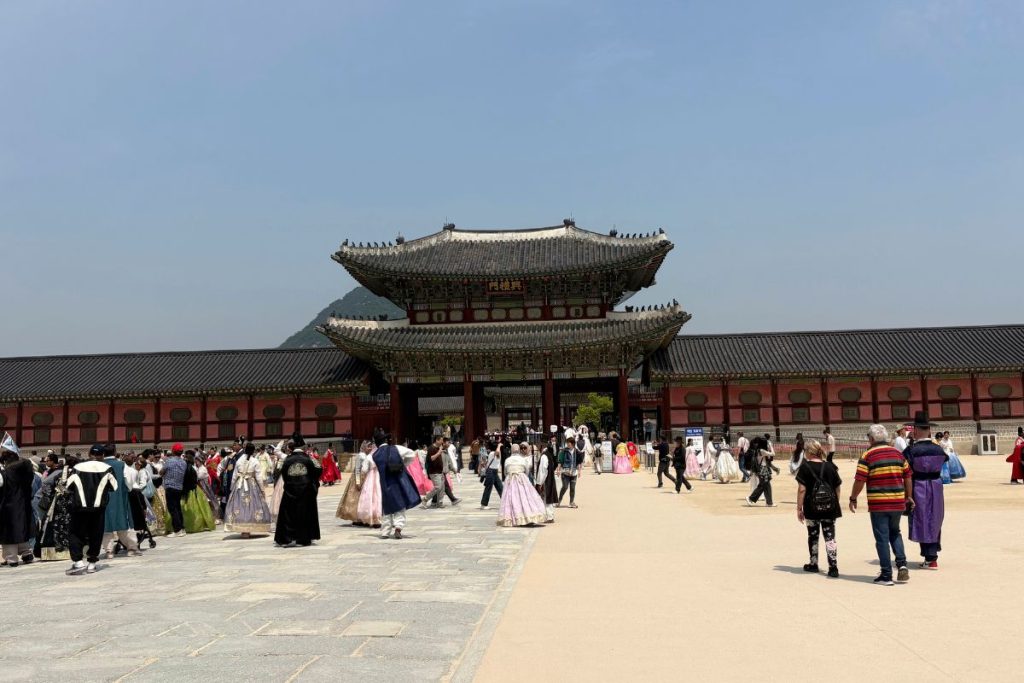
Changing of the Guards
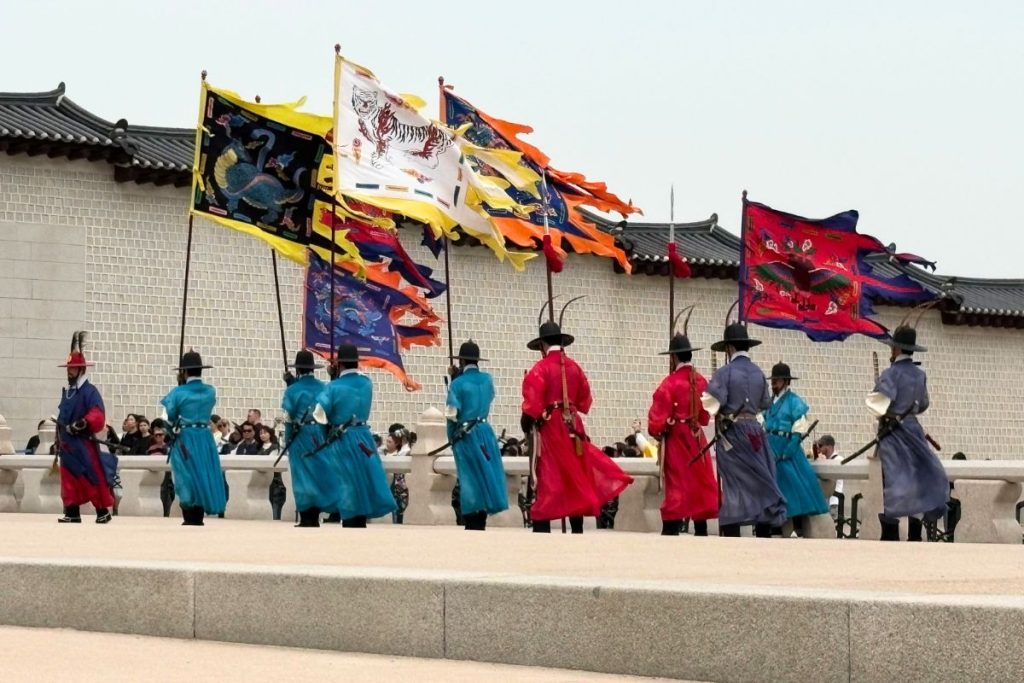
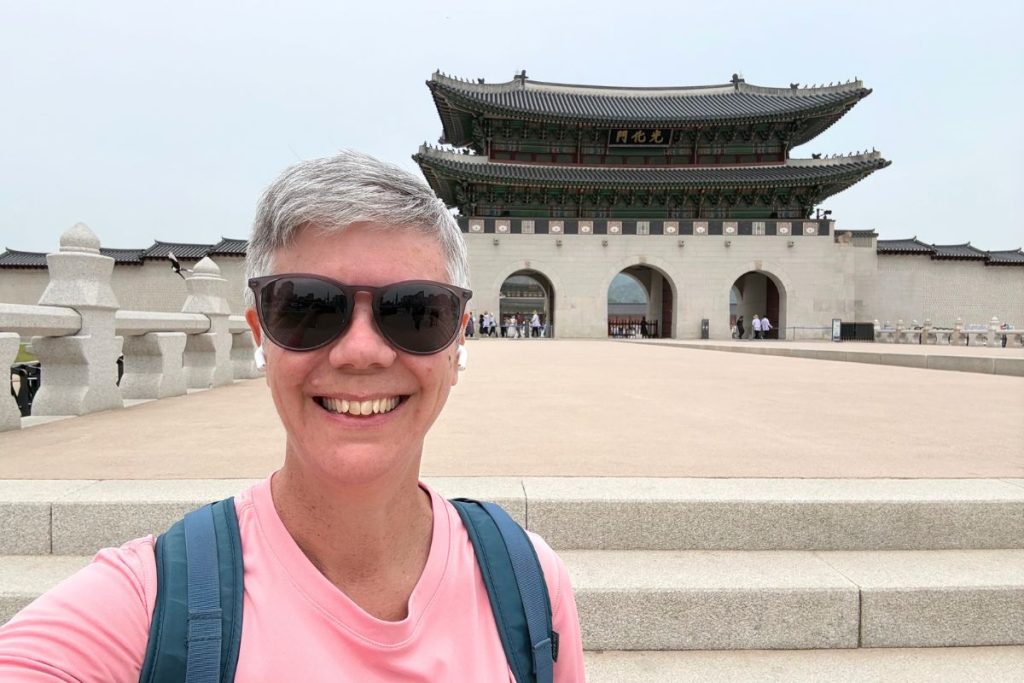
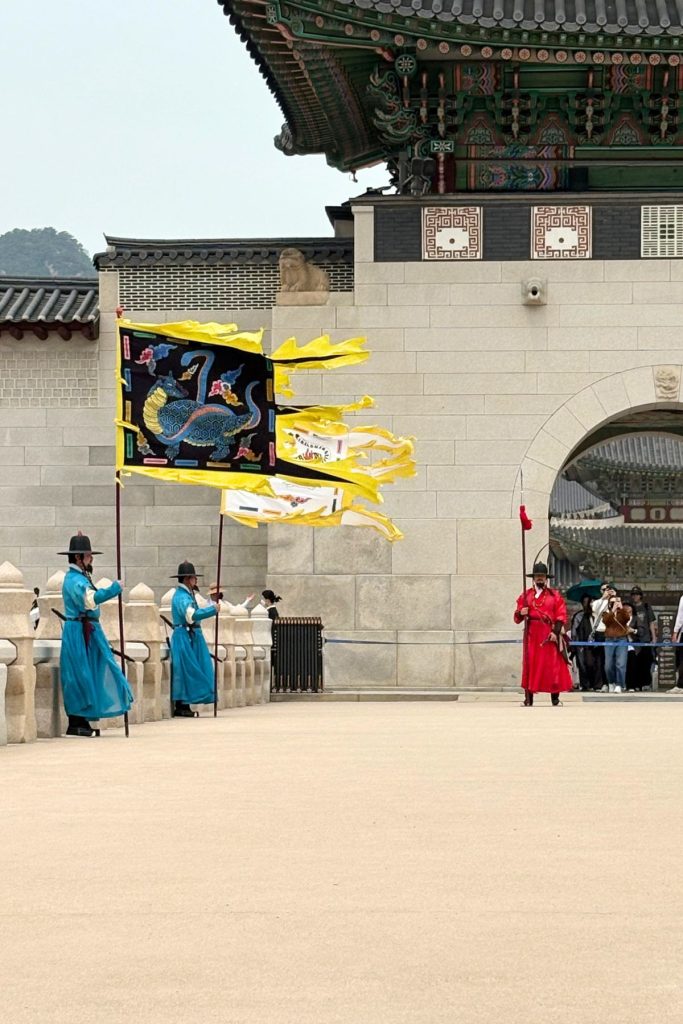
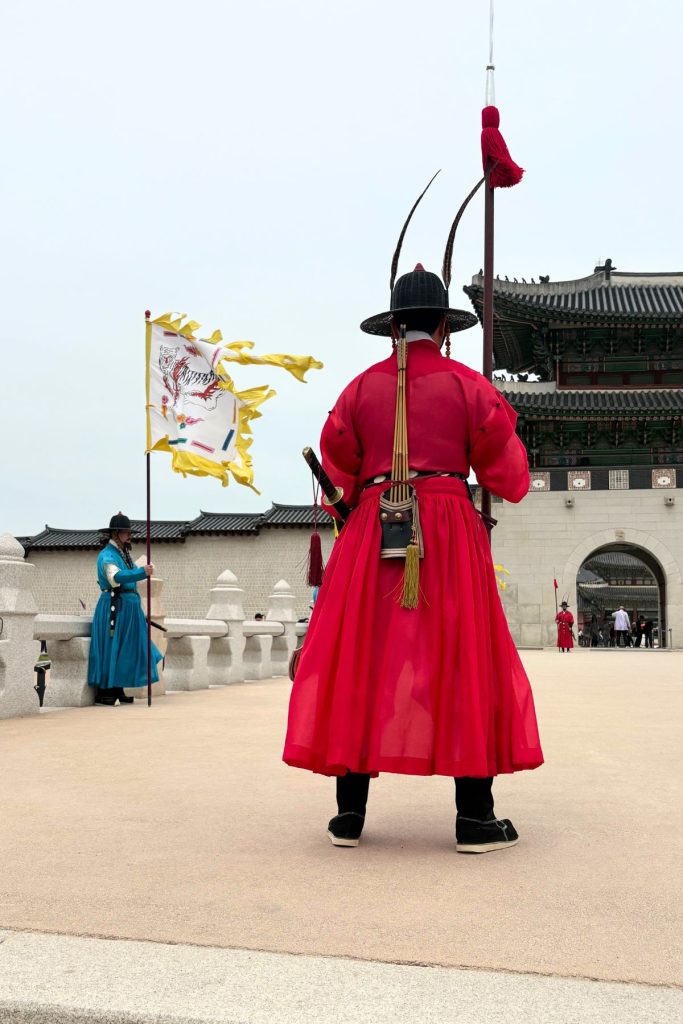
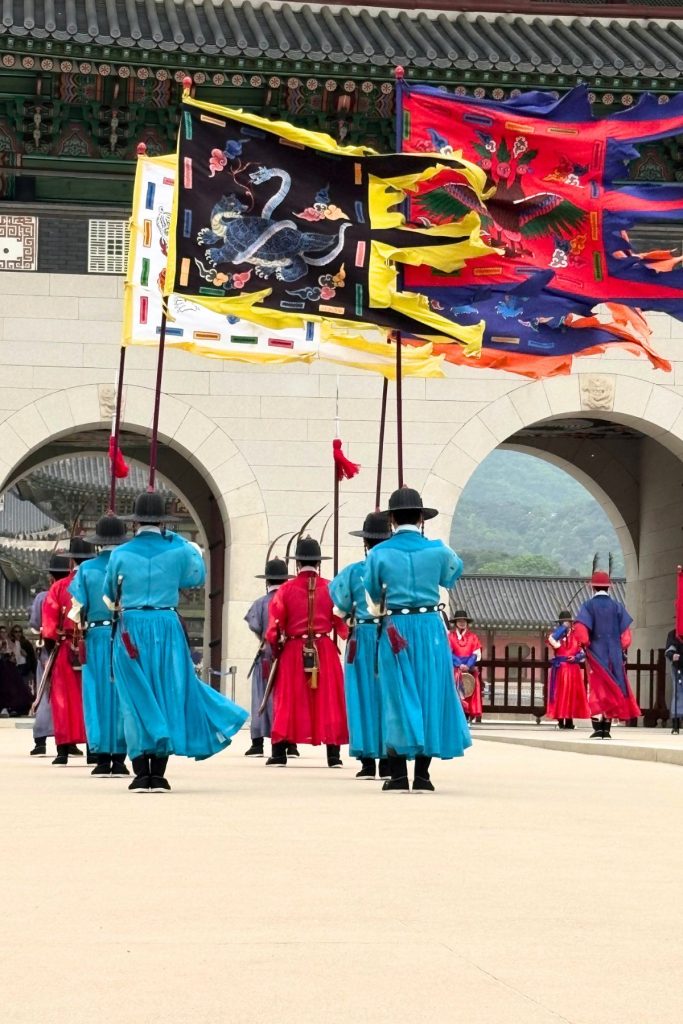
Twice a day, at 10:00am and 2:00pm, the changing of the guards ceremony takes place in front of Gwanghwamun Gate. This ceremony recreates the ritual of the Sumungun, the gatekeepers who were responsible for opening and closing the gates, providing security throughout the palace, and patrolling the palace during the Joseon Dynasty. The present-day ceremony was reconstructed based on historical records from 1469. The uniforms are based on 15th-century practices found in surviving documents and artifacts. First re-enacted in 1996, the ceremony is a must-see attraction ever since.
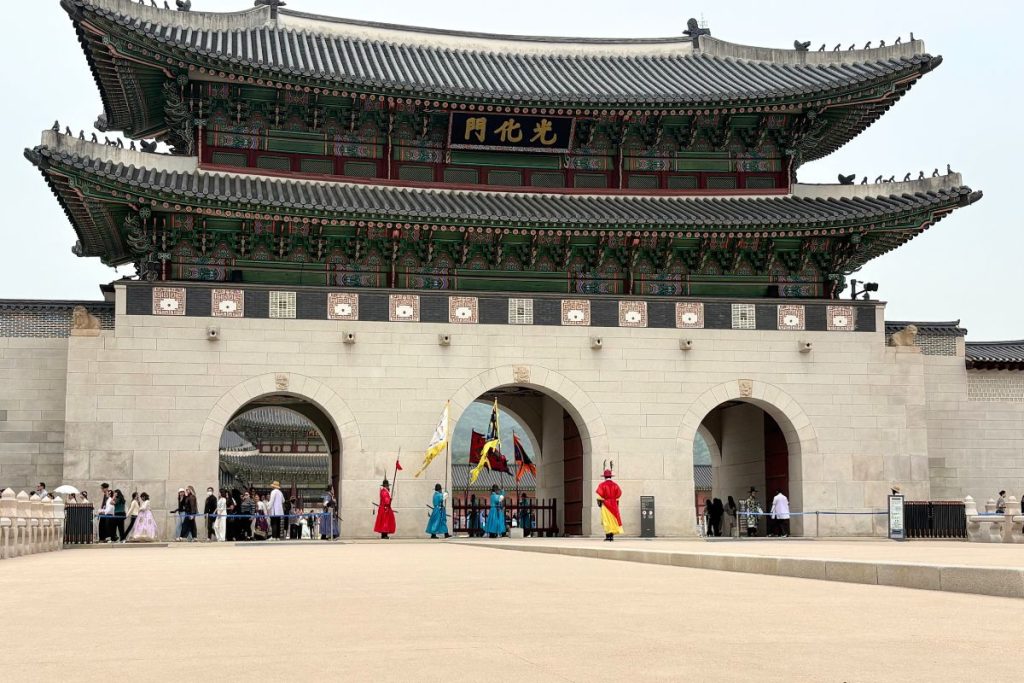
The ceremony begins with a traditional band playing drums, a double-reed oboe (taepyeongso), and gong (jing). The palace guards follow, marching toward the gate in vibrant uniforms. The guards carry traditional weapons and move in precise formations. The culmination of the ceremony is an exchange of symbolic keys between the commanders of the incoming and outgoing guards.
- Gyeongbokgung Palace is open every day except Tuesdays, with seasonal hours. Adult tickets cost 3,000 won (around $2 USD), and child tickets cost 1,500 won (around $1 USD). Anyone wearing a hanbok gets in free regardless of age.
- Most visitors show up for the changing of the guards ceremony right on the hour and crowd around the main gate, shoulder to shoulder. As soon as the 20-minute ceremony ends, hundreds of people head straight into the palace, leading to long lines and congested courtyards. I planned my visit so I explored the palace first, then headed out to the main gate early to watch the ceremony.
- There is also a Gwanghwamun Guard-on-Duty Show at 11:00am and 1:00pm. Visitors can try on royal guard uniforms before and after the ceremonies.
Insa-dong
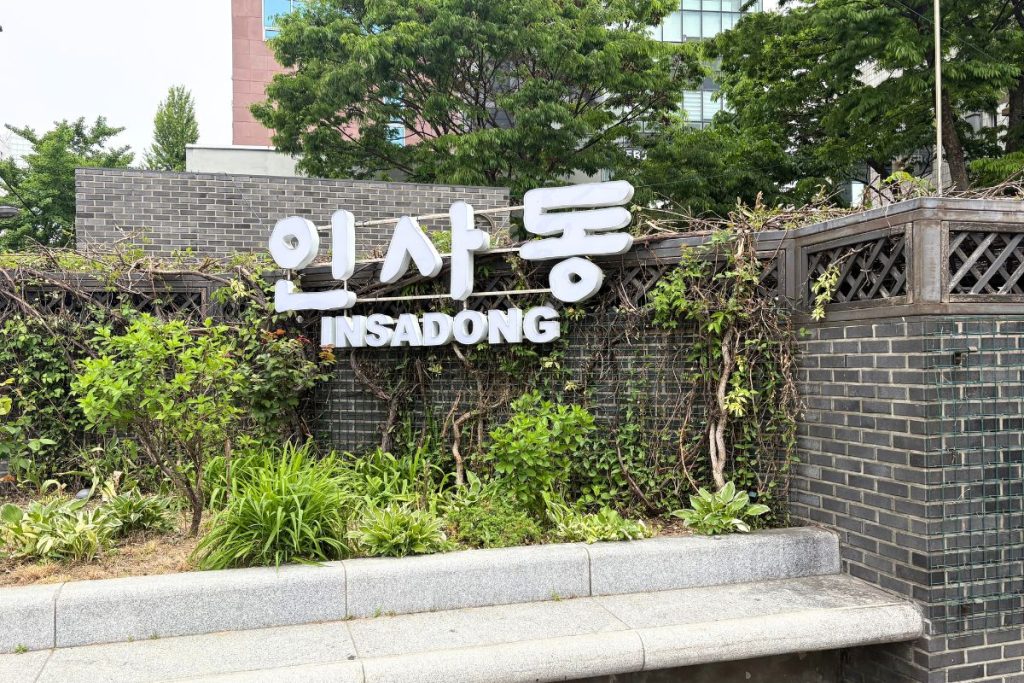
My hotel in Seoul was in an area called Insa-dong, a neighborhood in Jongno-gu known for its long pedestrian-friendly culture street (Insadong-gil). The neighborhood epitomizes traditional Korean culture and heritage and is popular with both tourists and locals. It makes for a very convenient and centrally-located home base to visit many of the popular areas in Seoul.
Insadong-gil
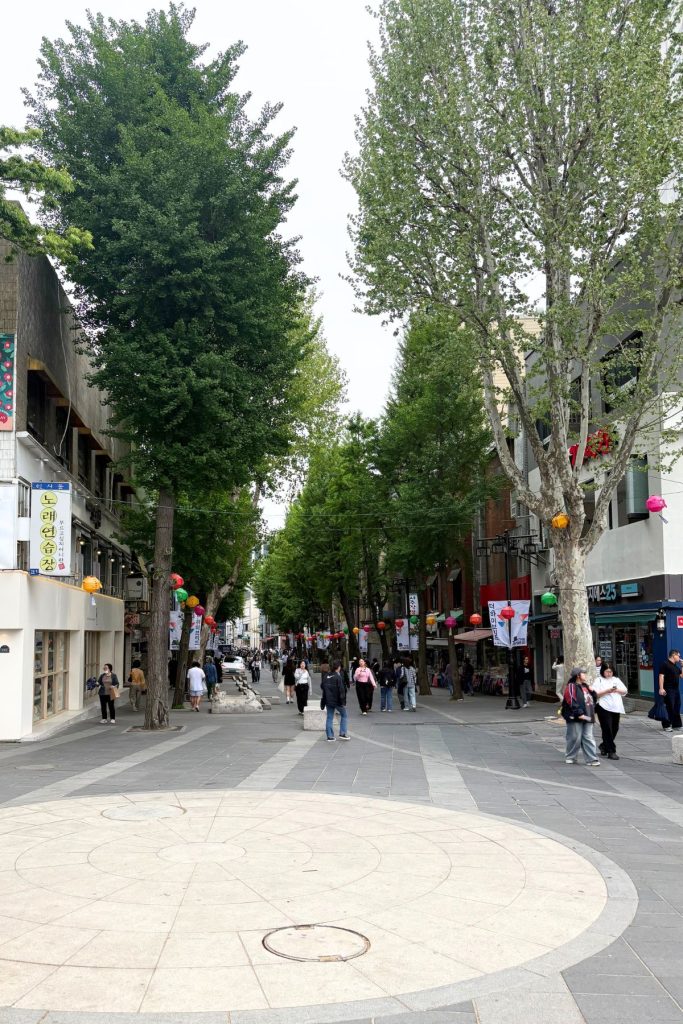
The main street, Insadong-gil, is lined with art galleries, wooden tea houses, restaurants, cafes, and small shops. The street itself runs against the grid pattern of the surrounding streets because it follows the path of a stream that once flowed down from the mountain. It still has that wandering, organic quality today. There are many branching alleyways off Insadong-gil, which include many more traditional craft and antique shops and traditional tea houses. It is a fantastic neighborhood to wander through and discover some hidden treasures.
Insa-dong Neighborhood
Many of the buildings in Insa-dong were once owned by merchants, bureaucrats, and government officials during the Joseon Dynasty. In fact, the National Department of Painting (Dohwawon) that created royal paintings and woodwork found in many of the royal palaces was once located here.
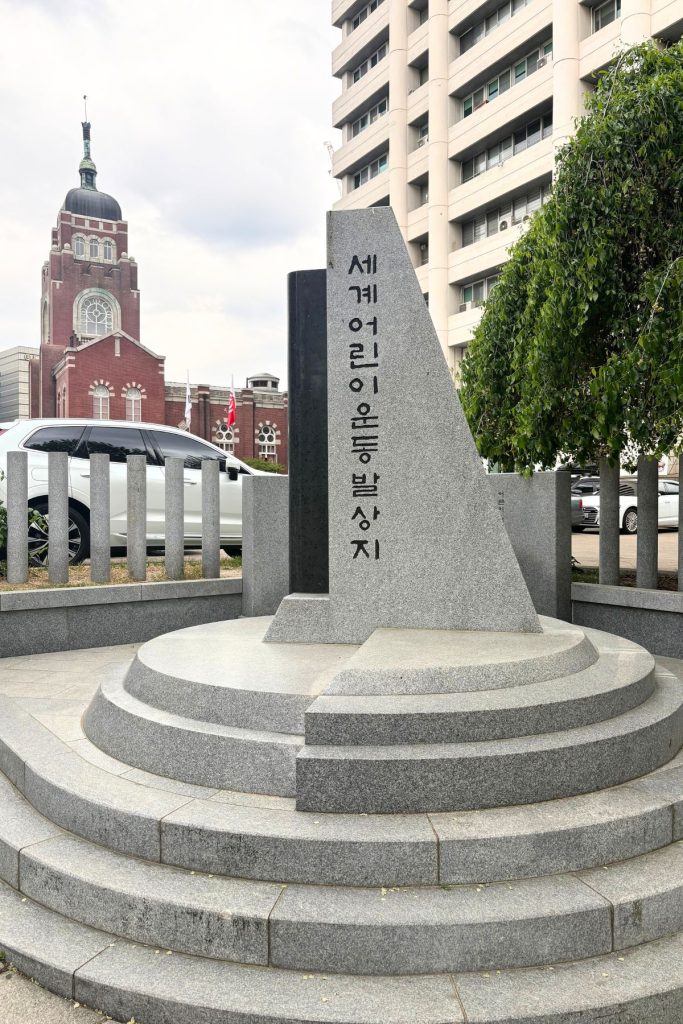
Insa-dong is a vibrant and bustling area, full of both history and modern charm. The Korean Declaration of Independence was written in the basement of a church here. After its signing, activists marched through Insa-dong to Tapgol Park, where the Declaration was read aloud publicly.
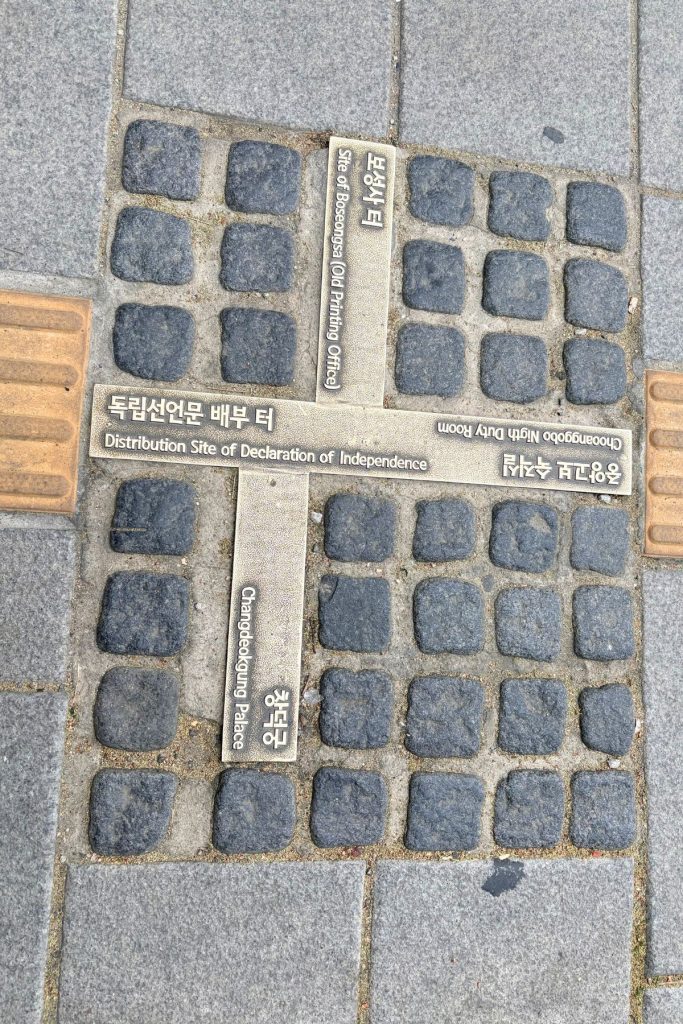
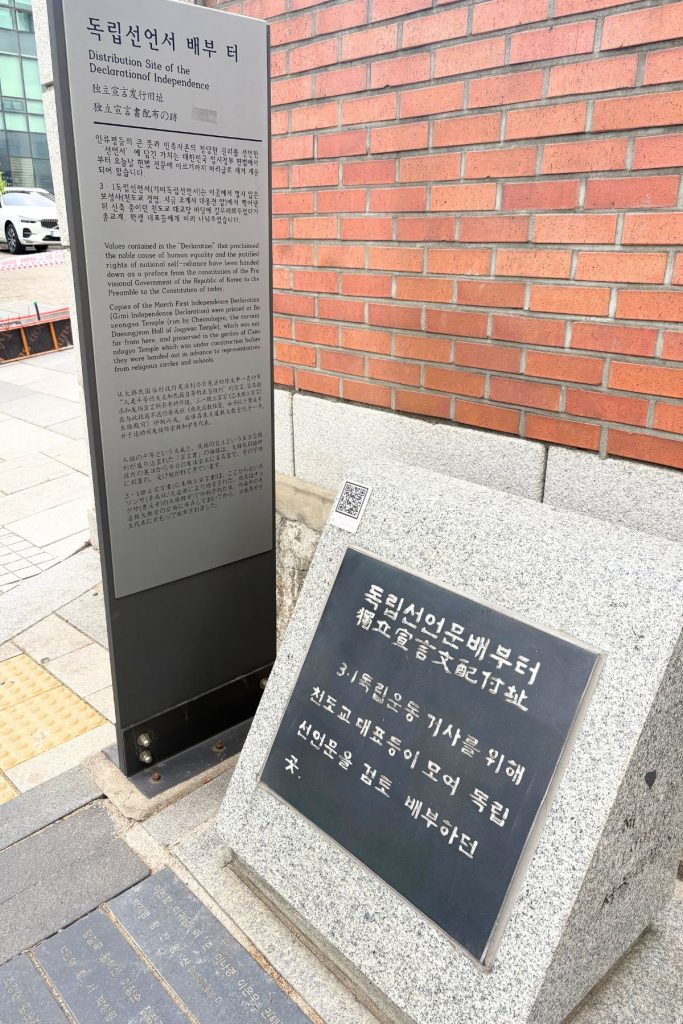
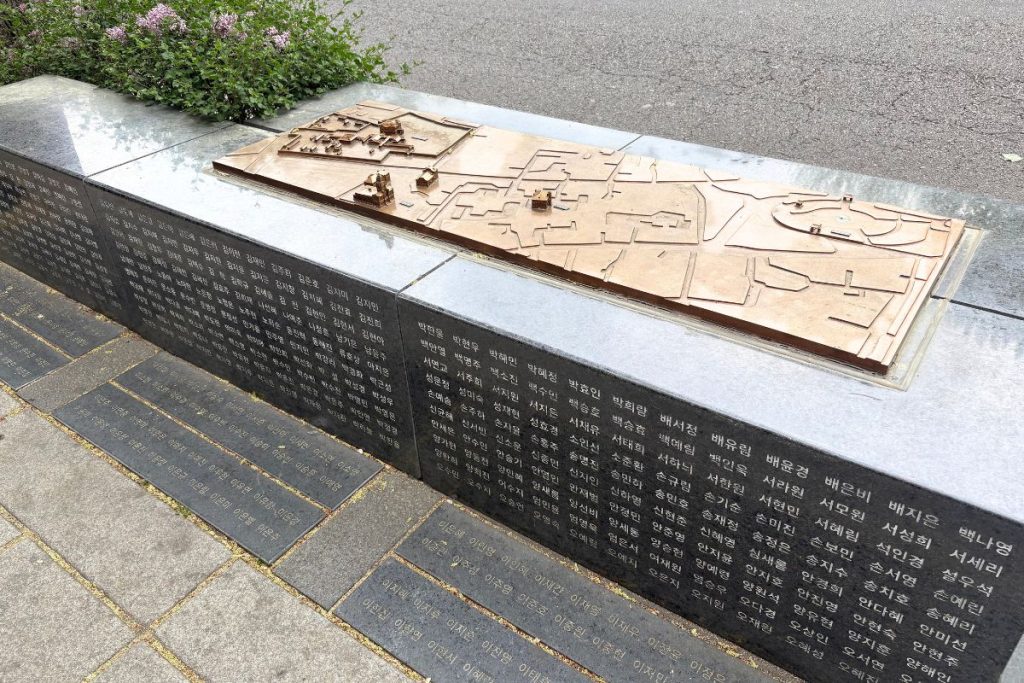
- The Ssamzigil shopping complex is one of Insa-dong’s best-known landmarks. It is a unique open-air courtyard mall with DIY craft stalls, jewelry vendors, homeware, and indie shops. Instead of stairs or escalators, visitors navigate all levels by following a continuous ramp (which gives it a quirky, wandering feel that seems to match the neighborhood perfectly!).
- There are around 100 art galleries in and around Insa-dong.
- Traditional wooden tea houses are tucked into alleyways serving handmade traditional teas. Several are housed in restored Hanok buildings with floor seating, making for a charming experience.
Bukchon Hanok Village
I then wandered around Bukchon Hanok Village, tucked right between two of Seoul’s most famous palaces, and it felt like stepping back in time. It reflects 600 years of Seoul’s history. Bukchon means “northern village,” referencing its location north of the Cheonggyecheon Stream and Jongno.
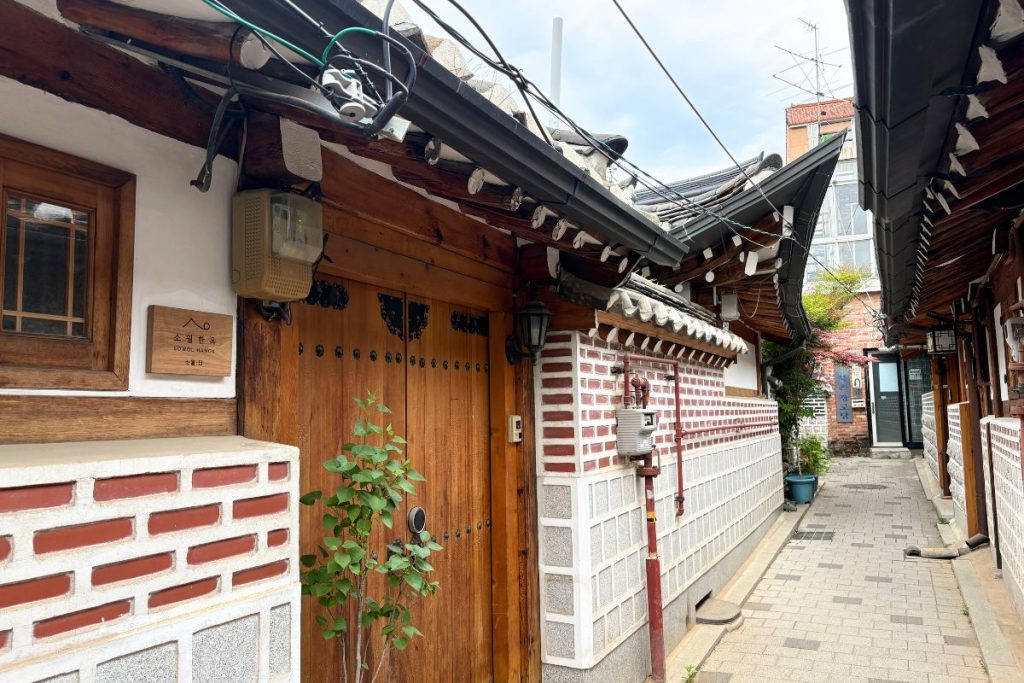
History of Bukchon Hanok Village
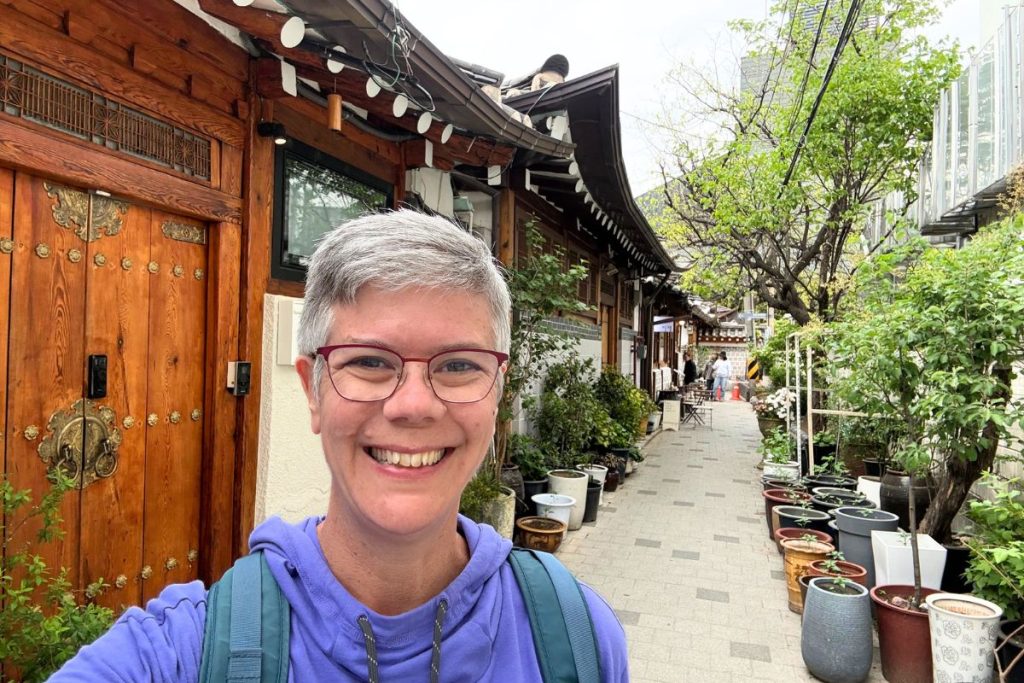
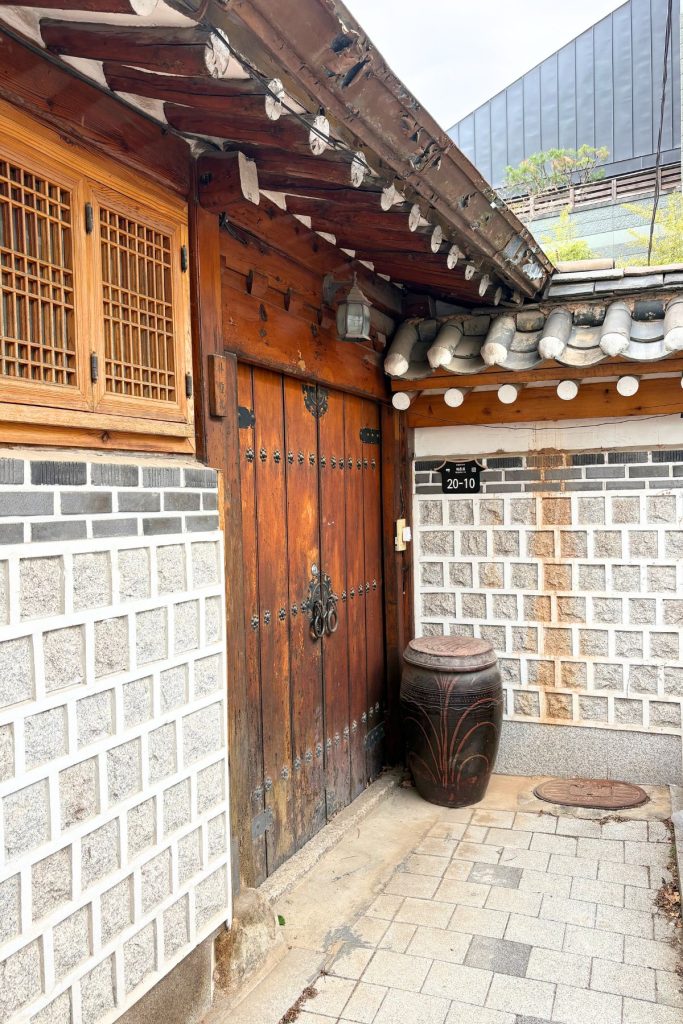
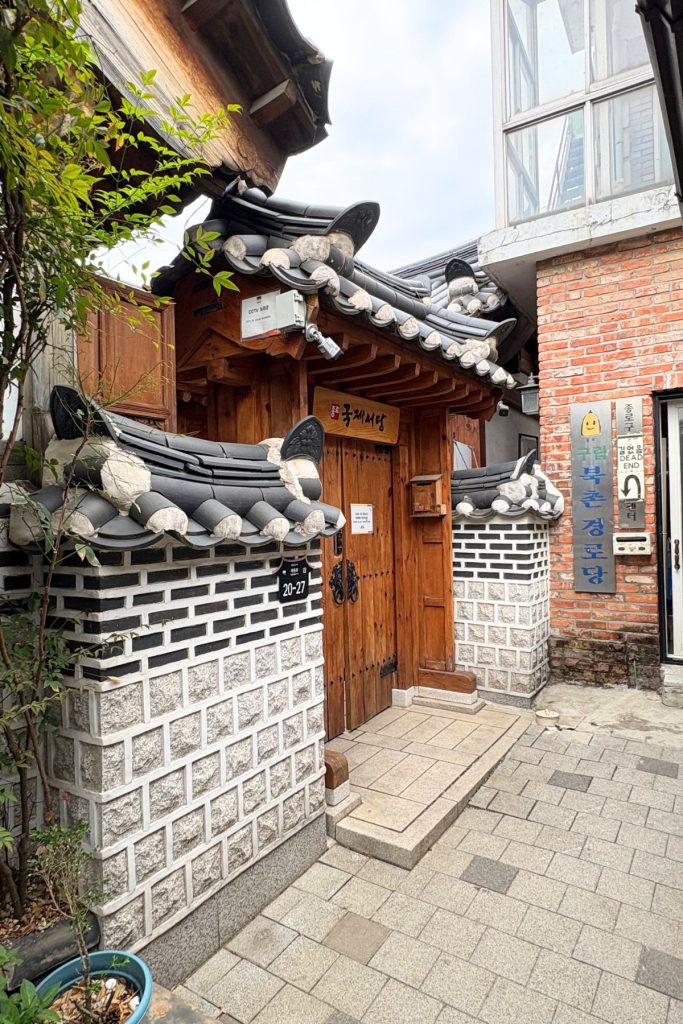
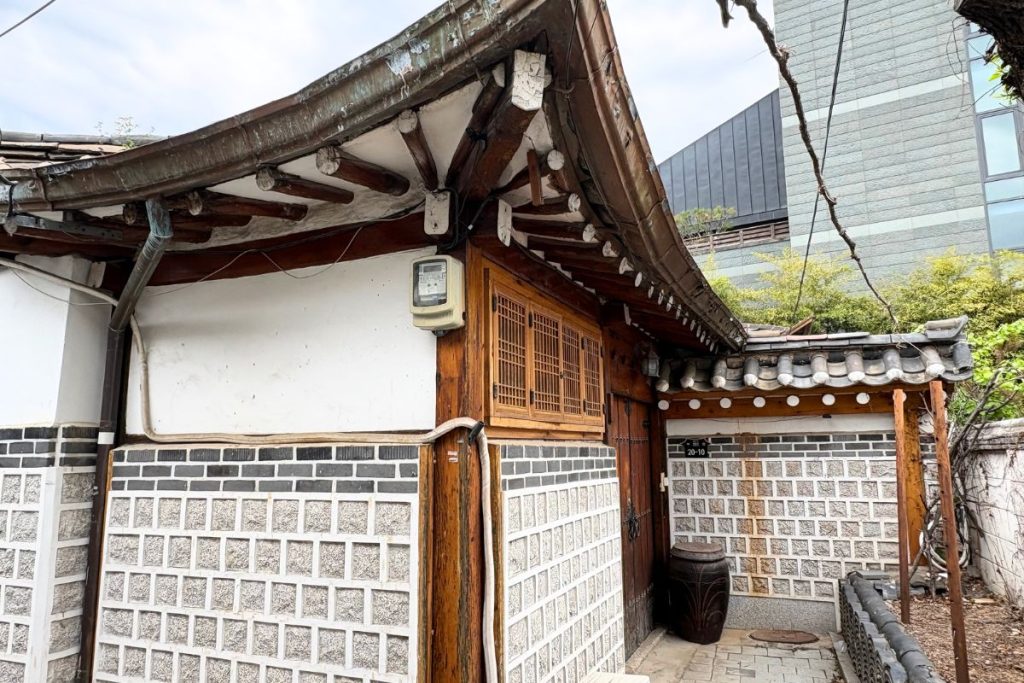
The narrow, winding alleyways are lined with beautiful traditional Hanok houses — curved tiled roofs, wooden beams, the whole deal — most of them hundreds of years old from the Joseon Dynasty. There are about 900 Hanok buildings in the area today. Many have been restored to their former glory using traditional designs and materials.
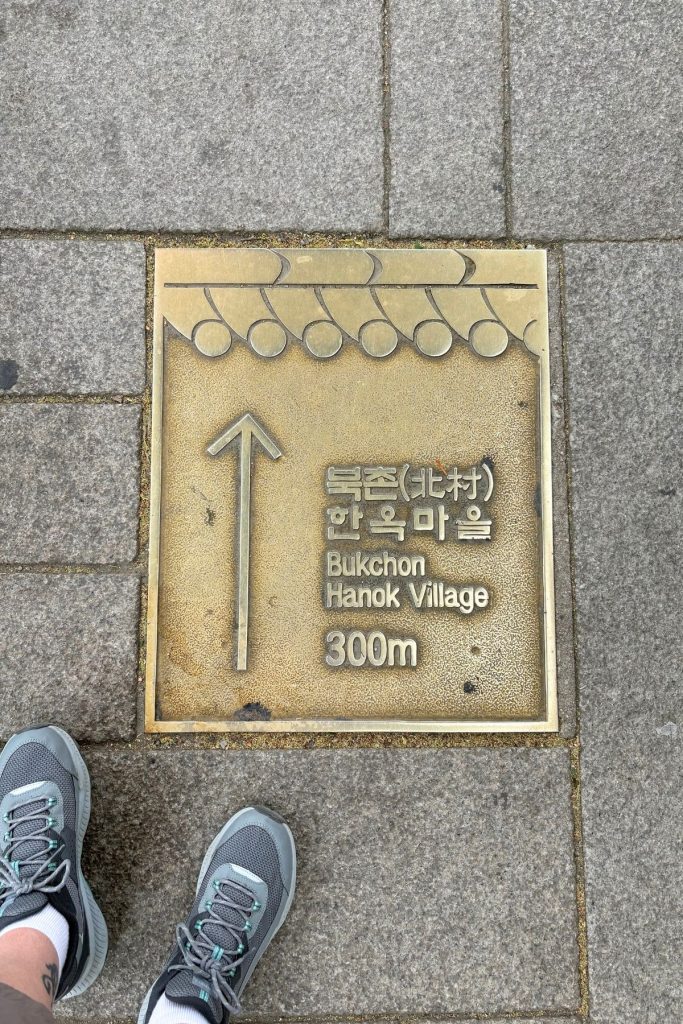
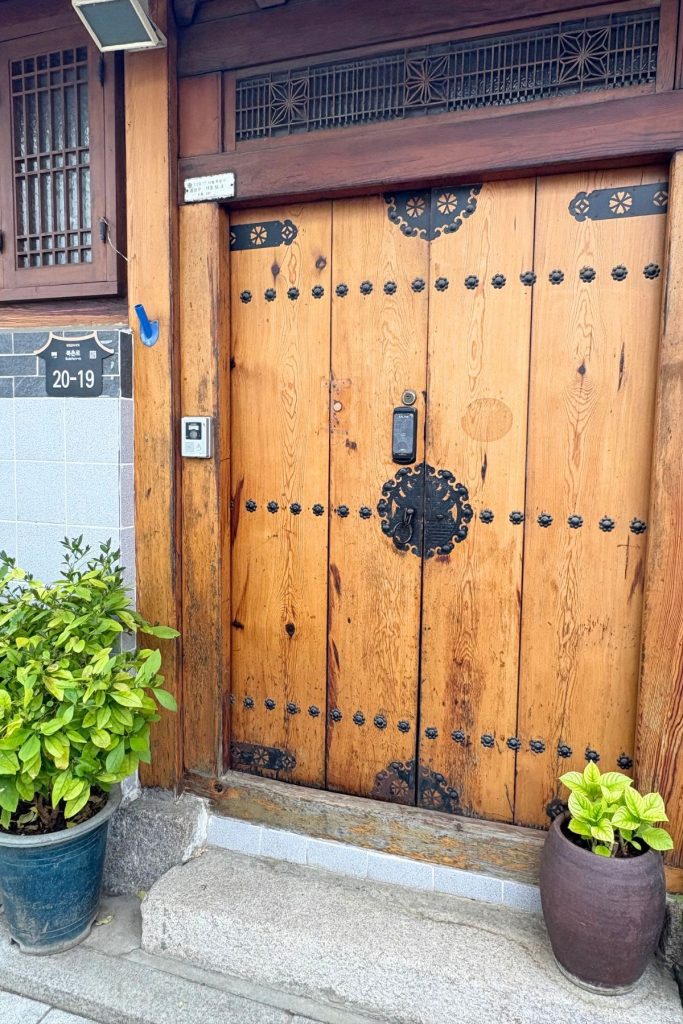
Bukchon served as a residential area for high-ranking officials and nobility during the Joseon Dynasty. The current Hanok district is a result of urban improvements in the 1920s and 1930s. Bukchon was set for renovation in the 1960s, which would have meant the destruction or relocation of many of the historic Hanok buildings. Locals protested, and the government spared it.
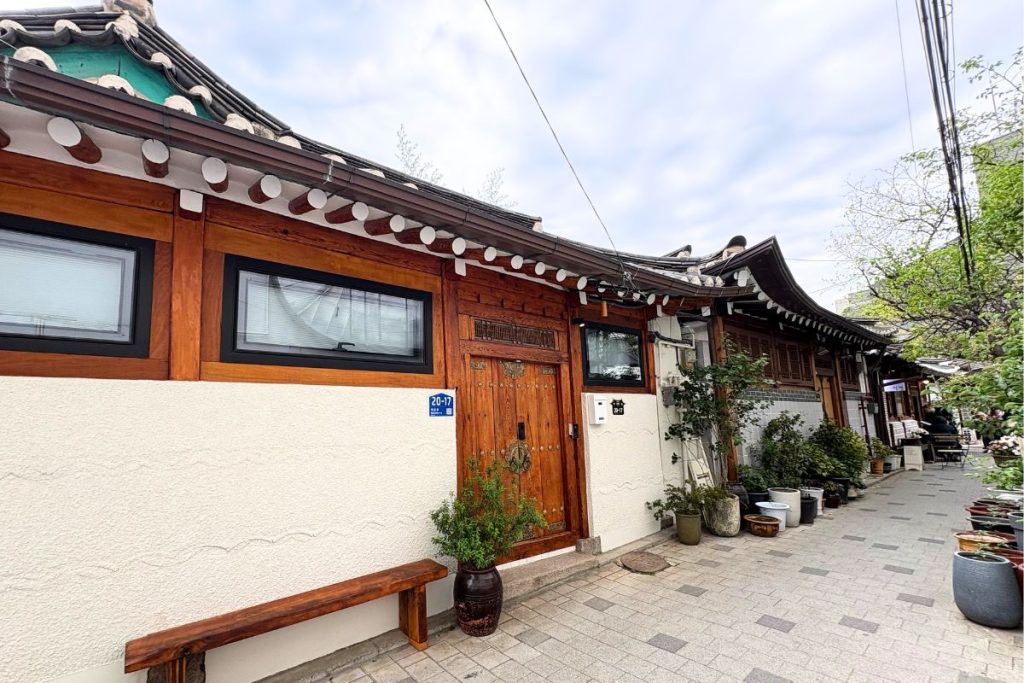
Living in an Historic Neighborhood
Bukchon is a real neighborhood where people actually live, so there’s a contrast of ancient architecture and modern daily life playing out right in front of you. It was not created for tourists, but many Hanoks operate as cultural centers, guesthouses, restaurants, and tea houses. Visitors are advised to be respectful of the residents at all times.
Hanok Architecture
The village’s intricate wooden frames, clay walls, and tile roofs all exemplify traditional Korean architecture. The architecture is designed to harmonize with nature. The signature detail is the curved rooflines, which are designed to echo the surrounding mountain ridges.
It was quite interesting to visit Gyeongbokgung, Insa-dong, and Bukchon in this sequence. It mirrored a natural cultural arc, moving from royal power to an artistic community to aristocratic daily life.
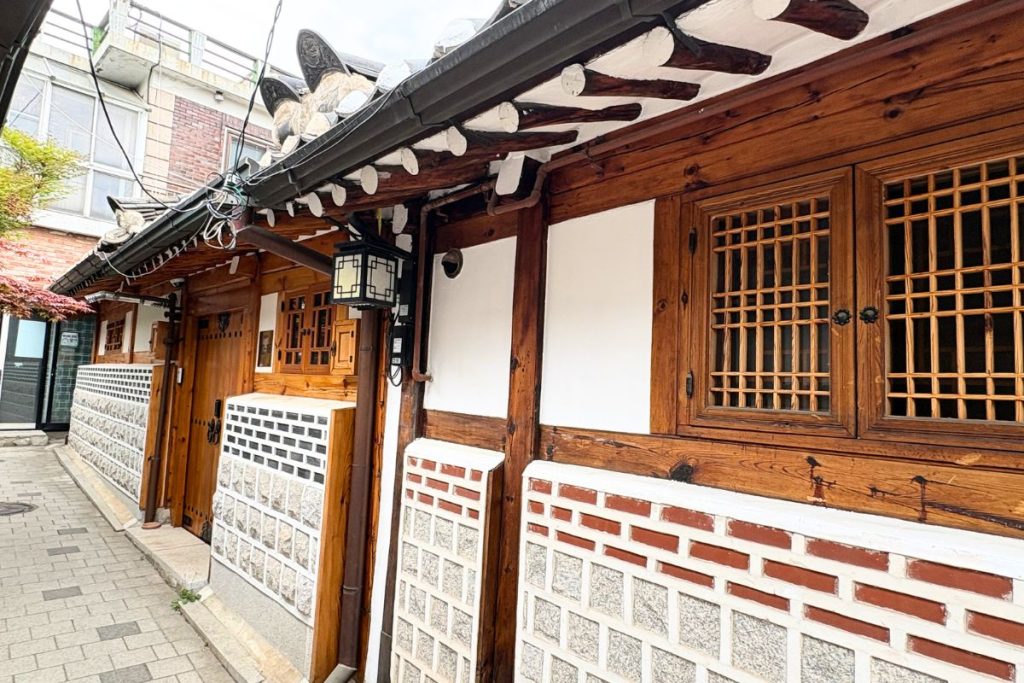
- Since it is a real neighborhood where real people live, Bukchon Hanok Village has a genuine authenticity that most heritage sites can’t match.
- Be a respectful visitor while in the Bukchon Hanok Village. Noise ordinances are enforced, and signs throughout the village ask tourists to keep voices down.
- Centrally located near Gyeongbokgung Palace, Changdeokgung Palace, Insa-dong, and Samcheong-dong cafe street, Bukchon is a natural centerpiece for a full day of culture.
N Seoul Tower (Namsan Seoul Tower)
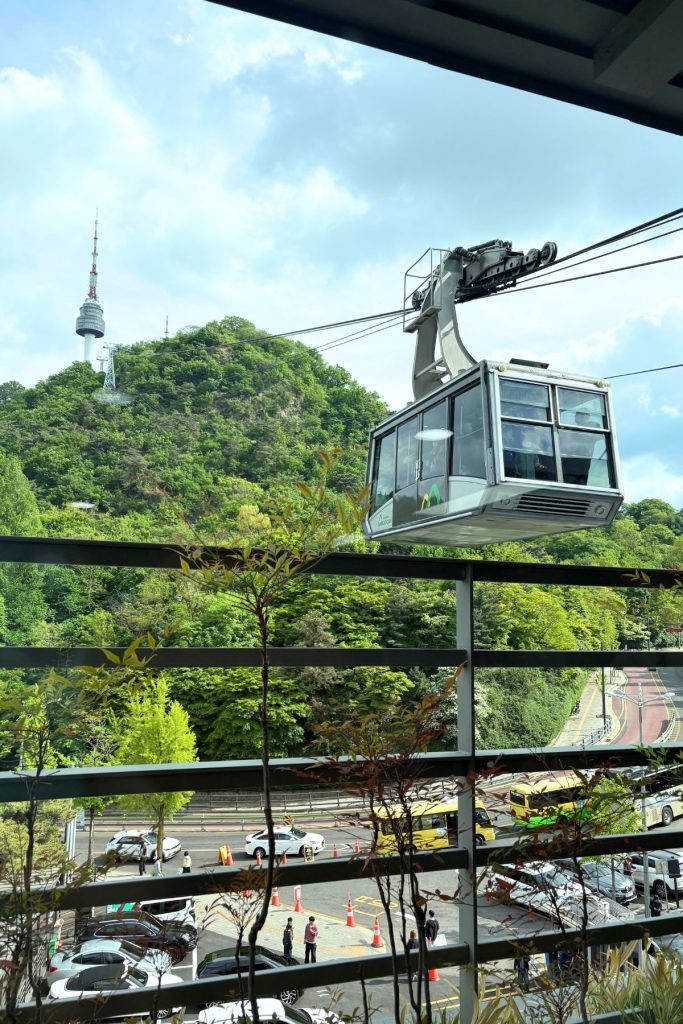
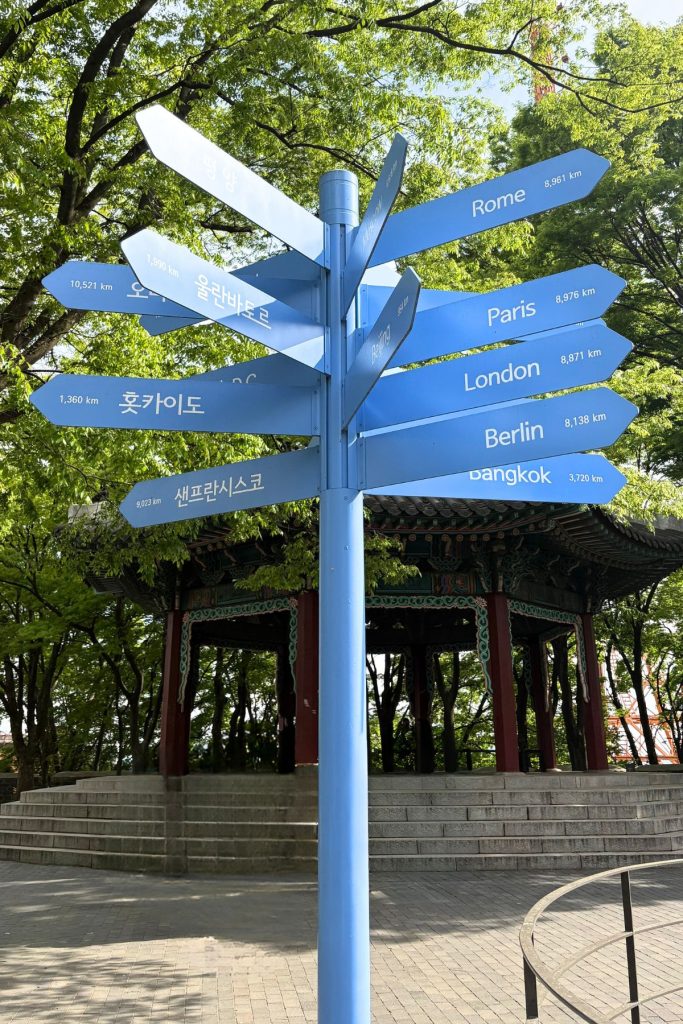
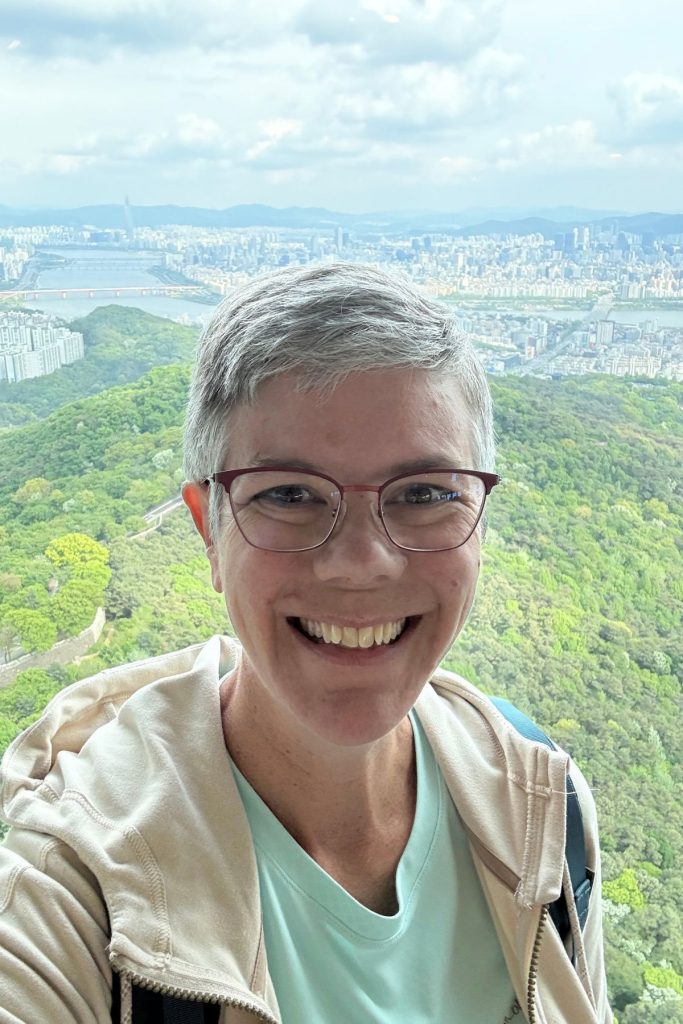
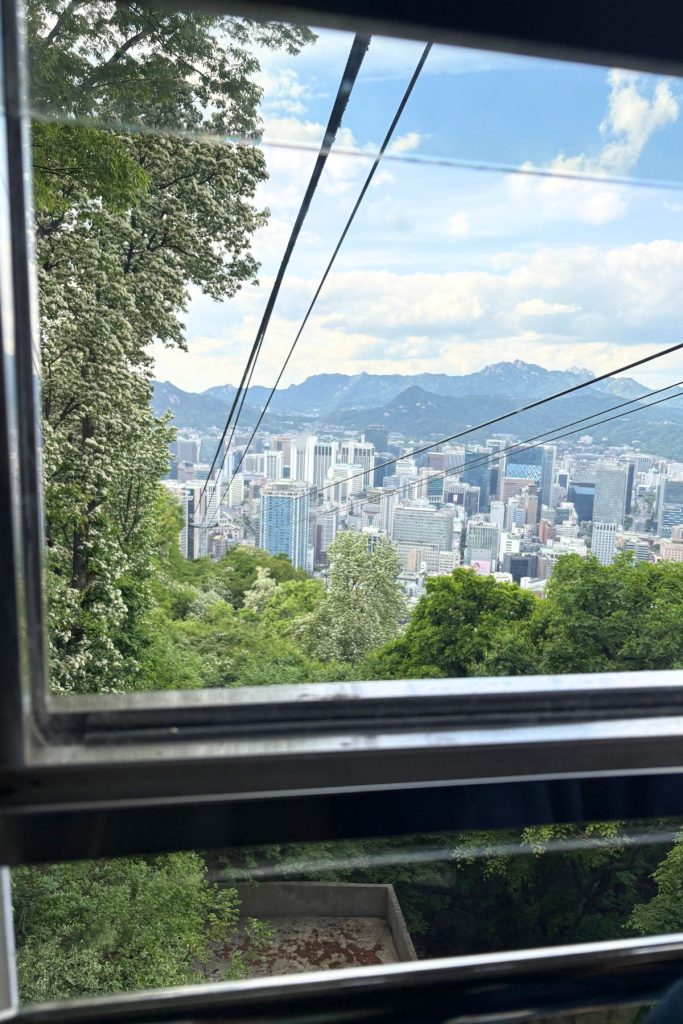
Another must-see spot to visit in Seoul is N Seoul Tower (Namsan Seoul Tower). It’s actually a big complex…you take the Namsan Cable Car to the main base plaza area, then you ride an elevator to get to the top of the tower. You can also hike up Mount Namsam, on well-marked and scenic trails that run through Namsan Park. There are many things to see and do here, both in the main base plaza area and then at the observation deck in the tower.
History of the Tower
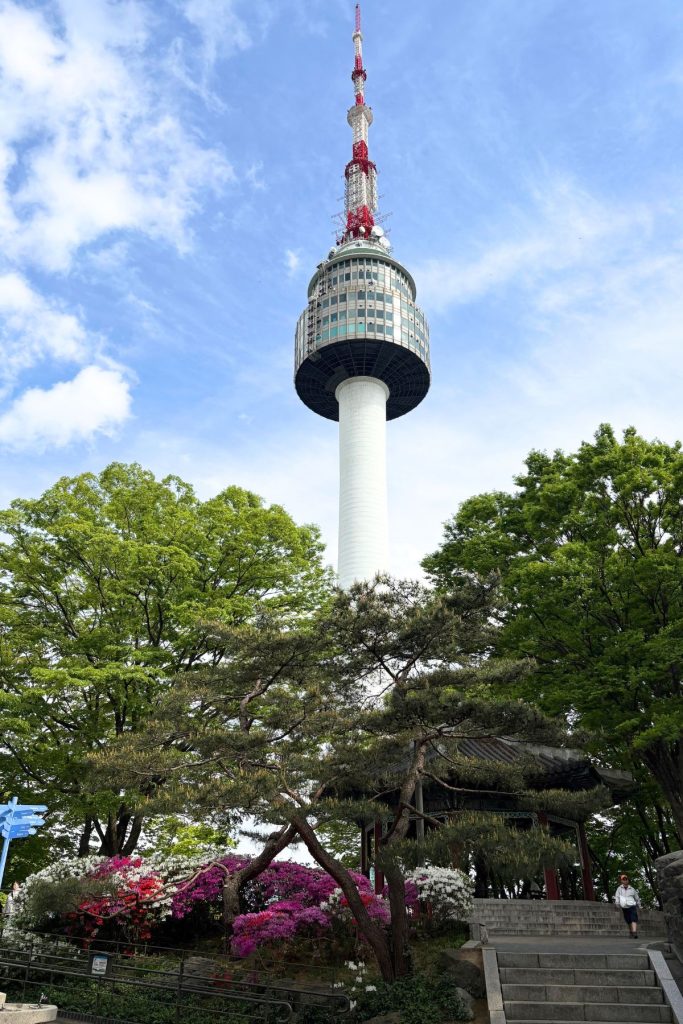
This was the first multipurpose tower established in Korea. It incorporates a sightseeing observatory into a broadcasting tower. It was originally built as a broadcasting tower for television and radio signals. In fact, it was built as a Cold War signal-jamming station. During that time, it was kept closed to the public for five years because a dictator feared spies could watch his residence from the top. Even though the observation deck was built in 1975, it sat unused for years over these security concerns. It opened to the public in 1980. Today, it is one of Seoul’s most romantic spots…quite a difference from the original purpose!
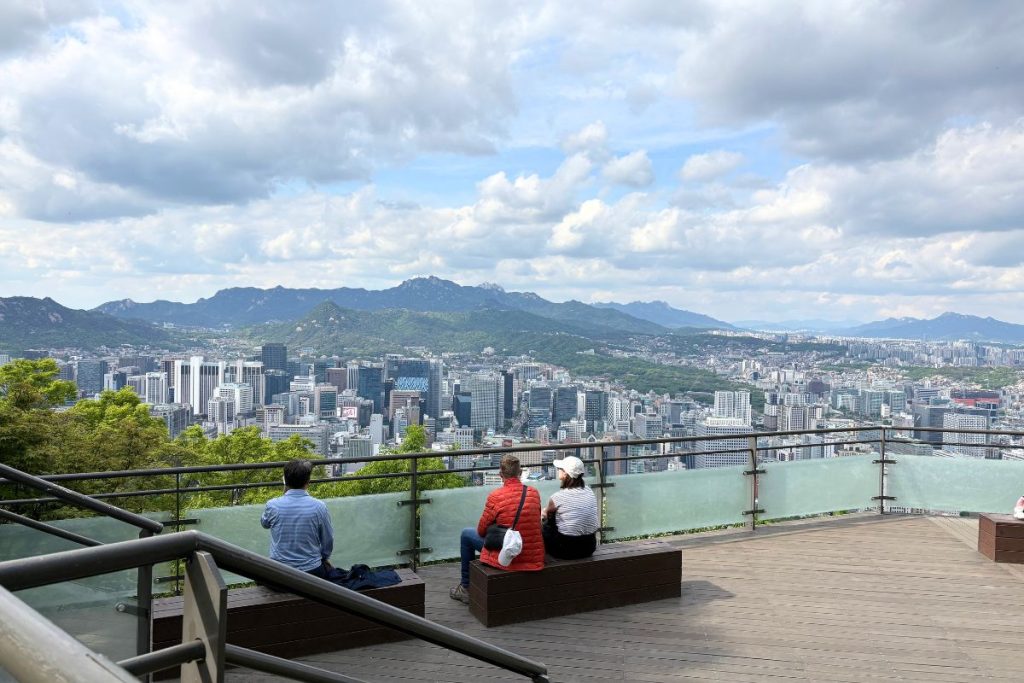
The tower itself stands 776 feet (236.7 meters) tall. But because it sits on Mount Namsan’s summit, its tip actually reaches 1,573 feet (479.7 meters) above sea level. That makes it higher than the roof of the Empire State Building! During the Joseon Dynasty, Mount Namsam itself was home to five warning beacons and a protective city wall. It served as a beacon-fire signal stations for over 500 years before anyone put an antenna on it. Fragments of the 14th-century city wall (Hanyangdoseong) can still be seen on the mountain trails.
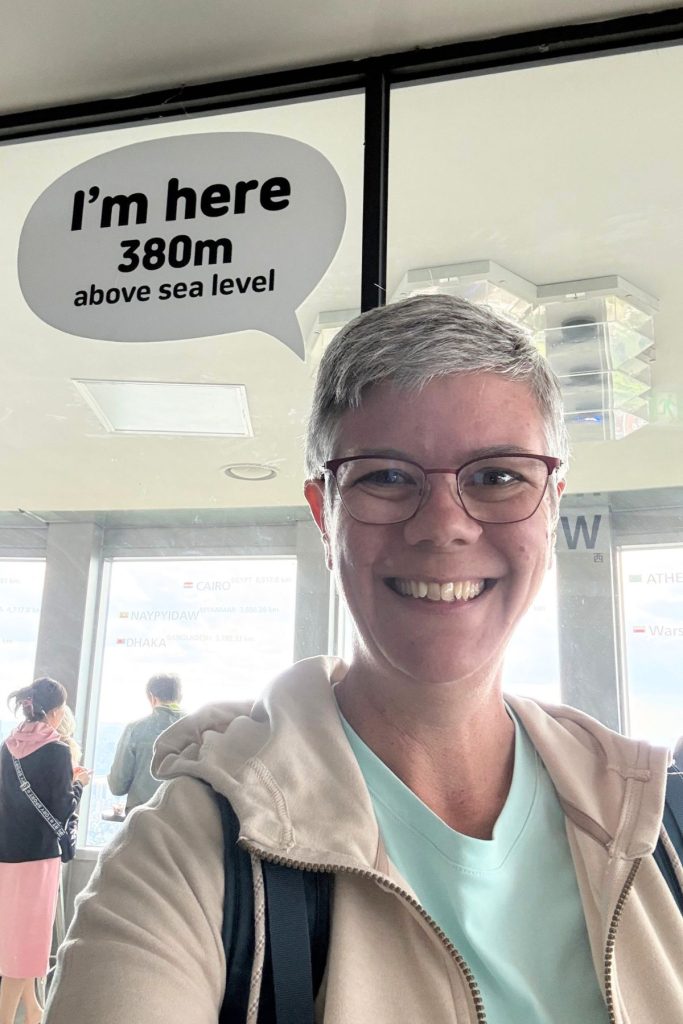
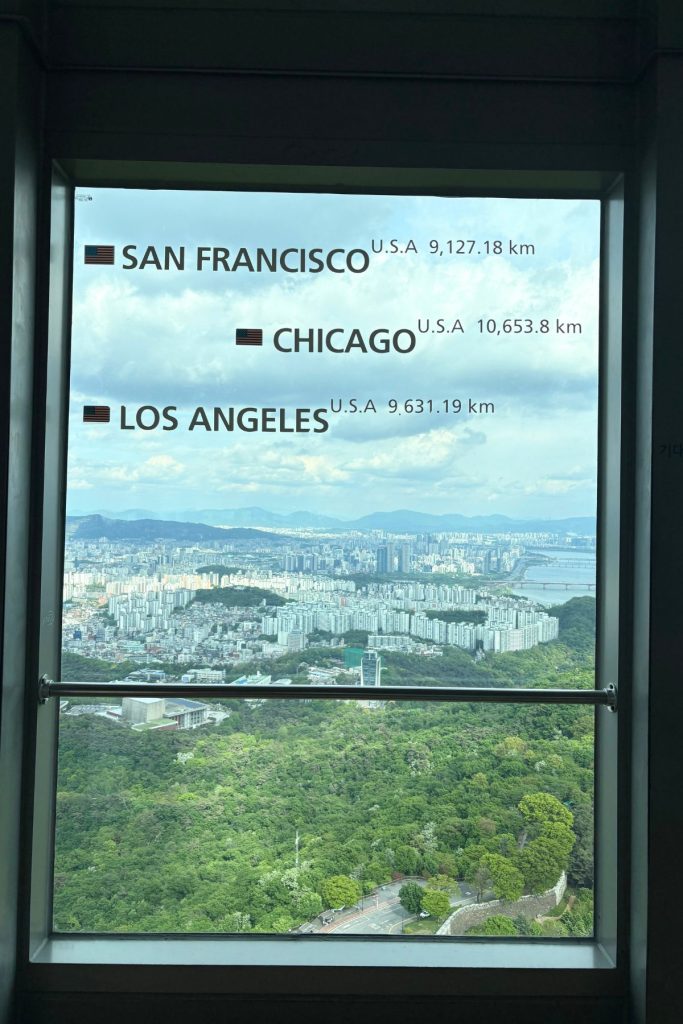
The Current Tower
In 2005, the Namsan Seoul tower merged with the CJ Corporation and was rebranded N Seoul Tower. There are mixed answers to what the “N” stands for…some say Nature, some say Namsan, and some say New!
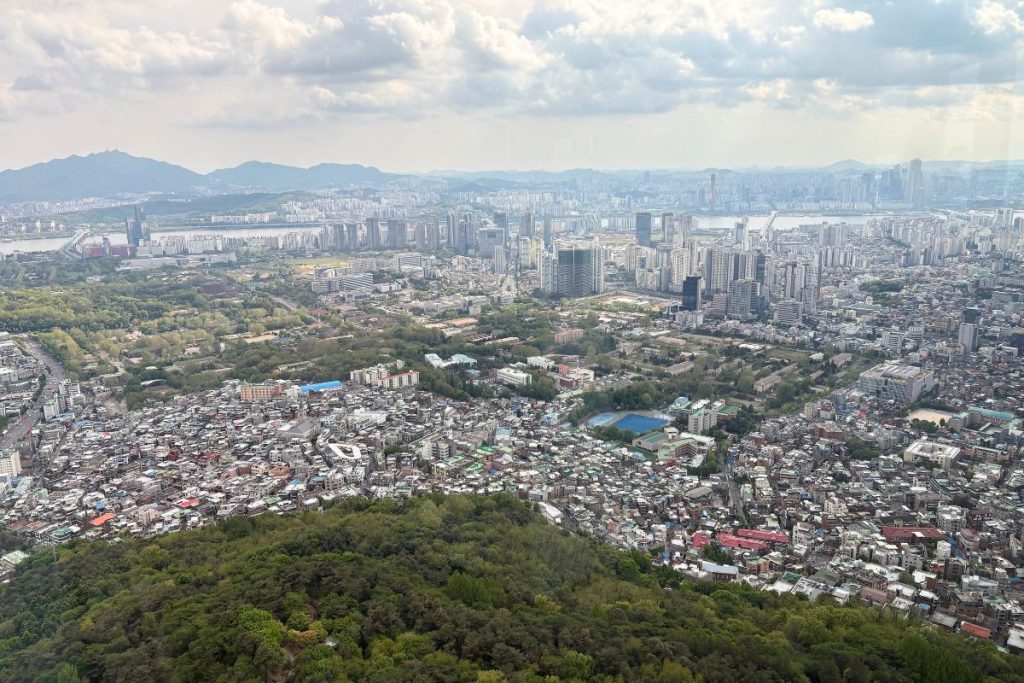
Pop Culture at the Tower
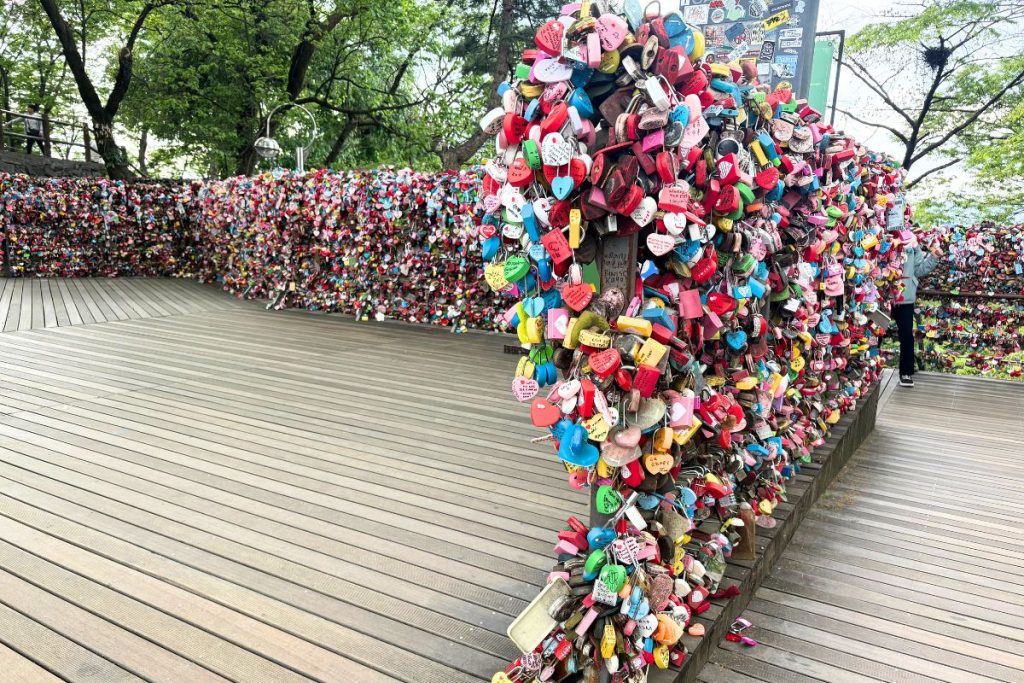
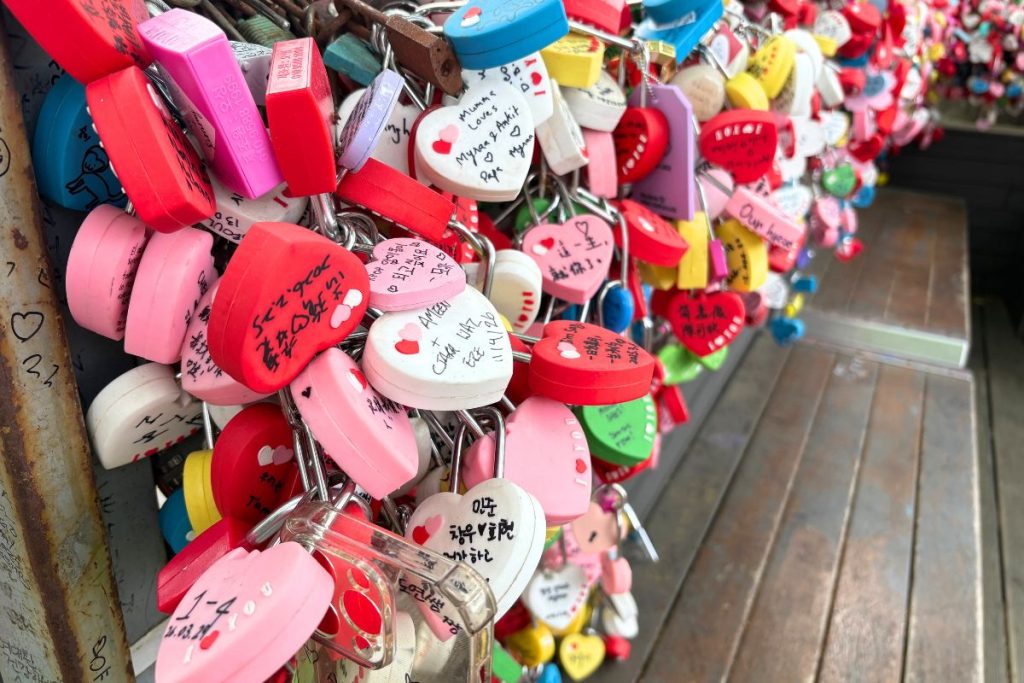
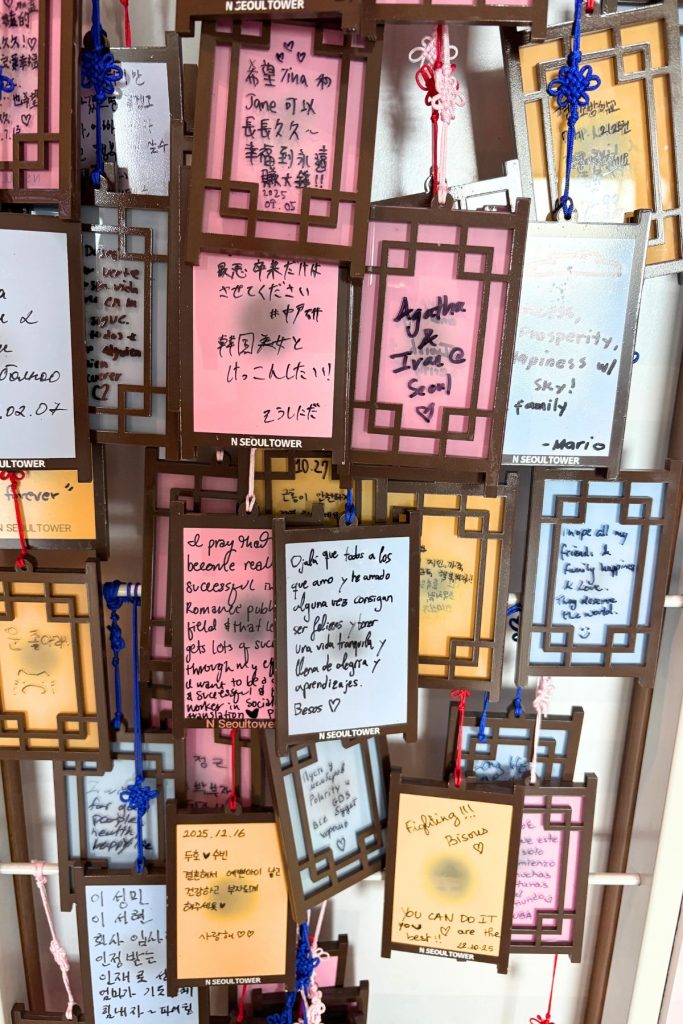
As with many other locations in Seoul, N Seoul Tower is a popular filming location for K-dramas. The Love Locks here are a popular tradition that are heavily featured in many K-dramas. The Love Locks are locks that are attached to the tower’s fences by couples hoping for everlasting love.
One final interesting tidbit about N Seoul Tower: the multi-colored LED lights on the tower are actually functional. They change color to provide real-time weather and air quality information. Blue means it is a clear day with good air quality. Green means it is normal/acceptable air quality, but people are advised to consider wearing masks because conditions are not at their best. Yellow means that the particle levels are high. Red means air conditions are very bad and it is best to stay indoors. Other colors, like pink, purple, yellow, and others, are used to celebrate special events and holidays.
- N Seoul Tower is open 365 days a year, from 10:00am-10:30pm on weekdays and from 10:00am-11:00pm on weekends. Hours may shift in severe weather, so it is worth checking the official site on stormy days. Last admission is 30 minutes before closing.
- Observatory tickets are around 16,000 won (around $12-15 USD) for adults, although prices can vary slightly depending on where you purchase them. Booking online in advance can get you a small discount over buying at then door.
- For the best of both worlds, plan to arrive before sunset and stay into the evening to enjoy the city views in daylight and the famous LED light show after dark.
Common Questions
Technically yes, but I would not recommend it. I split these up over two days: first visiting Gyeongbokgun, Insa-don, and Bukchon Hanok Village on day one, then I visited N Seoul Tower on the second day. My visit to N Seoul Tower was actually the last stop on my full-day DMZ tour, so I visited it in the afternoon. But it is really best to visit it in the evening to enjoy the LED lights and night views of the city. All four of these locations deserve time to actually wander and enjoy, so trying to fit them all into one day would miss out on a lot.
Gyeongbokgun, Insa-don, and Bukchon Hanok Village are all walkable from each other, so you can explore all of these on foot once you are in the area. The subway is a great option to get to the area if you are not staying there. It is cheap, clean, and has English signage. A T-money card is good for subways, buses, and even some taxis. N Seoul Tower is a short taxi ride away from the others.
Spring and fall are the ideal times of year to visit Seoul. Spring includes cherry blossoms and mild temperatures. Fall brings stunning foliage. Try to avoid the summer rainy season, when it is hot and humid. Winter can also get quite cold in Seoul, but the city is charming and the crowds are noticeably thinner at this time.
Even More Travel Ideas
Kicks, Pork & Tangerines: A Day in Jeju, South Korea
Sip, Stroll, and Bow: A Day at Seonamsa Temple
All Aboard the Past: Mojiko’s Retro Charm, Rail History & Mountaintop Views