Kicks, Pork & Tangerines: A Day in Jeju, South Korea
Jeju Island doesn’t do anything halfway. South Korea’s volcanic island paradise packs UNESCO World Heritage sites, a legendary food scene, and cultural experiences unlike anywhere else in the country, all on an island you can cross in under two hours. I had one day here as part of a cruise stop, and somehow managed to take in a jaw-dropping martial arts performance, eat what might be the best pork of my life, and browse one of Korea’s oldest traditional markets before the ship sailed away.
Jeju is one of those destinations that consistently surprises cruise passengers who expect a quick, forgettable port stop. The island has a distinct identity that sets it apart from mainland South Korea that are impossible to miss once you are here. Whether you’re a first-time visitor or a seasoned traveler, a day in Jeju has a way of leaving you quietly plotting your return.
One Day, One Unforgettable Island Experience
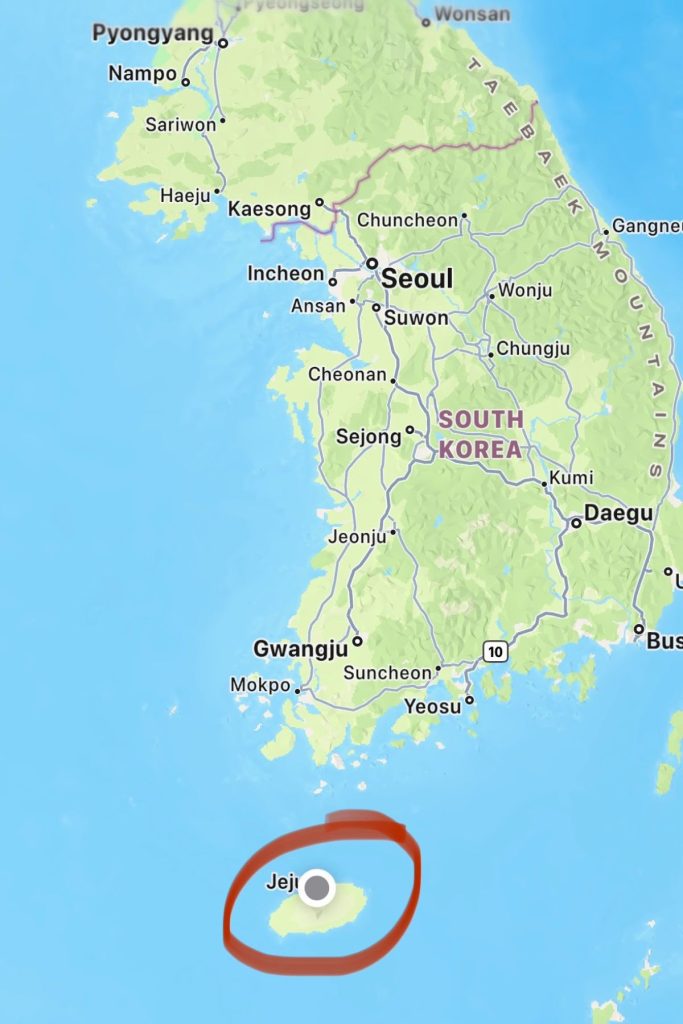
I visited Jeju Island, South Korea during my cruise from Tokyo to Seoul. Jeju is the smallest province in the republic of South Korea, located in the East China Sea about 60 miles (100 km) from the mainland. The island has a population of around 665,000 people and covers an area of about 705 square miles (1,826 sq km). Jeju Island is home to Hallasan, South Korea’s tallest mountain. Hallasan is a dormant volcano with a crystal-clear lake in its crater. Twisted black volcanic rock sculpts the island’s coastline.
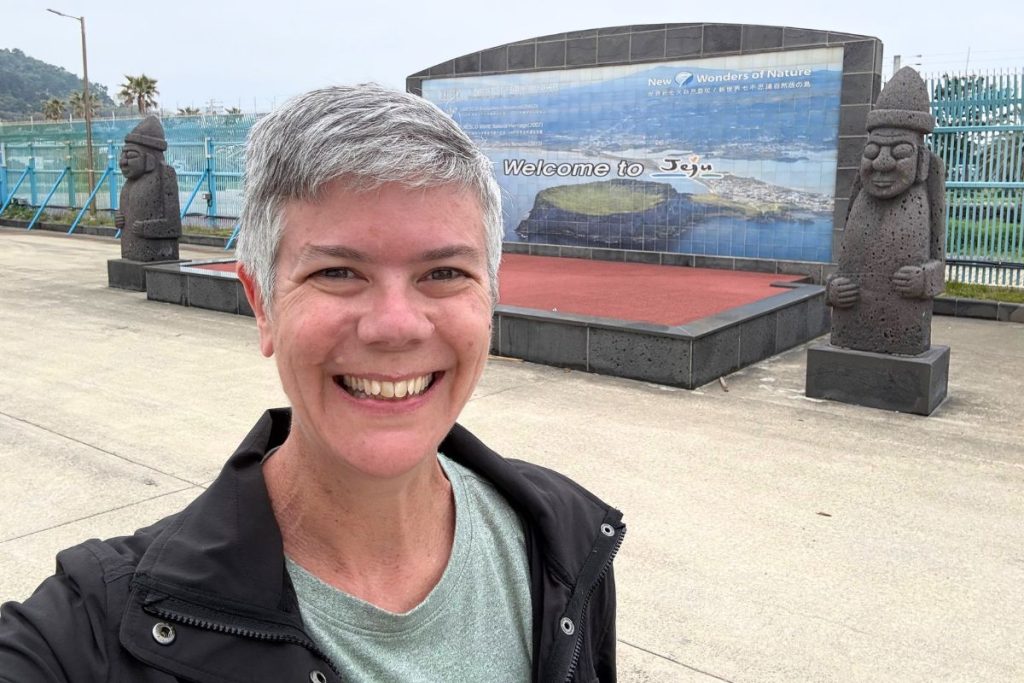
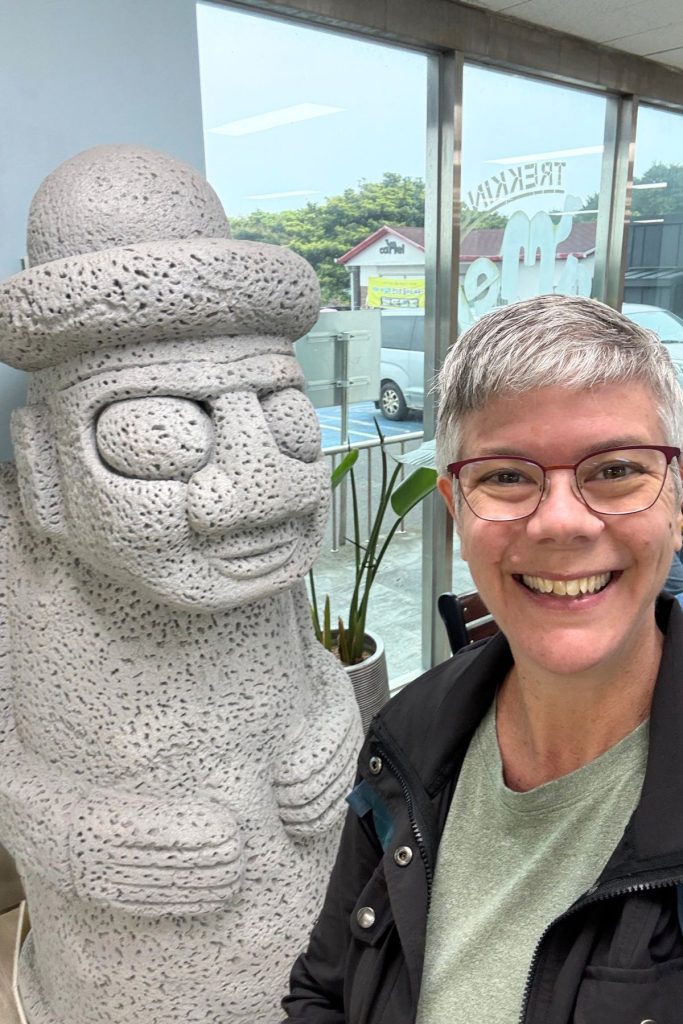
A key part of the culture of Jeju Island is the haenyeo (“sea women”). Haenyeo is a unique diving tradition dating back to 434. Participants harvest seafood in the ocean without any equipment or machinery. Haenyeo divers start training at age 15 and continue diving throughout their lives. Another tradition here is the dolharubang (“grandfather stones”). In the 1750s, islanders carved large rocks of solidified lava into massive human figures to scare away invaders. Around 45 carved stones remain today.
The K-Show Arirang Hon Performance
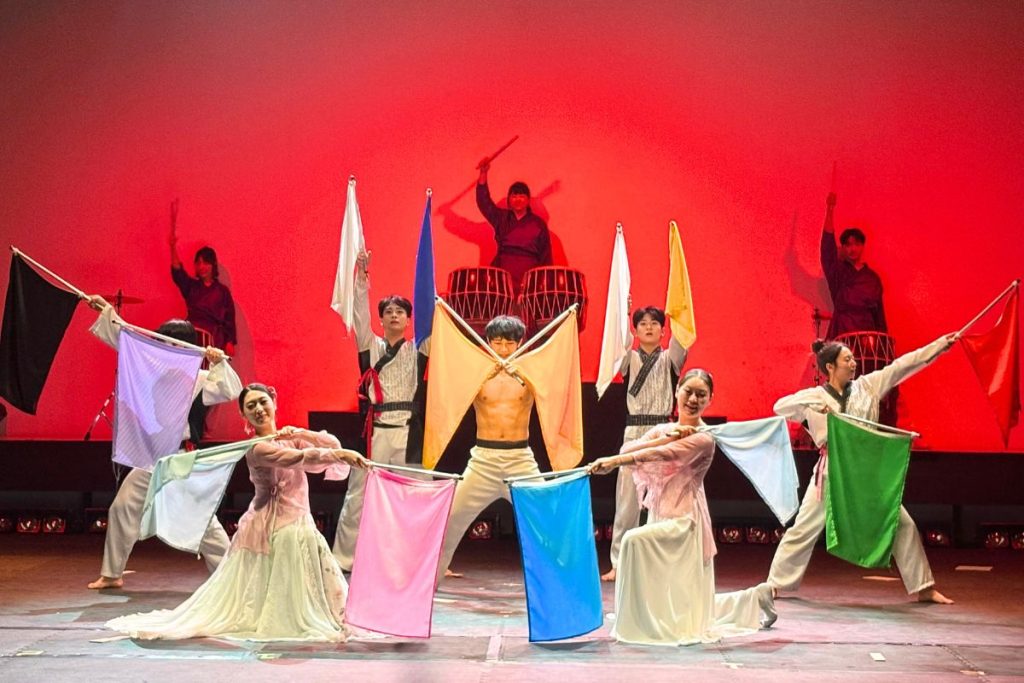
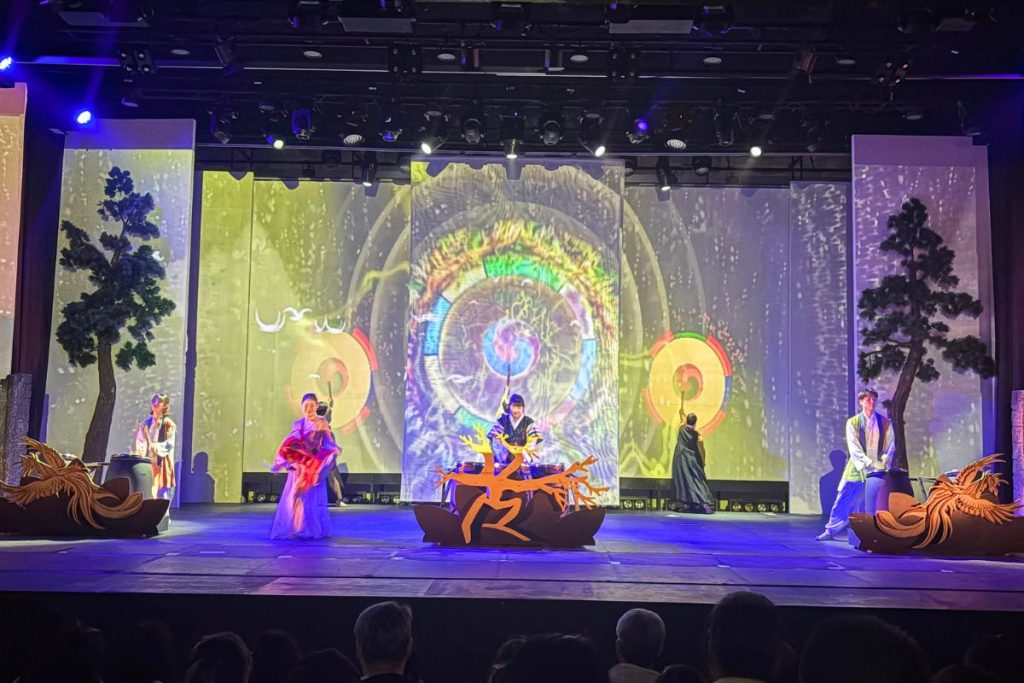
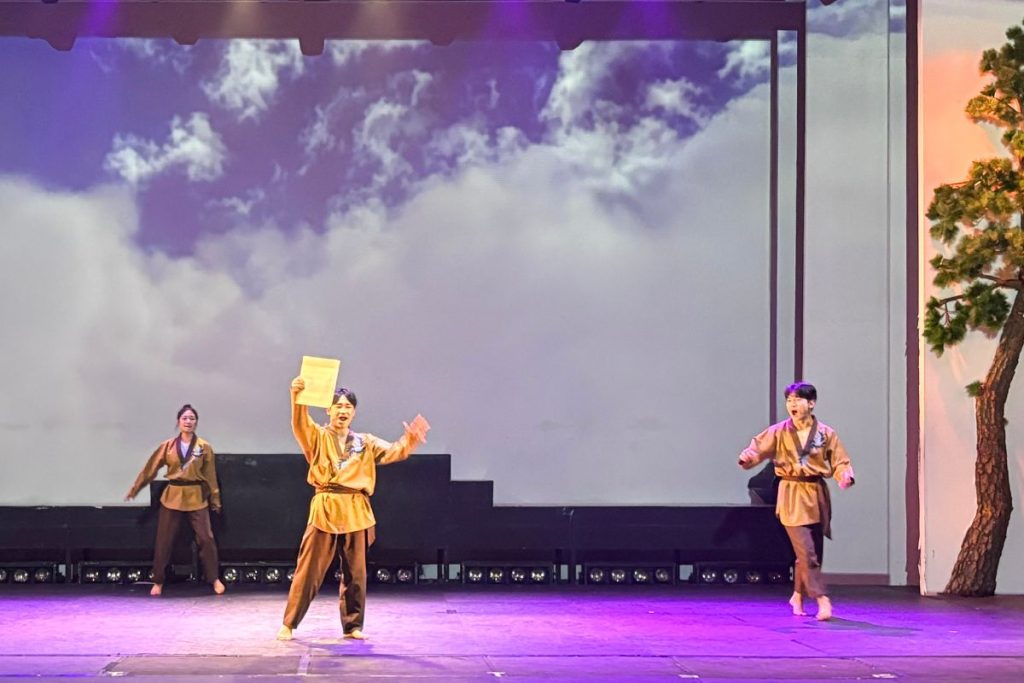
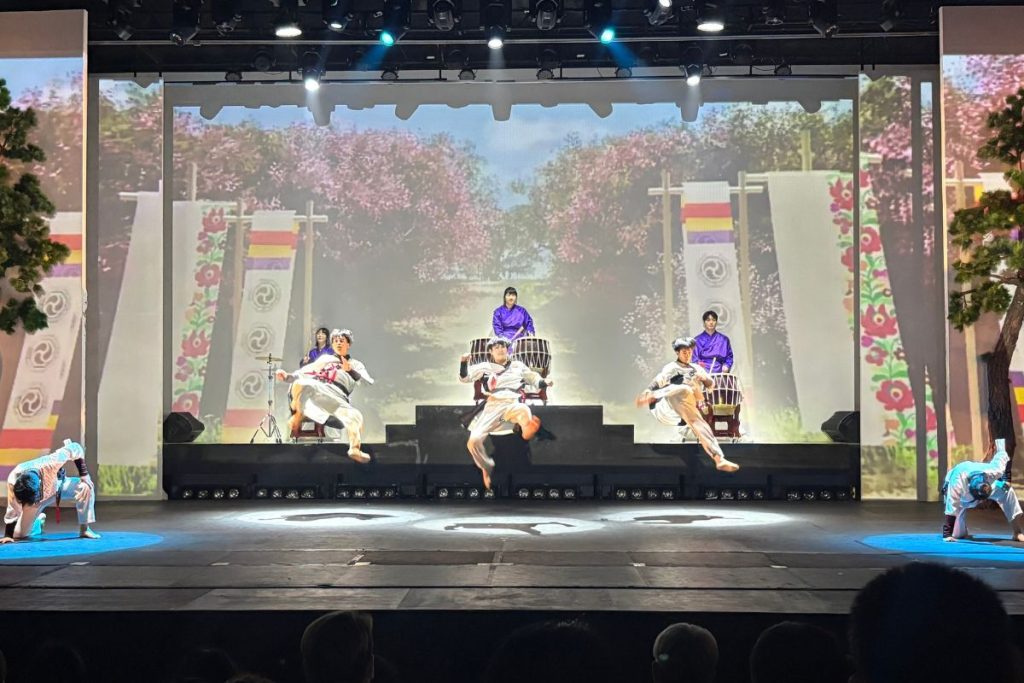
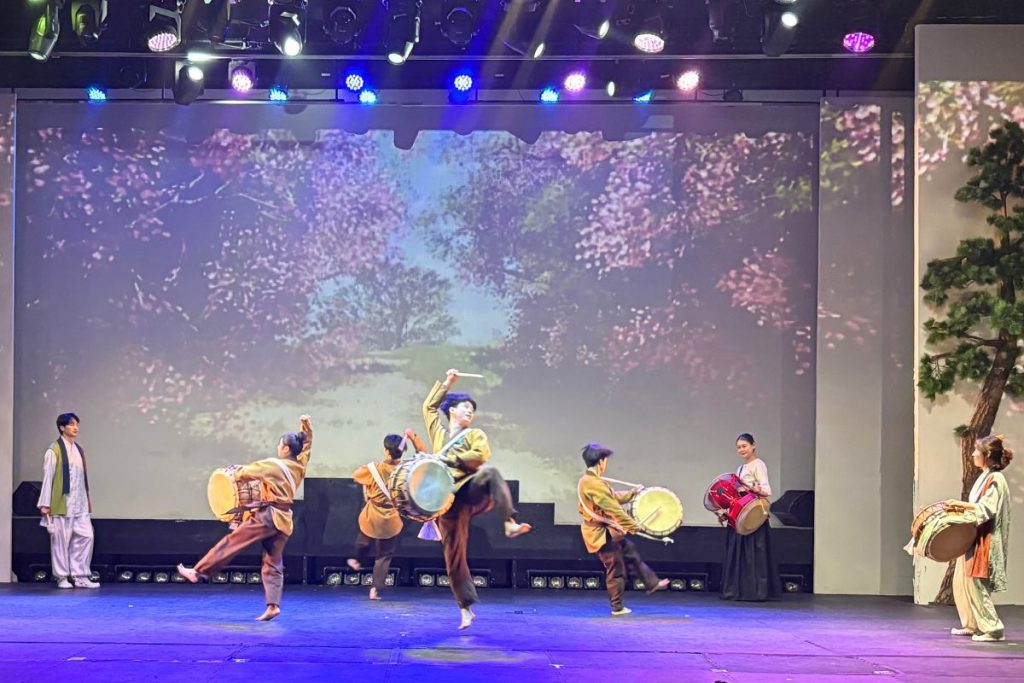
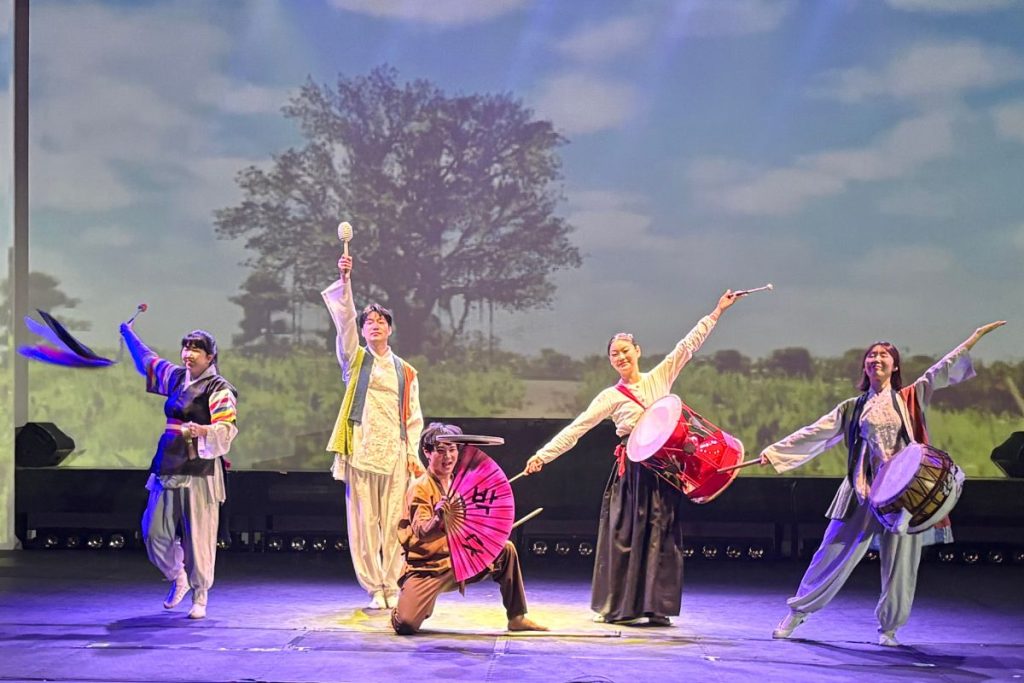
I did a fun excursion in Jeju Island. I kicked off my day at the Jeju Arirang Hon Theater with the high-energy K-Show. This is an entertaining show that blends the principles of Yin-Yang and the Five Elements with Korea’s grand cultural elements: Hangeul, Taekwondo, and Arirang. The show highlights dynamic Taekwondo techniques, along with traditional Korean arts like dance, samulnori percussion, and fan dances. A large, dramatic LED screen enhances the experience throughout the show.
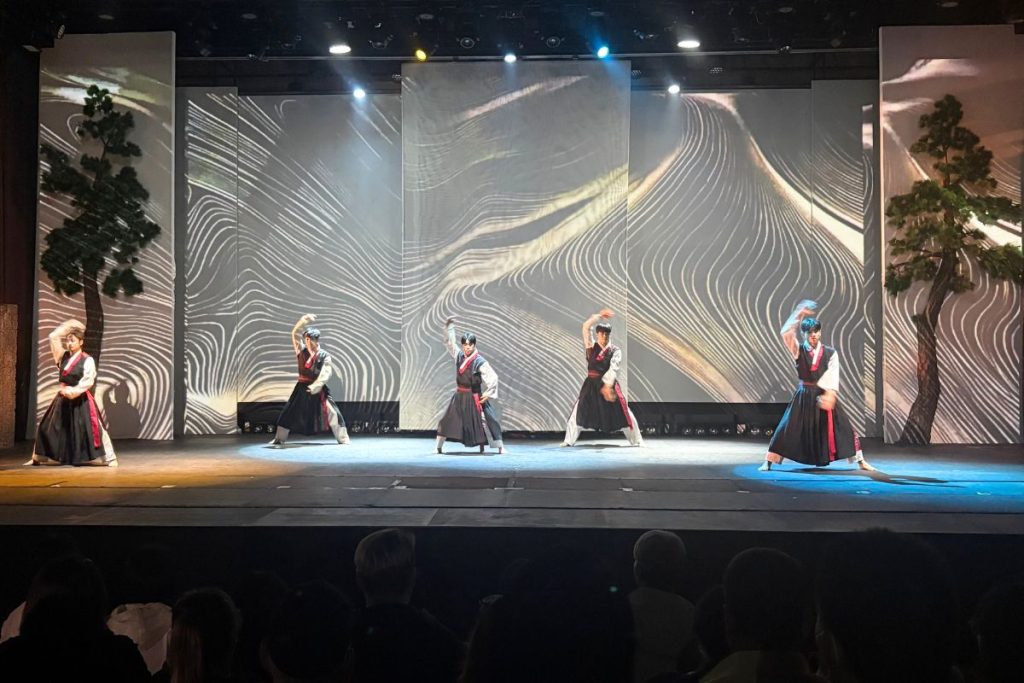
The performance includes several Taekwondo demonstration. These are performed with acrobatic flair and are very impressive! Many of the board-breaking events involved the practitioners leaping high into the air to break boards with dramatic kicks.
The show also included the evocative melodies of Arirang folk music. Arirang is a traditional Korean folk song with a hauntingly beautiful melody, often referred to as the unofficial anthem of the Korean people. Each region in Korea has its own version, often reflecting the region’s unique dialect and character.
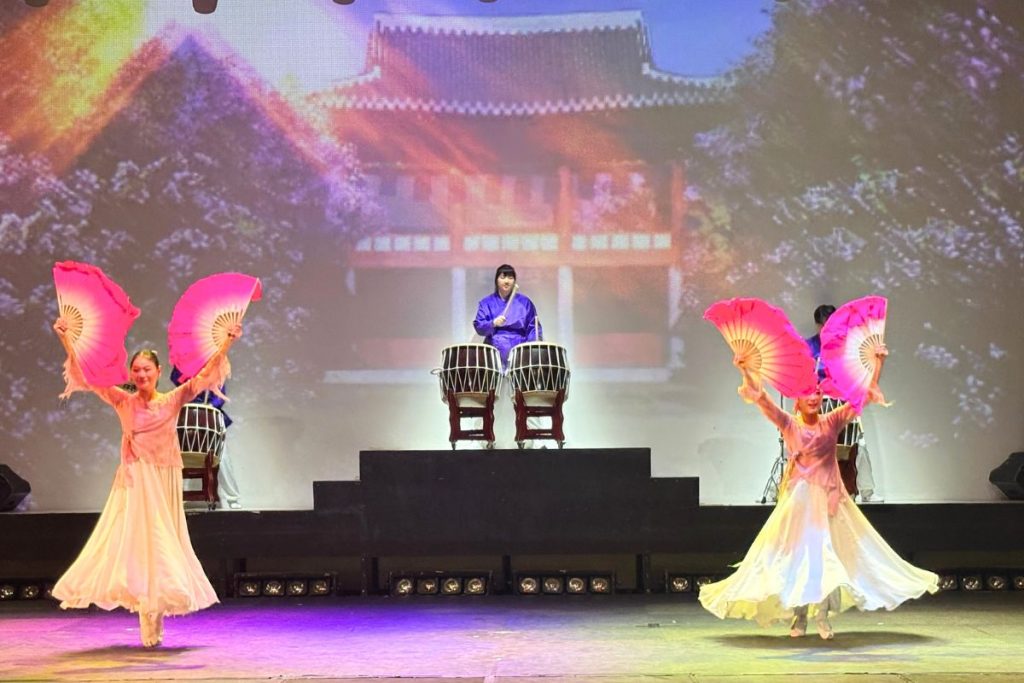
- The Jeju Arirang Hon theater is a permanent theater that runs the show year-round. Reservations are highly recommended. Shows run at 9:40AM, 11:00AM, and 2:30PM. Tickets cost from 18,000 won (around $13 USD) for children to 25,000 won (around $18 USD) for adults.
- No one knows exactly when Arirang originated, but versions of it have been sung for centuries.
- In 2012, Arirang was inscribed on the UNESCO Intangible Cultural Heritage of Humanity list. Both North and South Koreans sing Arirang. At inter-Korean sporting events, athletes from both countries have marched together under a unified flag while Arirang played.
Korean BBQ Lunch
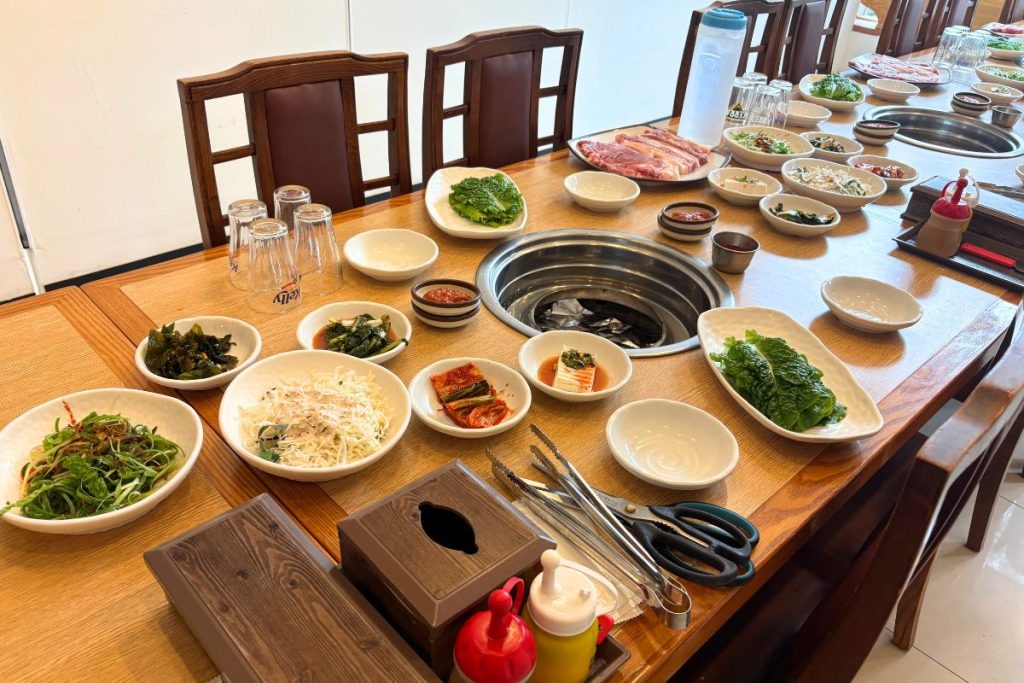
Lunch today was traditional Jeju black pork BBQ at a local restaurant, with a large assortment of side dishes, soup, and rice. It was delicious! Jeju black pork, often described as the wagyu beef of pork, is the most famous culinary speciality on Jeju Island.
The small species of pig has black skin and a smooth coat of hair. The pork is very red and looks similar to beef. It has a meaty, steak-like flavor without any gaminess. It is chewier than regular pork. Locals call this pig ddongdosaegi (똥도새기), or “poop pig.” The Jeju black pigs were originally raised in outhouses and ate human waste…a rather alarming history, but one that has shaped the breed into something uniquely flavorful!
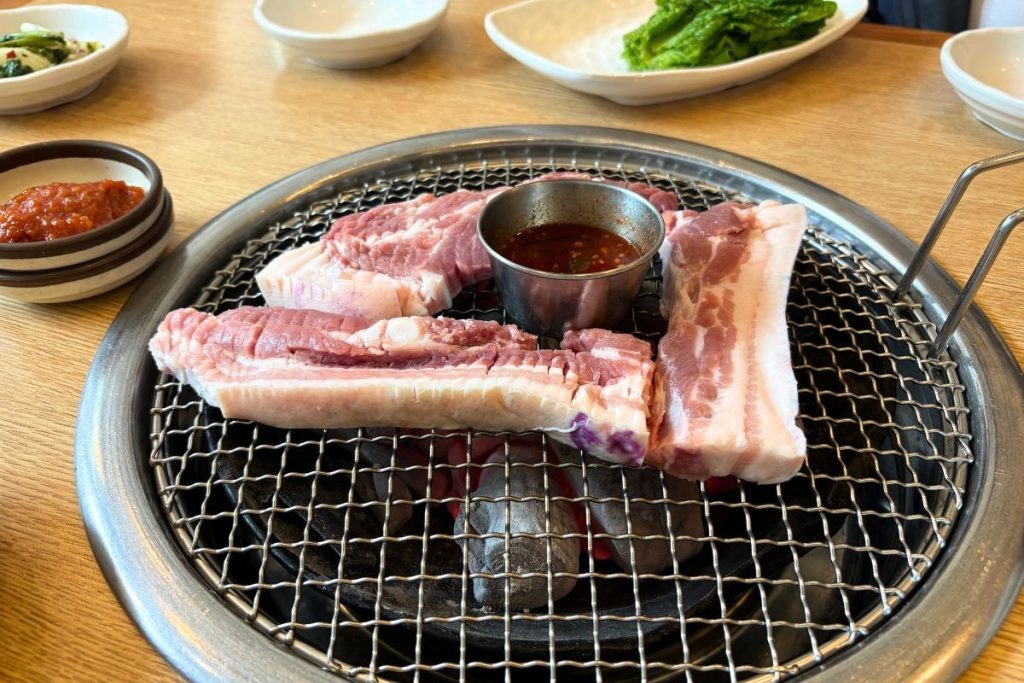
Our servers grilled this delicious local specialty right at our table. We wrapped the grilled pork in lettuce leaves. There was a large assortment of banchan (side dishes) and sauces, so everyone could customize each bite however they wanted to. The traditional way to eat these lettuce wraps is in one bite, so the trick is to make each one small enough to do that!
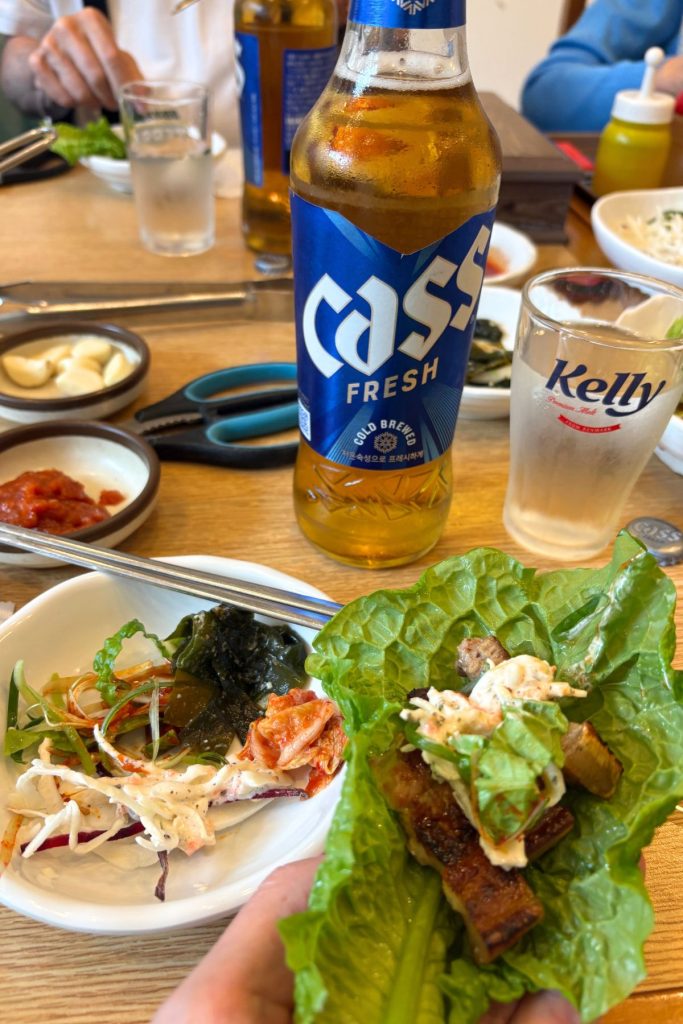
- Traditional banchan (shared side dishes that come automatically with a Korean meal and are refillable), including kimchi, bean sprouts, mushrooms, coleslaw, raw garlic (which can be grilled right alongside the meat), steamed egg, and tofu soup, are served.
- Several sauces are also served, including ssamjang (a thick, savory-spicy paste made from fermented soybean paste and chili), fermented anchovy sauce, and salted sesame oil with black pepper.
- Every bite is a little different, depending on how you choose to assemble your wrap!
Dongmun Traditional Market
I wrapped up my excursion in Jeju at Dongmun Traditional Market, established right after Korea’s liberation in 1945. A devastating fire in 1954 forced a relocation, but the market kept its original name. As one of Jeju’s most vibrant traditional markets, Dongmun offers a diverse array of goods and a bustling atmosphere. Many stalls sell souvenirs and goods aimed at tourists.
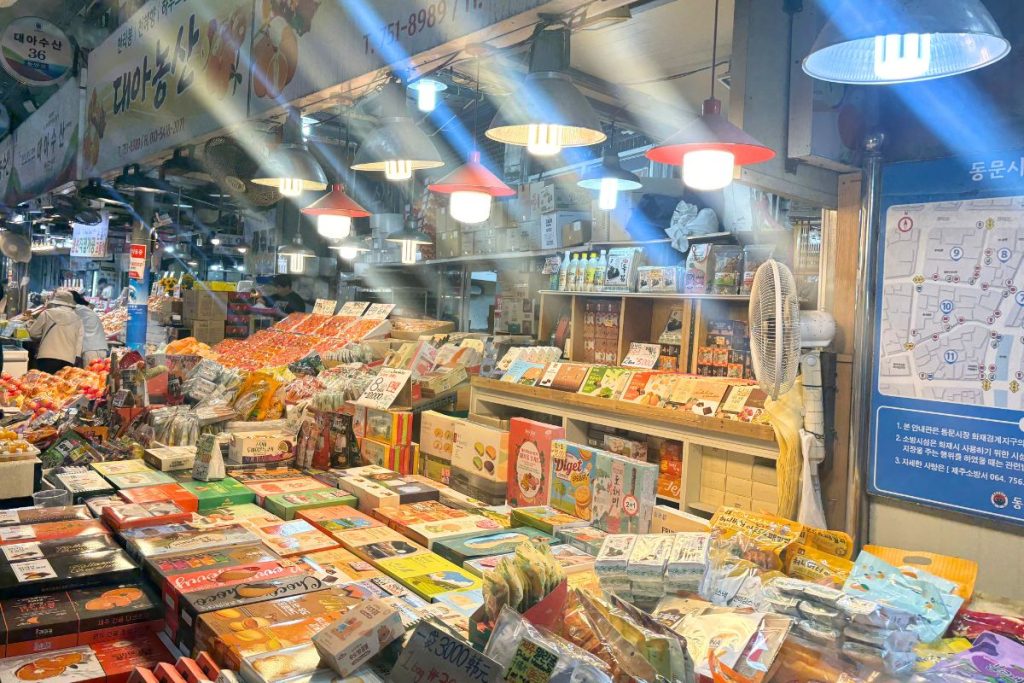
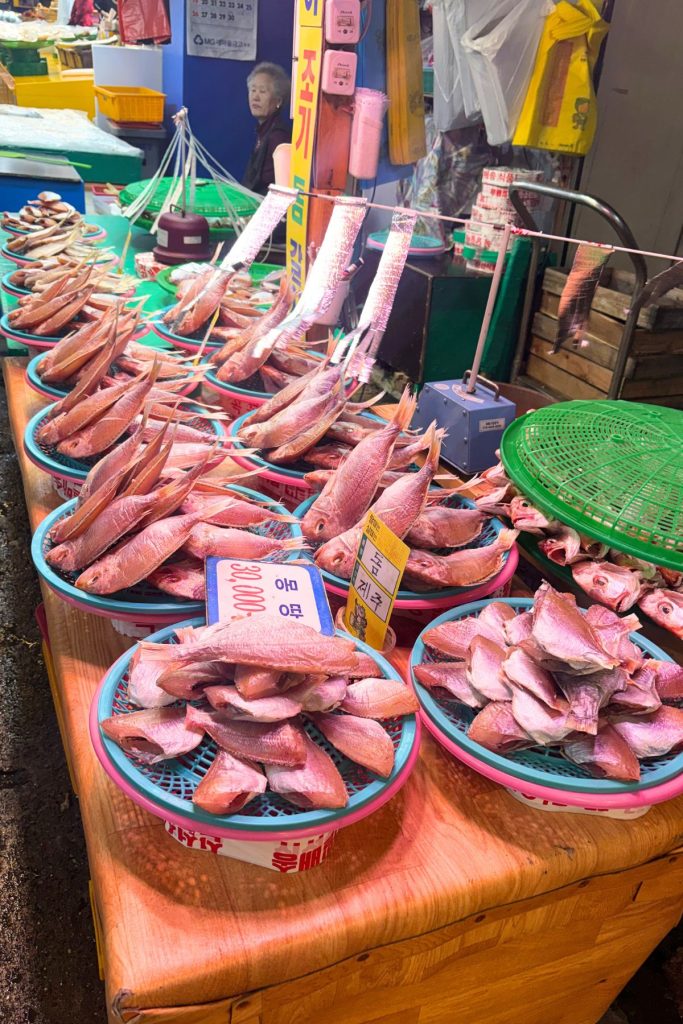
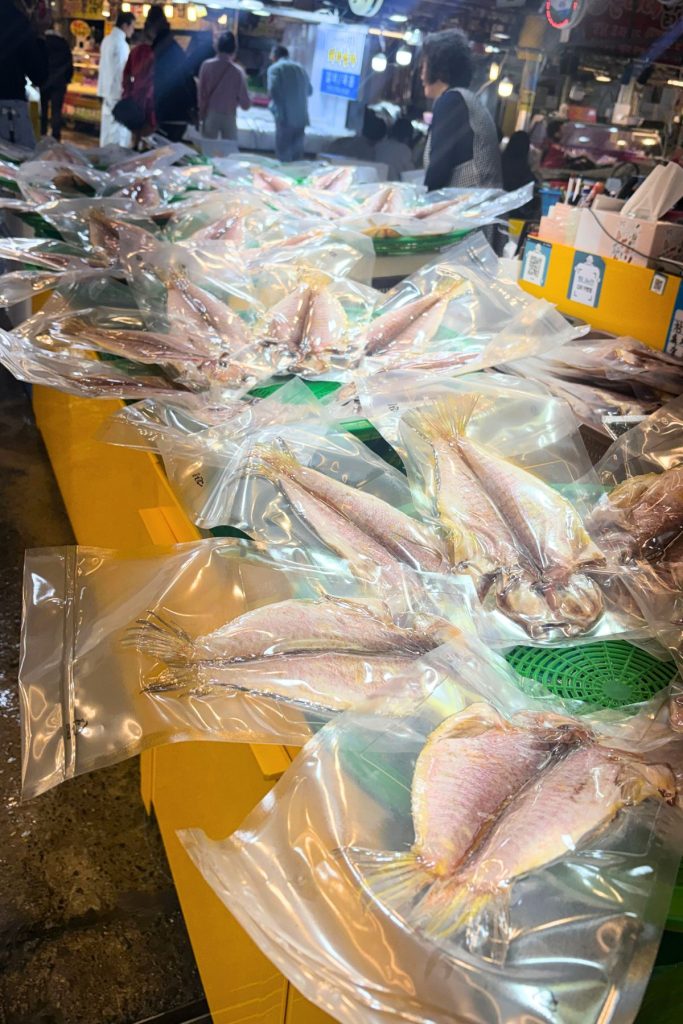
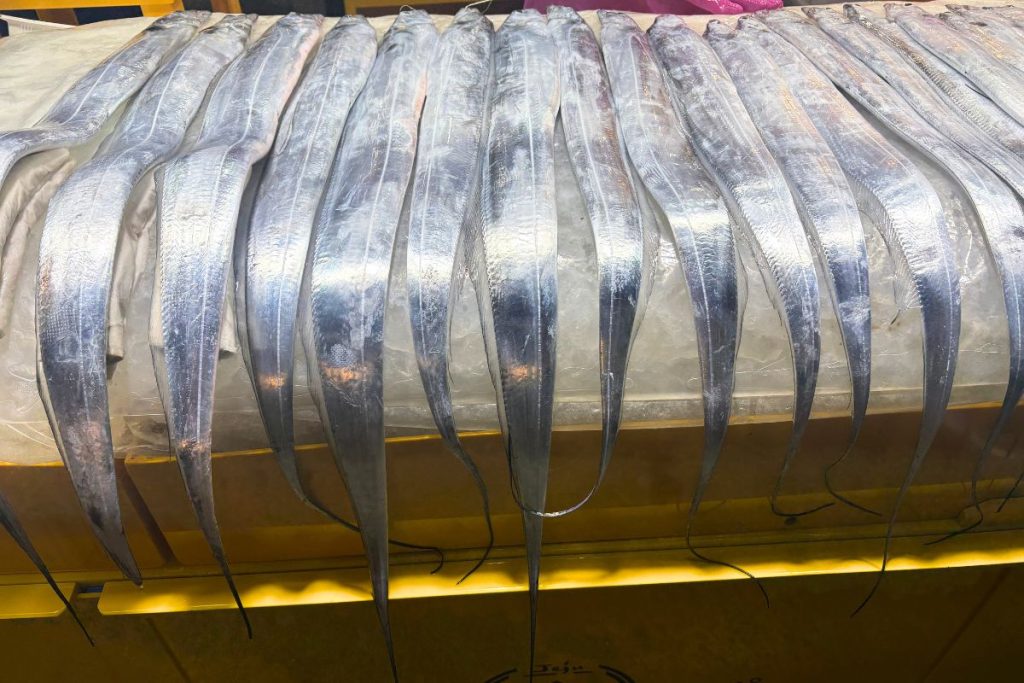
The market also sells a wide variety of fish and fresh vegetables. Fresh catches of the day determine which fish varieties you will find. A popular fish sold here is the silver cutlassfish. Fresh-caught abalone is also a well-known local delicacy here.
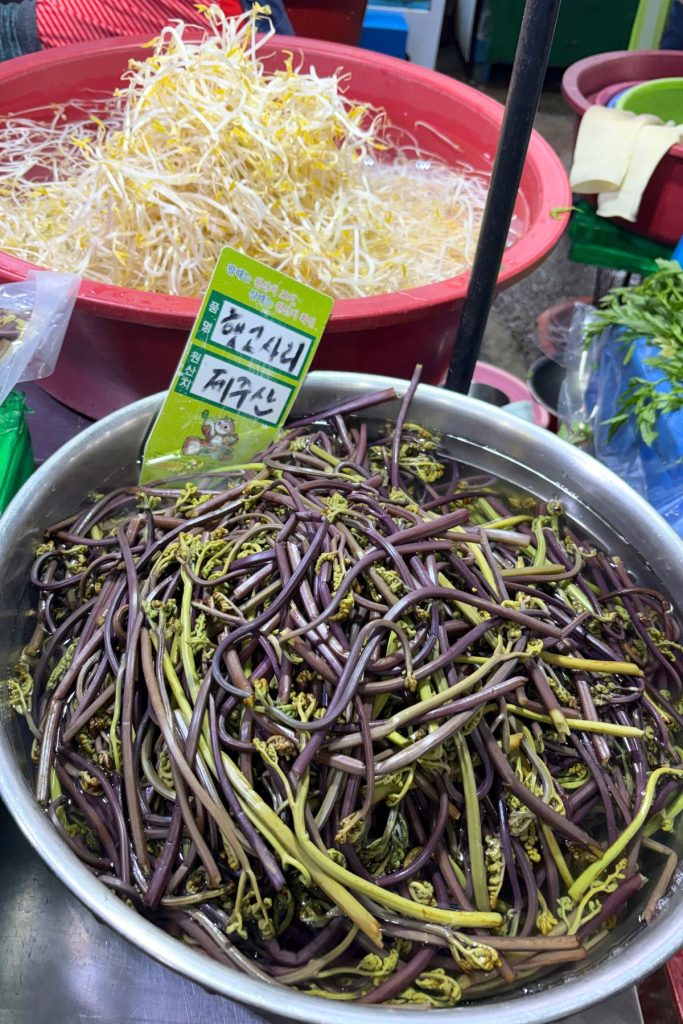
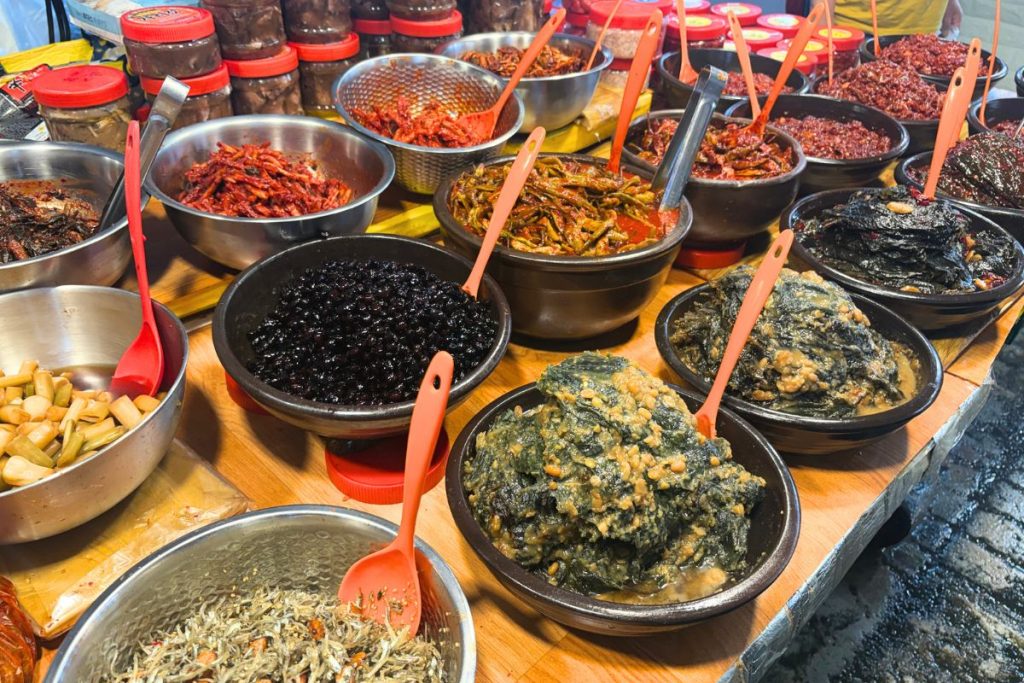
Another popular item at the market is a wide variety of kimchi and other fermented dishes. Vendors display these in large open bowls. Some vendors sell pre-packaged kimchi as well.
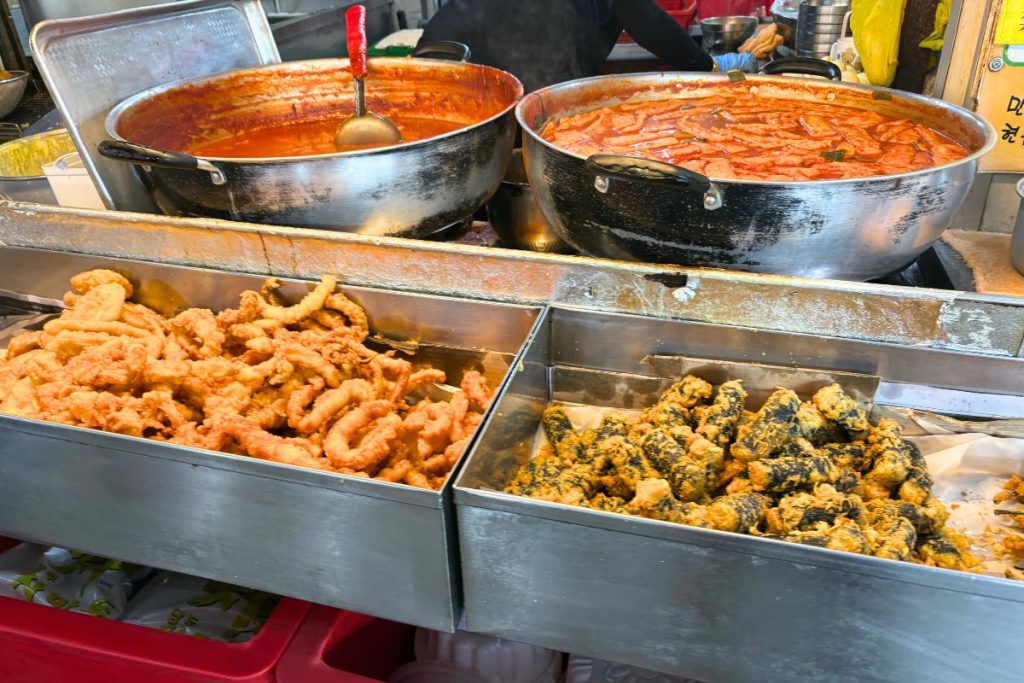
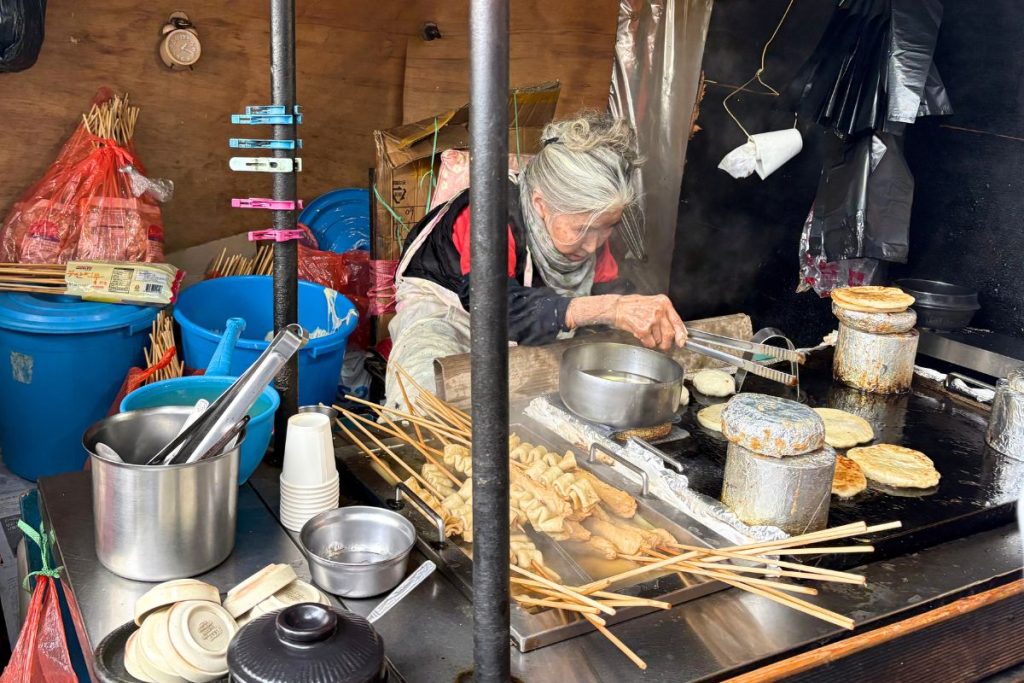
Street food vendors are another popular attraction at Dongmun Market. Many vendors here cook dishes with blowtorches (yes, really!). There is a wide variety of delicious local specialties to choose from.
- The Dongmun Market is the best place to purchase Jeju souvenirs. Many souvenirs sold all over Jeju are cheapest here, and there is a wide variety of stalls to choose from.
- The fresh fish section is not for the squeamish! Live Jeju octopuses are chopped up and eaten while the tentacles are still squirming.
- The market can get very busy, so be sure to pay attention when walking around to avoid bumping into other people or goods on display.
Around the Market
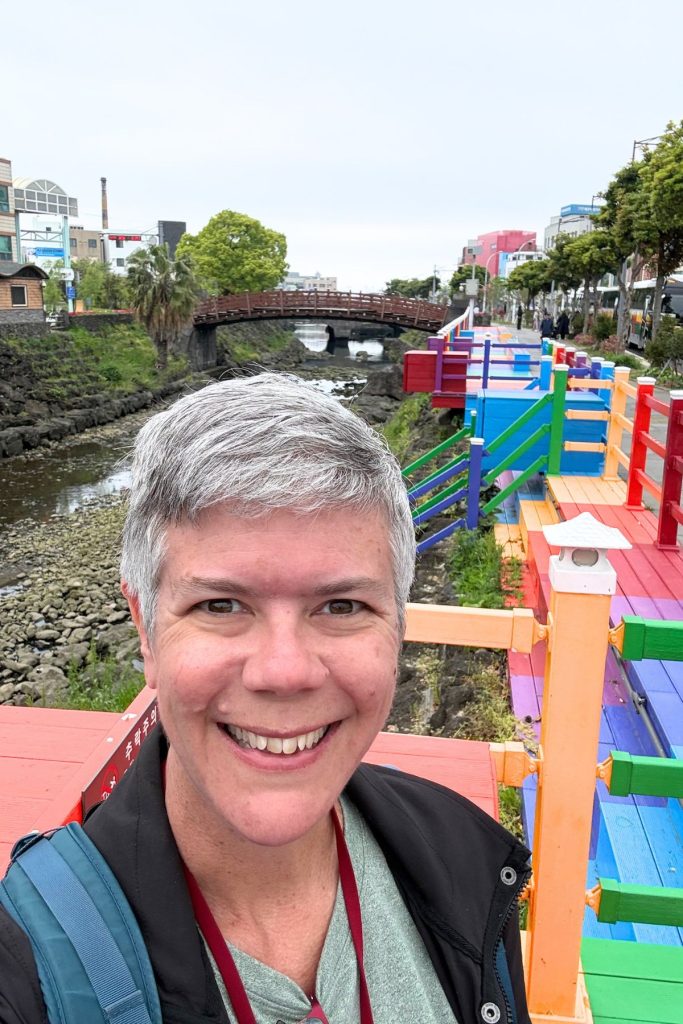
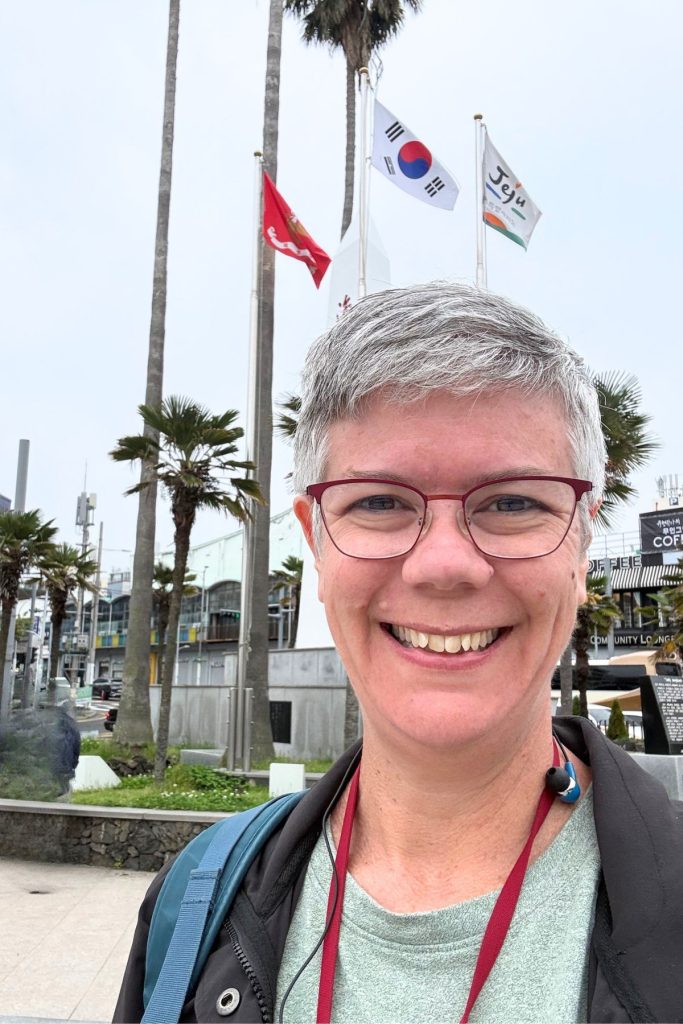
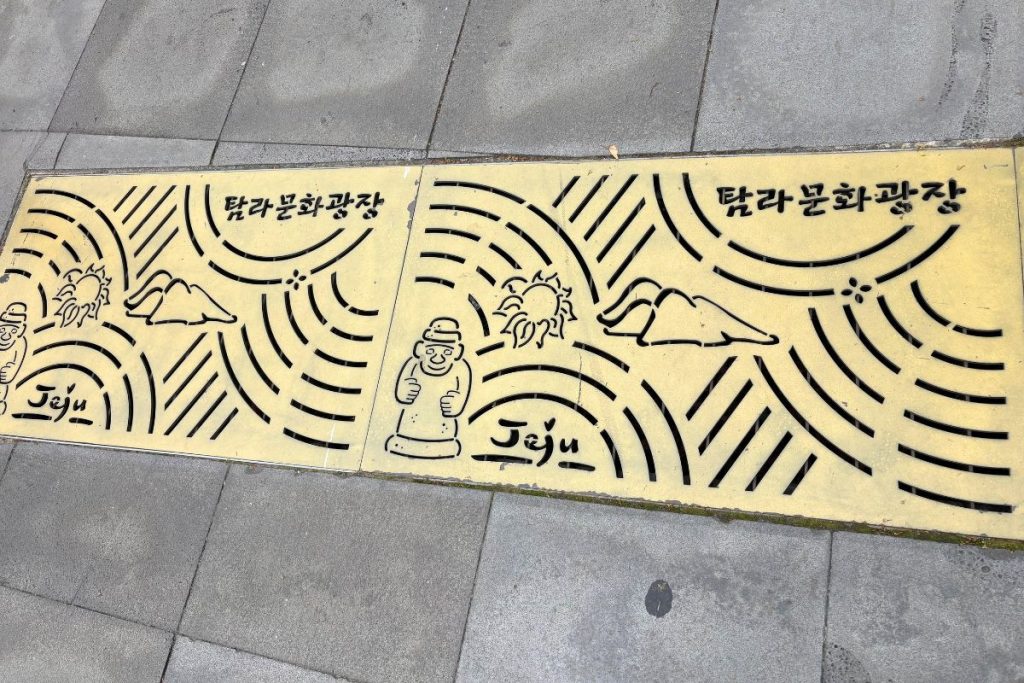
After exploring the large (and rather over-stimulating!) Dongmun Market, we had a bit of free time outside the market. This area of Jeju City includes a river with a colorful boardwalk area and other fun items to explore.
Tangerines
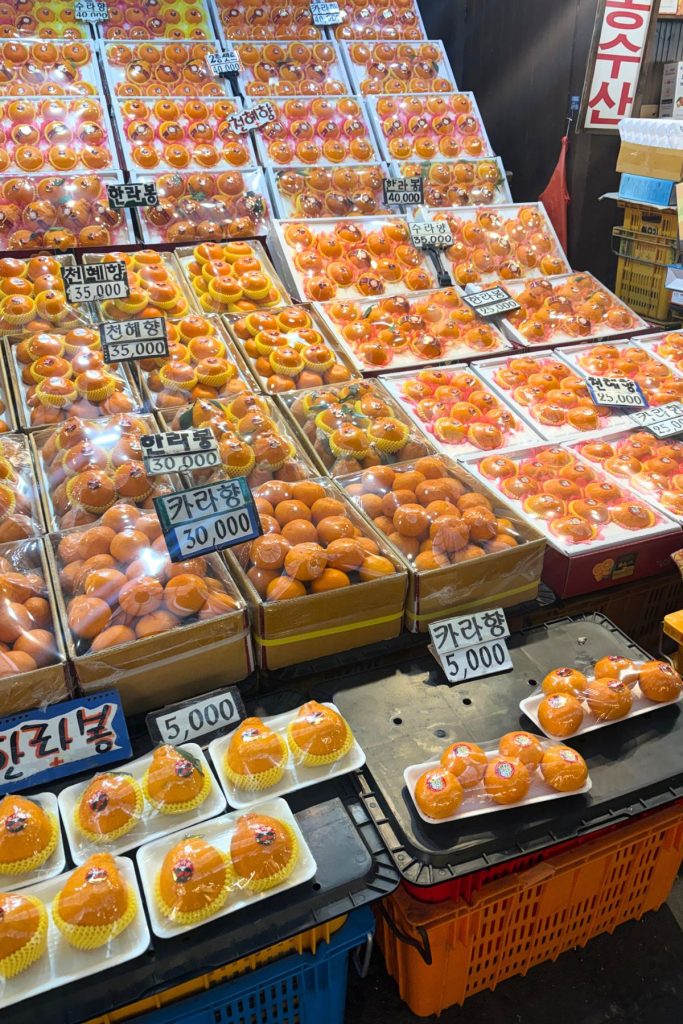
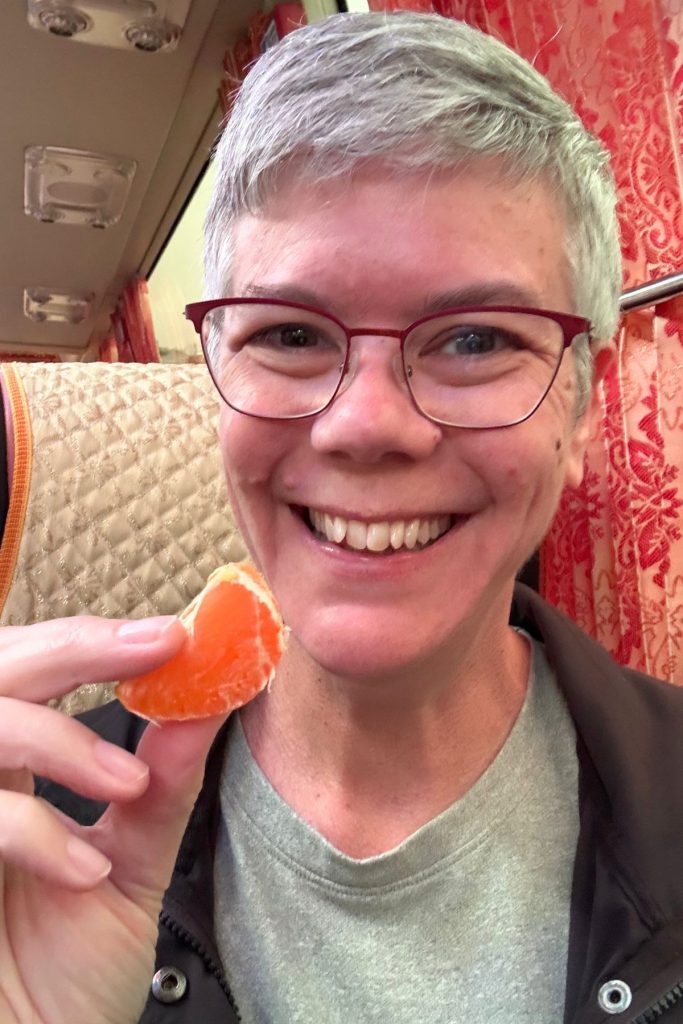
Jeju produces about 60% of all tangerines grown in South Korea. The Dongmun Market is a perfect place to buy them, as many vendors have them for sale. The variety of mandarins will vary based on what is in season. Some popular varieties include large Hallabong mandarins (they have a distinctive bump near the stalk) and hwangguem-hyang mandarins (these are super sweet). Tangerine-themed souvenirs have become Jeju’s unofficial mascot (along with the “Grandfather Stones,” of course)! Someone on my tour bought some in a big bag. Since we couldn’t take fresh fruit back on the ship, we all shared them on the bus ride back to the ship! No lie, it was probably the best tangerine I have ever eaten (and I live in Florida!).
Common Questions
Jeju is fairly easy to navigate on your own, especially if you are focusing on the main tourist areas. There is reliable taxi service on the island. Not all drivers speak fluent English. So write your destinations in Korean or save them in your phone to help bridge the language gap. If you have limited time here (like I did as a port call during a cruise), a private tour or an organized excursion is something worth considering. But, if you are an independent traveler, it is an easy and safe area to navigate on your own. So yes, you can absolutely navigate Jeju on your own, but a guide makes the day smoother.
The show runs about 70 minutes. It is absolutely suitable for kids, and there were many kids of all ages at the show I attended. The show is high-energy and very entertaining, so kids should enjoy it just as much as adults do. You do not need to speak or understand Korean to appreciate the show, since it is largely non-verbal.
A typical meal runs roundly from 15,000 to 30,000 won per person (about $11-$22 USD). This will vary, depending on the cut and the restaurant. Some premium cuts, such as aged pork or bone-in options, will run a bit higher. The price usually also includes the banchan (side dishes), wrapping greens, and sauces, so you are getting the full spread. Note that most restaurants do have a minimum order of two portions. This is considered the best pork in Korea, so it’s definitely one of the best culinary values you can find anywhere in Asia!
Even More Travel Ideas
Sip, Stroll, and Bow: A Day at Seonamsa Temple
All Aboard the Past: Mojiko’s Retro Charm, Rail History & Mountaintop Views