All Aboard the Past: Mojiko’s Retro Charm, Rail History & Mountaintop Views
Some places just have a way of slowing you down, and Mojiko, Japan is absolutely one of them. On a recent visit to this charming port town on the northern tip of Kyushu, I wandered through the beautifully preserved Meiji and Taisho-era buildings of Mojiko Retro, geeked out over vintage locomotives at the Kyushu Railway History Museum, and rode the Sarakurayama Cable Car up to sweeping views of it all. If you’re looking for a day trip in Japan that is equal parts history, nostalgia, and unexpected adventure, Mojiko might just be your perfect detour.
In this post, I’m breaking down each stop on my Mojiko adventure. I enjoyed a full day here, strolling the atmospheric waterfront district and enjoying gorgeous Western-influenced architecture, exploring one of Japan’s most beloved railway museums, and taking in panoramic views of the Kanmon Strait from high above the city. I’ll share what to expect at each spot. Whether you’re a history buff, a train enthusiast, or just someone chasing a great view, there’s something here for you.
Mojiko: Japan’s Best-Kept Retro Secret
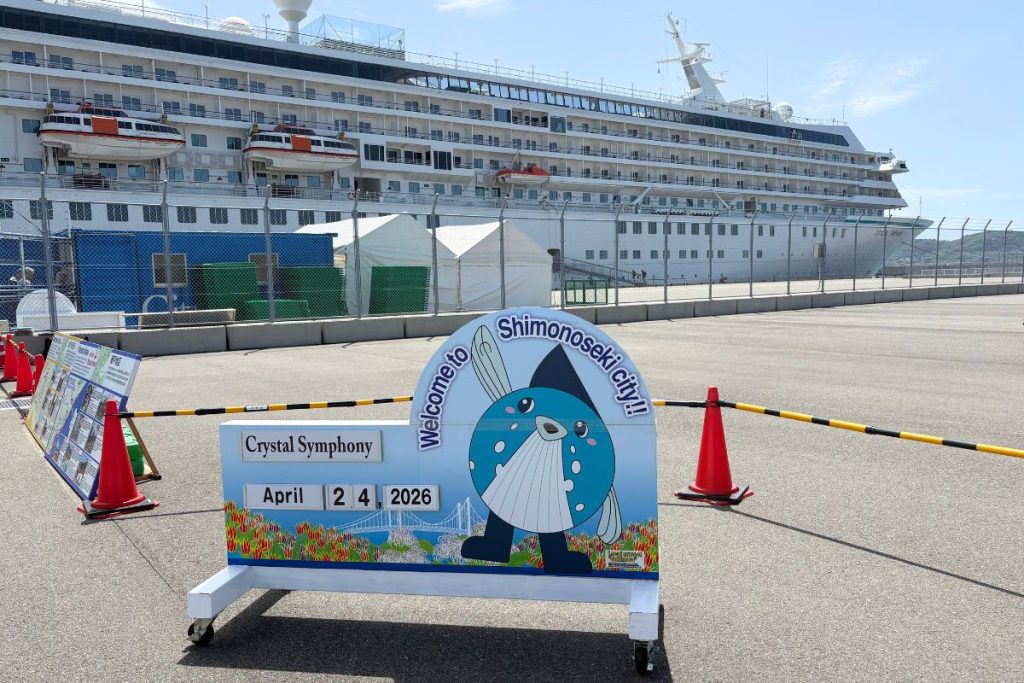
I had the pleasure of visiting Mojiko, Japan as a port stop on a cruise from Tokyo to Seoul. We actually docked at the nearby port of Shimonoseki. We first took a pleasant 20-minute bus ride in an undersea tunnel under the Kanmon Strait. This brought us to our first stop, Mojiko Retro. From here, we walked to the Kyushu Railway History Museum. Our final stop of the excursion was the Sarakurayama Cable Car for some incredible views of the entire area.
Mojiko Retro District (Mojiko Retoro)
The first stop on today’s excursion was the Mojiko Retro District (Mojiko Retoro), a beautifully restored port area reflecting the charm of Japan’s Meiji and Taisho periods. Mojiko thrived as an international trading port. Japan designated Mojiko a Special National Port in 1889, recognizing its proximity to China and its vital role as a coal exporting hub. Moji port became Japan’s leading exporter of coal by 1896, and it continued to prosper in the years leading up to World War II.
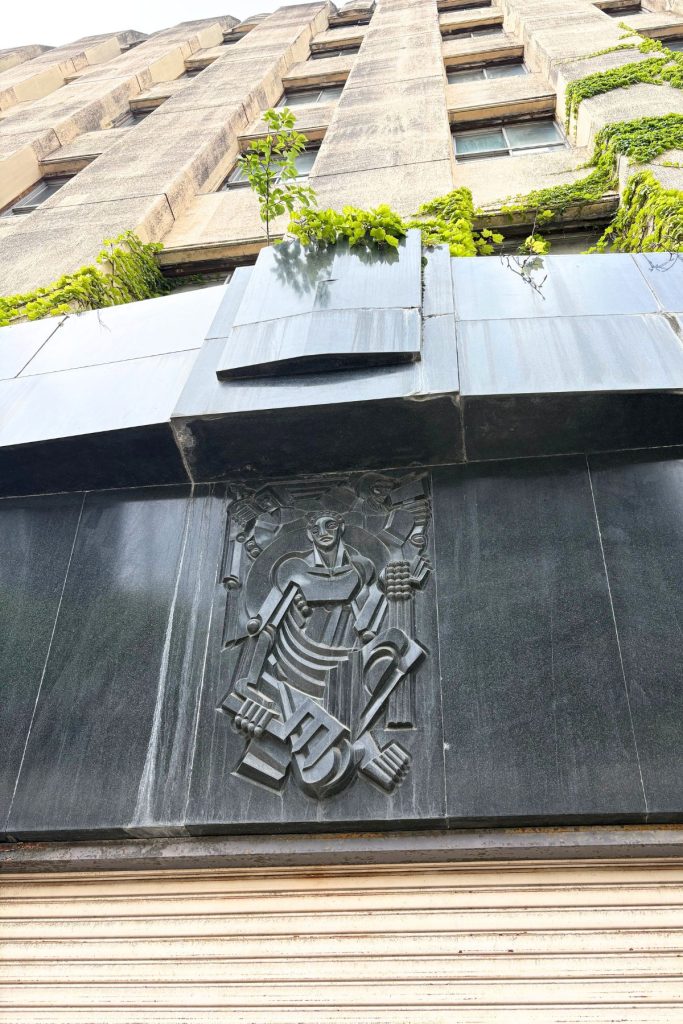
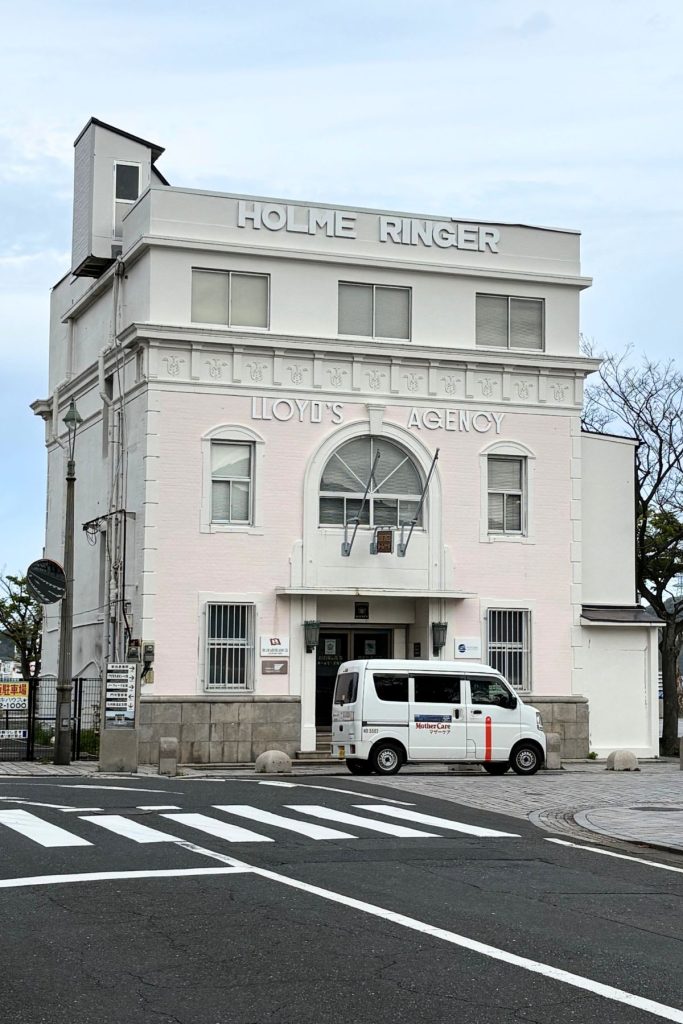
Historic Mojiko Retro
In 1988, the Mojiko Retro project kicked off to preserve the historic buildings in Moji Port. It opened as an urban tourism destination in 1995. Today, approximately two million people visit the Mojijo Retro per year. I enjoyed a pleasant walking tour through the main areas of the district. We admired the gorgeous architecture along the way.
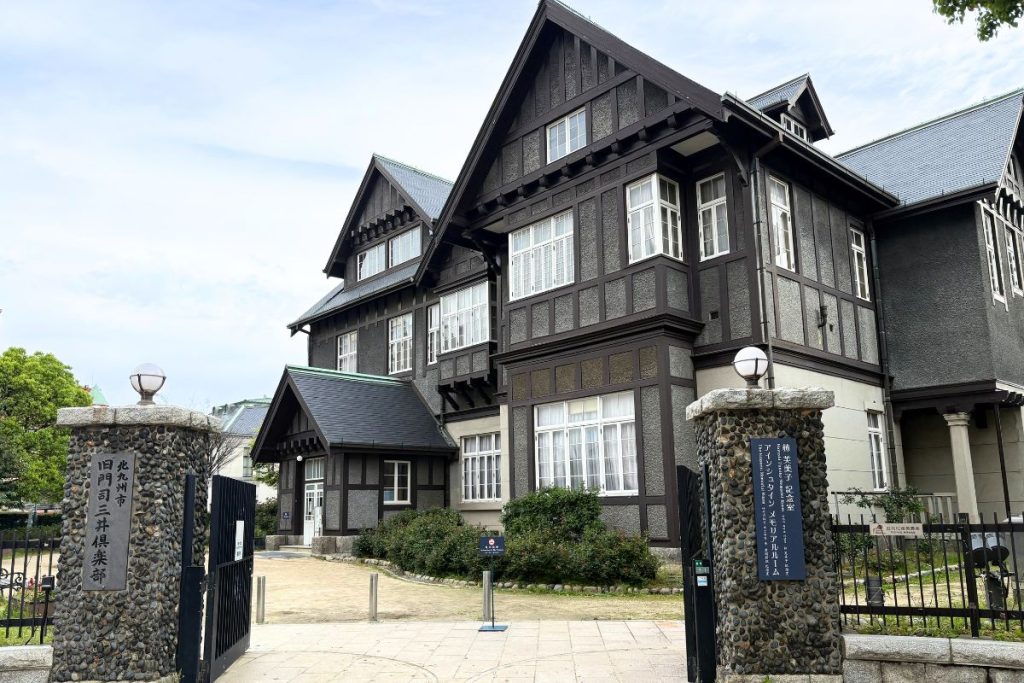
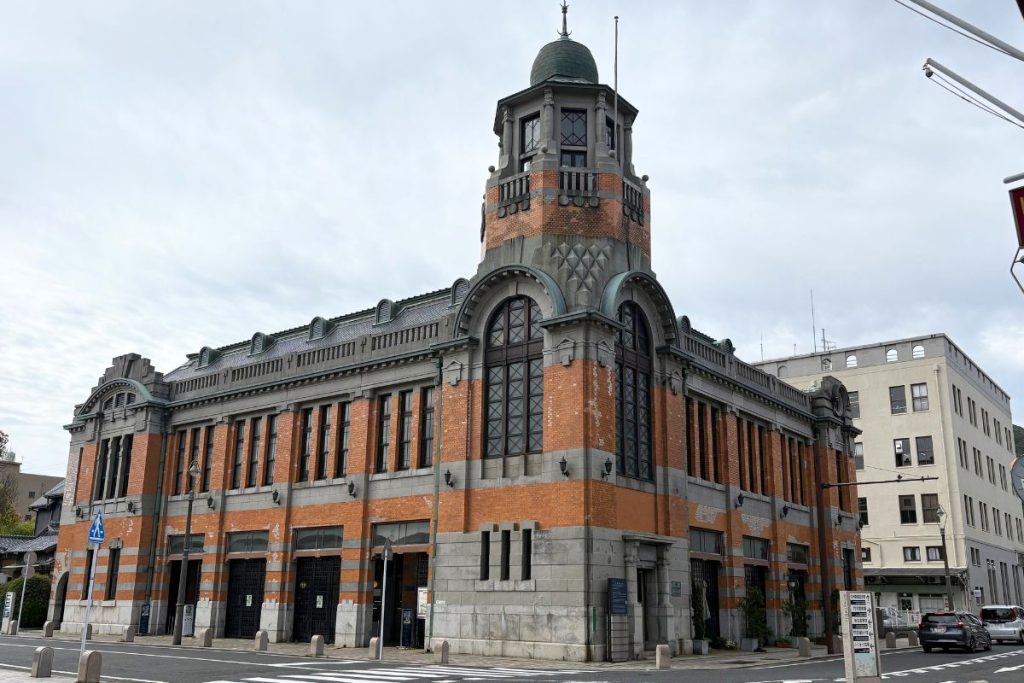
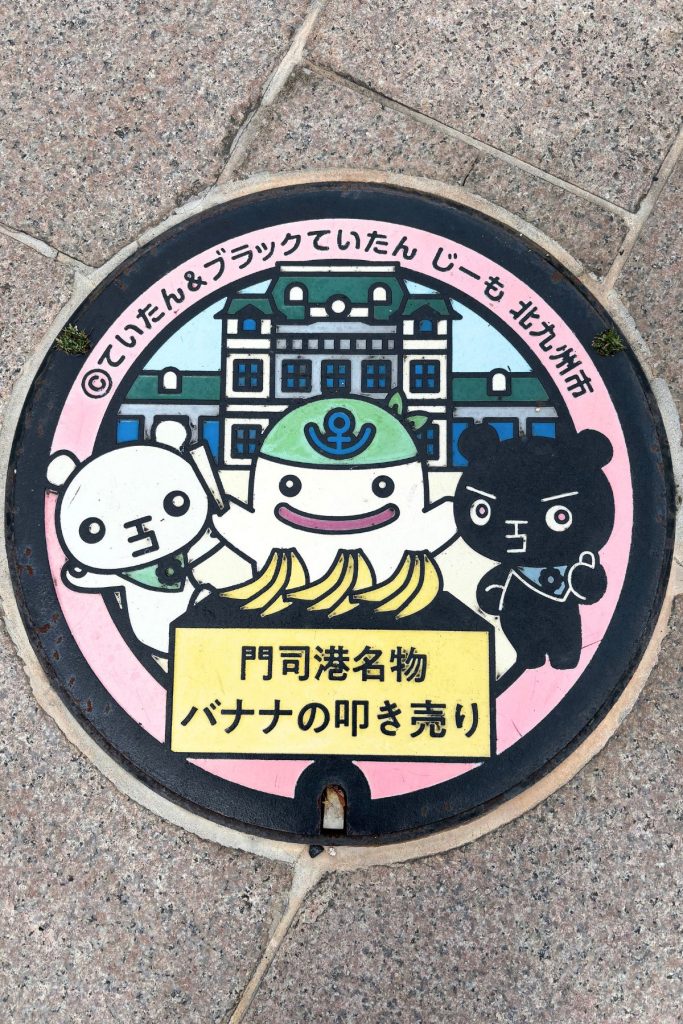
We walked past several notable buildings, including the Mojiko Station, the Mojito Mitsui Club, and the Former Mojito Customs building. Some of the interesting international traditions here include bananas and baked curry. In the early 1900s, a huge number of bananas arrived at Moji Port from Taiwan. The vendors had to get creative to sell them off before they ripened, and so the tradition of banana street vendors became a beloved part of the city’s history. Today, the district embraces its banana legacy with fun banana-themed souvenirs around every corner! Mojiko’s signature dish, Yaki-karē, is a curry and rice gratin with a soft-boiled egg under the cheese topping.
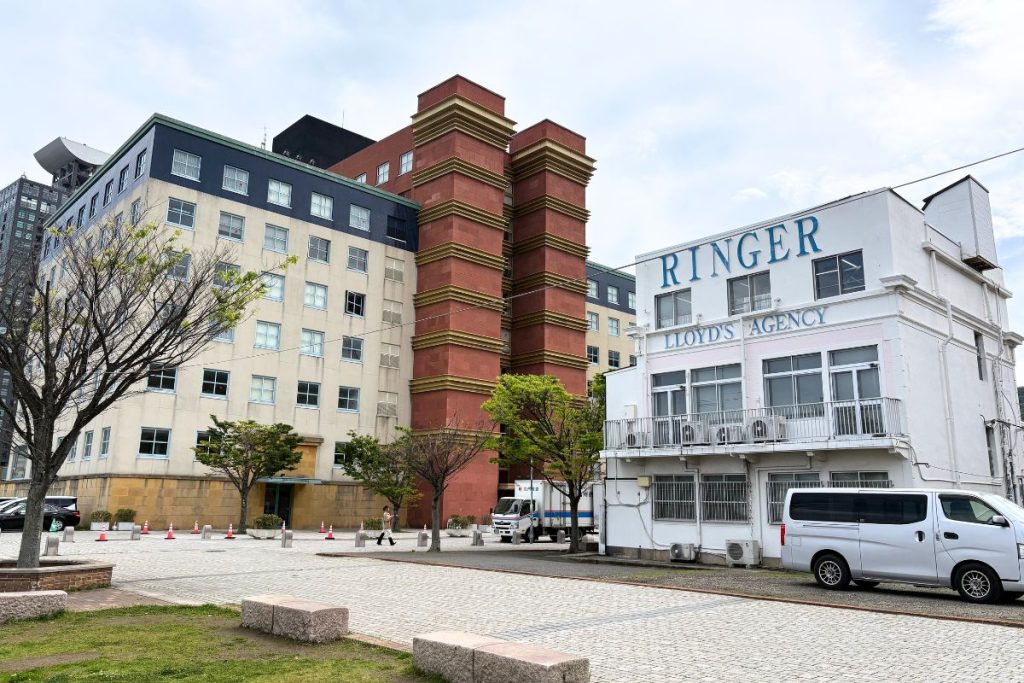
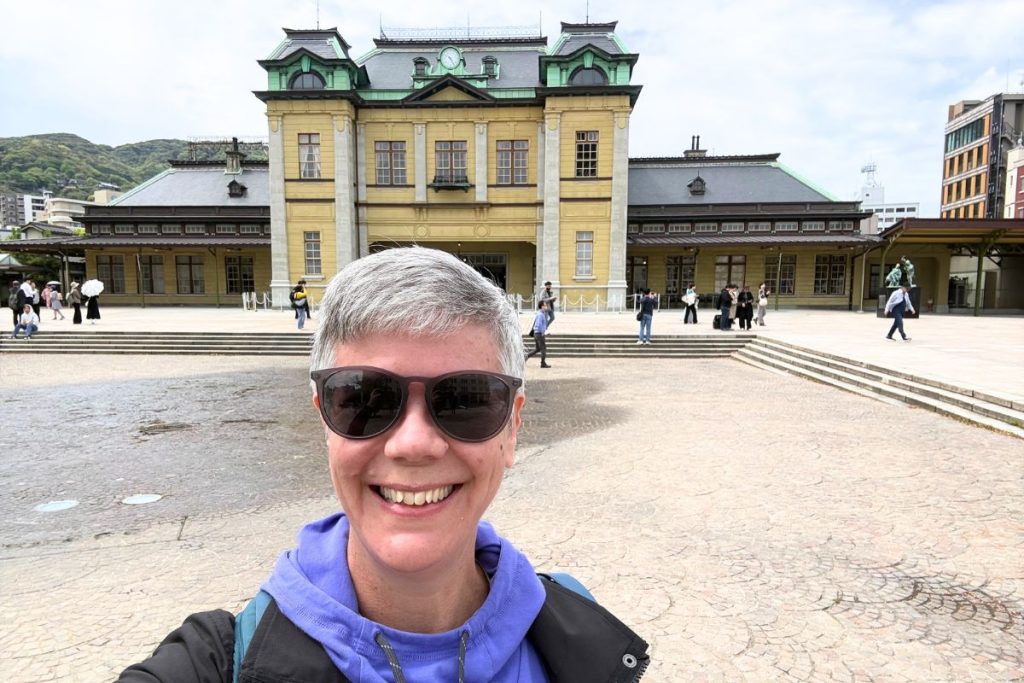
- Mojiko Station is a neo-renaissance-style building constructed in 1914. It underwent massive renovations from 2012 to 2019. Many details, including rooftop ornamental pieces, were faithfully restored using old photographs.
- The Moji Mitsui Club, built in 1921, famously hosted Albert Einstein and his wife the following year.
- The Former Moji Customs building is a 1912 reconstruction of the original, which burned down in 1910. It now houses a fruit café, a small art gallery, and an exhibit on modern customs policies and smuggling.
Kyushu Railway History Museum (Kyushu Tetsudo Kinenkan)
After walking around Mojiko Retro, we visited the Kyushu Railway History Museum (Kyushu Tetsudo Kinenkan). This interesting museum is housed in the former headquarters of the Kyushu Railway Company, which was established in 1891 as Kyushu’s first railroad company. The museum opened in 2003.
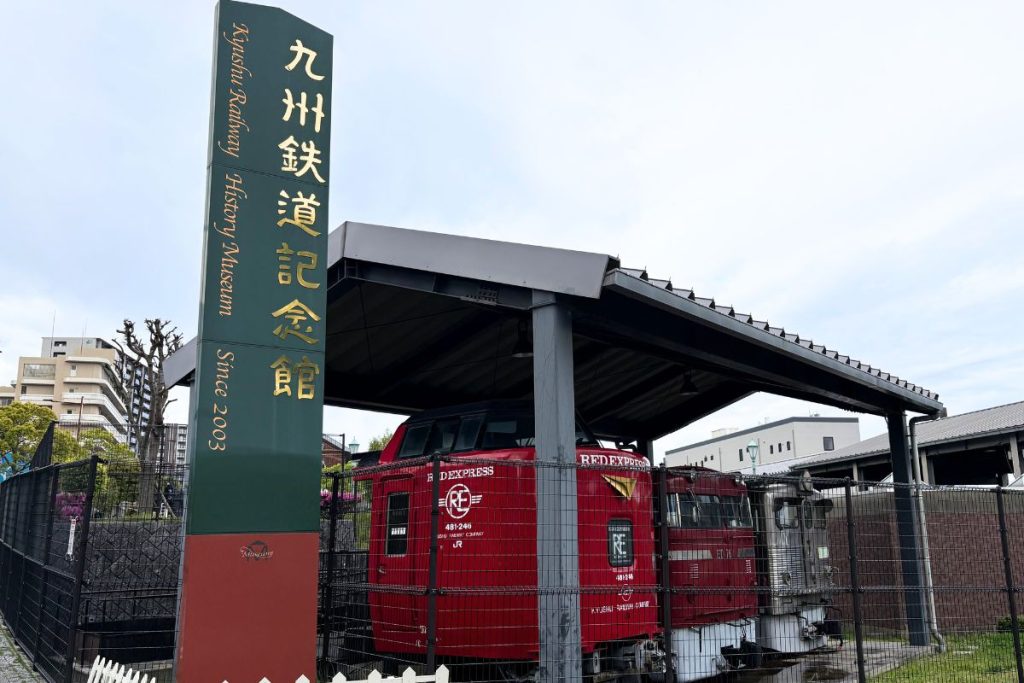
Exploring the Trains Outside
The museum’s entrance is at the original location of Moji Station, which was later relocated and renamed “Mojiko Station.” It is also the location of the zero mile marker, which is the point from which all track distances on the island of Kyushu were measured.
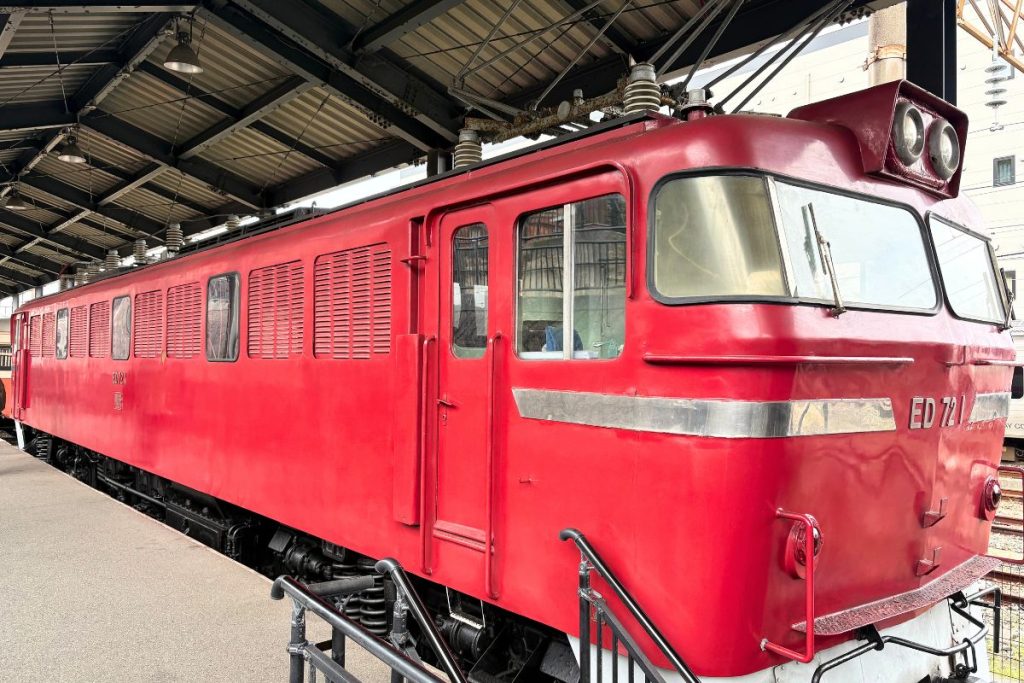

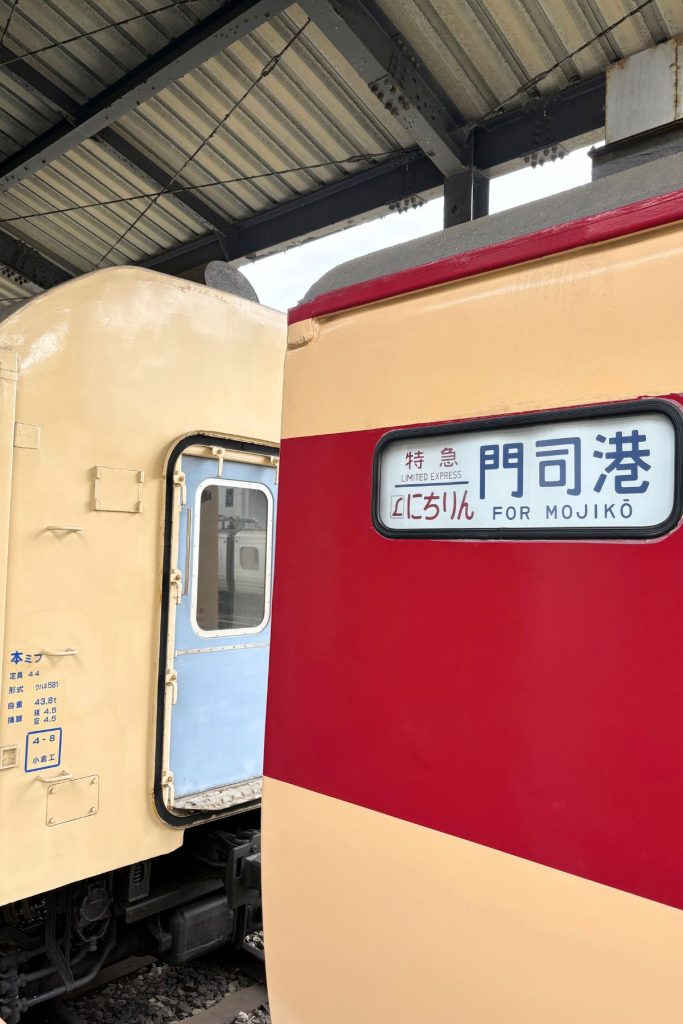
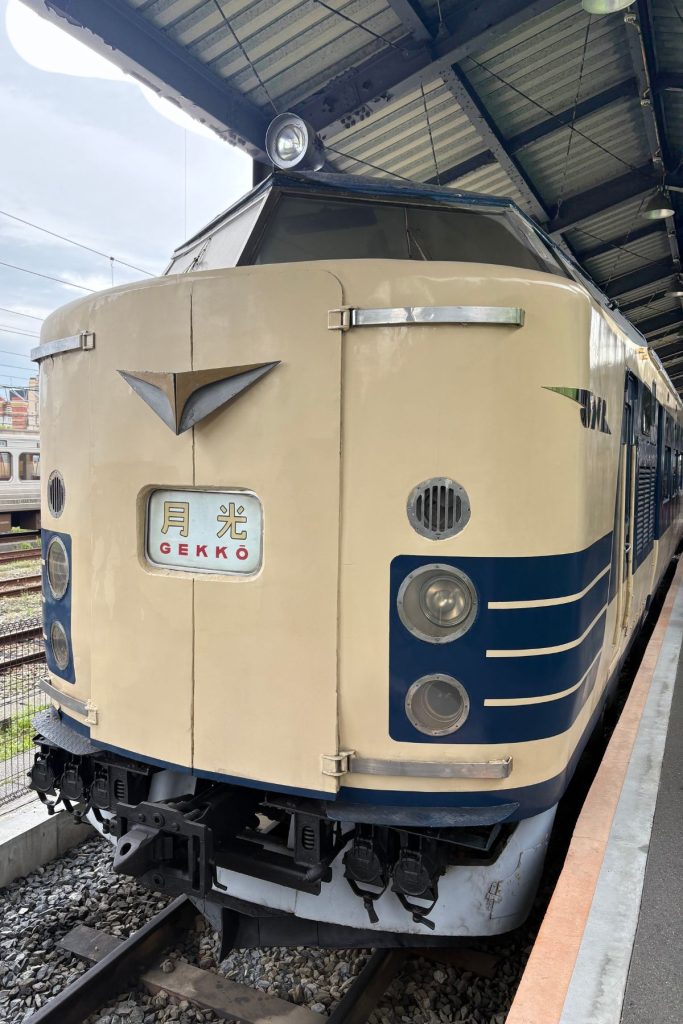
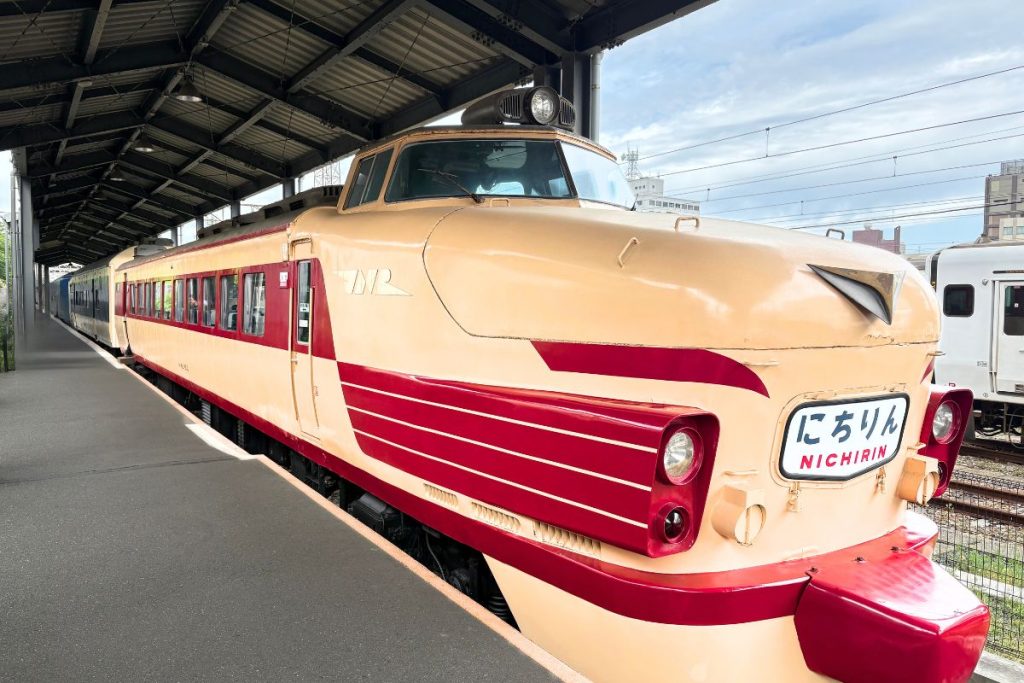
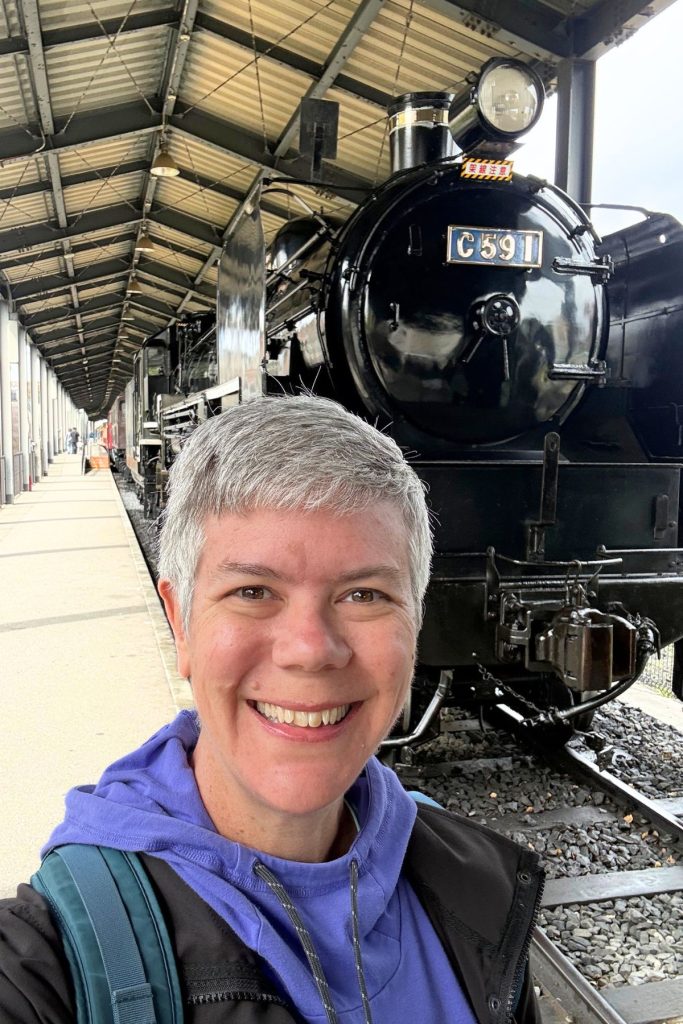
There are several trains on display outside of the museum. Many of the trains are open so visitors can walk through them. The oldest locomotive on display is from 1922, a 9600 steam engine that was the first domestically mass-produced steam engine in Japan. There is also a C59 class steam engine on display, which operated during the 1940s and was designed as an express engine.
Interesting Exhibits Inside the Museum
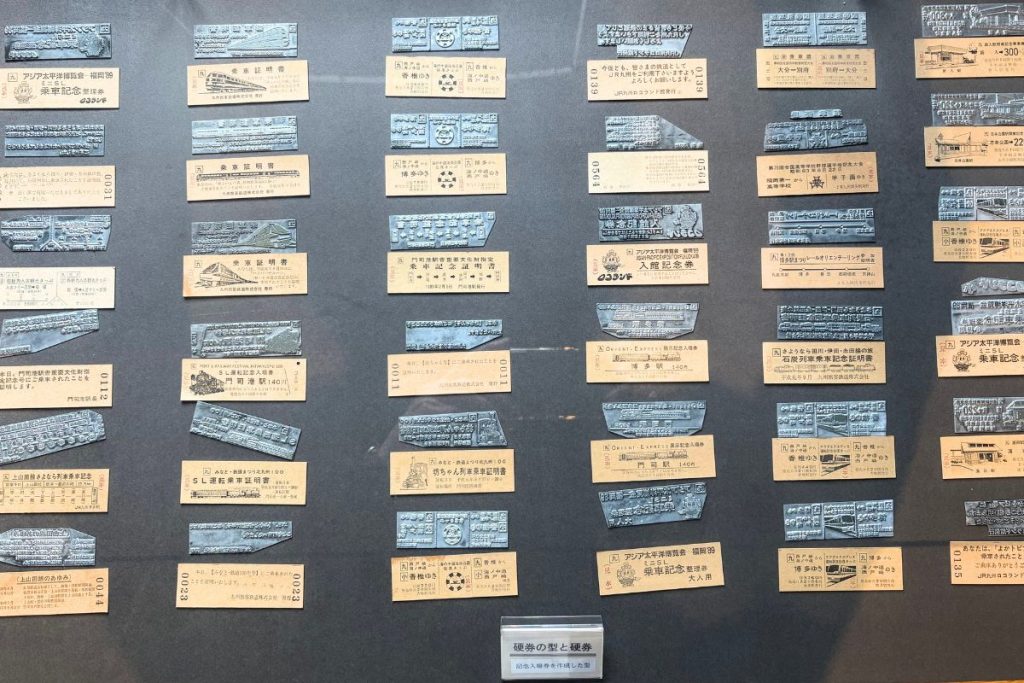
The inside of the museum has two floors of interesting exhibits. The first floor includes a large model railway based on Kyushu and its actual trains, complete with miniature stations modeled on Mojiko and Hakata. The second floor features a large timeline and exhibits on different eras of rail technology. Here, visitors learn about the transition from telegraphs to telephones, changes to ticket designs, and the evolution of conductor uniforms.
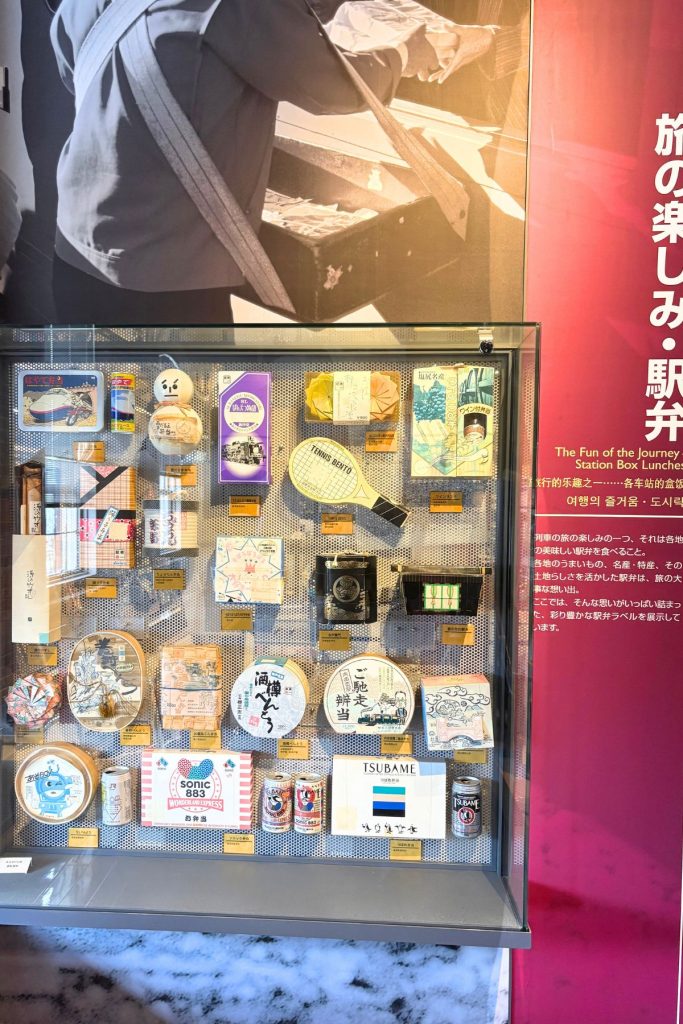
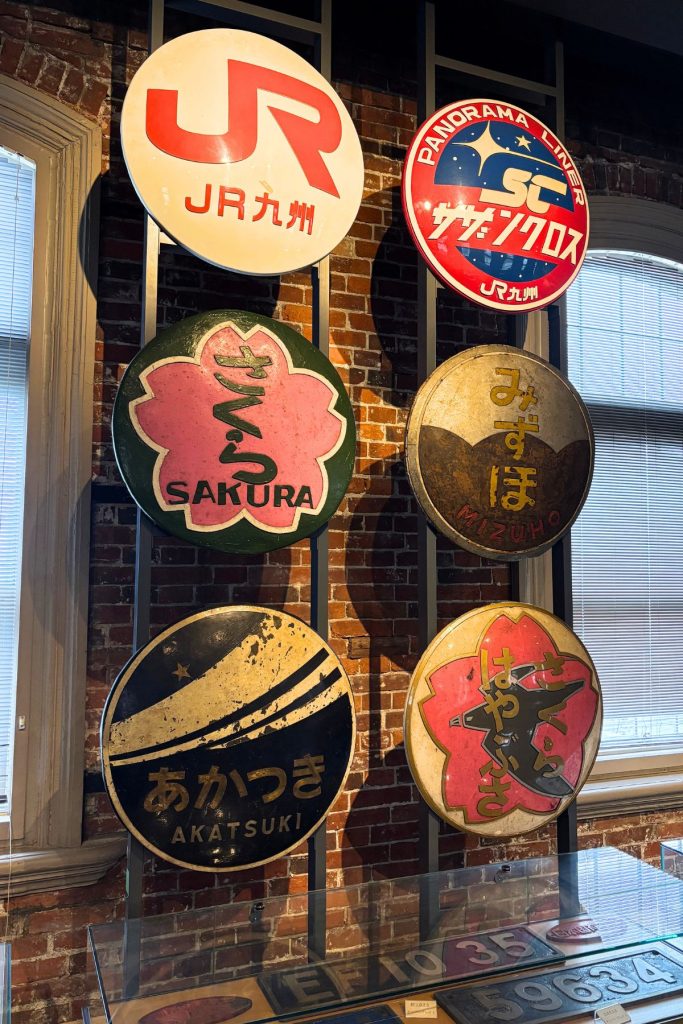
- One of the museum’s most popular exhibits is a driving simulator that uses a real control panel from a Class 811 train. Visitors can test their train-operating skills against one of three difficulty levels.
- In the outdoor Mini Train Park, visitors can drive a miniature train on a realistic track complete with a double track and signals.
- The museum is compact but packed with content, making it very doable in an hour or two. It is perfect as part of a full day in the Mojiko Retro district and is equally enjoyable for hardcore rail enthusiasts and curious first-timers alike.
Sarakurayama Cable Car (Sarakurayama Keiburu)
The last stop on my excursion today was the Sarakurayama Cable Car (Sarakurayama Keiburu), followed by a ride on the Slope Car, leading to the summit of Mount Sarakura (Sarakurayama). We drove approximately 20 minutes from the Mojiko Retro district to the cable car station. The cable car is a funicular line that opened in 1957, originally known as the Hobashira Cable before being renamed in 2015. This cable car is one of the longest in western Japan, covering a distance of 3,600 feet (1,100 meters) and an elevation difference of 1,445 feet (440 meters) from Sanroku Station to Sanjo Station. The second part of the journey, the slope car, is a kind of monorail used to reach the mountain’s summit of 2,040 feet (622 meters).
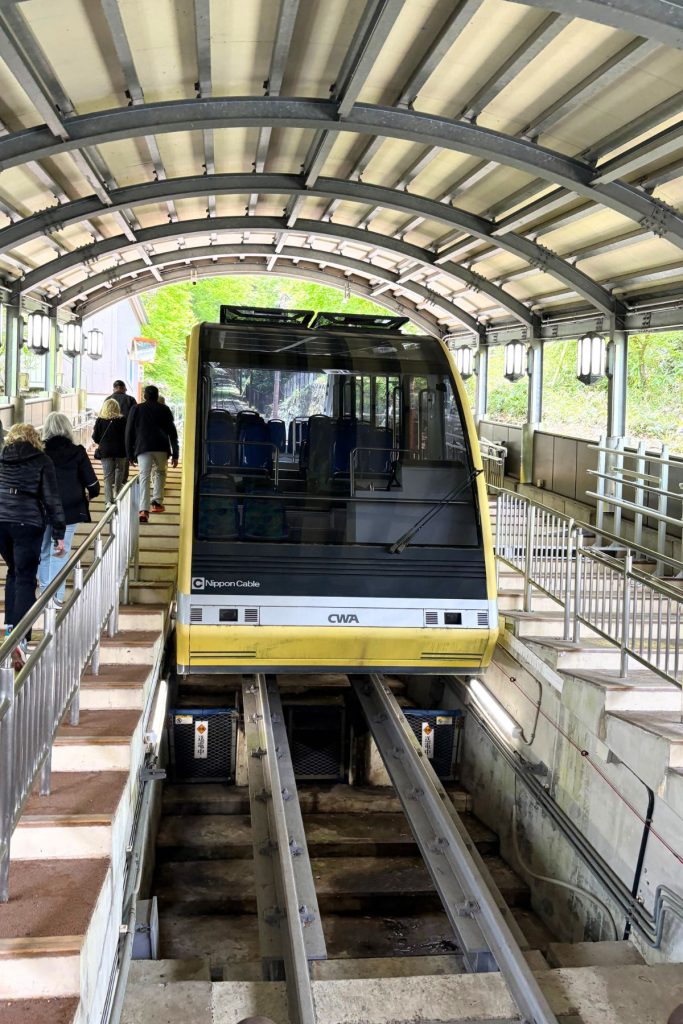

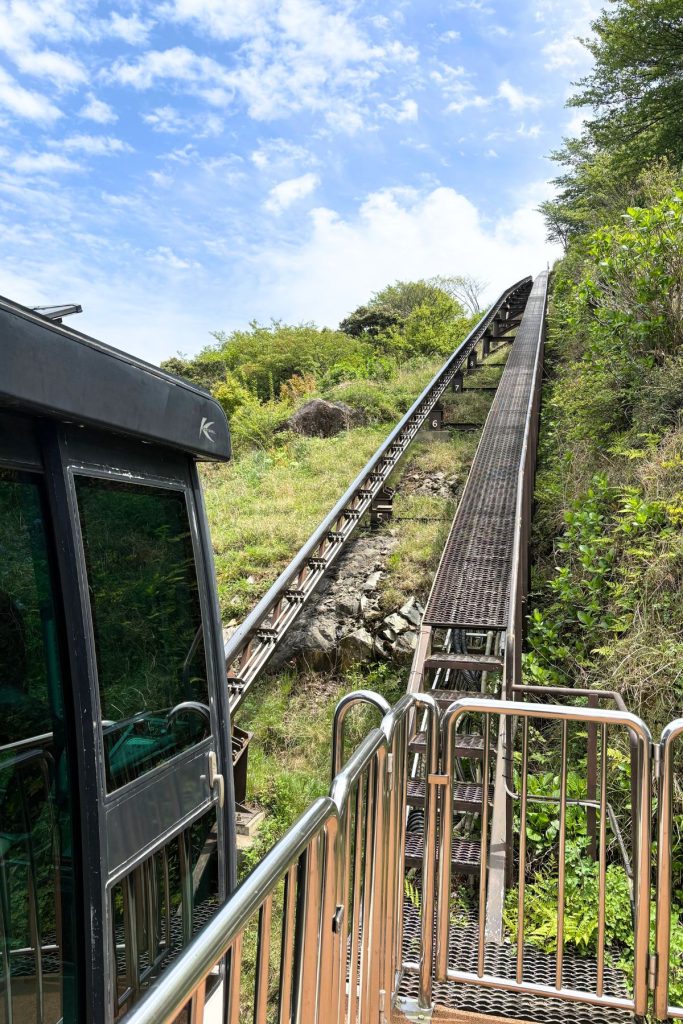
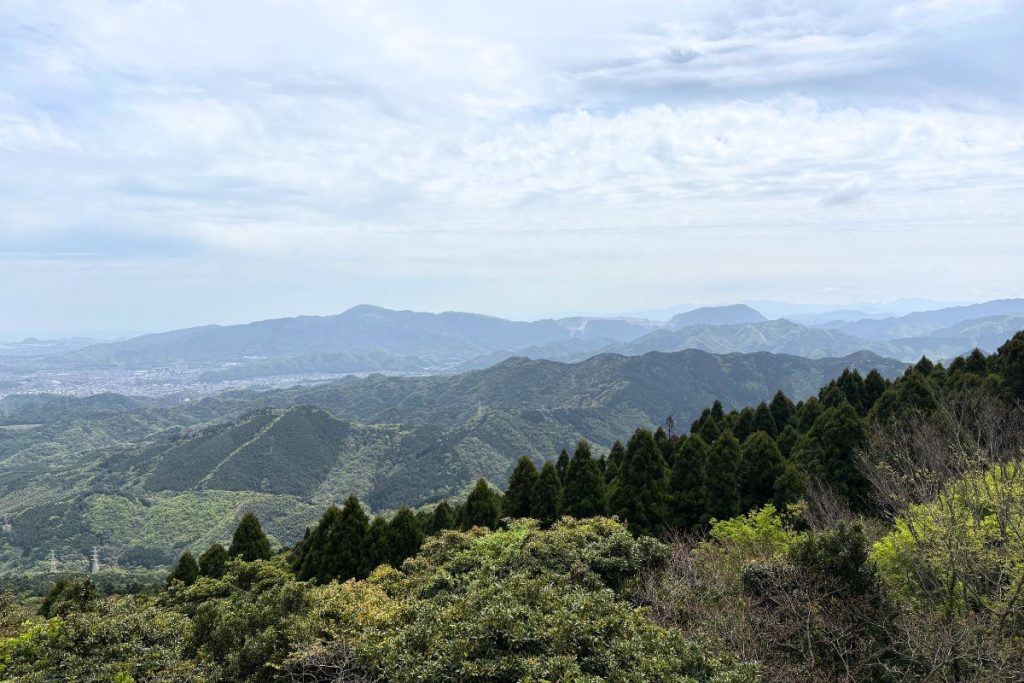
After about a 10 minute trip on both the cable car and slope car, we arrived at the observation deck. From the observation deck, I saw sweeping views of Kitakyushu’s cityscape, harbor, and distant mountains. The view from the top is actually best enjoyed at night. It is called “a night view worth 10 billion dollars” and is recognized as one of Japan’s New Three Greatest Night Views. Sunset is also said to be spectacular here. Unfortunately, we visited during the day…but the views were still absolutely stunning!

- There is a restaurant at the observation deck, providing 200 degree views of the area while dining.
- For the best night view experience, try to visit on a clear winter night. The crisp air makes the cityscape especially sharp and spectacular.
- A round-trip ticket for both the cable car and slope car costs approximately $8 USD (based on current currency conversions).
At the Port of Shimonoseki
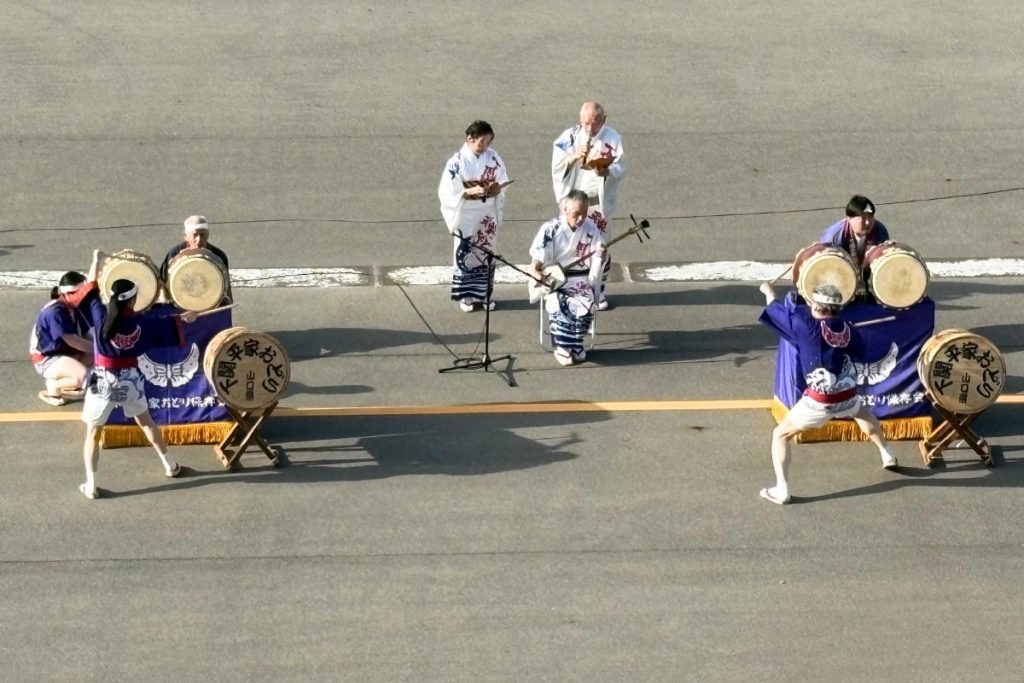
We had quite the send-off from Shimonoseki this afternoon! We were treated to a fabulous Kumi-Daiko (組太鼓) ensemble performance, incorporating music and traditional folk singing. There were teams of people who played the large drums. Wadaiko, or taiko for short, are traditional Japanese drums used to perform at festivals and other events. The three-stringed instrument that resembles a guitar is called a shamisen, a traditional Japanese stringed instrument played with a large pick. A man and a woman sang throughout the performance, using a traditional call-and-response style rooted in Japanese folk music traditions called min-yo.
There was also a group of four women dancers performing Nihon Buyo (日本舞踊). This style of performance tells stories with dancers conveying emotion through their movements, using slow, deliberate, and a highly refined style. Expressing the story of the music, this dance originally came from Kabuki. The dancers are called Nihon Buyo odoriko (Nihon Buyo dancers). I enjoyed watching the performance from the deck of the ship as we prepared to sail away that afternoon.
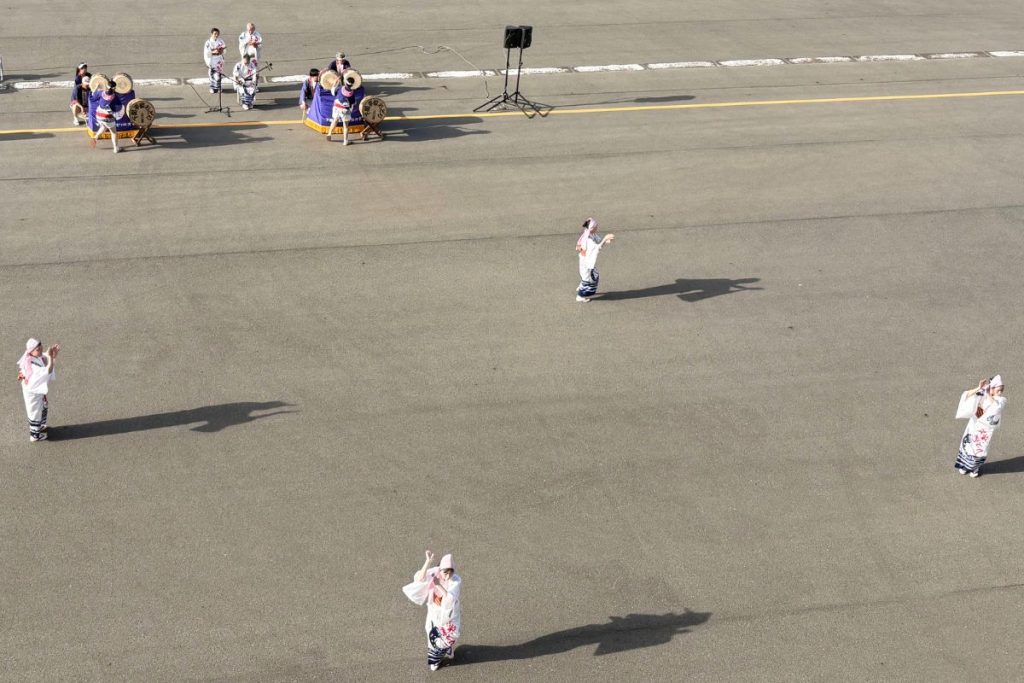
- This type of performance dates back over 400 years, to the traditions of Noh theater and Kabuki.
- Every subtle tilt of the wrist, turn of the head, and placement of the foot carries meaning.
- This is considered one of Japan’s most refined and prestigious performing arts.
Common Questions
Getting To and Around In Mojiko
You can easily take a train from either Fukuoka or Kokura. The total journey from Fukuoka is about 60 minutes, first on the Sonic JR Kyushu train to Kokura Station, then a local train on the JR Kagoshima Main Line to Mojiko. The local trains from Kokura operate every 30 minutes and take just 14 minutes. You will arrive at Mojiko Station, and most attractions in the area are within about a mile (2 kilometer) radius of the station.
Yes! The historic district is very compact and easily walkable. Other options to tour the city include rickshaw (rickshaw men wait outside the station offering tours of the area) or rental bicycles (available near the inner harbor). There is also a small trolley train called the Shiokaze-go (Mojiko Retro Scenic Line) that runs along the Kanmon Strait near the station, which offer a leisurely and scenic ride through the district. The tourist authorities at Mojiko Station also provide helpful maps in several languages showing all of the buildings to visit.
Weather
As with many other areas in Japan, any time of the year is a good time to visit Mojiko. The highlights are spring and fall, when the mild temperatures make exploring the historic district very comfortable. The scenery is also particularly beautiful with cherry blossoms in the spring and colorful foliage in the fall. Another peak time to consider is from the end of November to mid-February, when the Roman Illumination winter light festival occurs and there are over 300,000 lights illuminating the old port and historic buildings. The summer includes the Mojiko Beer Festa, an annual event showcasing over 20 varieties of beer. Use caution if visiting in June or July…this is Japan’s rain season (tsuyu), and there can be long stretches of gray, wet weather.
Even More Travel Ideas
Golden Walls, Nightingale Floors, and Cherry Blossoms: The Magic of Kyoto Awaits
From Crashing Waves to Castle Walls: A Perfect Day in Kochi, Japan