La Rochelle and Île de Ré: Clocktowers, Ramparts, and Donkeys in Pants
I spent one day exploring two coastal towns in France. In the morning, I wandered La Rochelle with no itinerary and no guide. In the afternoon, I got on a bus for a proper excursion to Île de Ré. It’s an island whose main town is still entirely wrapped inside its own fortifications. Same coastline. Same cruise stop. Two completely different rhythms.
This one covers a clocktower gate that has been keeping time in La Rochelle since the Middle Ages. A farmers market I stumbled into with zero warning. A UNESCO-listed wall system built to keep the British out in the 1600s. A lighthouse. And a breed of donkey that wears pants for reasons that are somehow both practical and slightly absurd. Also a tugboat, because French wind does not care about your sailaway schedule.
Prefer to watch instead of read? Watch the video →
La Rochelle, On My Own Schedule
The day gave me a free morning before the afternoon excursion. I did what I always do with unstructured time in a port…I picked a direction and started walking.
Under the Arcades
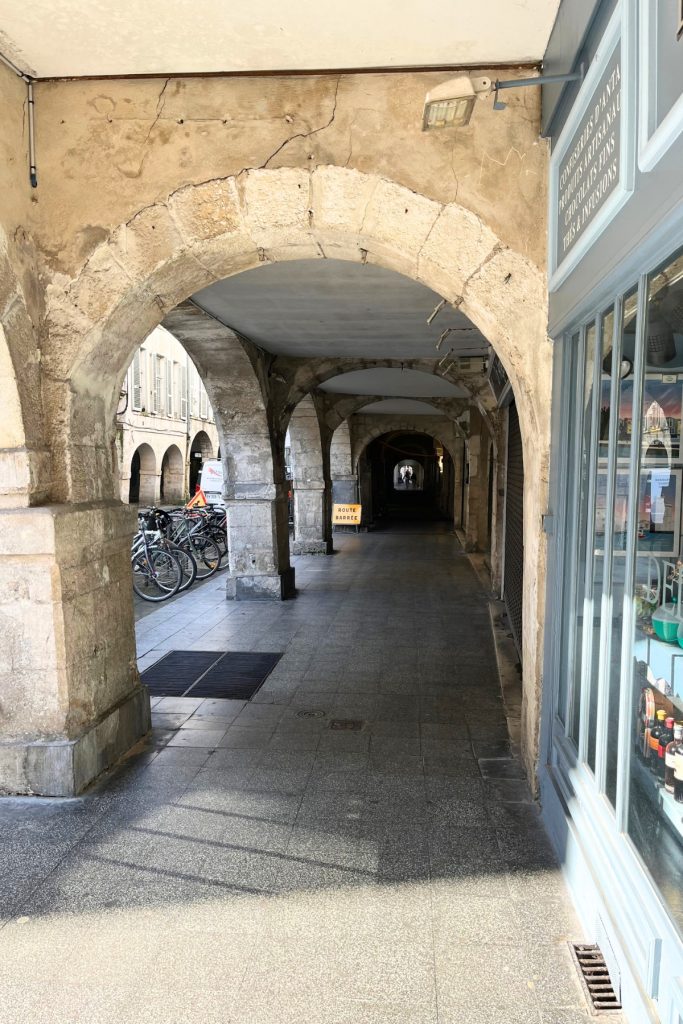
La Rochelle’s old town is built for walking in the shade. Stone arcades run along the streets near the port, one archway leading into the next, shops tucked in the whole way. I ducked into one without any real plan and it spit me out near the Tour de la Grosse Horloge.
The Grosse Horloge and the Vieux Port
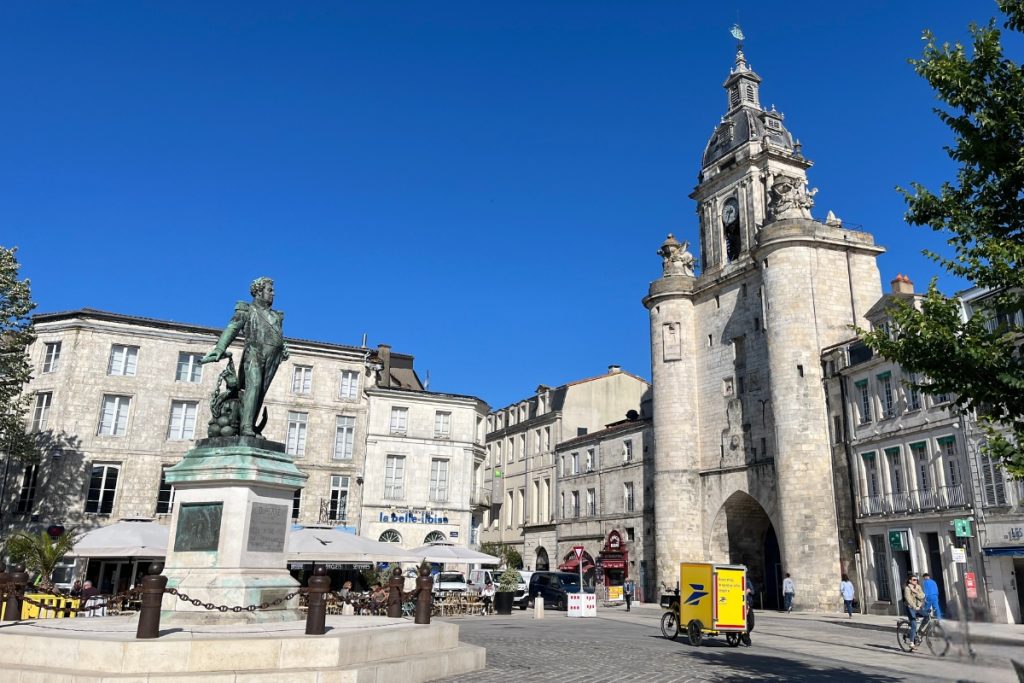
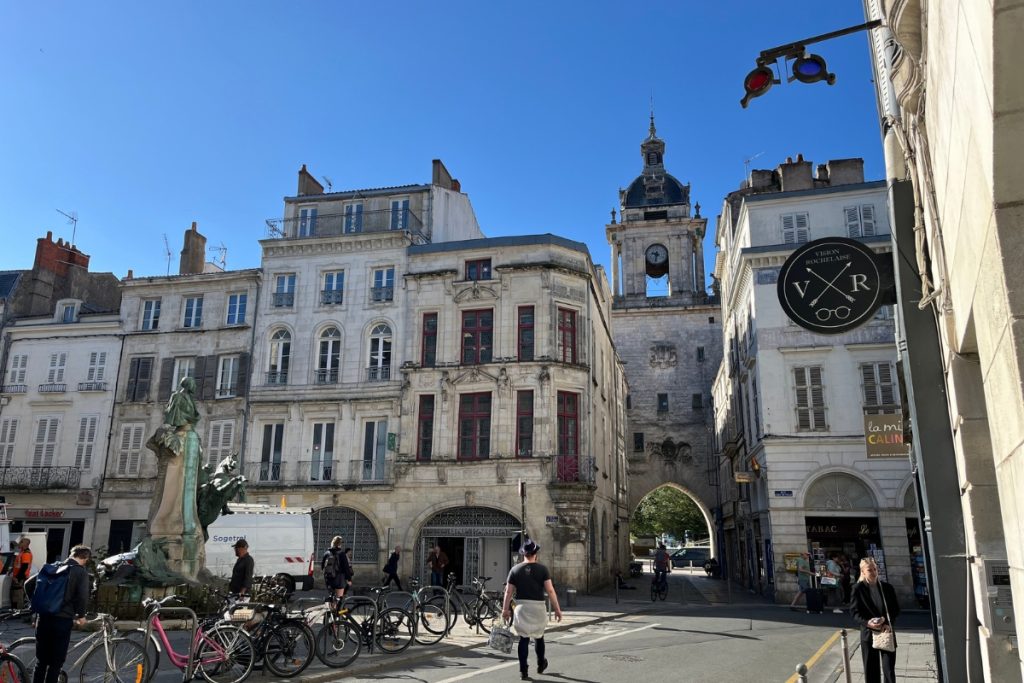
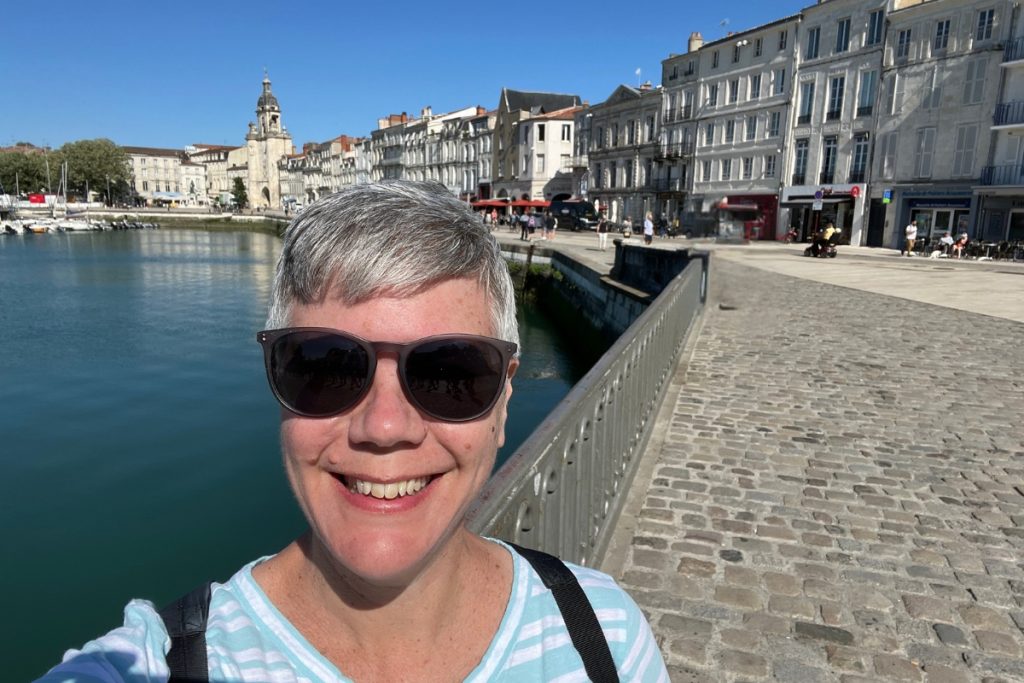
The Grosse Horloge is the gate and clocktower that has split the Vieux Port from the old town since the 1300s. It started life as a fortified gate. It picked up a clock a couple centuries later. Now it mostly functions as the spot where every visitor stops to take the same photo. I took mine too. No point pretending otherwise.
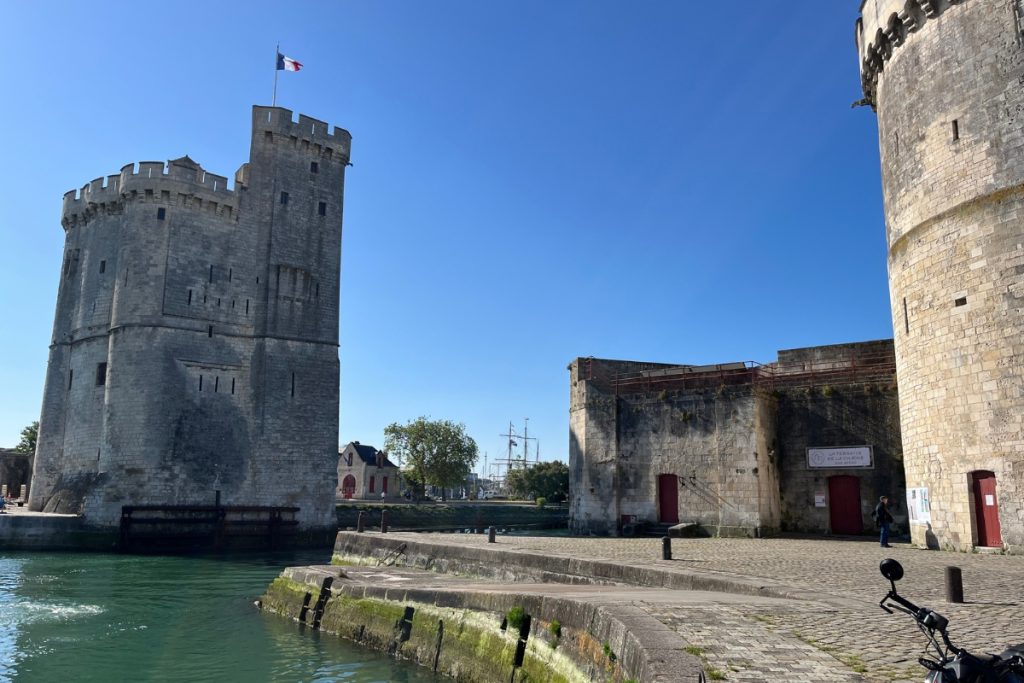
Past the gate, the Vieux Port itself is small and packed with sailboats. Two medieval towers watch over it, Tour Saint-Nicolas and Tour de la Chaîne. They used to hold a chain between them to block enemy ships from entering the harbor. These days their biggest threat is photobombing every boat that motors past.
A Cat, a Fort, and a Beach
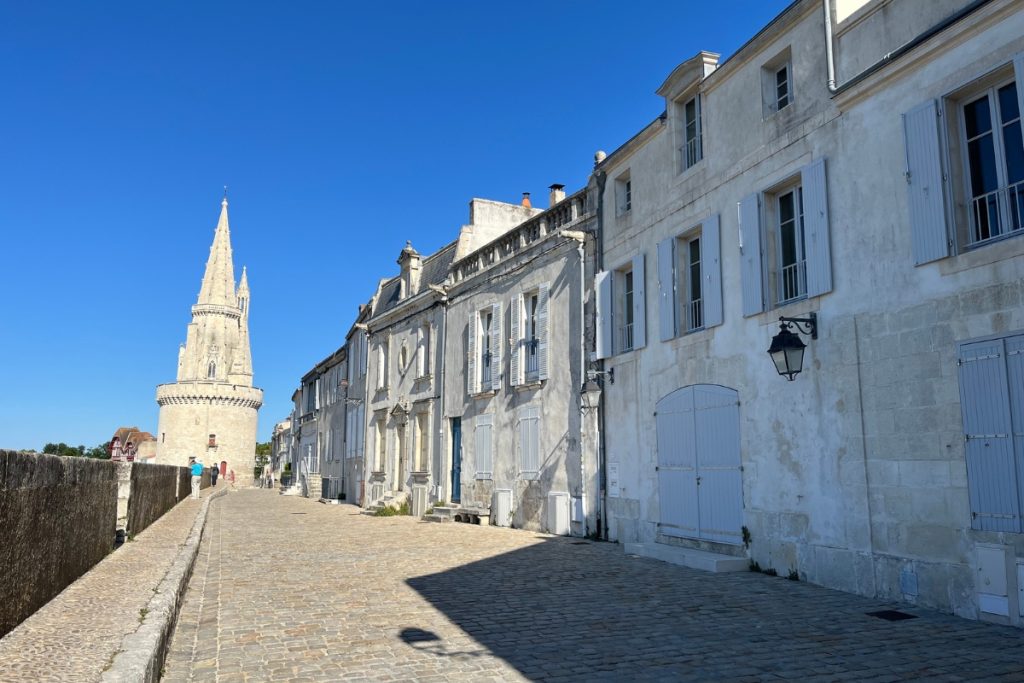
I kept walking along the ramparts, out past the towers toward Tour de la Lanterne, the spired one visible from a distance down the walkway.
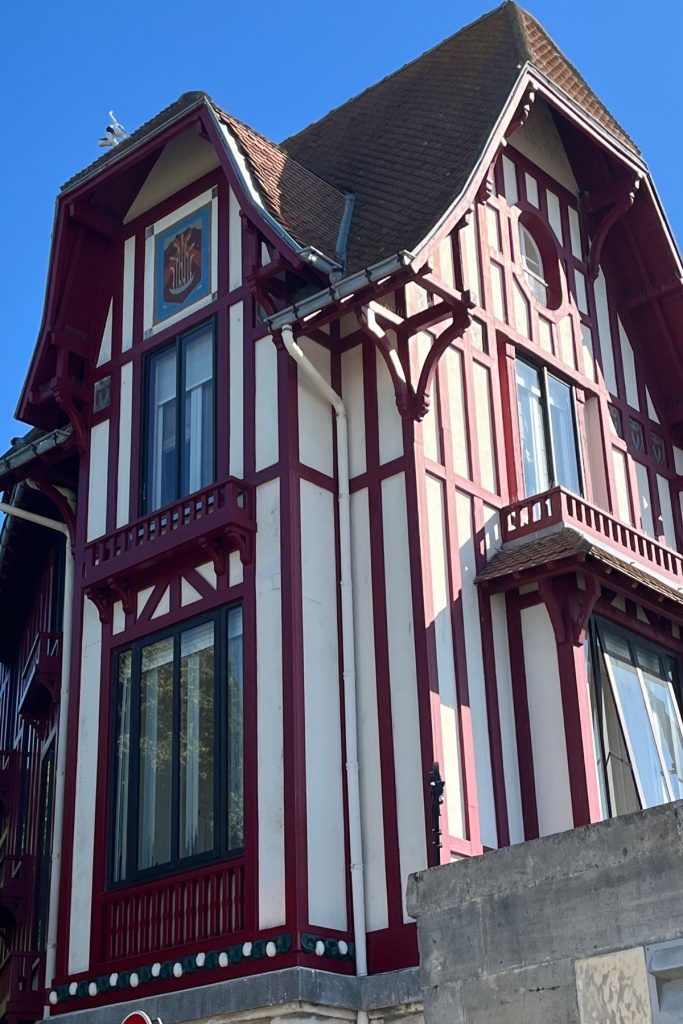
Along the way I passed a house with absolutely no business standing where it did. Red and white timber framing, steep gables, built in 1926 in a Norman Revival style that has nothing to do with the white stone everywhere else in La Rochelle. It is called La Maison du Chat, the Cat House, for the ceramic cat perched on the roofline. Nobody knows for certain why it is there. I have decided to believe the architect simply wanted a cat on his roof and nobody talked him out of it.
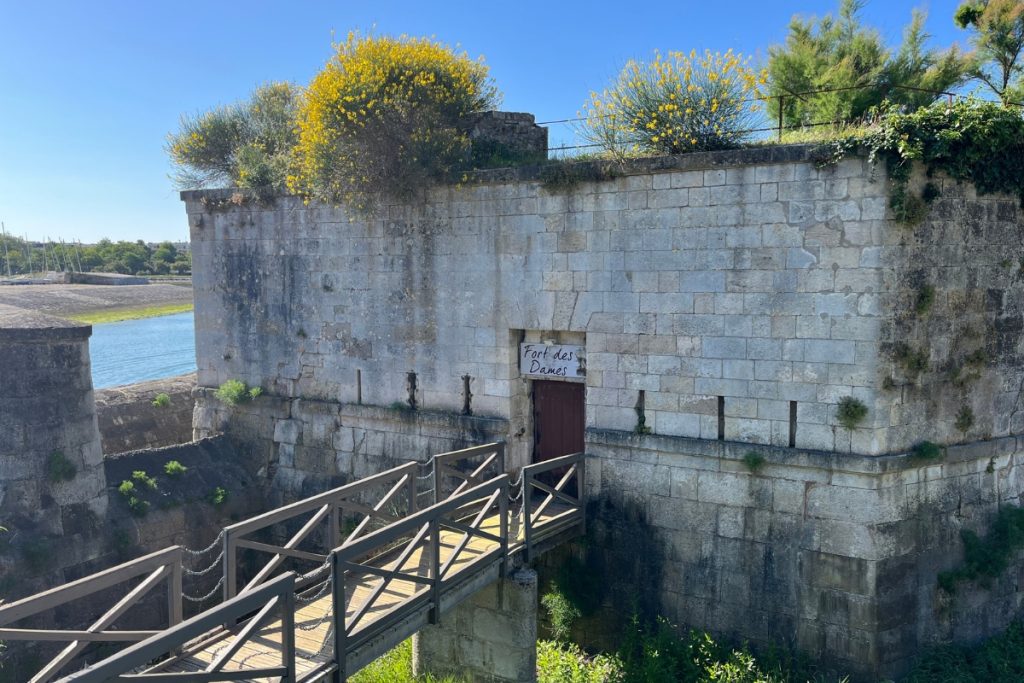
Further along, the ramparts lead to Fort des Dames. It’s a small fortification with its name hand painted over the door and a wooden footbridge leading in. I did not go inside, but I appreciated the confidence of naming a fort after the ladies. Past it, the ramparts open onto a beach. The sand did what sand does everywhere else, except this sand had a few centuries of stone wall standing guard behind it.
One Last Stop Before the Ship
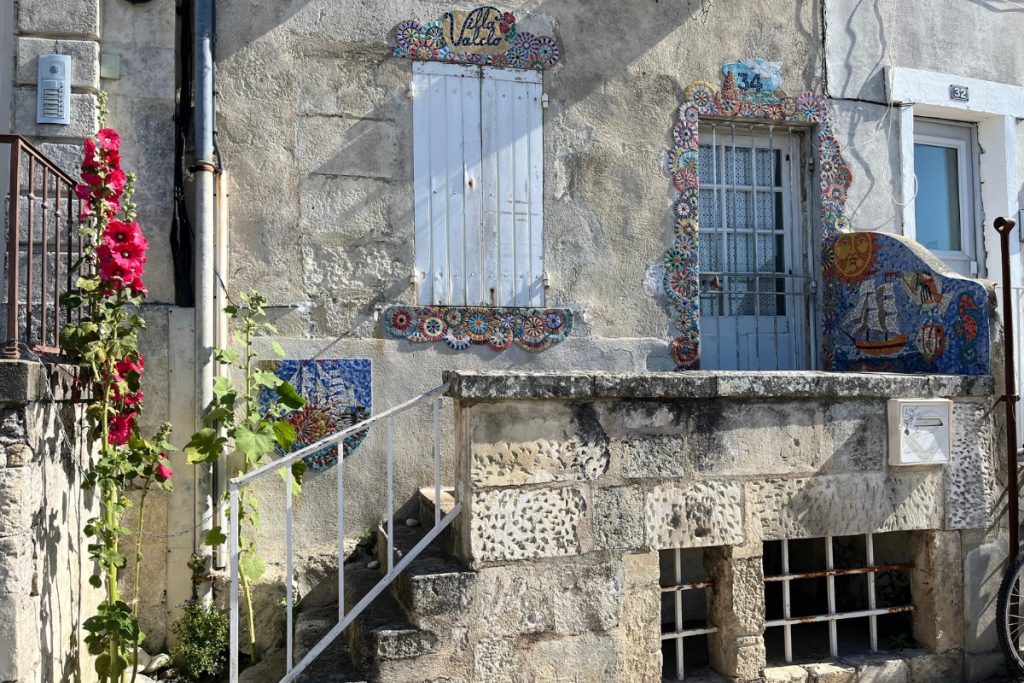
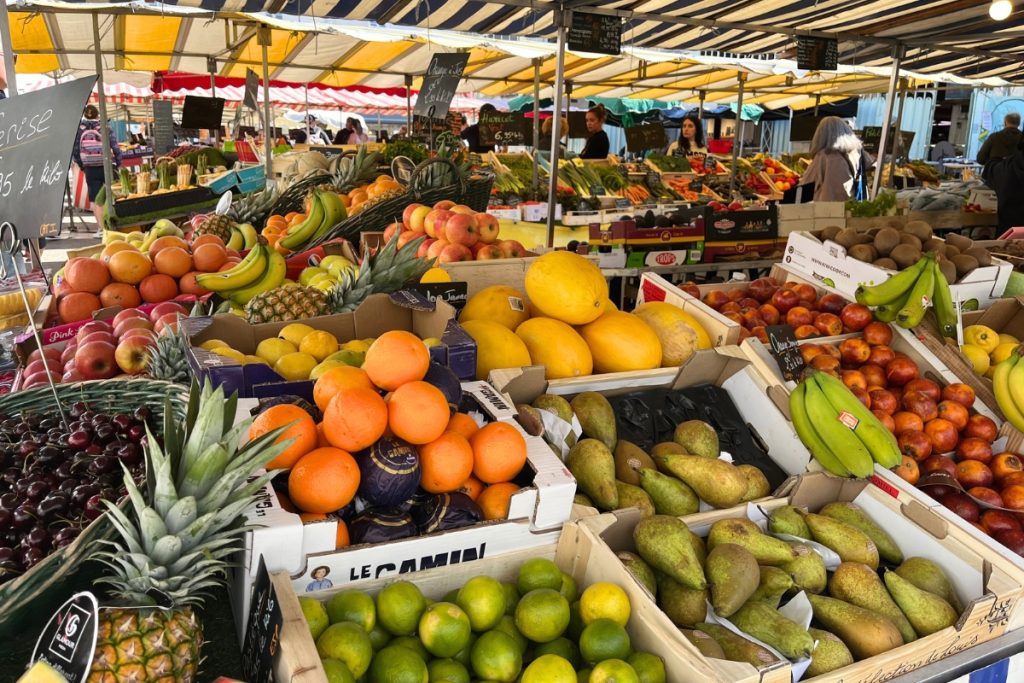
The walk back took me down a quieter residential street, past a house someone had turned into a mosaic garden. Hollyhocks grew up around tile work on the walls. From there I landed back near the port, and then straight into a farmers market I had not planned on. I had no regrets about it. Stalls of fruit, produce, and things I could not name but wanted anyway, set up in the streets like it was any other Tuesday, cruise ship or not. I passed the Hôtel de Ville on the walk back, its towers and flags doing their best to out-fancy everything else I had seen that morning. Then it was back to the ship for the afternoon’s excursion.
Back to the Ship
I had just enough time before the afternoon excursion for lunch and a cold treat. My legs had earned it after that walk. I got soft serve with a rainbow of M&Ms on top, poolside, the sun doing its thing. No agenda, no ramparts, just a cup and a spoon and absolutely no regrets. Then it was back down the gangway for round two.

Afternoon Excursion to Île de Ré
The afternoon was a proper excursion, guide and bus included, out to Île de Ré. Where the morning had no plan, this half had a schedule. I did not mind the trade.
Walls, a Lighthouse, and a Harbor
We started at the ramparts, the same Vauban fortifications that ring the town of Saint-Martin.
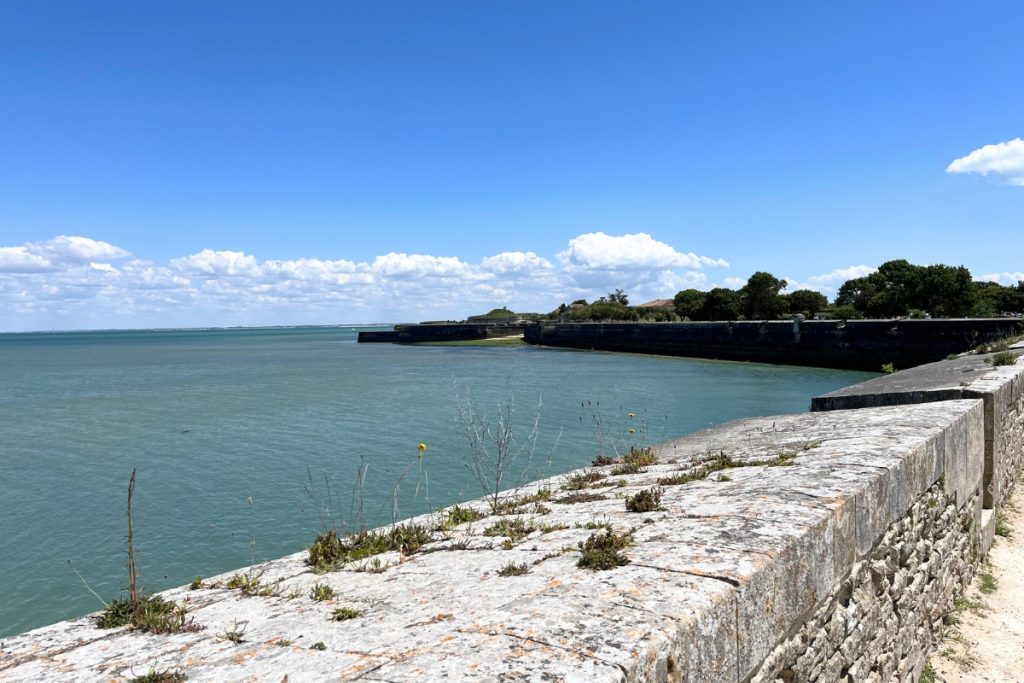
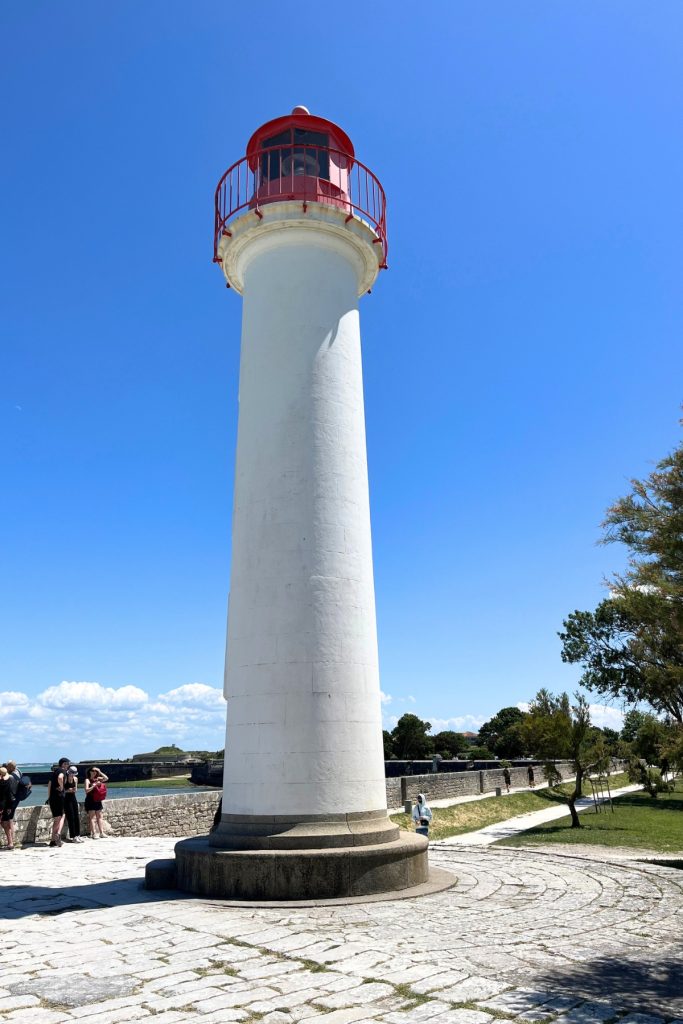
From there we walked out toward a small lighthouse standing right on the wall. Red lantern room, white tower, barely nine meters (about 30 feet) tall. It was built to mark the harbor entrance rather than to impress anyone. It does its job well enough that I still stopped to take a photo.
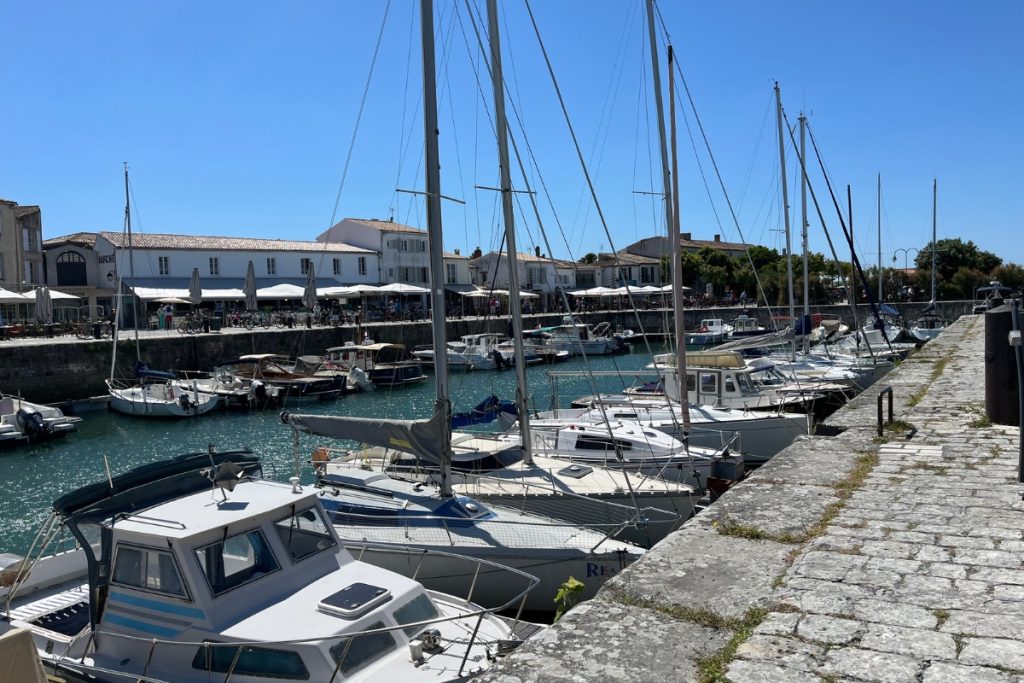
From there the walk dropped down into the harbor itself. Boats packed into a stone basin, bicycles chained to every available post, the old town rising up behind it in white stone and pale shutters.
A Church That Would Rather Be a Fort
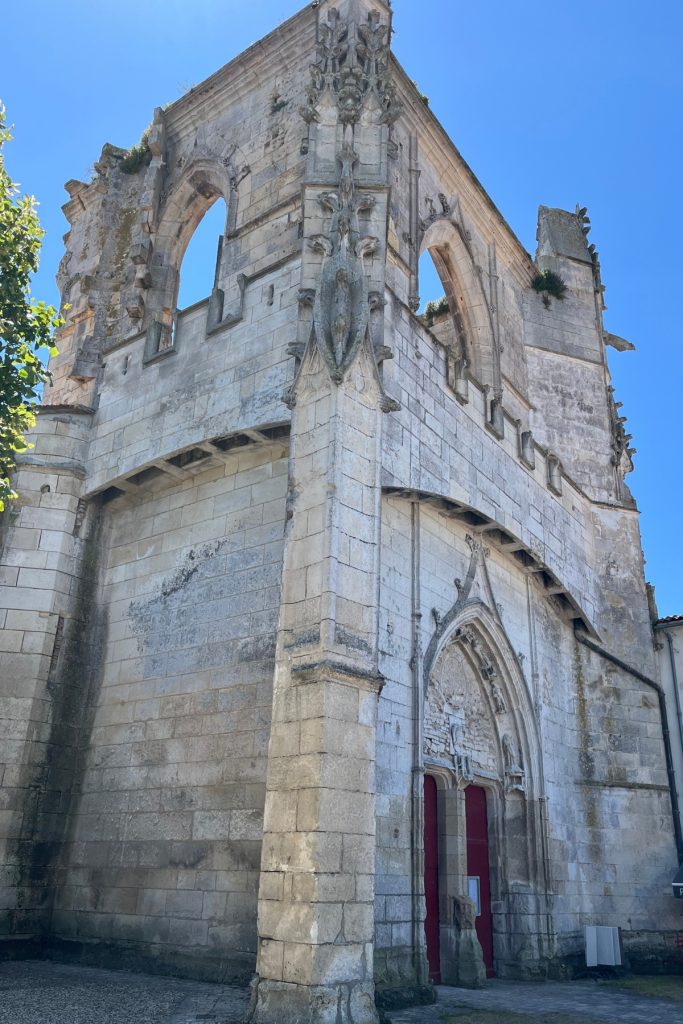
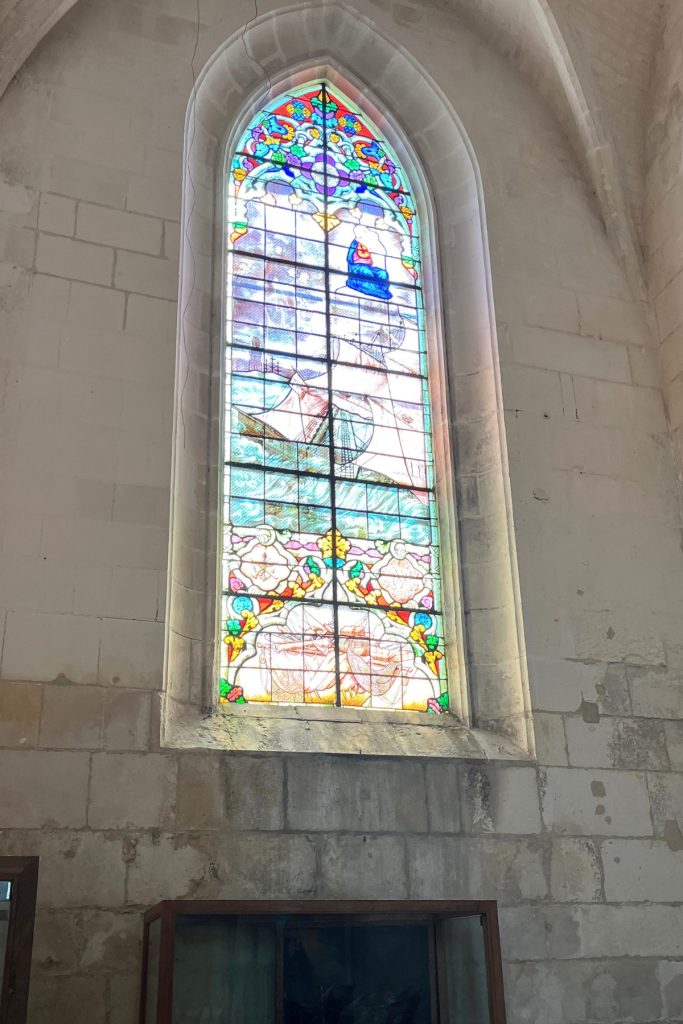
Église Saint-Martin, the church in the center of town, looks like it lost an argument with history…because it did, several times. Locals call it le Grand Fort, and the nickname is not decorative. It was sacked in the 1500s and bombarded by an English and Dutch fleet in 1696. It lost its bell tower to a collapse in 1774 and caught fire as recently as 1964. What is left standing is a genuinely strange mix: half working church, half Gothic ruin. A walkway and battlements are built into the transept, because at some point defending the church mattered more than decorating it. Inside, stained glass windows depict ships instead of saints. That felt appropriate for an island that has spent most of its history worrying about who might be arriving by water.
Wandering Saint-Martin
The streets past the church are the kind that do not need a plan either. Narrow, cobblestone, lined with pale stone houses and shutters in every shade of green our guide insisted was the island’s official color. I have no way to confirm that claim and have decided not to look too hard into it. One house had a ginger cat asleep in front of a green door like it owned the property. At that point in the afternoon, it may as well have. Another wall had a hand painted map of the entire island, faded blue paint on stone, next to a bakery doing brisk business in pastries.
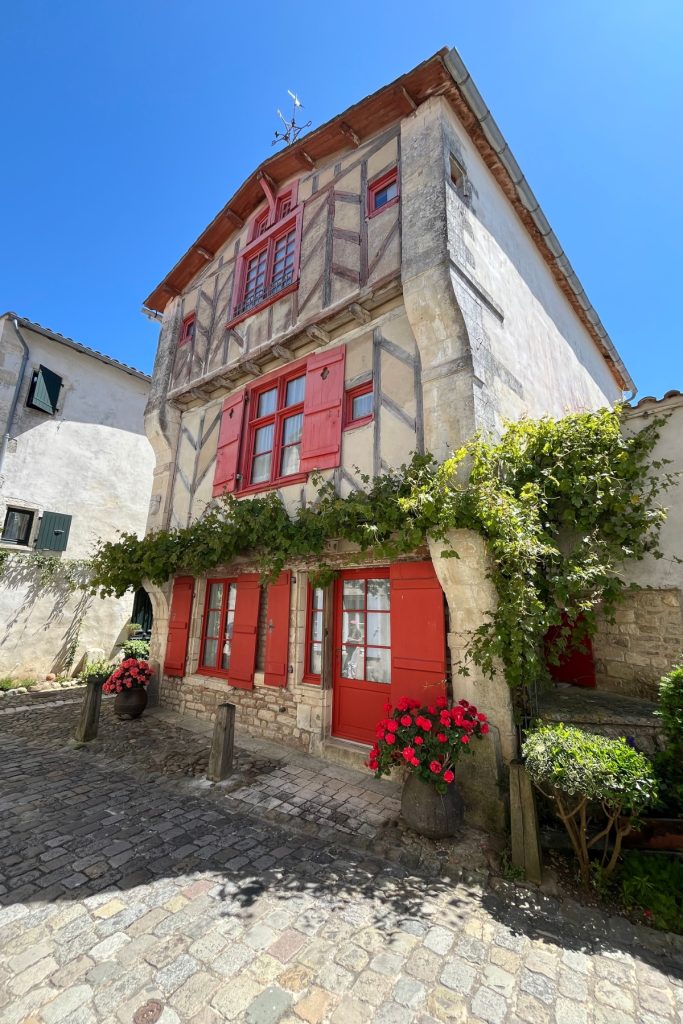
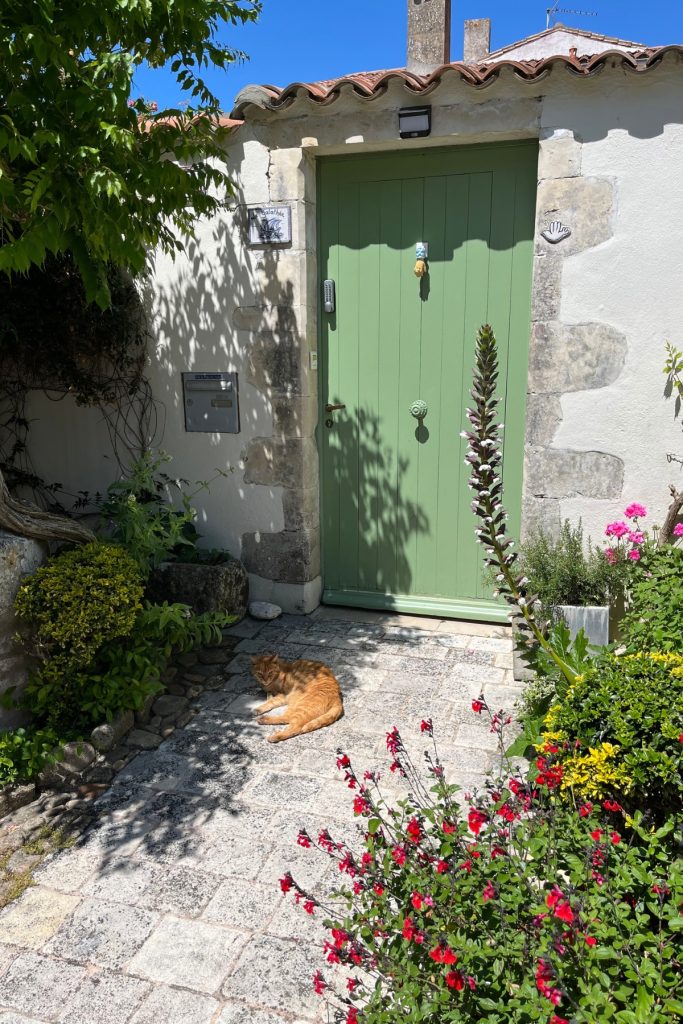
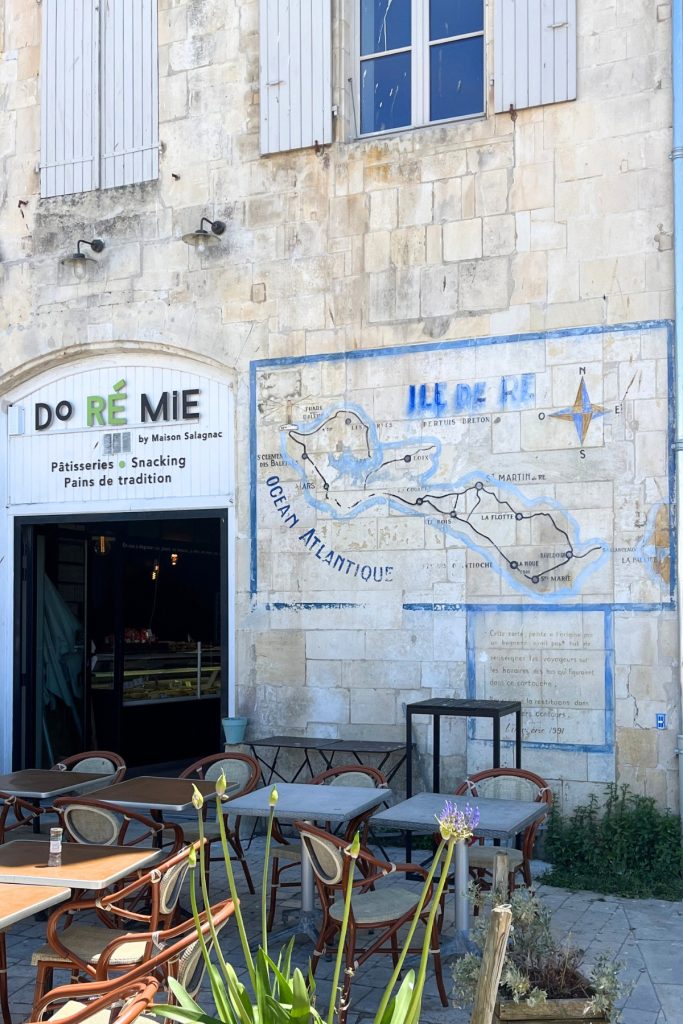
Donkeys, in Costume and Otherwise
A shop near the center had a stuffed donkey mascot out front, dressed in the same red and white striped pants as the real thing, advertising donkey milk soap to anyone who wandered past. Cute, and as it turned out, a preview.
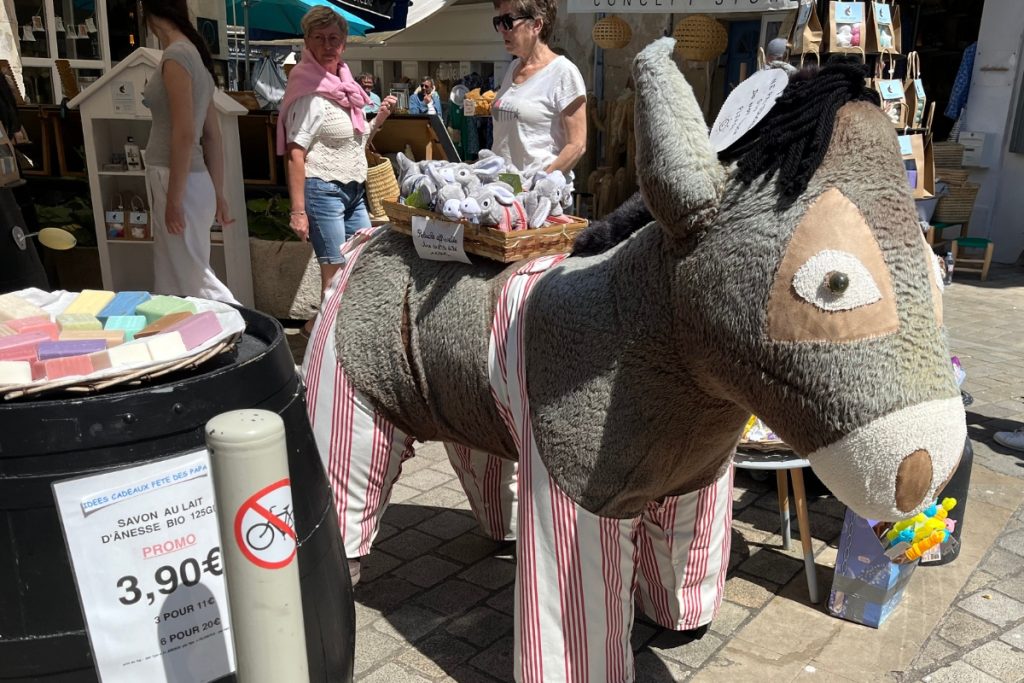
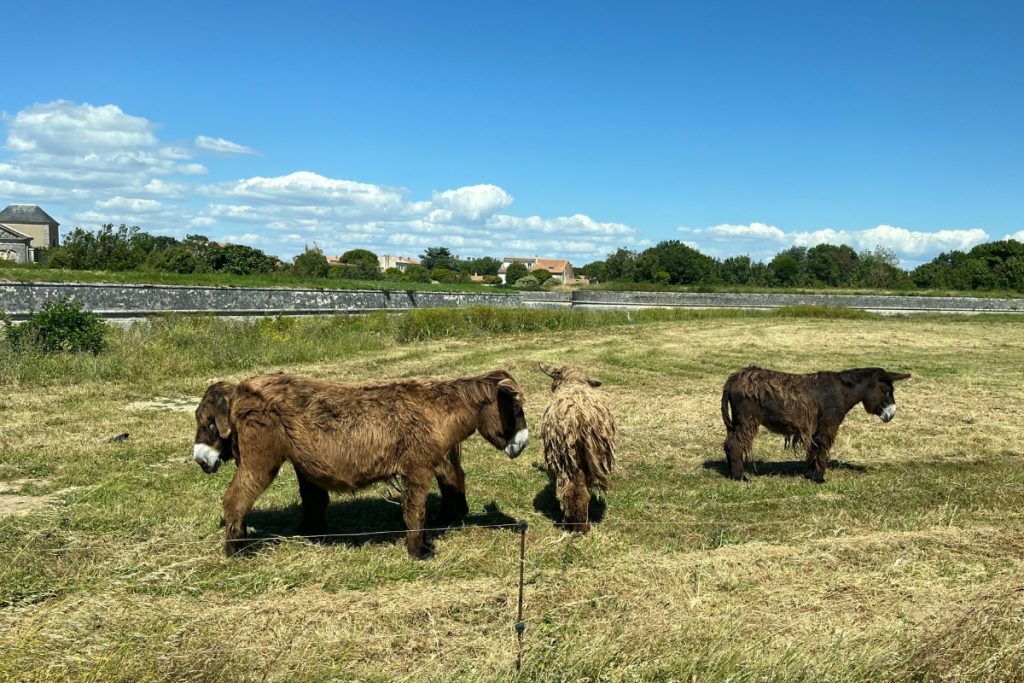
On the bus ride back, we passed a field of actual donkeys grazing near the ramparts, off duty and unbothered. Long shaggy coats did a passable impression of dreadlocks, which explains why the locals call them “Rasta donkeys.” No pants required when you are not working the salt marshes. I will let the resemblance speak for itself.
Macarons and a Windy Goodbye
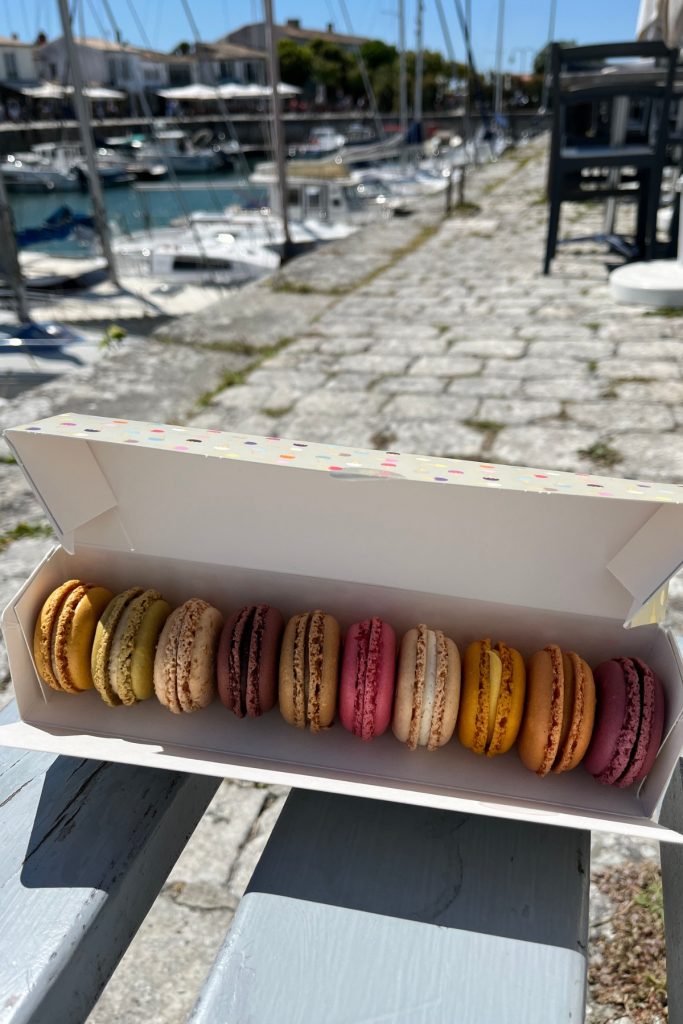
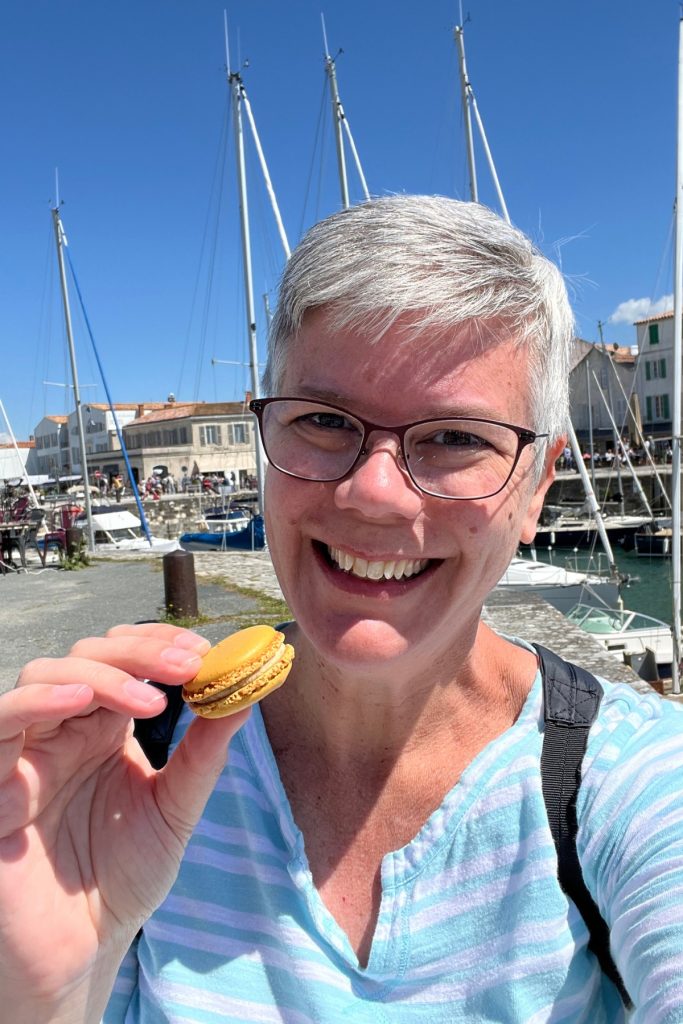
Back near the harbor I did what any reasonable person does in France before reboarding a ship. I bought a box of macarons to eat on a bench by the water. A good excuse to finally sit down after a day spent almost entirely on my feet.
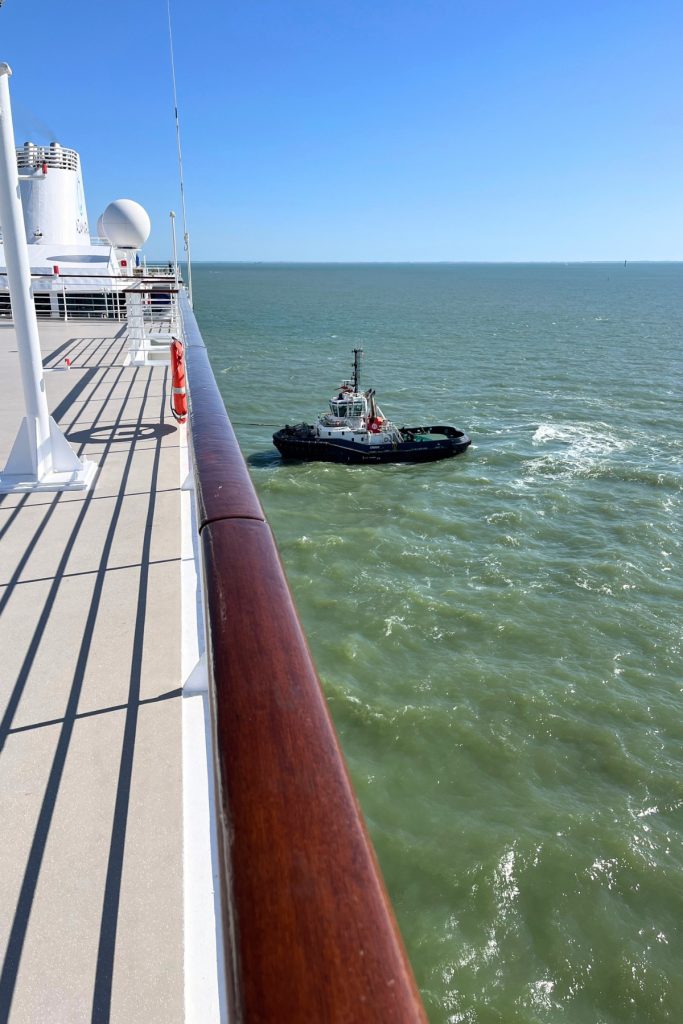
The sailaway that evening needed a tugboat. The wind had picked up enough that the ship needed a shove out of the harbor. Nothing like ending an island day watching a much smaller boat do all the work.
Worth the Time if You Have It
A few things I did not get to, for anyone with more than a morning in La Rochelle:
- The three medieval towers, Tour Saint-Nicolas, Tour de la Chaîne, and Tour de la Lanterne, can all be climbed. I only ever saw them from the outside.
- Fort des Dames was as far as I got on the ramparts walk, without going in.
- I only passed the Hôtel de Ville on the way back to the ship. It offers tours of its interior.
And on the Île de Ré side:
- Phare des Baleines, the tall lighthouse at the western tip of the island, was too far out of range for our excursion loop. Apparently it’s worth the climb for the view alone.
- The bell tower at Église Saint-Martin has a viewing terrace, a hundred some steps up, with a panorama over the town and the ramparts.
- Ars-en-Ré, which by every account has the postcard version of colorful shutters and a black and white striped church spire that I only saw from a distance.
- Around a hundred kilometers (about 62 miles) of bike paths connect the island’s villages. That’s clearly the correct way to see more of it than a bus excursion allows. Next time, a bike.
Closing Thoughts
One day, two completely different rhythms. La Rochelle let me wander with no plan and rewarded me for it. A market I did not expect. A house with a cat on the roof I nearly missed. Île de Ré handed me a schedule and a guide. In return I got a church that survived four different disasters, a lighthouse the size of a garden shed, and donkeys that dress better than I do for half the year. Both versions of the day were the real one. Neither needed a brochure to make the case.
Common Questions
Yes. The two are connected by a toll bridge, and regional buses and taxis run between La Rochelle and Saint-Martin-de-Ré. Renting a car or booking a private transfer gives you more flexibility than a fixed excursion, though you lose the guided history at the fortifications.
By car or bus, yes. There is also a passenger ferry option from La Rochelle in season, and the island has an extensive bike path network once you arrive, so plenty of visitors combine the bridge crossing with a rental bike for the day.
Budget at least an hour if you are walking from the Vieux Port out past the towers to Fort des Dames and back, longer if you stop for photos at every turn, which you will.
The town itself is entirely walkable. A car or bike becomes useful only if you want to reach the other villages, like Ars-en-Ré or the Phare des Baleines at the far end of the island.
Late spring through early fall gives you the best weather and the most open shops and market stalls. Summer brings bigger crowds, especially around the harbor and the donkey park in Saint-Martin.
Real tradition. The pants, called culottes, were originally sewn to protect the donkeys from mosquito bites while they worked the island’s salt marshes. The donkeys have not worked those marshes in decades, but the pants stuck around as the island’s unofficial mascot.
Keep Wandering
Two Days, Three Gaudí Buildings: A Pre-Cruise Barcelona Stay
Sand and Silence: Following the Footsteps of the Longest Day in Normandy