Sailing Through the Panama Canal: 51 Miles, Two Oceans, One Very Slow Day
Sailing through the Panama Canal is what happens when a cruise ship turns into a bathtub toy. The ship drives into a concrete chamber. The gates close behind it. Water flows in from below, and the ship rises. Nobody pumps anything. Gravity does the work, and it takes most of a day. I have spent plenty of days at sea. This is the only one where I set an alarm for 5:30 a.m. to stand at a railing and watch a wall.
This is my transit aboard Azamara Journey, from the first lock at Gatun to the last one at Miraflores. Along the way, we pass through three sets of locks, cross a lake full of waiting cargo ships, and sail under a very large bridge. You will also meet the small electric locomotives that keep the ship from scraping the walls. They are the real stars of the day. And since I book cruises for a living, the end of the post covers the questions I get asked most, including when to go and where to stand.
Prefer to watch instead of read? Watch the video →
Atlantic to Pacific, One Lock at a Time
The Panama Canal is about 51 miles (82 km) long and connects the Atlantic and Pacific Oceans. It opened in 1914. Ships do not cross it at sea level. They climb 85 feet to Gatun Lake, cross the lake, and then descend on the other side. Three sets of locks handle the climbing and the descending. Gatun is on the Atlantic side. Pedro Miguel and Miraflores are on the Pacific side. A wider set of locks opened in 2016 for larger ships. My ship used the original ones.
Entering the Panama Canal
The alarm went off at 5:30 a.m. I grabbed coffee and climbed to the top deck, along with everyone else who had the same idea. The sky was still pale. Behind us was the cable-stayed Atlantic Bridge, which opened in 2019. We had already sailed under it. Ahead was a flat channel and the first set of locks. The ship was about to enter the canal.
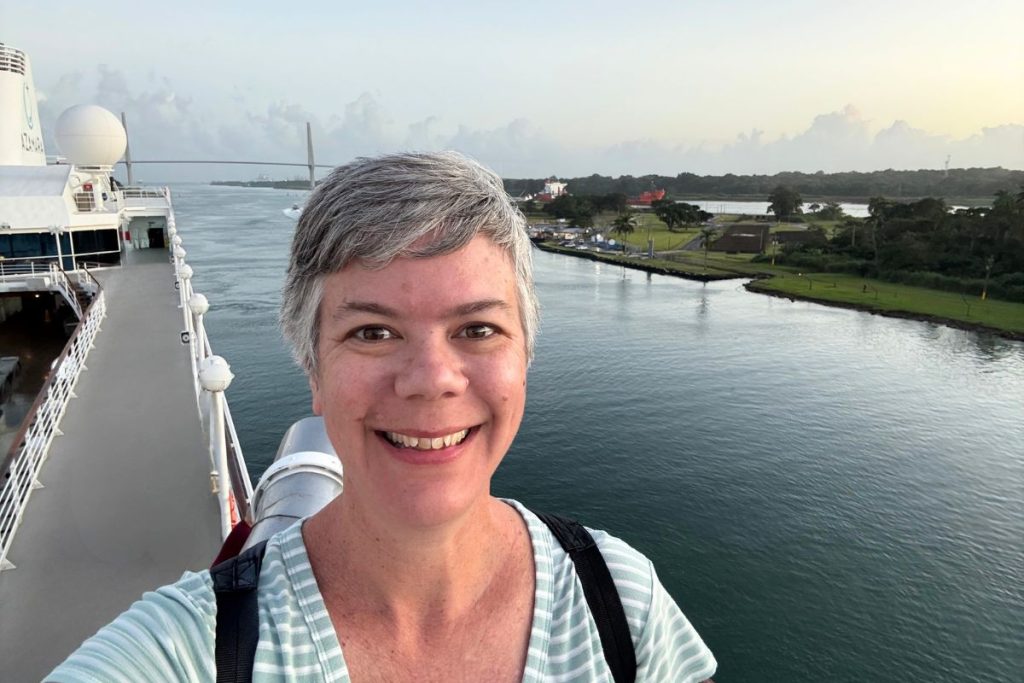
Gatun Locks
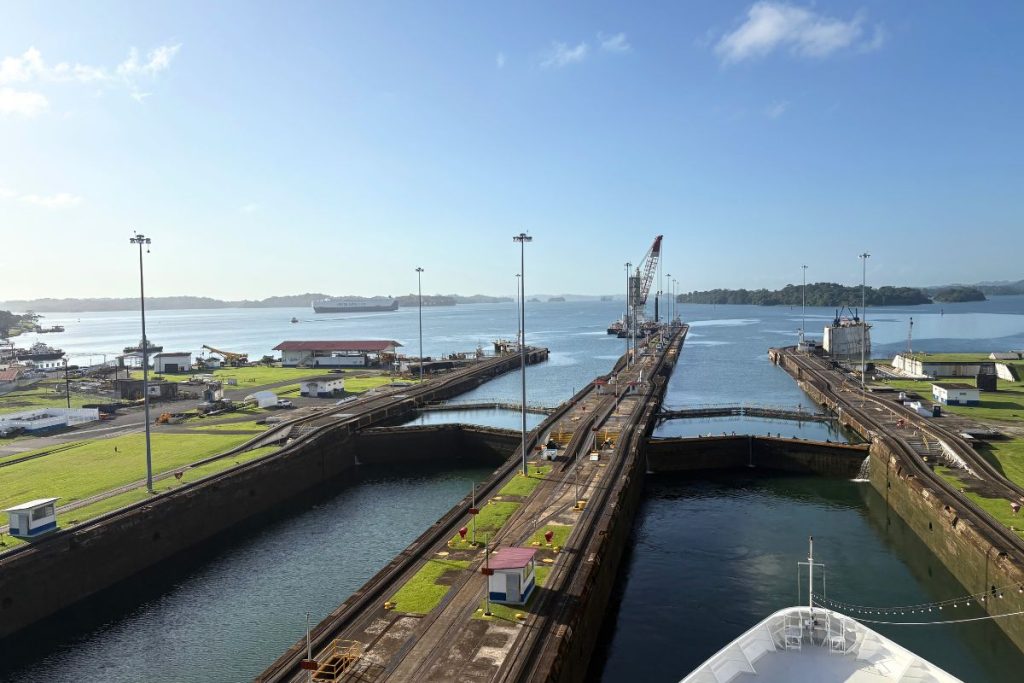
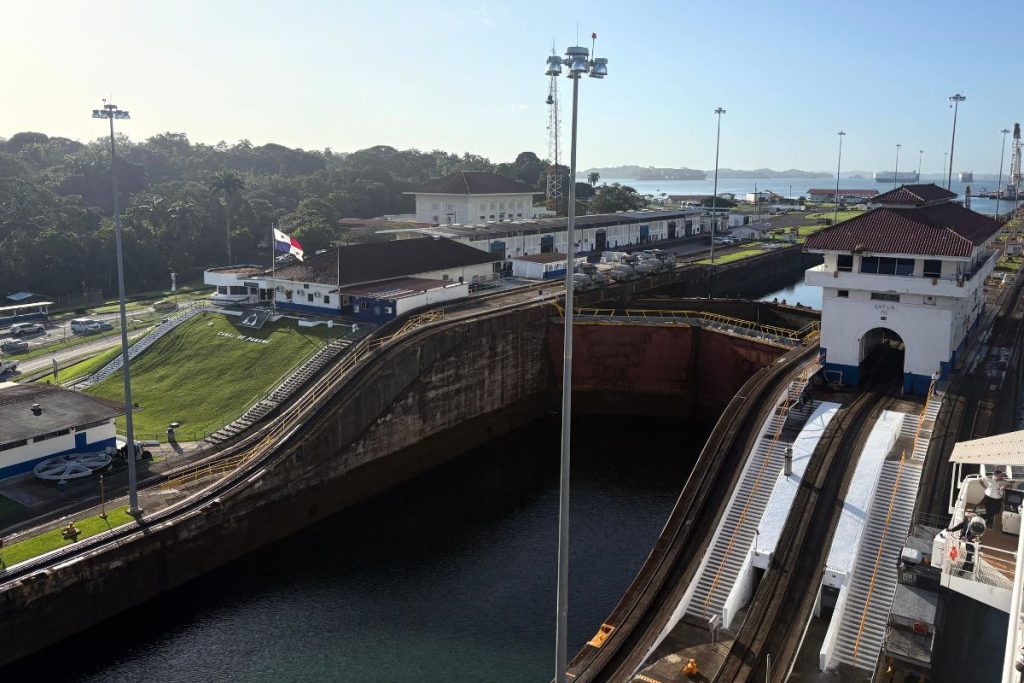
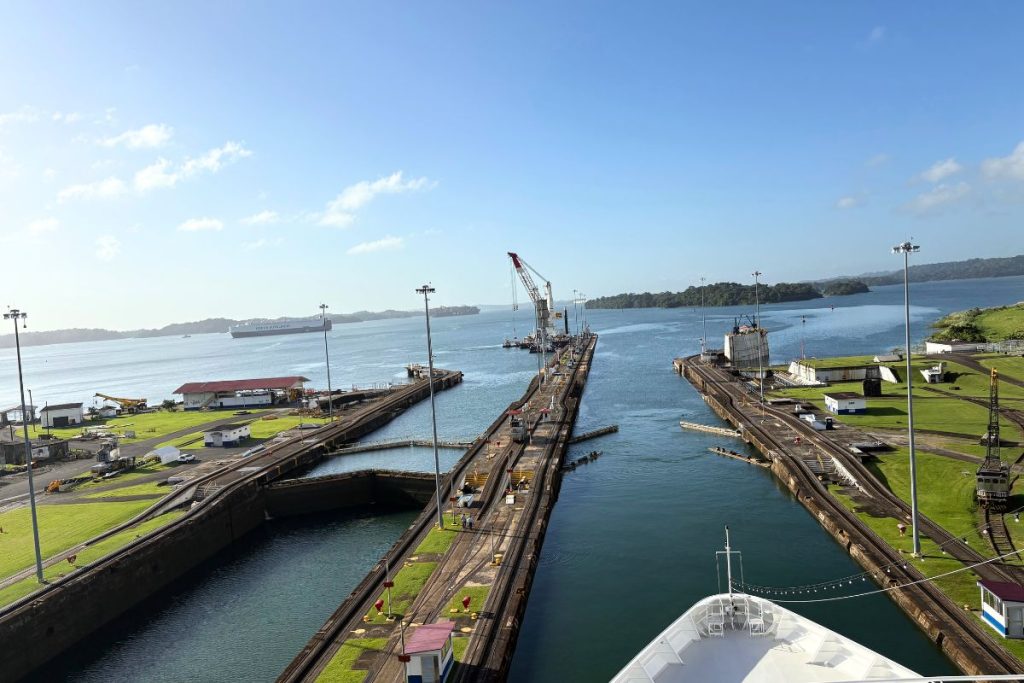
Gatun is the first set of locks. It has three chambers in a row, like steps. Together, they raise the ship 85 feet (26 meters) to Gatun Lake. Each chamber is 110 feet (33.5 meters) wide and 1,050 feet (320 meters) long.
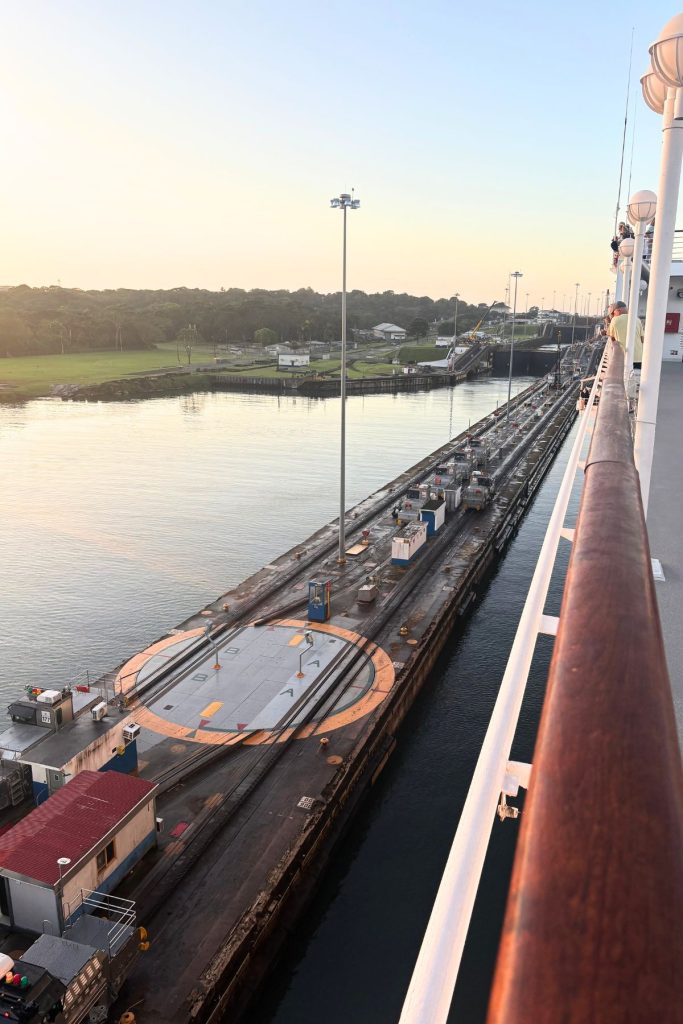
Every chamber follows the same routine. A tugboat stays close while the ship eases in. Electric locomotives called mules run on tracks along the top of the lock walls. Cables connect them to the ship, and they keep it centered. They do not pull the ship forward. The ship’s own engines do that. The mules simply prevent the ship from meeting the concrete, which is a job I respect.
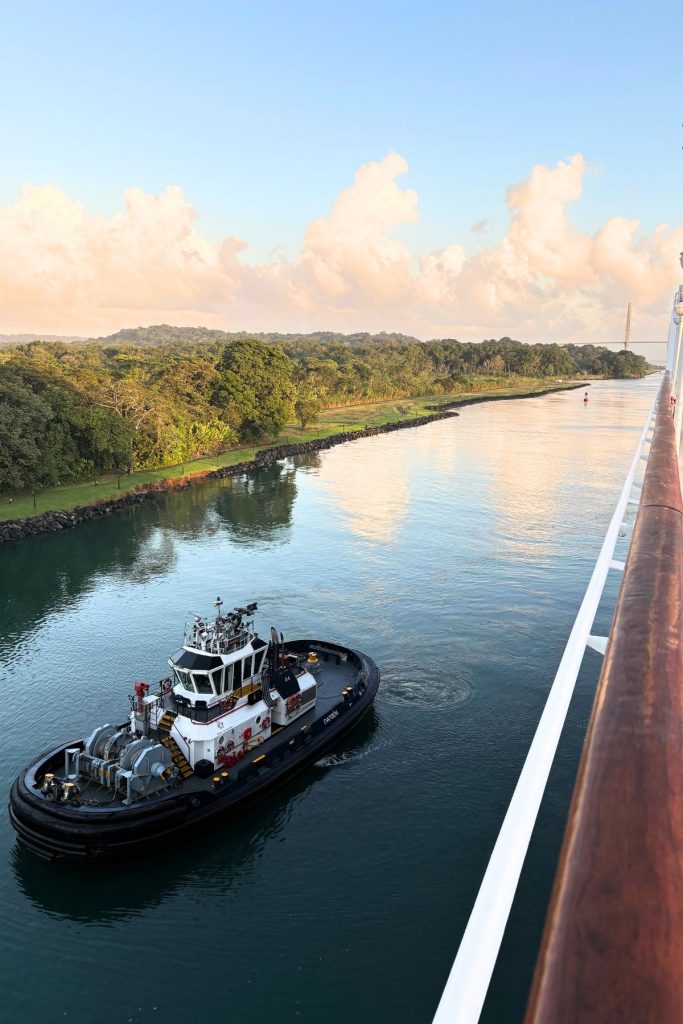
Once the ship is in position, the gates close behind it. Then the chamber fills with 26.7 million gallons (101,000 cubic meters) of water. There are no pumps. Gravity moves the water in from Gatun Lake through culverts in the walls and floor. You barely feel anything. The only sign is that the lock walls slowly sink and the people on the ground get smaller.
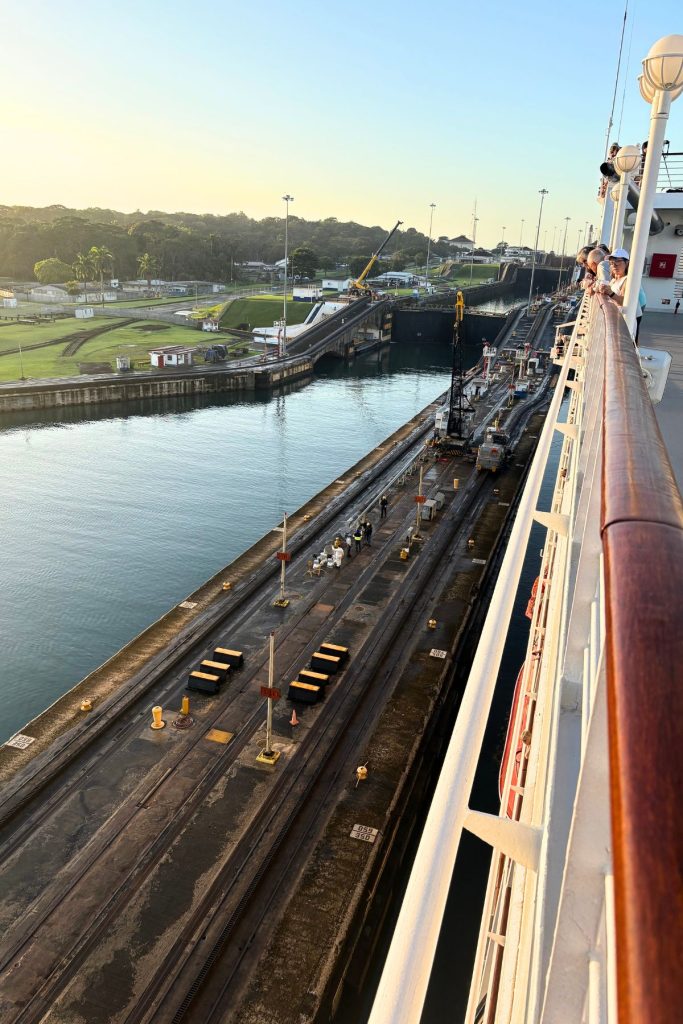
After the first chamber, I went inside for breakfast. Then I went right back out. Missing the other two would have been poor planning. By the third chamber, the ship had climbed all 85 feet. The white building on the center wall has GATUN painted on it, in case anyone forgets where they are.
Gatun Lake and the Culebra Cut
The third chamber opened, and the ship was 85 feet above the Atlantic, floating on a lake. Gatun Lake is freshwater and man-made. It was created by damming the Chagres River, and it was the largest artificial lake in the world when it was finished. Ships cross about 21 miles (33 km) of it. The same lake supplies the water that fills the locks. We had just been lifted by the thing we were now floating on.
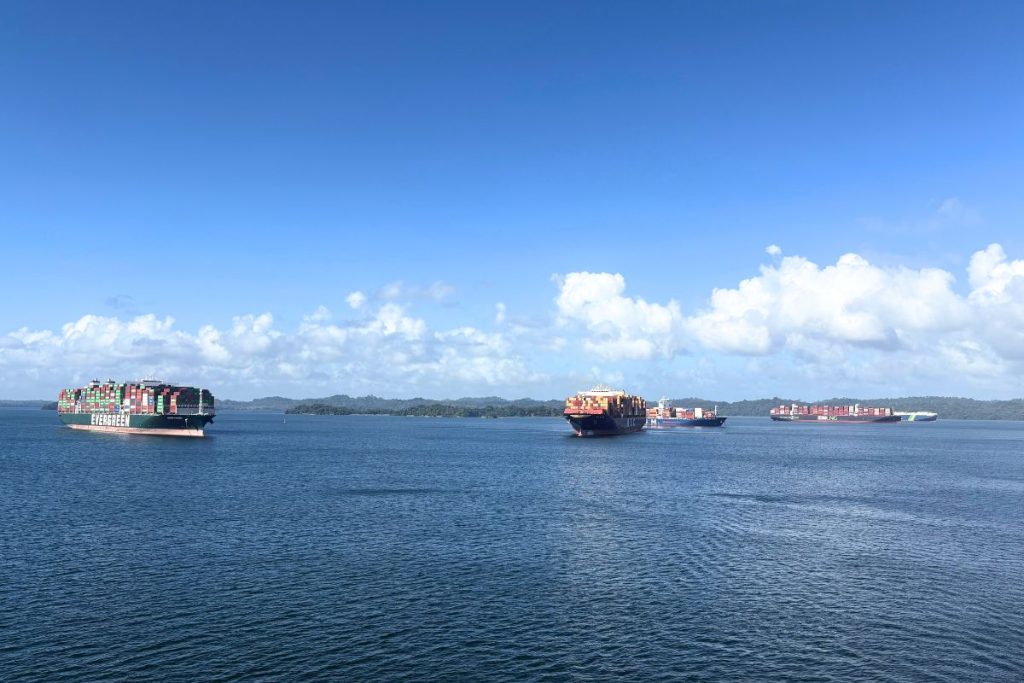
We had company. Container ships were spread across the water, waiting their turn at the locks. Each one was stacked with more containers than I could count, and none of them had a deck chair.
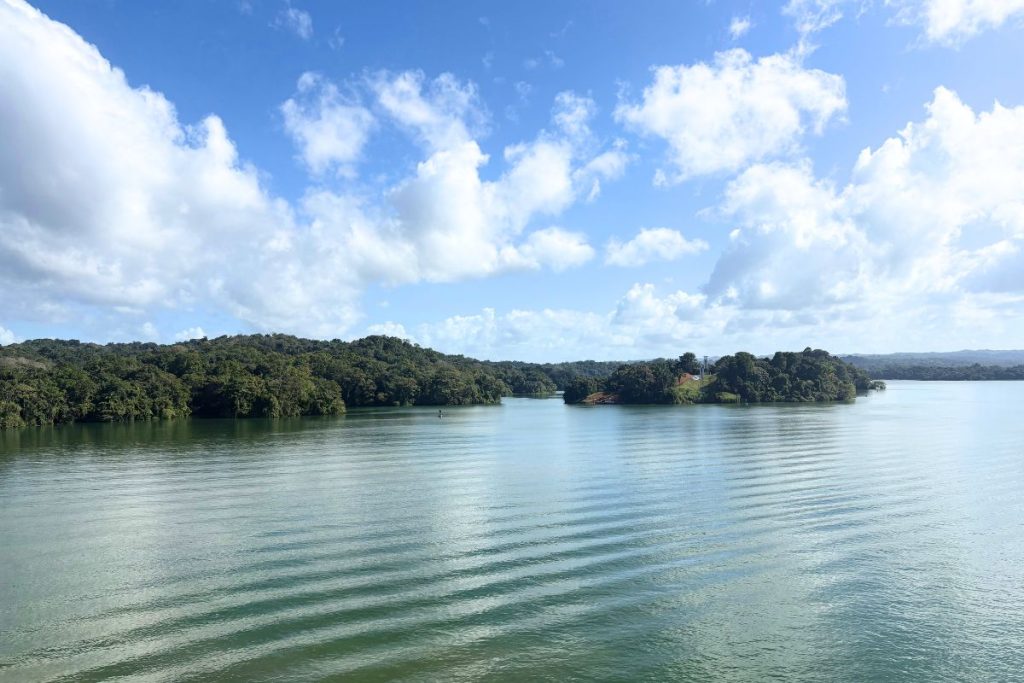
Between the ships, the view was jungle and small islands. For long stretches, the only thing moving was our wake.
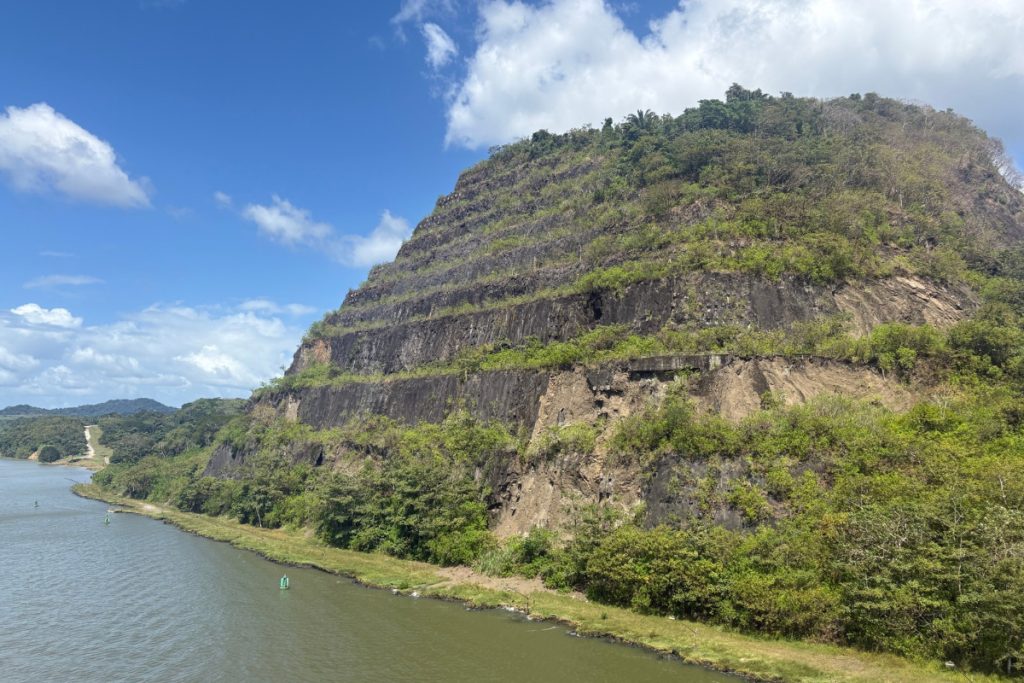
After the lake, the canal narrows into the Culebra Cut. This is the channel dug through the continental divide. It was also the hardest part of the canal to build. Accidents were common here. At least 25,000 workers died building the canal across the French and American efforts, and many of them were West Indian laborers. It is worth remembering while you stand at the railing with a coffee.
Then the Centennial Bridge appears overhead. It crosses the Cut near the Pedro Miguel locks and carries six lanes of the Pan-American Highway. Its total length is 3,451 feet (1,052 meters). It opened on August 15, 2004, to relieve traffic on the older Bridge of the Americas, and it stands about 262 feet above the water. The ship fit underneath without incident, which is what you want from a bridge.
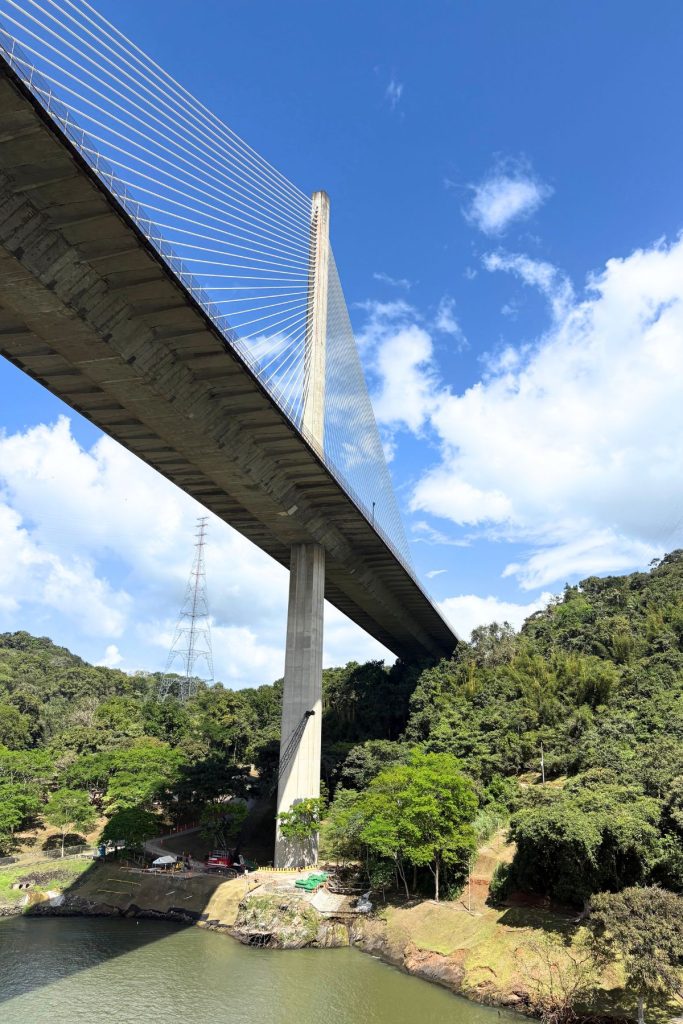
Pedro Miguel Locks
After the Culebra Cut, the canal reaches Pedro Miguel. We were heading down now, so everything worked in reverse. Once the ship was inside the chamber and the gates closed, the water drained out instead of flowing in.
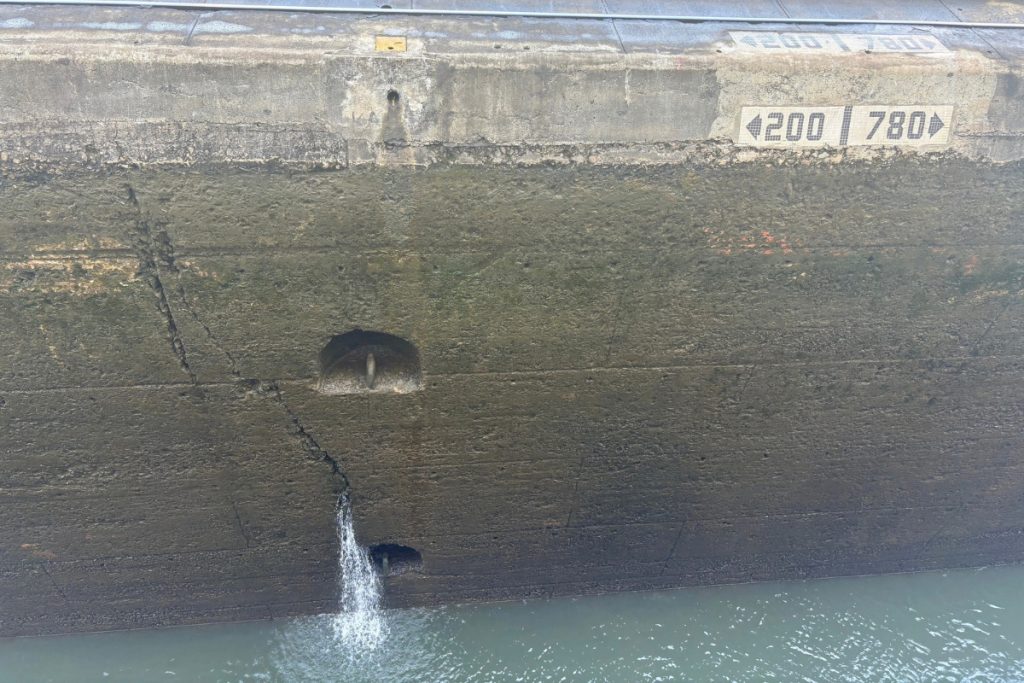
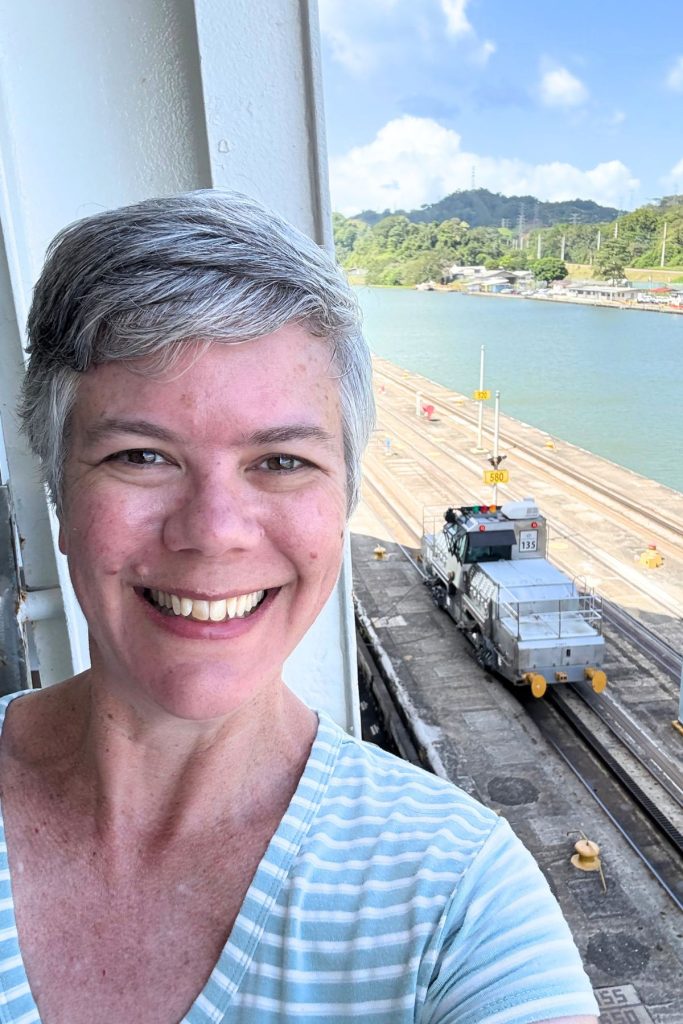
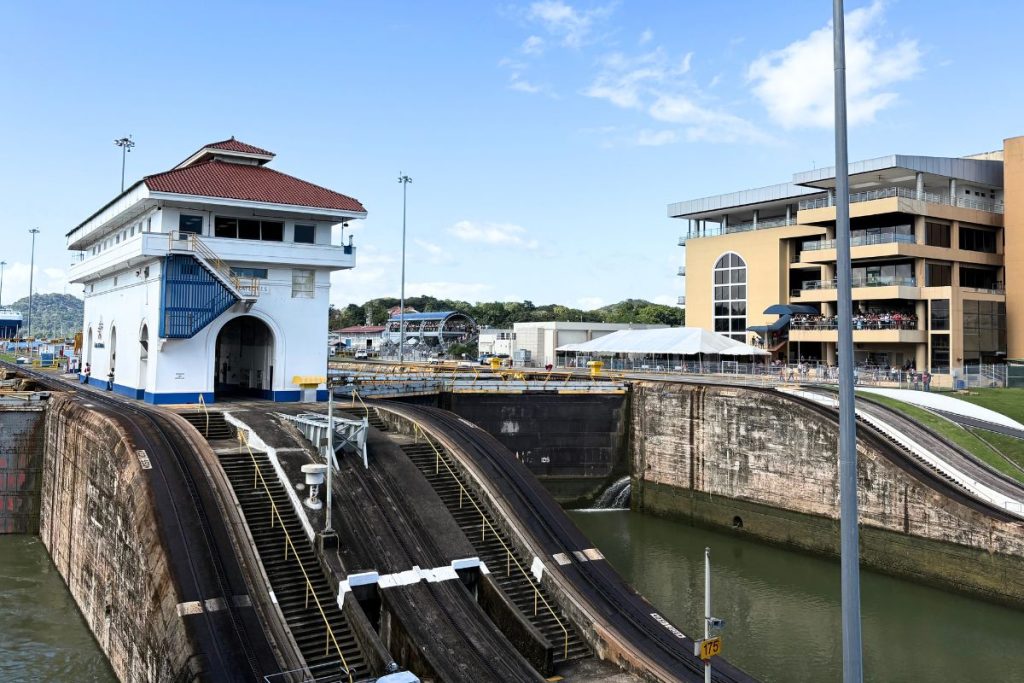
Pedro Miguel has only one chamber. It lowers the ship 31 feet (9.4 meters), and Miraflores handles the rest. This is also where I got to know the mules better. That is mule 135 in the photo. It walked beside us the whole way, attached by cables, and it never complained. I have worked with colleagues who could not say the same.
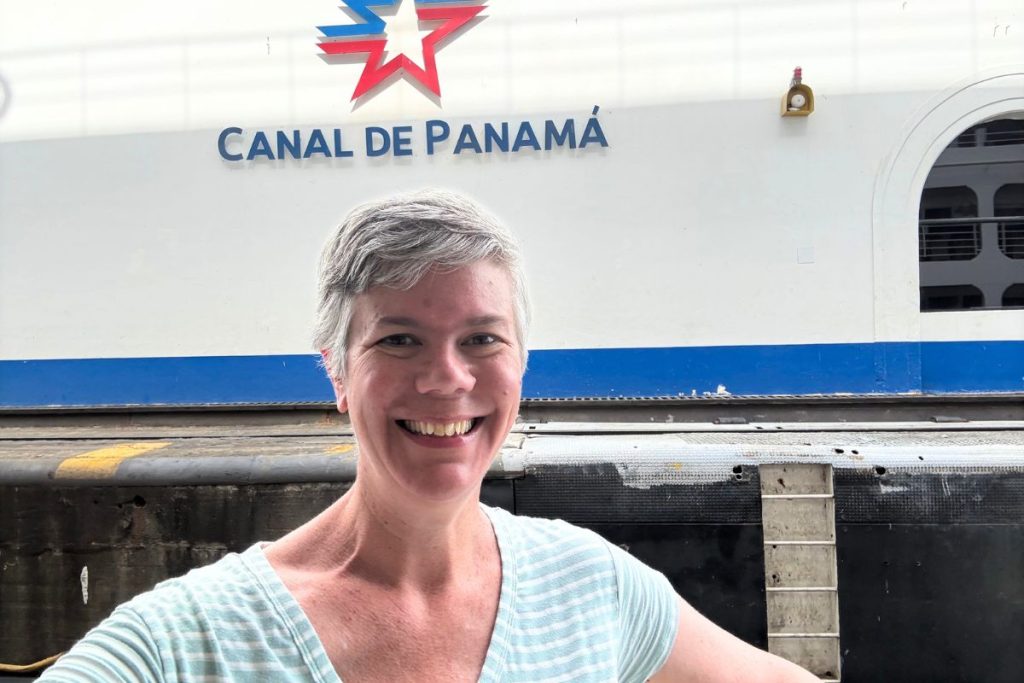
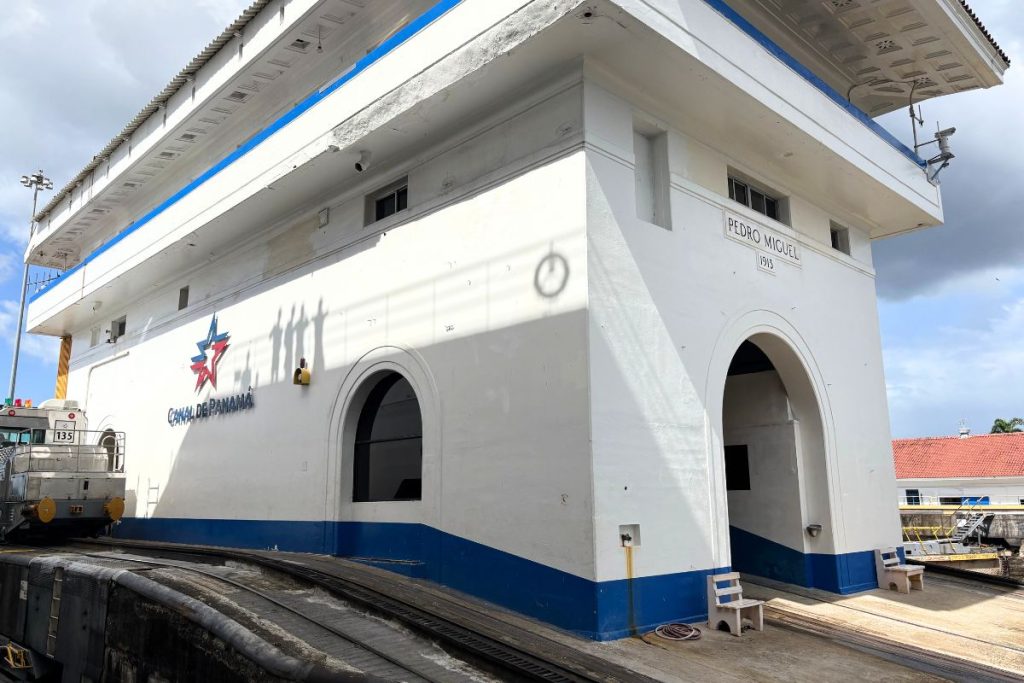
The white control house at the lock has “Pedro Miguel” painted on the side, with the year 1913 underneath. It still has the Canal de Panamá logo on the wall and a couple of benches by the door. The building looks like it has been watching ships go by for over a century, because it has.
When the gates opened at the far end, we sailed out into Miraflores Lake, a short stretch of water before the final locks.
Miraflores Locks
Miraflores is the last set of locks. It has two chambers, and together they lower the ship the rest of the way to sea level on the Pacific side. The drop is listed as 54 feet (16 meters), but that number moves. The Pacific tides are large, so the actual lift ranges from about 43 to 64.5 feet depending on the day. Miraflores is also the set of locks closest to Panama City. That explains the crowd.
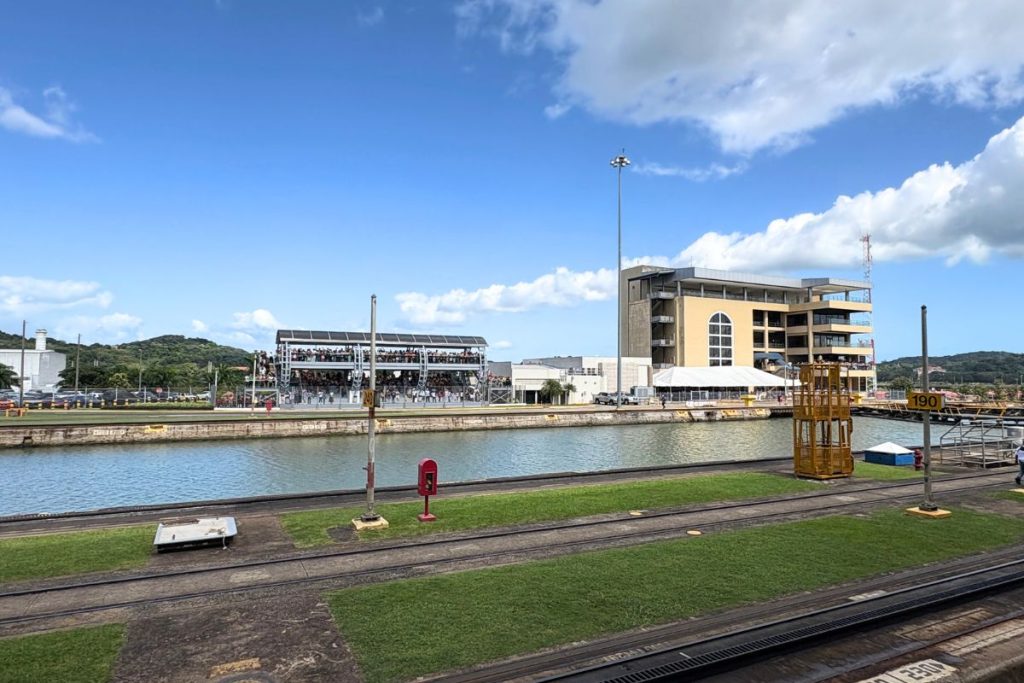
An Audience at the Visitor Center
The Miraflores Visitor Center sits right beside the locks, and its observation decks were packed. A crowd had come to watch ships go through. Cruise passengers spend the day at the railing watching the canal. Here, the canal had an audience watching us. I had not considered that we might be the entertainment.
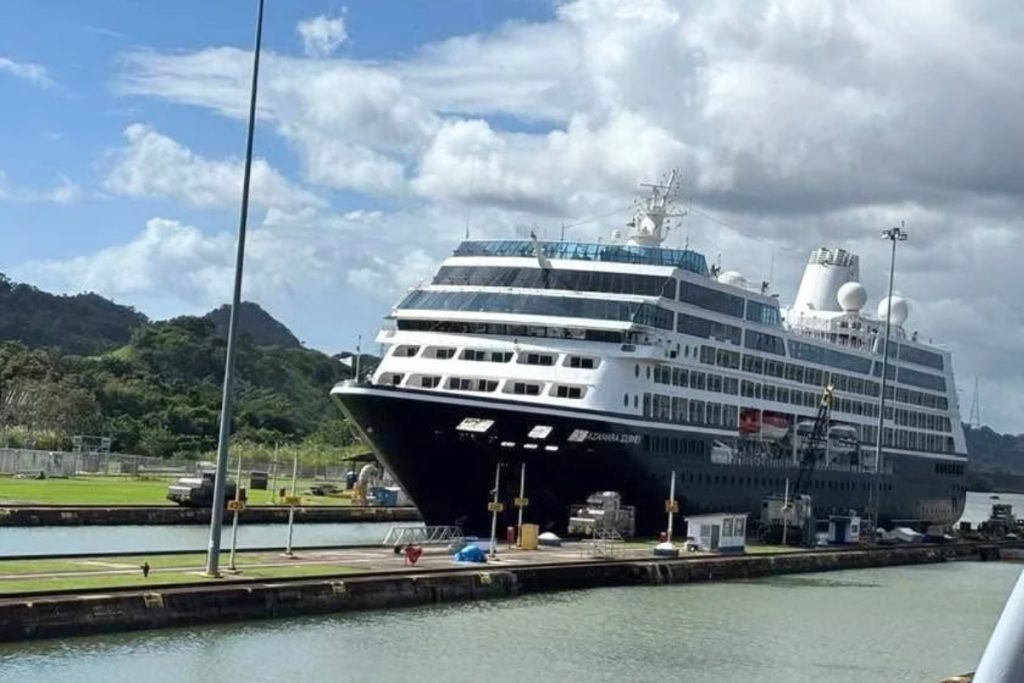
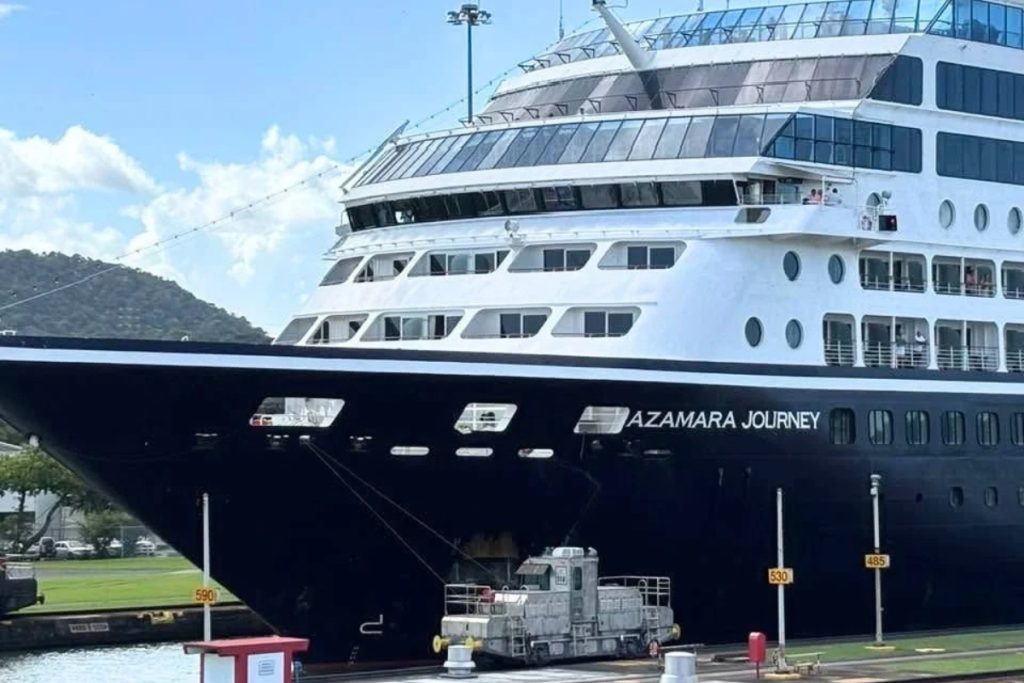
Azamara Journey in the Final Lock
These two photos were taken by someone on those observation decks. They show Azamara Journey inside the last Miraflores lock. In the close-up, you can see a mule at the bow with its cables running to the ship. It is the same job the mules had been doing since Gatun. At no point during the day did the ship touch a wall.
On to Fuerte Amador
The gates opened for the last time, and the ship was back at sea level. Behind us were three sets of locks, a lake, and a whole crew of mules that never once complained. Ahead was the Pacific. We sailed on to our final stop, Fuerte Amador, at the end of the Amador Causeway just outside Panama City.
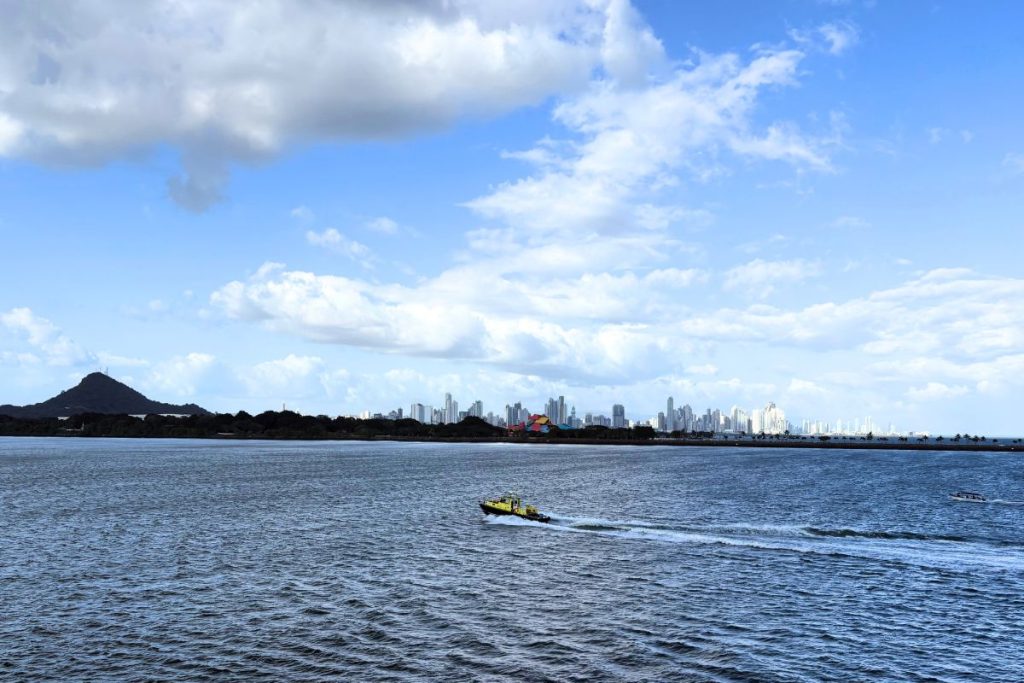
The Panama City skyline slowly rose out of the haze as we got closer. By the time we reached Fuerte Amador, the sun was going down. The transit was over.
Closing Thoughts
A Panama Canal transit is nothing like a sea day in the Caribbean. There is no horizon to stare at and no reason to lie down. A ship sits in a concrete box while water moves, and then it does the same thing five more times. That is the appeal.
People do not book a Panama Canal cruise for the scenery. They book it for the engineering, and watching it work is its own reward. I climbed 85 feet at Gatun, floated past container ships on the lake, and sailed under the Centennial Bridge. At Pedro Miguel, I watched mule 135 keep us off the wall. At Miraflores, I learned that we were the entertainment.
By sunset, the ship had gone from one ocean to the other, and I had spent most of the day at a railing holding a coffee. That is the real version of a Panama Canal transit: slow, mechanical, and hard to look away from. I would do it again tomorrow. I would just bring a snack.
Common Questions
Planning Your Panama Canal Cruise
The dry season runs from about mid-December through April. It brings sunnier skies, lower humidity, and the most reliable weather. It is also peak cruise season. My transit was in December, and the day was mostly sunny. The rainy season runs from roughly May through November, with the heaviest rain in October and November. Rain in that season often arrives as short showers rather than all-day washouts, and shoulder months can mean lower fares and fewer people at the railing. The canal operates year round either way.
Quite a few do. Smaller ship lines such as Azamara, Windstar, and Viking offer these itineraries. Larger lines including Holland America, Princess, Celebrity, Norwegian, Royal Caribbean, and MSC offer them too. Many are repositioning cruises between the Caribbean and the Pacific, starting or ending in ports like Fort Lauderdale, Miami, Tampa, or Los Angeles. Some are partial transits that cross Gatun Lake and turn around without reaching the Pacific. Ship size also changes the experience. Smaller ships like mine use the original locks, with mules. The largest ships use the newer, wider locks, where tugboats do that job instead.
Where to Watch the Canal
There is no single best spot, so plan to move around. The upper forward decks give the clearest view of the locks ahead, and that is where I watched the Gatun Locks. The aft decks show the gates closing behind the ship. A balcony cabin gives you a private spot without the crowd, though most of the action happens from the open decks anyway. If you want a place at the bow rail, arrive 30 to 45 minutes before the first lock. Chairs go quickly.
Yes. The easiest way is the Miraflores Visitor Center, a short drive from Panama City. It has observation decks overlooking the locks, a museum on the history of the canal, and a film. Ships move on their own schedule, so check the transit times before you go if you want to see a live one. There is also a visitor center at the Agua Clara Locks on the Atlantic side. Some day tours go further and take you on a boat through part of the canal.
Keep Wandering
Forget the Rest of the Alphabet: These Three Letters Are All You Need
Don’t Let the Size Fool You: Sea Days on Smaller Ships Are Anything But Boring