Two and a Half Days at Rio Carnival: Sugarloaf, Christ the Redeemer, and Everything In Between
My cruise landed right in the middle of Rio Carnival. Locals call it Carnaval, and either way, it means about two million people out on the streets each day. Two and a half days, one port call, and the biggest party on the planet happening a few blocks from the ship the entire time. I kicked off my Rio adventure at a cathedral shaped like nothing I expected. Two cable cars carried me up a granite mountain next, and day one wrapped up at the Sambódromo, where I stayed until my body gave out around 3am. After a well-earned day of rest, my last half-day in Rio started on a hundred-and-forty-year-old train, climbing to a statue finished in 1931. Two famous beaches followed, one on foot and one from a bus window. Then a sail-away with a drink in hand, watching it all disappear behind the ship.
This is not a comprehensive Rio guide. It is what happened over two and a half packed days, exactly as my itinerary delivered it. If you want the full breakdown of the Samba Parade itself, roles, costumes, judging categories and all, I already wrote that one. Link below. This post is everything else.
Prefer to watch instead of read? Watch the video →
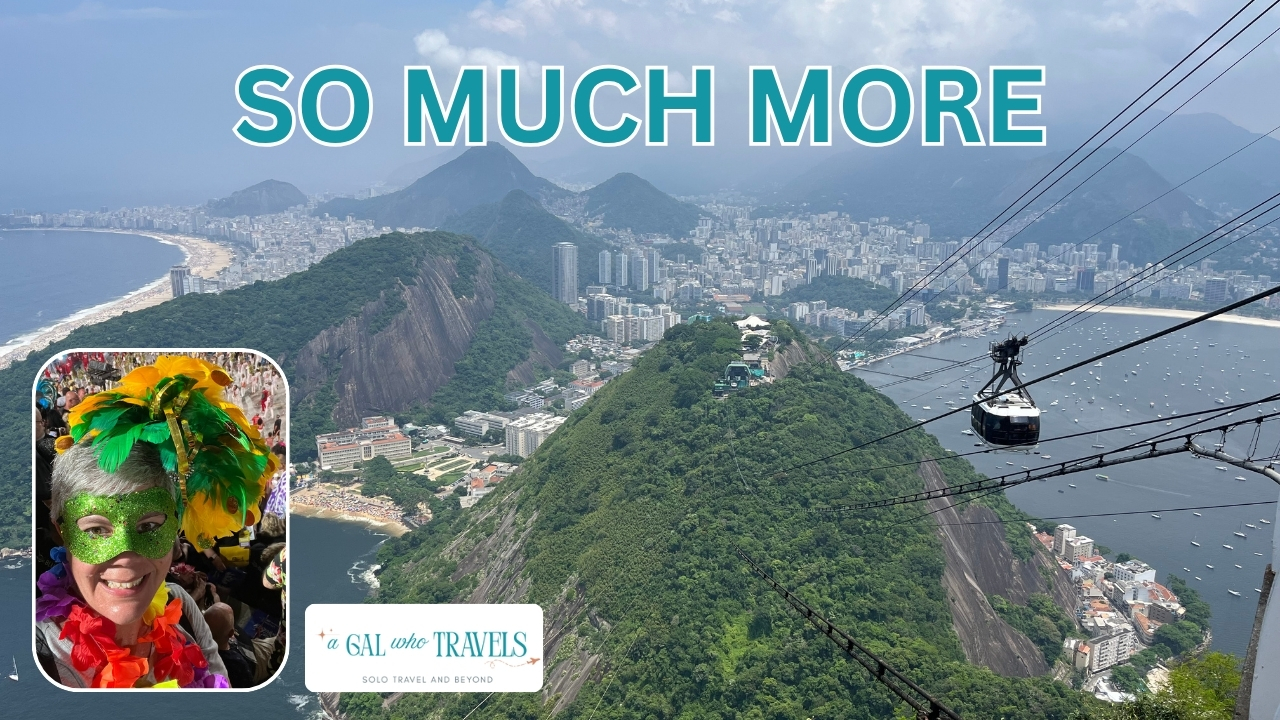
Six Stops and One All-Nighter in Two and a Half Days
Here’s how it broke down, stop by stop, starting with the thing that was impossible to avoid: Carnival itself.
Rio Carnival, Whether You Booked For It or Not
Rio during Carnival does not wait for you to find it. It finds you first.
We set out for the first excursion at 8:45am, and the party was already in full swing. Thousands of people were out on the streets in full costume, drinks in hand, well before nine in the morning.

The tour bus crawled through streets packed with both vehicles and revelers decked out in feathers, body paint, and glitter, slowing to a stop more than once so a group could cross.
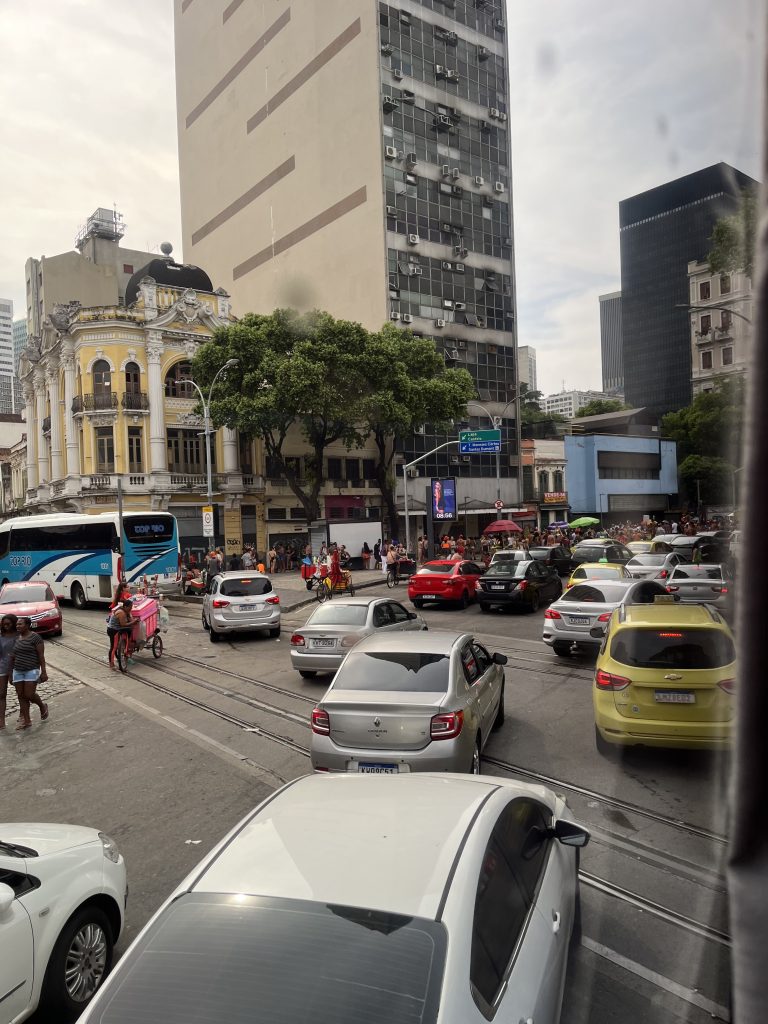
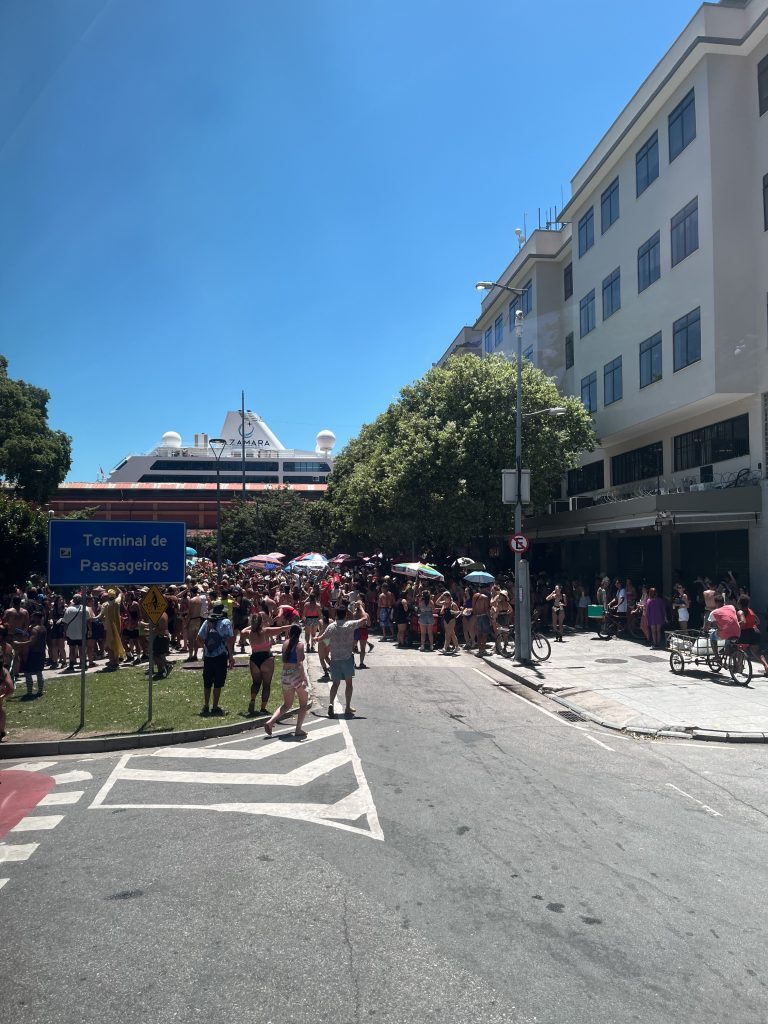
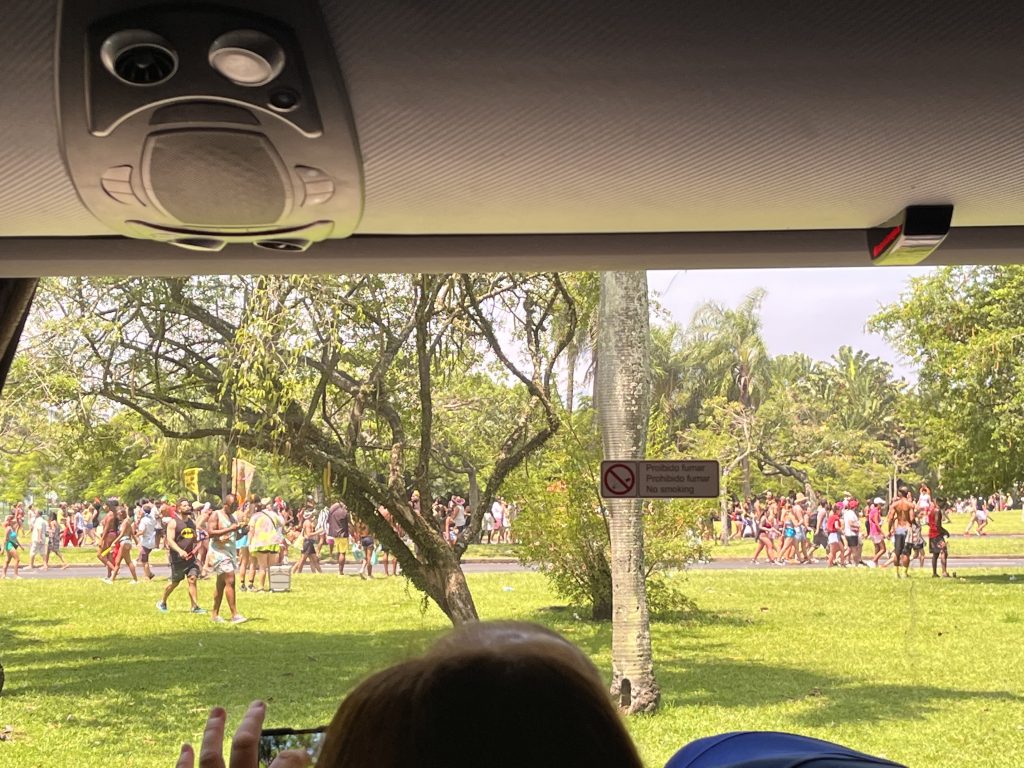
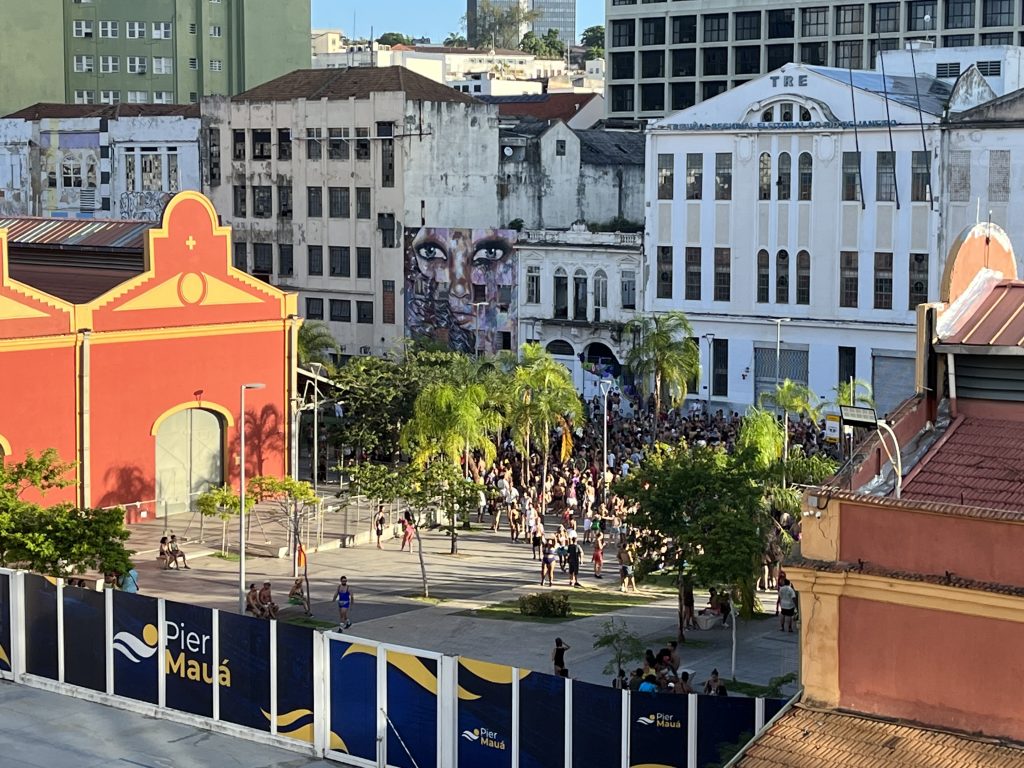
By the time we were making our way back to the ship after the morning excursion, we ran straight into the largest blocos of the day. A bloco is basically a street party built around a band, moving through the neighborhood, completely separate from the official Sambódromo parade. While we were enjoying the Cathedral and Sugarloaf that morning, the locals had gathered by the thousands, packed wall to wall in parks and on street corners, lost in the music.

We finally got back to the ship around 1:30pm, but the energy had not let up. From my balcony, I could see that the crowd around the cruise terminal was its own kind of spectacle. The whole scene reminded me of Mardi Gras, Pride, and Coachella, rolled into one.
The Cathedral That Skips the Whole Cathedral Look
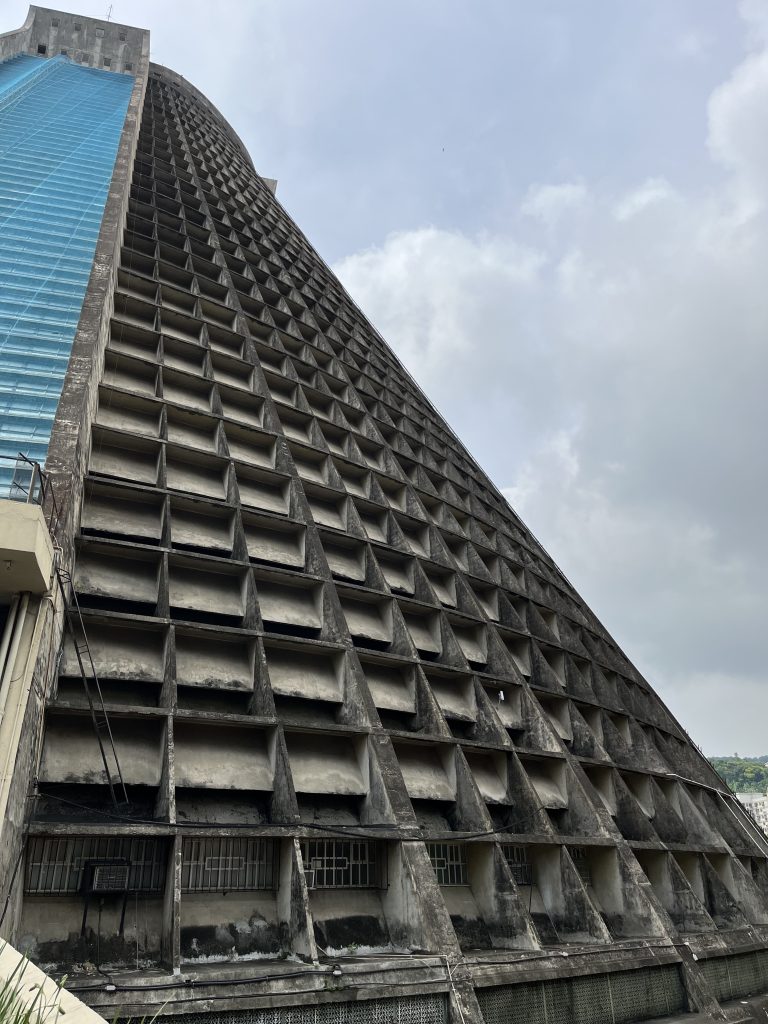
First stop, Day 1 morning: the Catedral Metropolitana de São Sebastião, Rio’s Metropolitan Cathedral. If you are picturing spires and stained glass in tidy little windows, recalibrate. This is a concrete cone, built between 1964 and 1979, and it looks more like a modernist monument than a church from the outside. Some people compare it to a beehive. I am not going to argue with them.
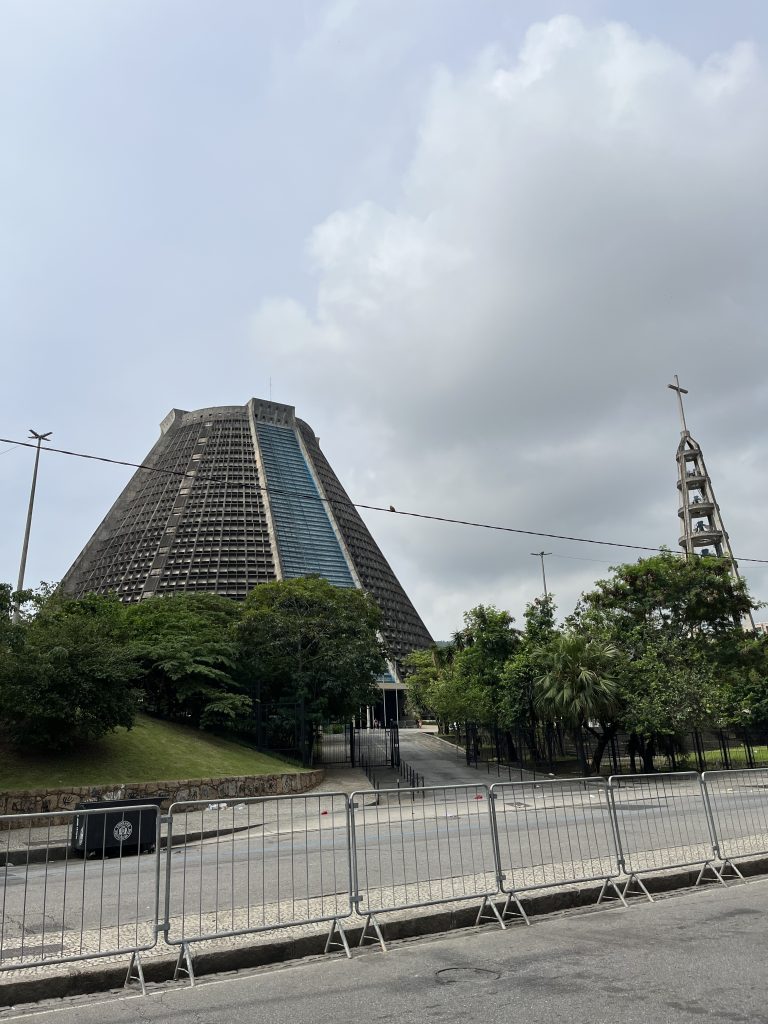
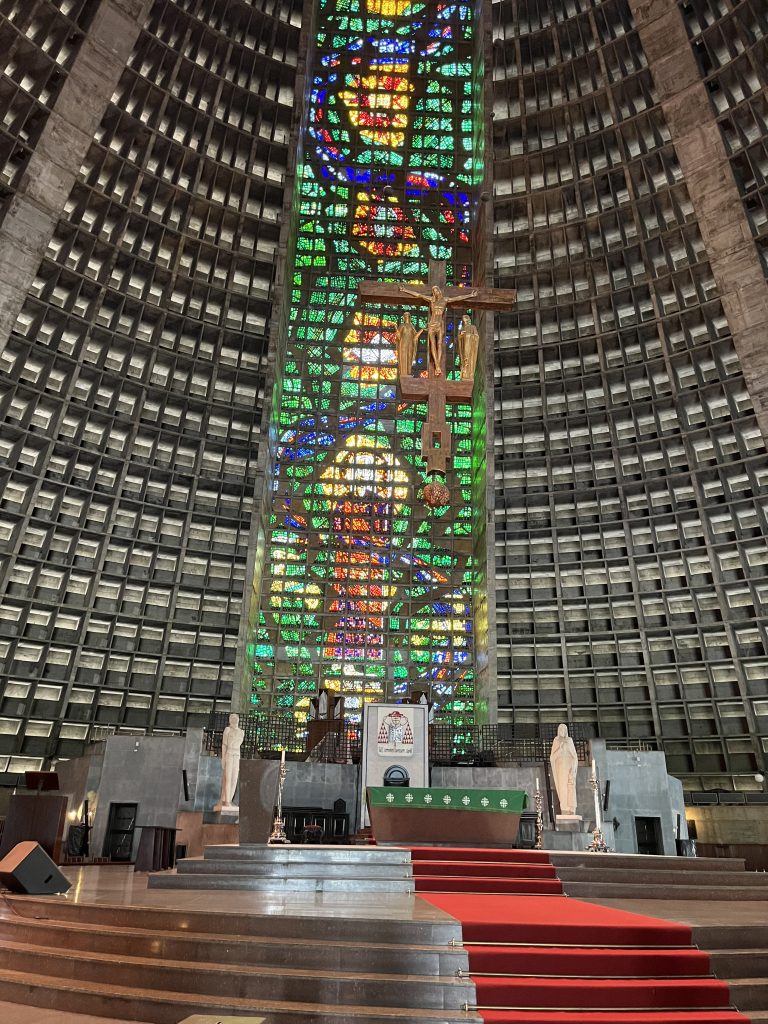
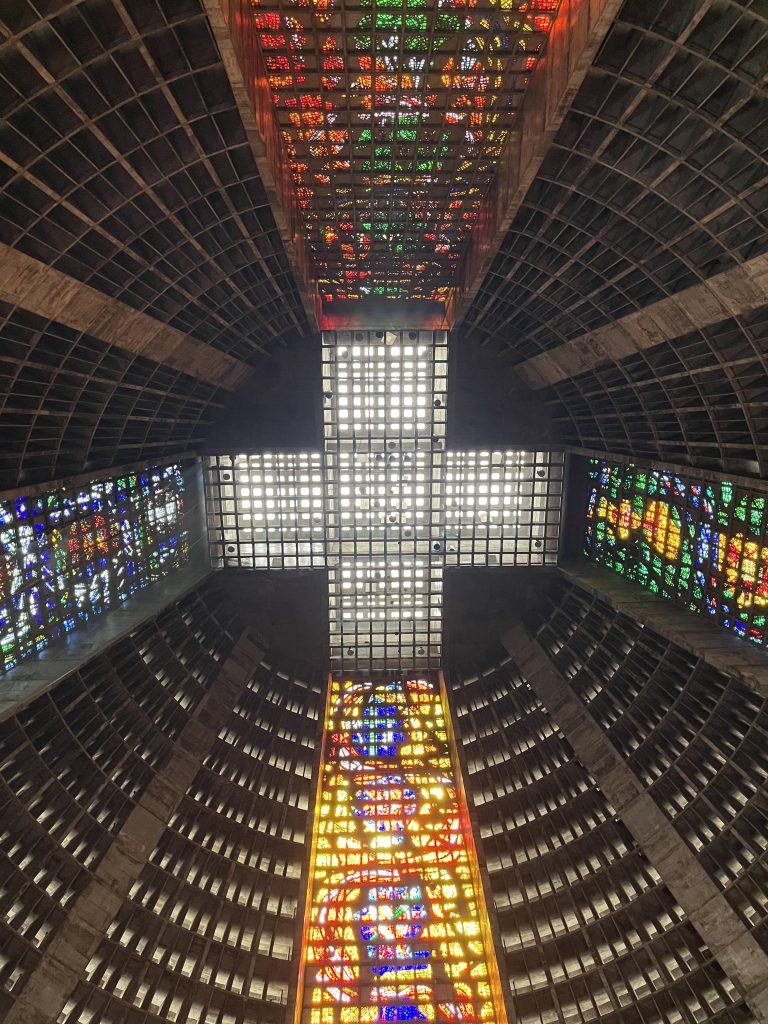
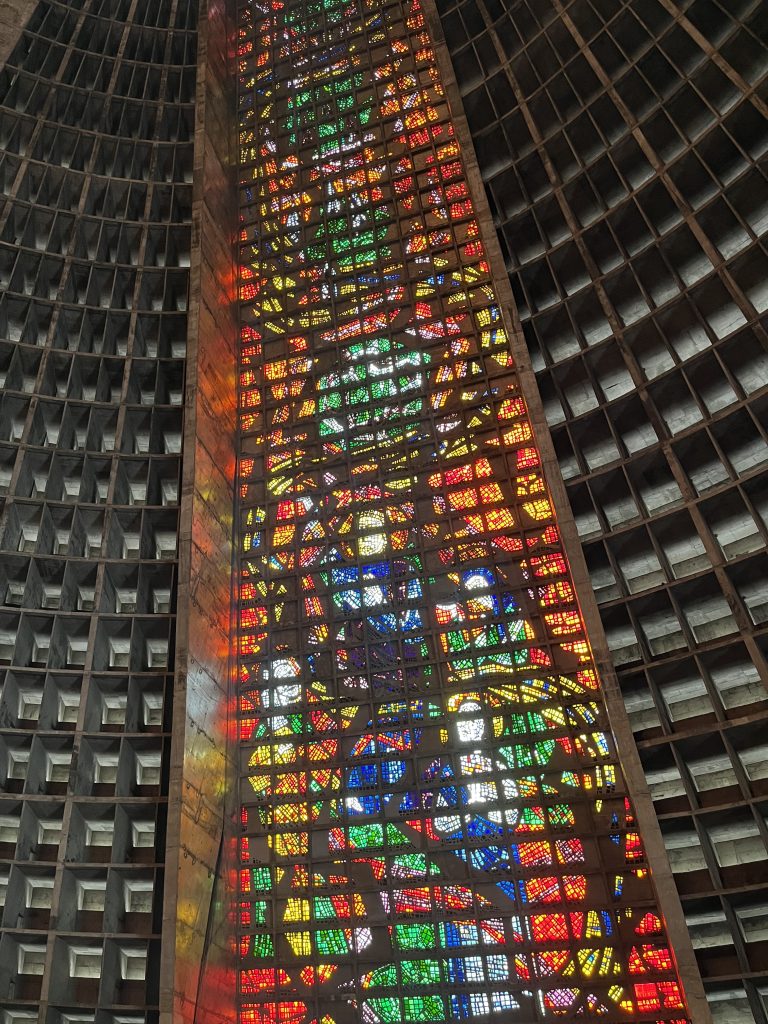
The interior is where it earns its keep. Four massive stained-glass windows run floor to ceiling, meeting at the top under a cross-shaped skylight. When the light hits them right, the whole space changes color. It is one of those buildings where the outside prepares you for nothing and the inside delivers anyway.
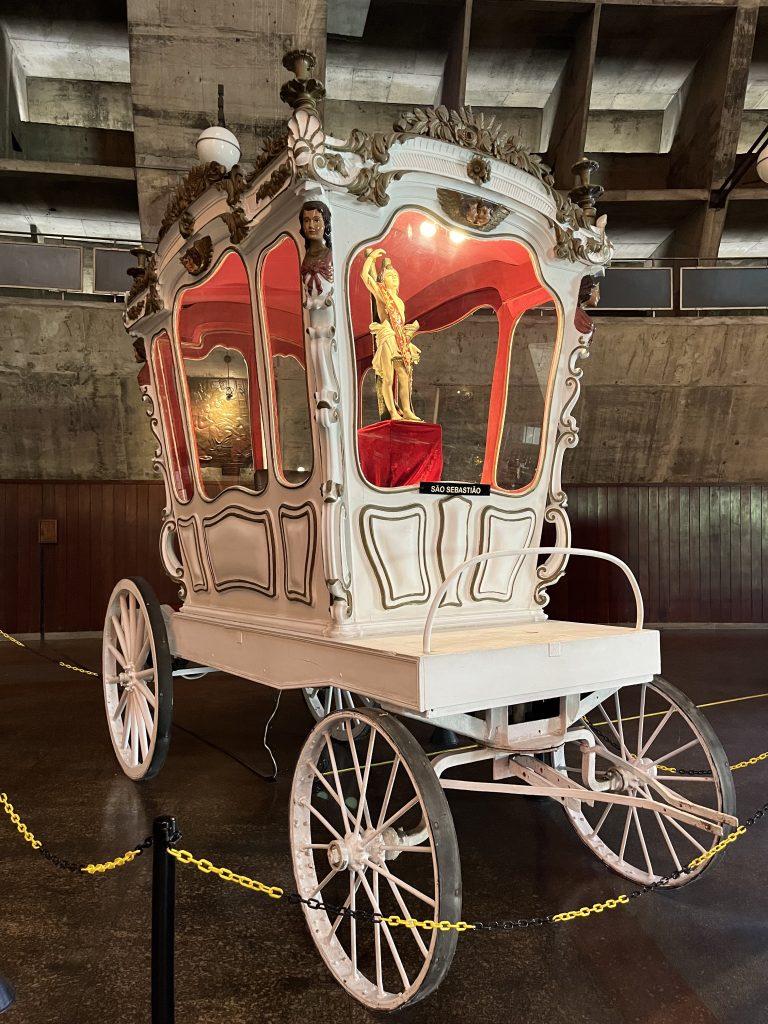
Inside, the cathedral also displays the ceremonial carriage once used for São Sebastião processions, tucked into the space almost as an afterthought next to all that glass. Worth a look on your way through.
Sugarloaf, Twice
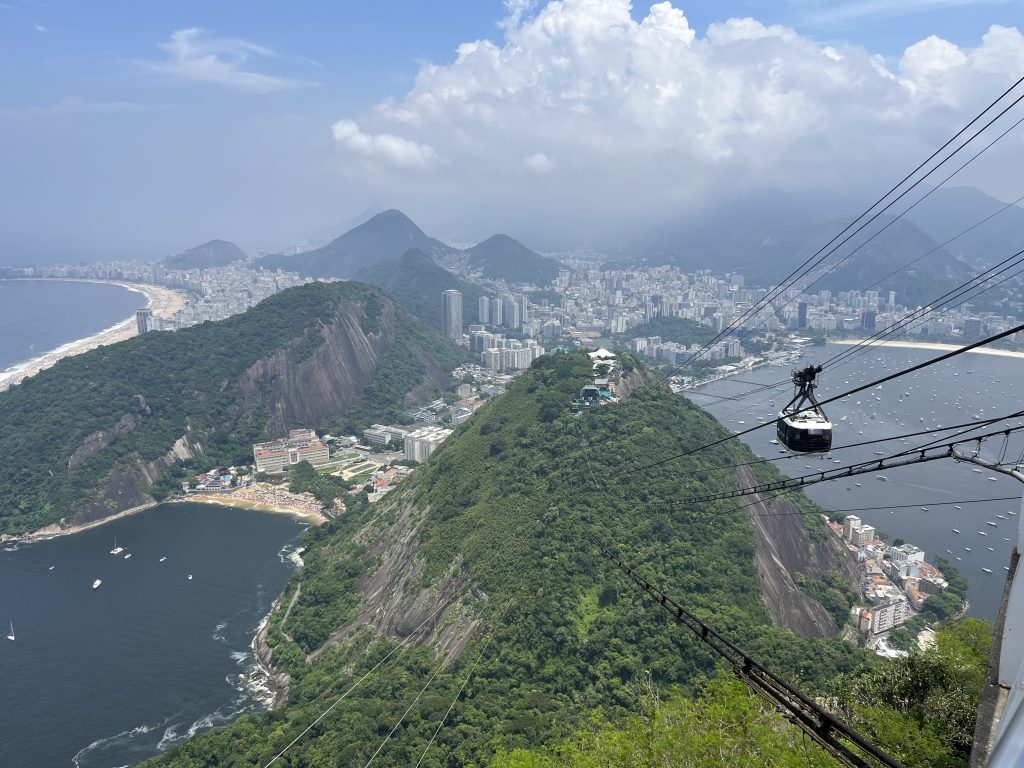
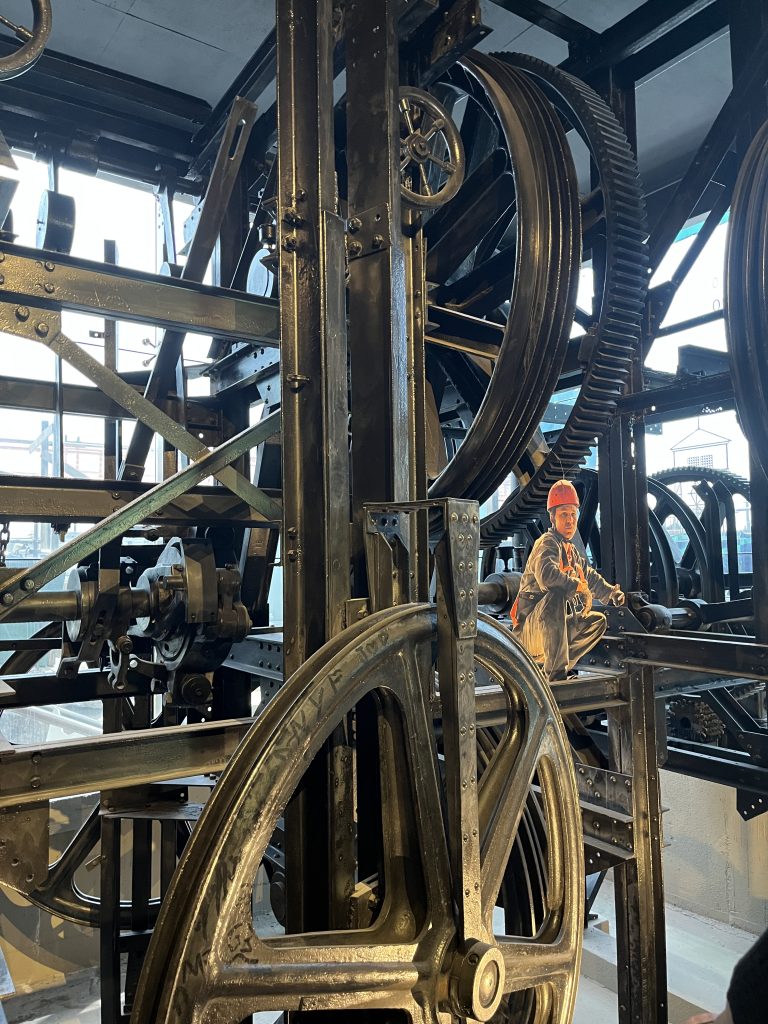
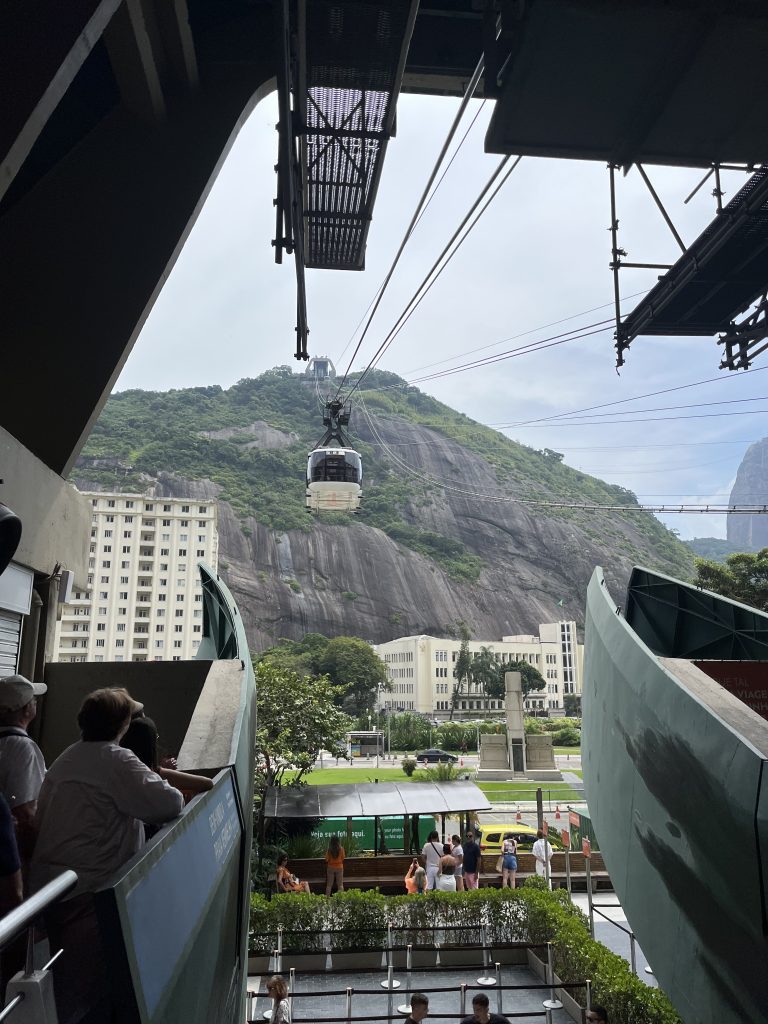
From the cathedral, we headed to Sugarloaf Mountain, or Pão de Açúcar. The name comes from the sugar trade era, when refined sugar was molded into cone shapes for shipping. The cable car system up, the Bondinho, opened in 1912. It was the third cable car built anywhere in the world and the first in Brazil, which is the kind of fact that makes the ride feel less like a tourist attraction and more like riding a piece of engineering history.

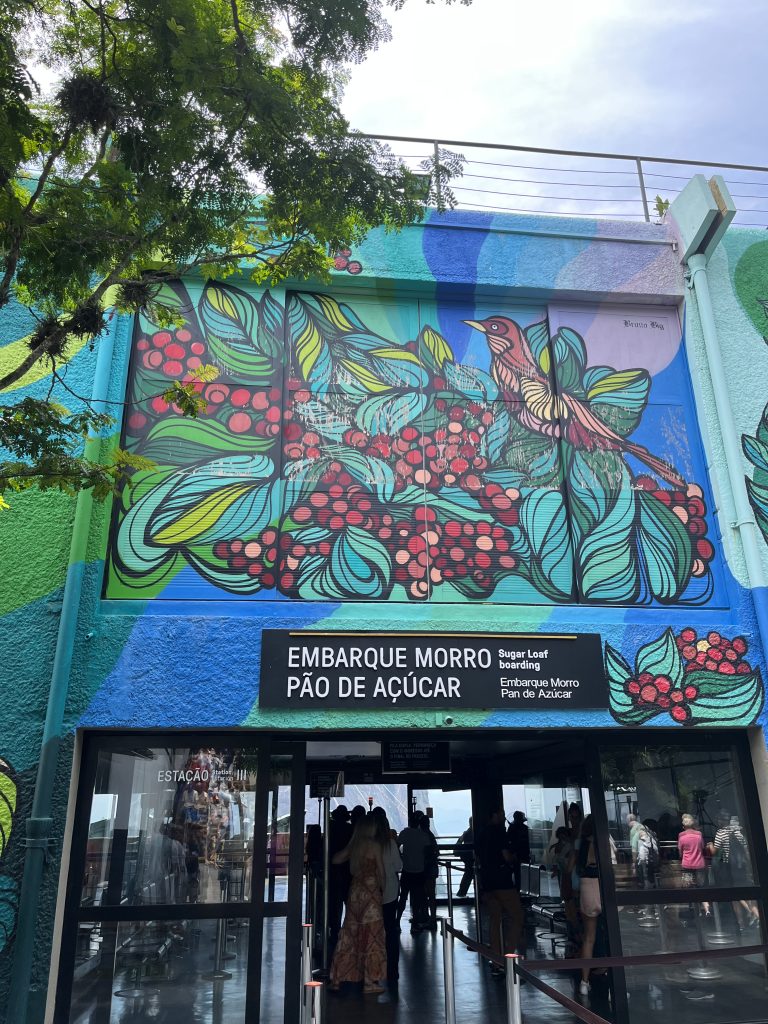
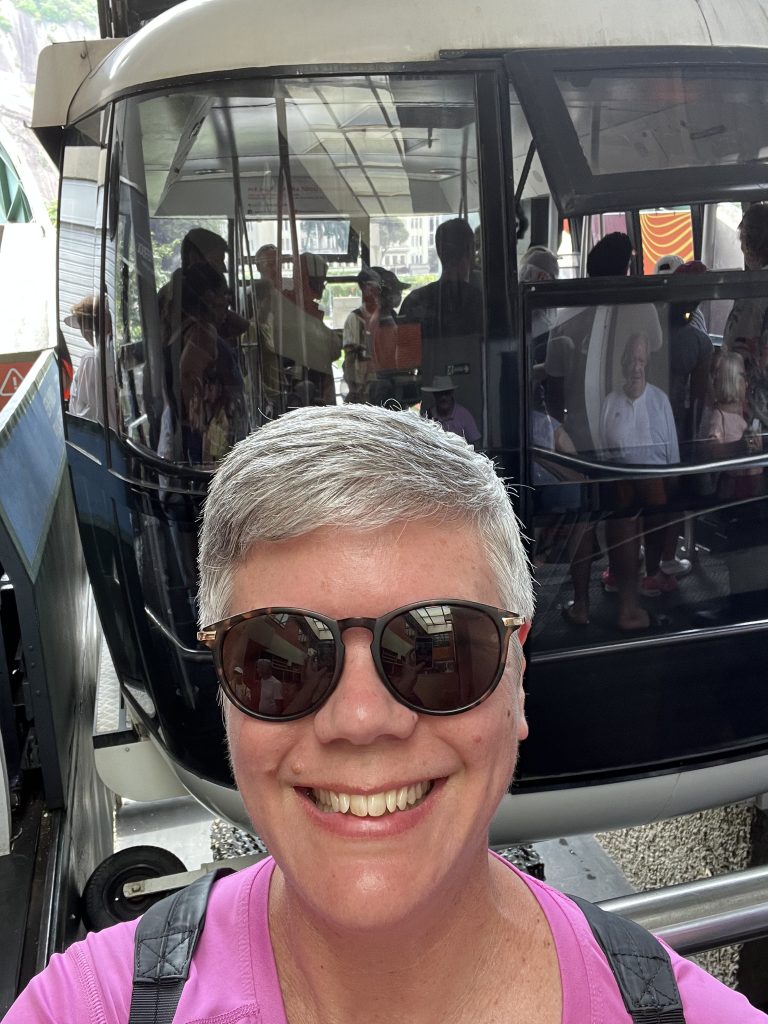
The trip happens in two stages. The first car takes you from the base station up to Morro da Urca, a lower hill with its own overlook and cafés. The second car continues from there to the Sugarloaf summit itself. Each stage has its own view, and they are different enough that skipping the first landing would be a mistake.
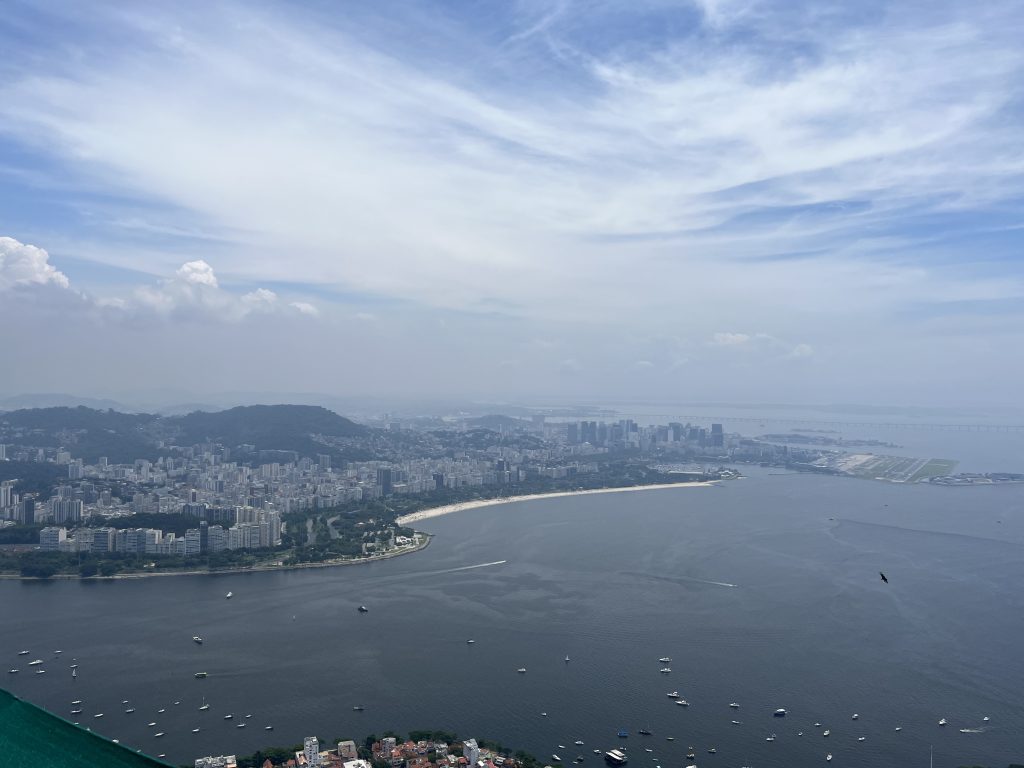
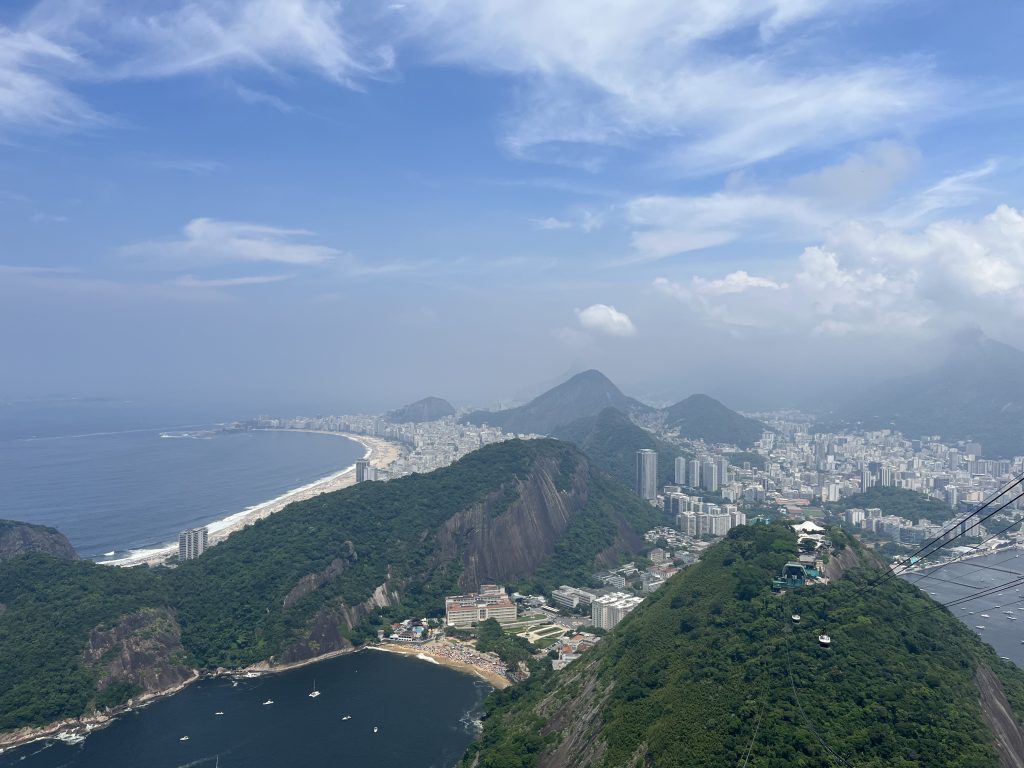
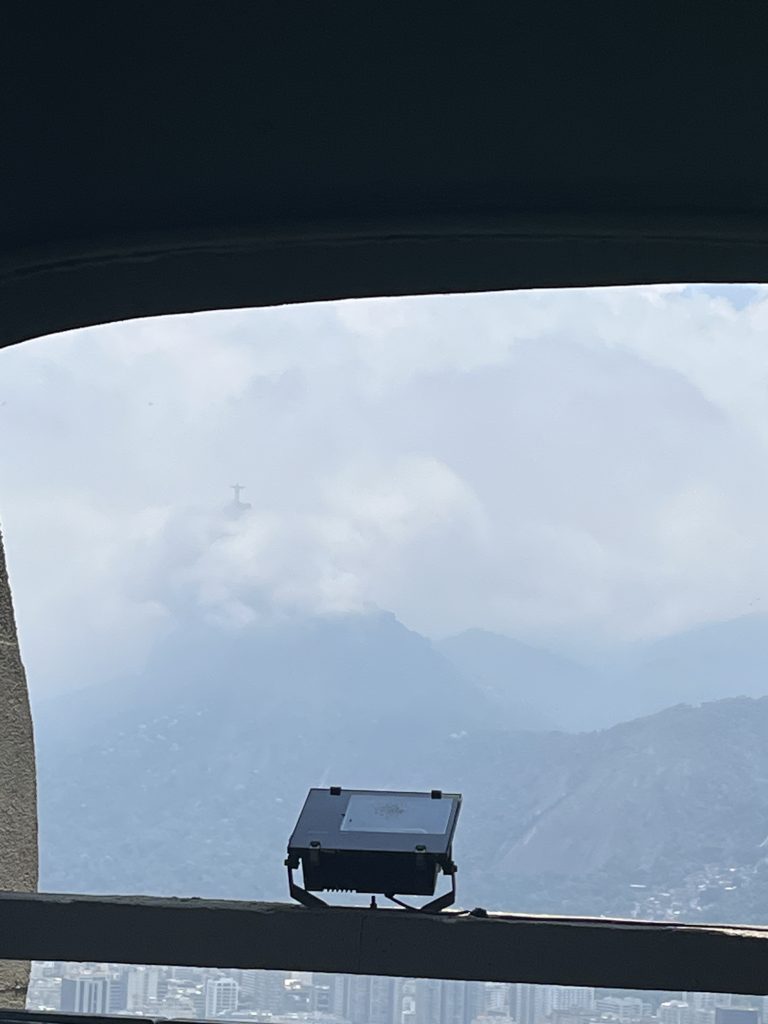
From the top, I could see: Botafogo Bay, the curve of Copacabana, Guanabara Bay, the Rio skyline, and on a clear enough moment, a hazy outline of Christ the Redeemer in the distance. That last one felt like a preview of Day 3 before Day 3 had even happened.
A Night at the Sambódromo, Briefly
Back on the ship that afternoon, I napped. On purpose, this time. The Sambódromo was going to need it.
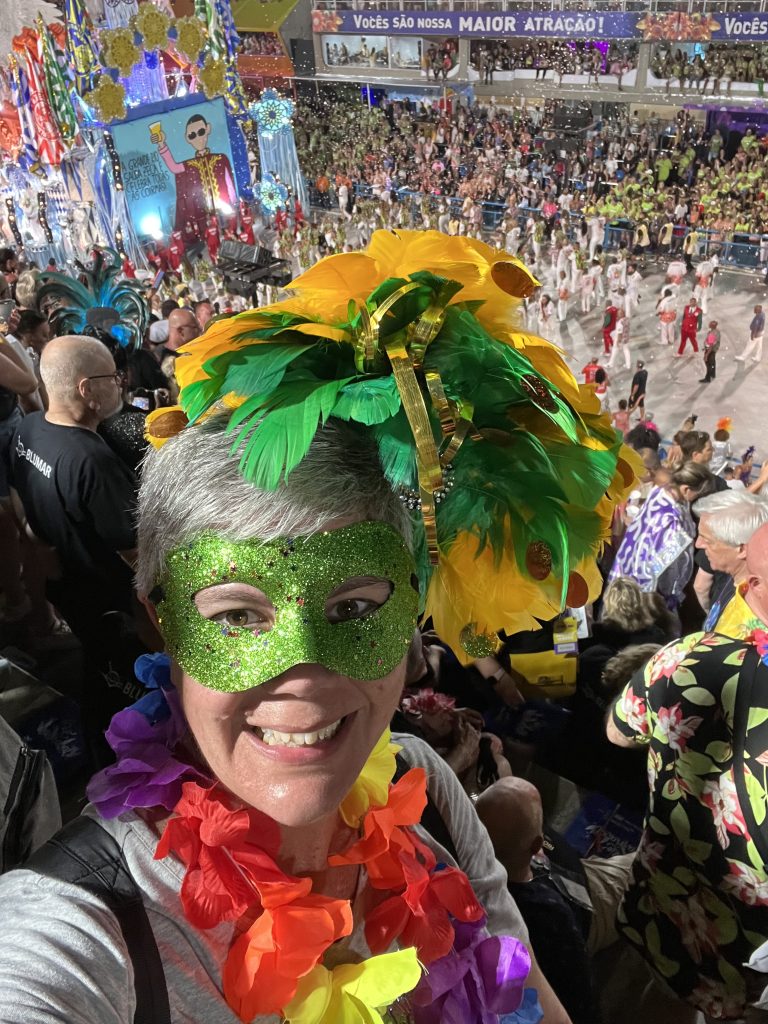
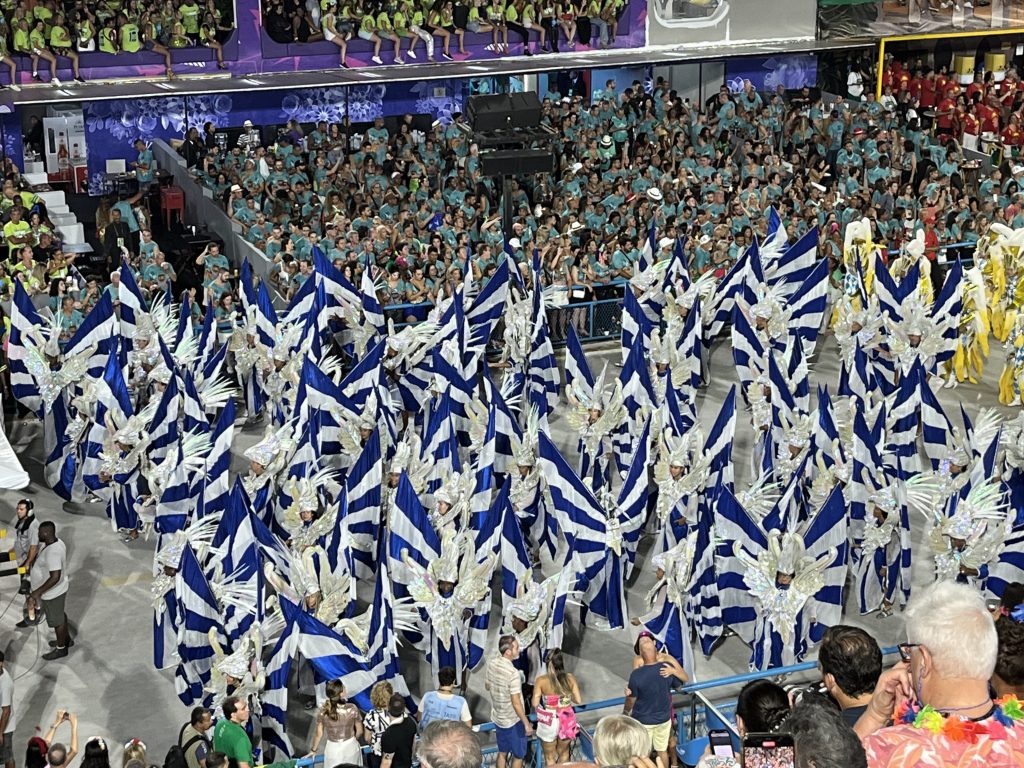
That night: the Special Group parade at the Sambódromo. Six samba schools, Sector 9 seats, confetti and fireworks and a sea of sequins that did not let up for hours. I made it through four schools before catching the 3:15am shuttle back to the ship, which felt both like a triumph and a mild personal failure, since two more schools were still going strong when I left.
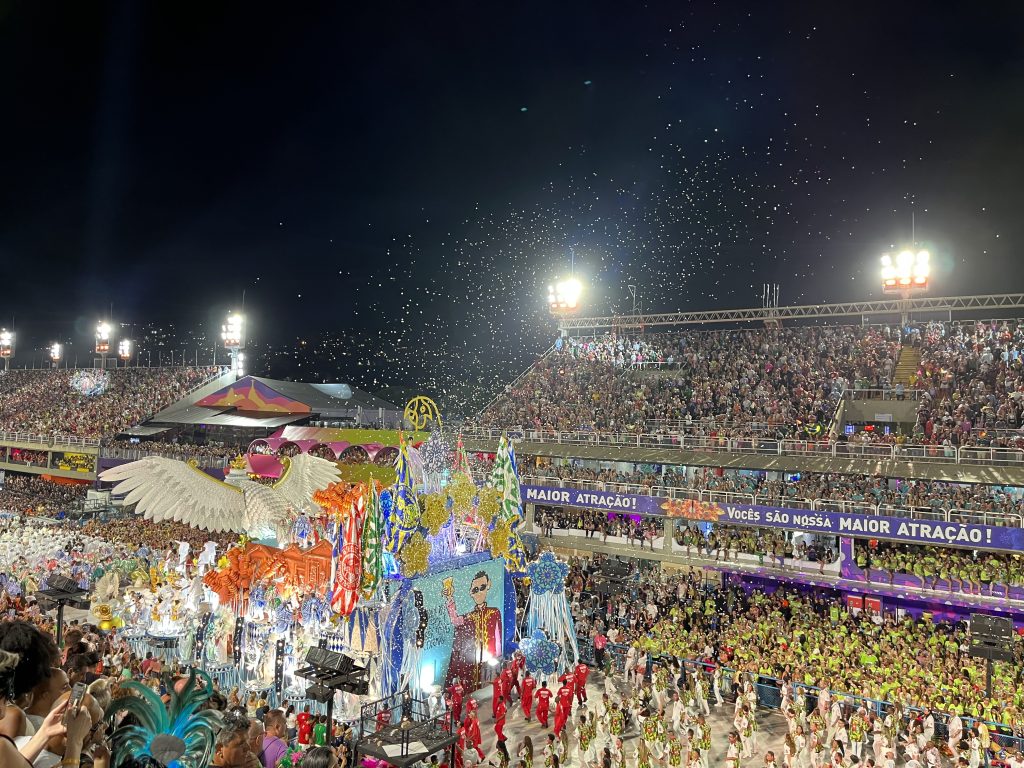
I already gave this night its own full post, roles and costumes and all, because trying to cram it into this one would have shortchanged it. If you want the deep dive, read Sequins, Samba & Spectacle: A Night at Rio’s Legendary Carnival Parade. For now, just know that this night is the reason Day 2 exists.
The Rest Day I Earned
Day 2 had exactly one job: recovery. After the Samba Parade, I got back to the ship around 4:30am to find a plate of sandwiches, fruit, and a cookie waiting in my cabin, courtesy of my stateroom attendant. I ate every bite of it before finally falling asleep sometime after 5am. I spent the rest of the day relaxing on the ship, mostly on a balcony, watching the Rio skyline from a safe and horizontal distance.
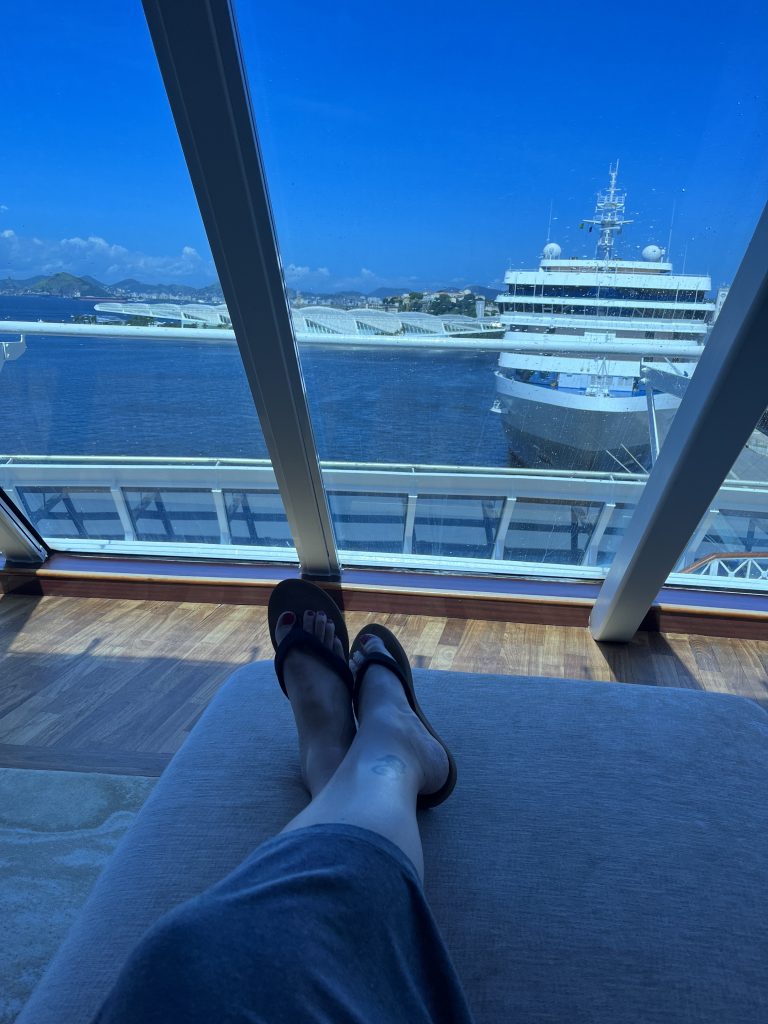
At one point, the captain blew the ship’s horn and sent the crowd on the pier into a full roar, proof that even a rest day in Rio during Carnival was not going to be quiet. I thought about getting up and joining them. Then I looked at my balcony chair, looked at the door, and stayed exactly where I was.
Coffee and cake at the Mosaic Café qualified as the day’s main event, and I regret nothing about that.

Sometimes the best photo of a trip is a quiet balcony moment after the loudest night of it. This was one of those days.
Christ the Redeemer, by Cog Train
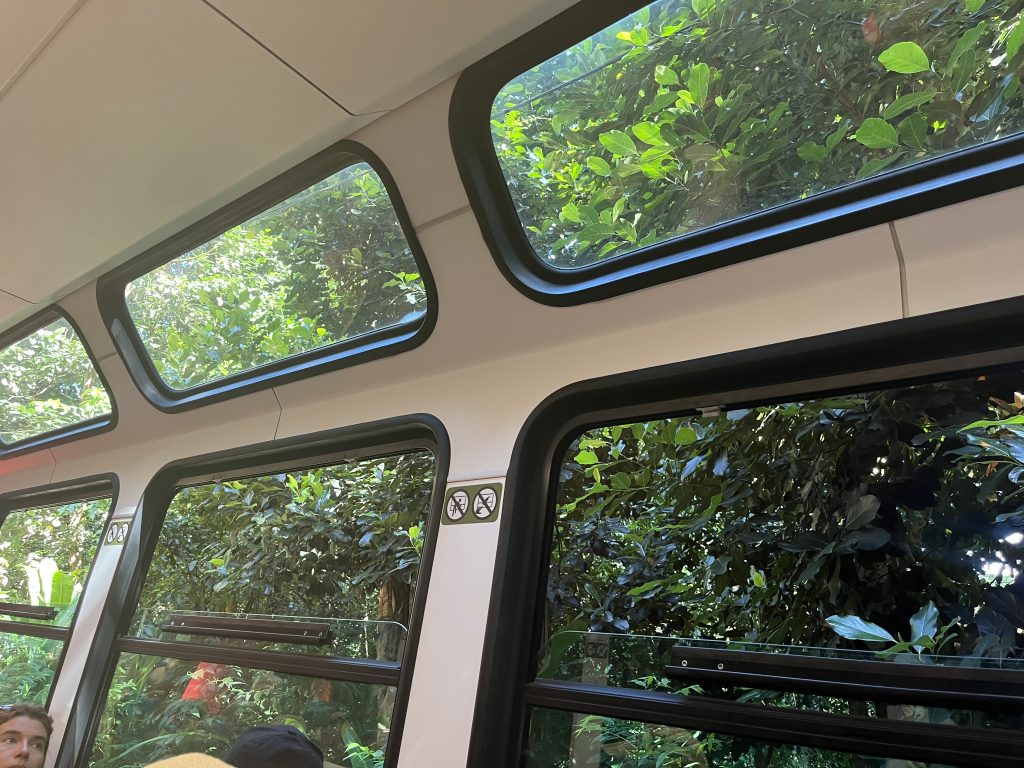
Day 3, back at it. This time, Christ the Redeemer, reached by the Corcovado Rack Railway, a cog train that has been running since 1884, nearly fifty years before the statue itself existed. It was originally steam-powered, electrified in 1910, and it was the very same railway used to haul construction materials up the mountain when the statue was being built between 1922 and 1931. The whole route runs through Tijuca National Park, one of the largest urban forests in the world, so the ride up is as much a jungle canopy tour as it is transportation.
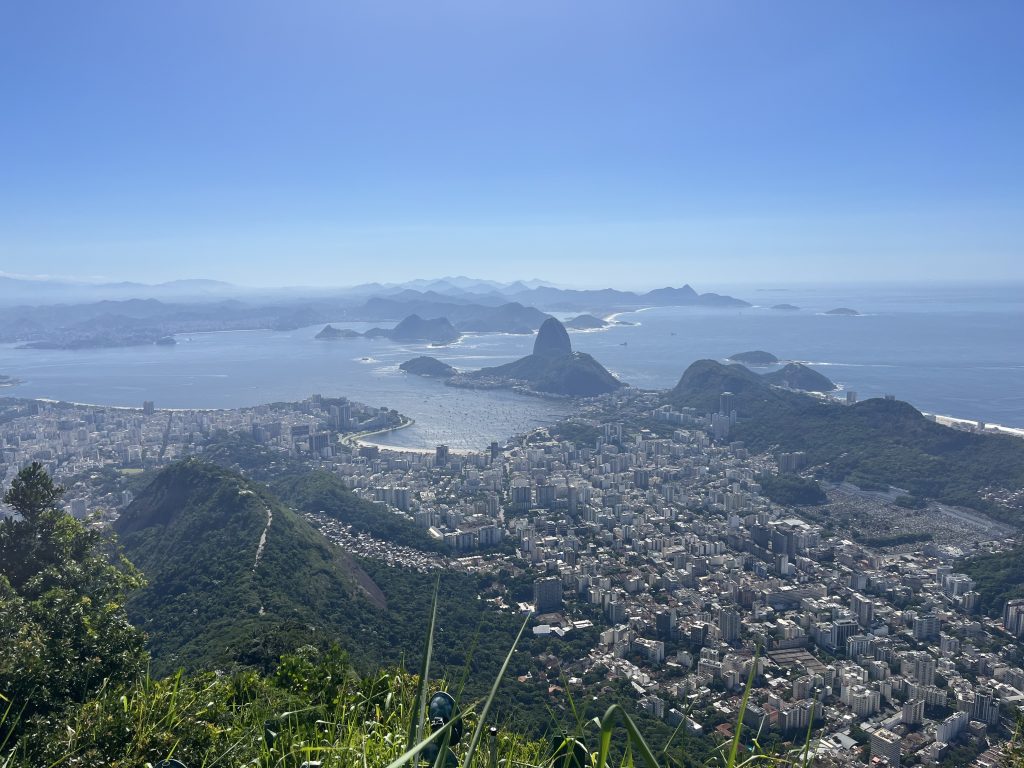
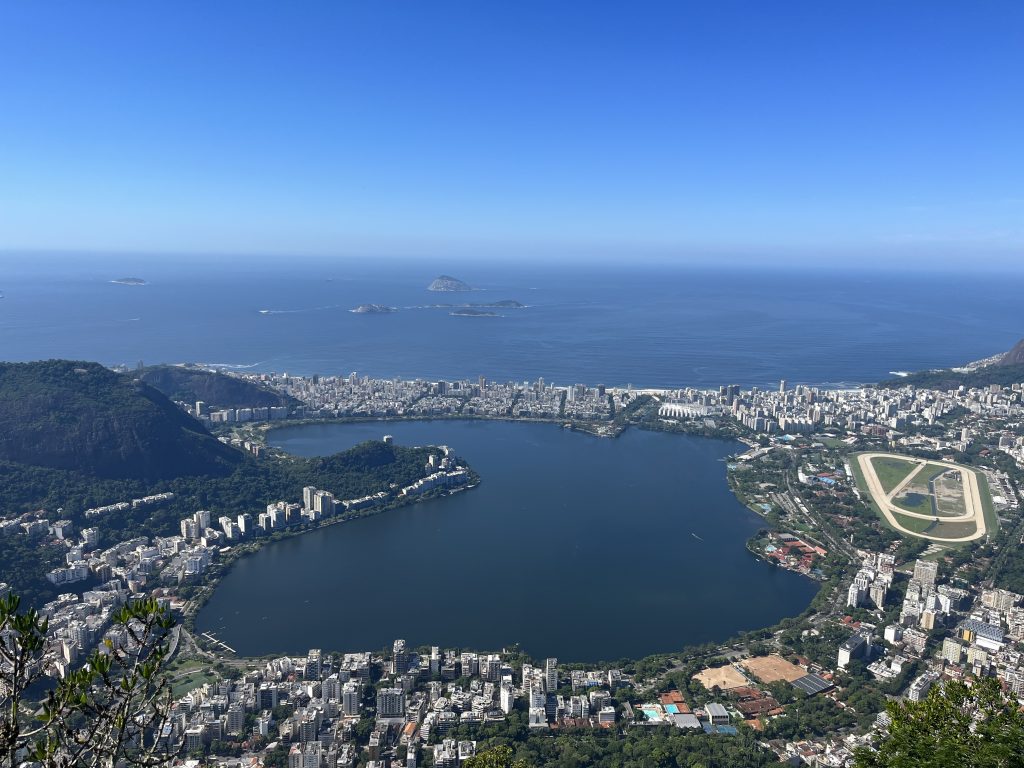
At the summit: Guanabara Bay, Lagoa Rodrigo de Freitas, the same Sugarloaf and Botafogo panorama from two days earlier but now from the opposite direction, and the curve of Copacabana laid out below.
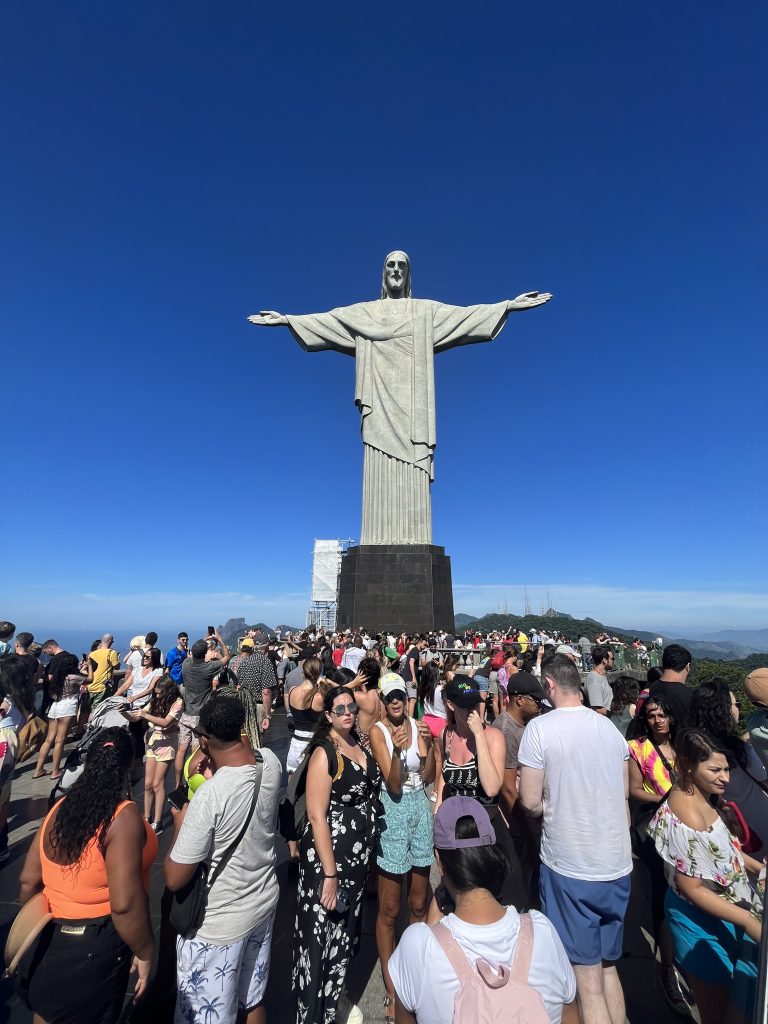
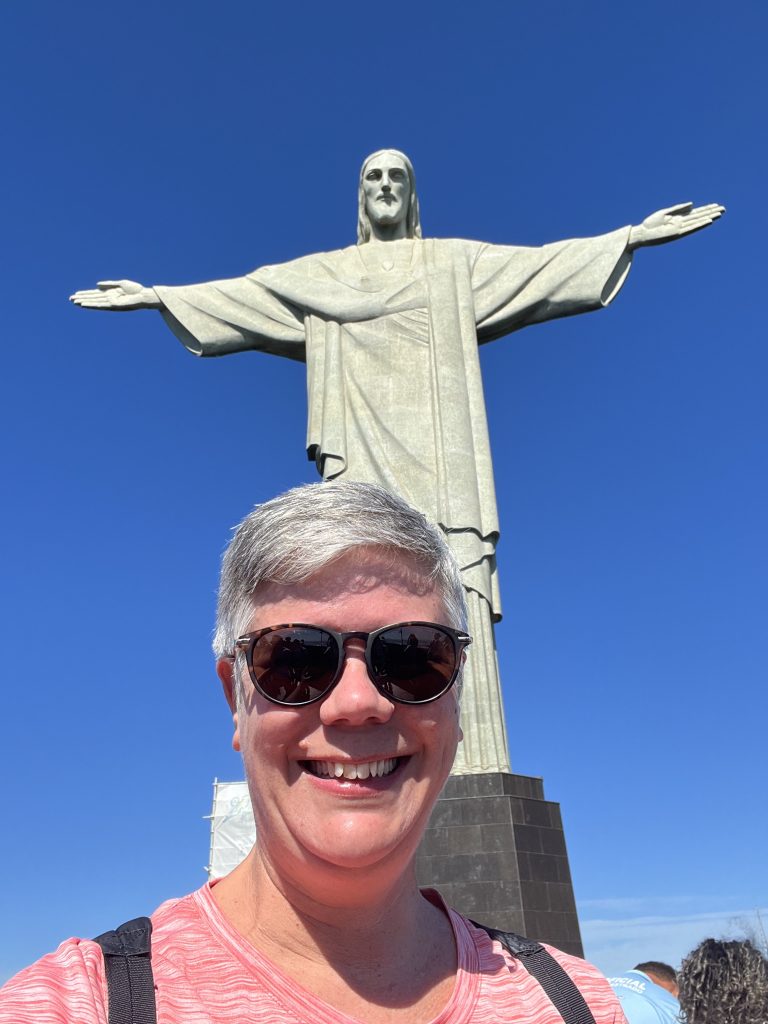
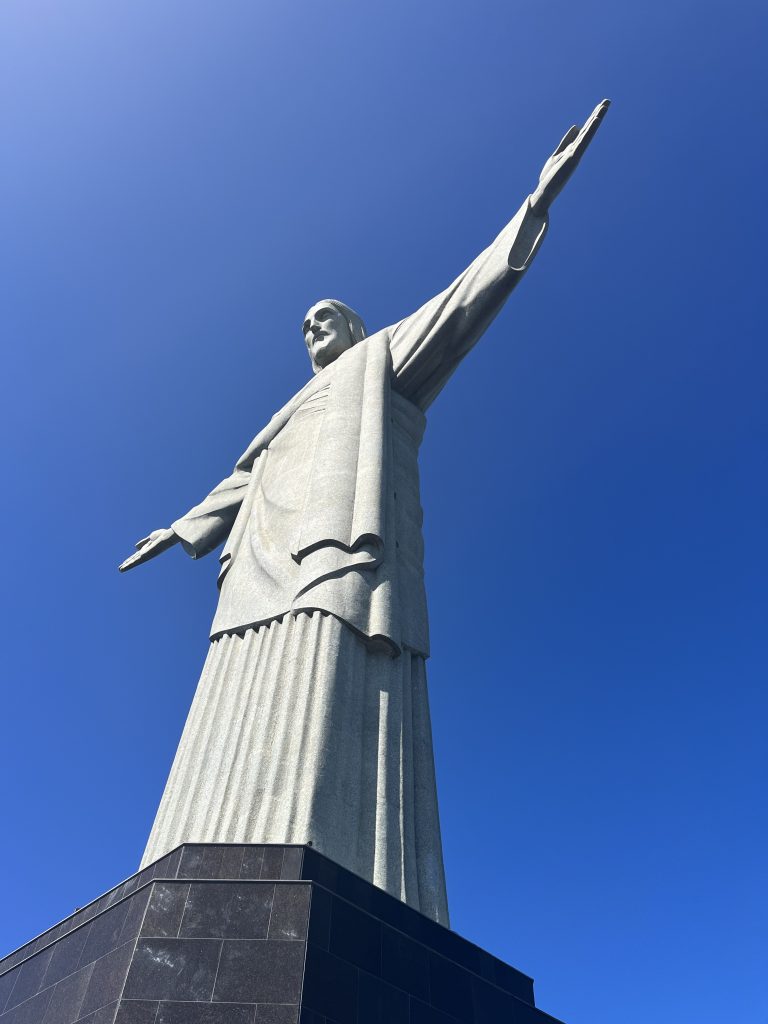
And then the statue itself, which is somehow both exactly what you expect and still bigger in person. Crowds gather at the base for the low-angle shots, and these crowds were thick. Shoulder to shoulder, waiting for a gap in someone else’s photo before you can get yours. I got mine eventually. Everyone gets theirs, eventually.
Ipanema, In Passing
From Corcovado, we made a brief stop at Ipanema Beach on the way back to the ship. I had “The Girl from Ipanema” stuck in my head the entire time, which felt less like a coincidence and more like an obligation. Not a full beach day, just enough time for a short stroll along the sidewalk and a selfie with the Dois Irmãos peaks framing the background. Even a brief stretch of quieter shoreline was enough to notice how different this beach feels from the postcard version everyone already has in their head.
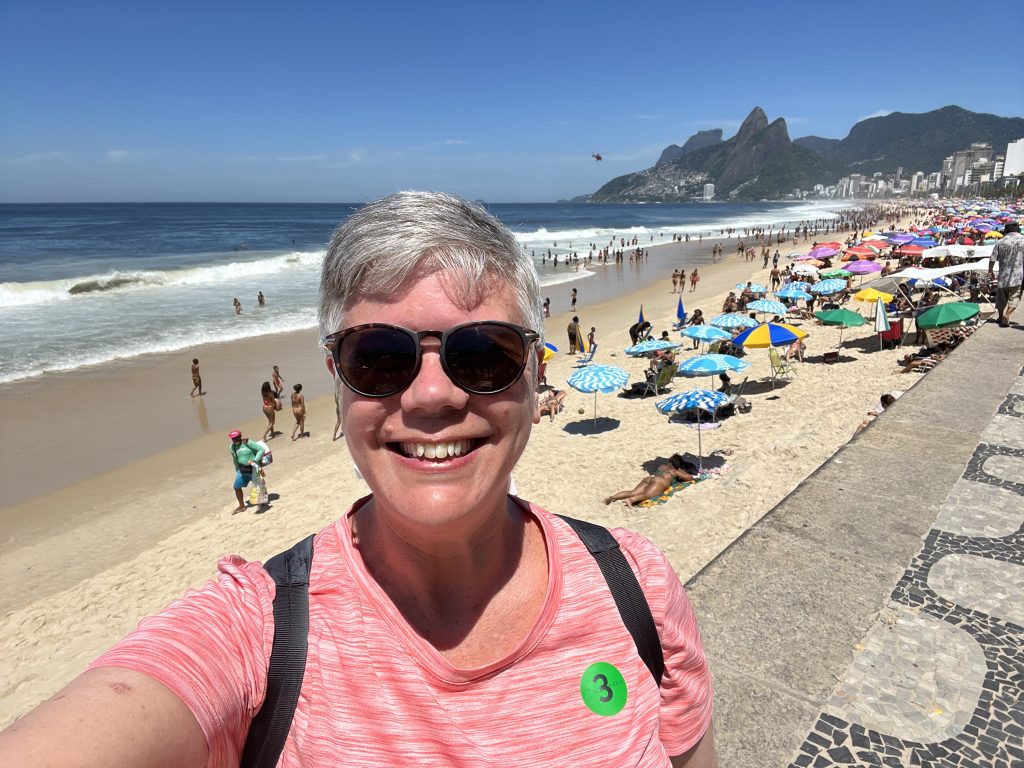
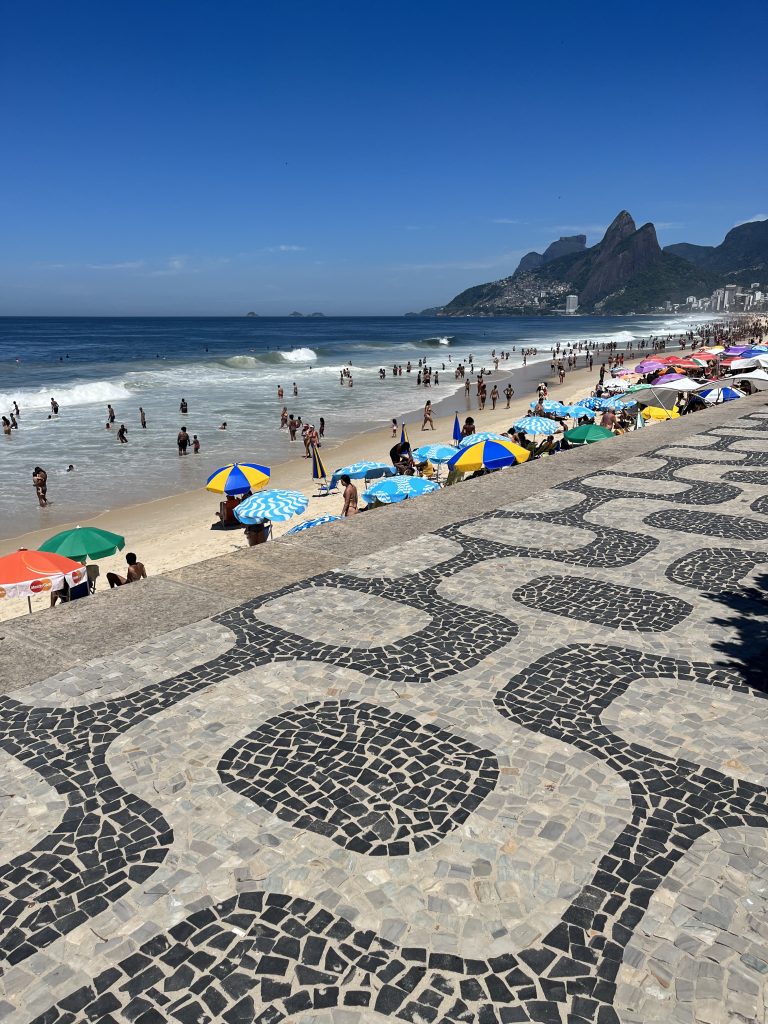
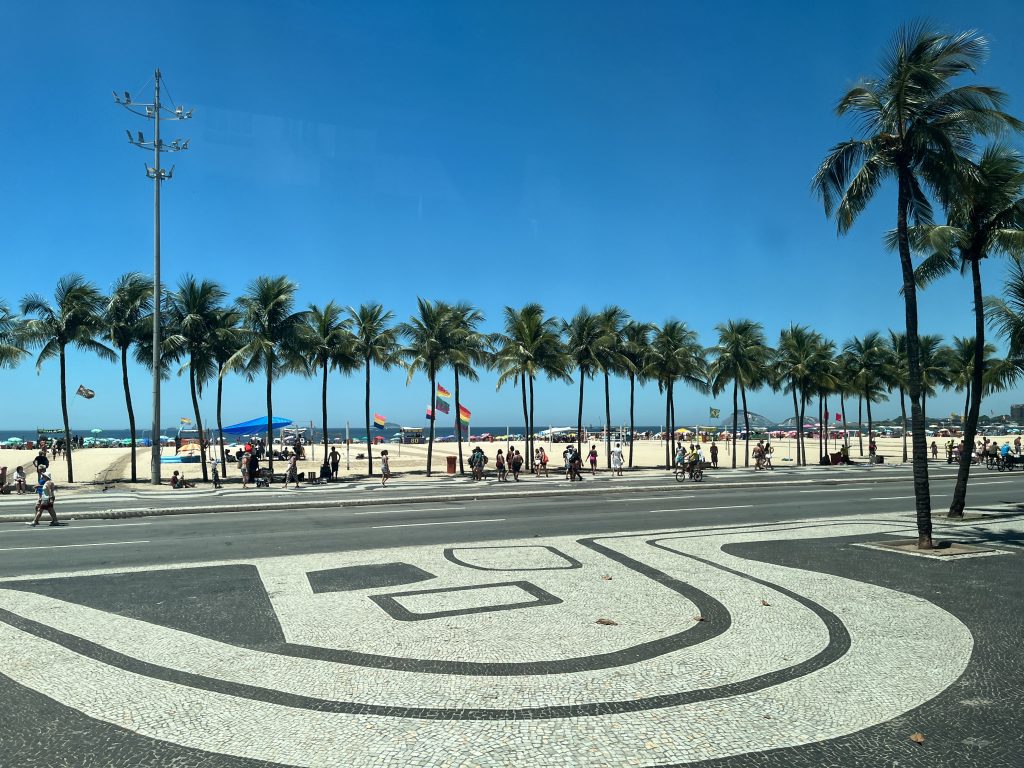
The wave-pattern mosaic sidewalk is not a Rio invention. It is calçada portuguesa, the same black-and-white stone technique used across Lisbon, brought over by Portuguese pavers in the early 1900s. I had been in Lisbon the summer before, and walking this sidewalk felt like running into an old friend in a completely different city.
Copacabana, From a Bus Window
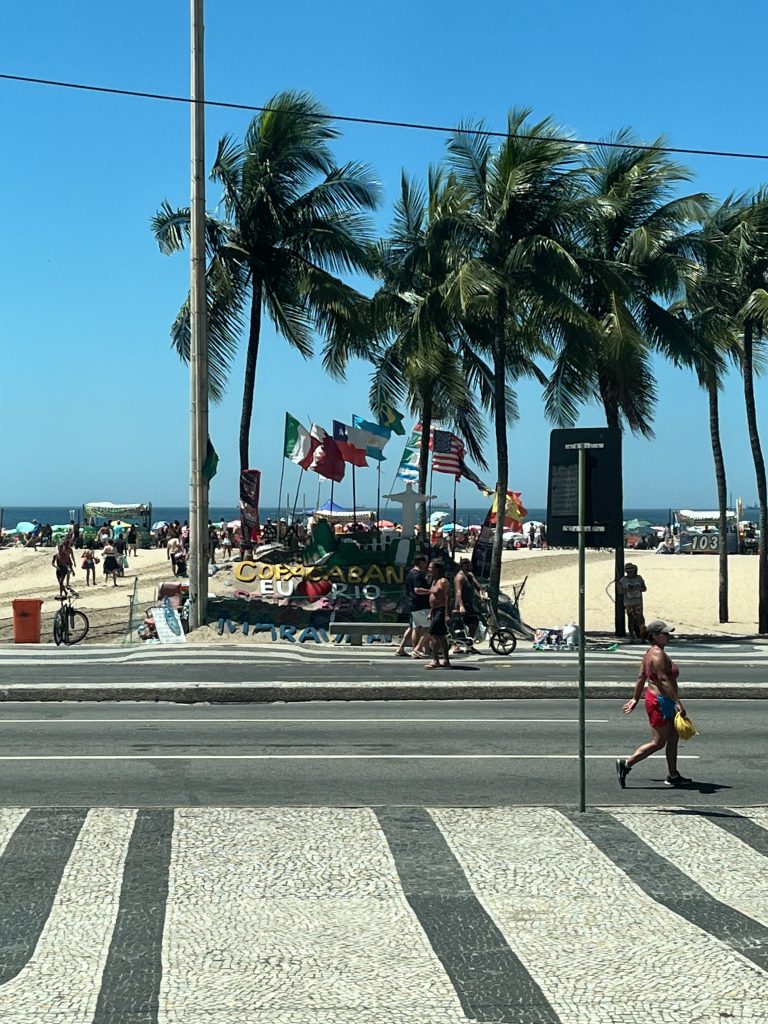
Copacabana Beach got the drive-by treatment, and yes, Barry Manilow was fully cued up in my head before we even turned the corner. A miniature sand sculpture of the beach itself, complete with tiny flags and an even tinier Christ statue, more of that same black-and-white calçada going by outside the window, and the colorful “RIO” letter sign that everyone photographs and nobody quite remembers where it is afterward. I kept half an eye out for Lola and Tony. No luck. Consider this the honorable mention section.
Sail-Away: Sugarloaf and Christ the Redeemer, One Last Time
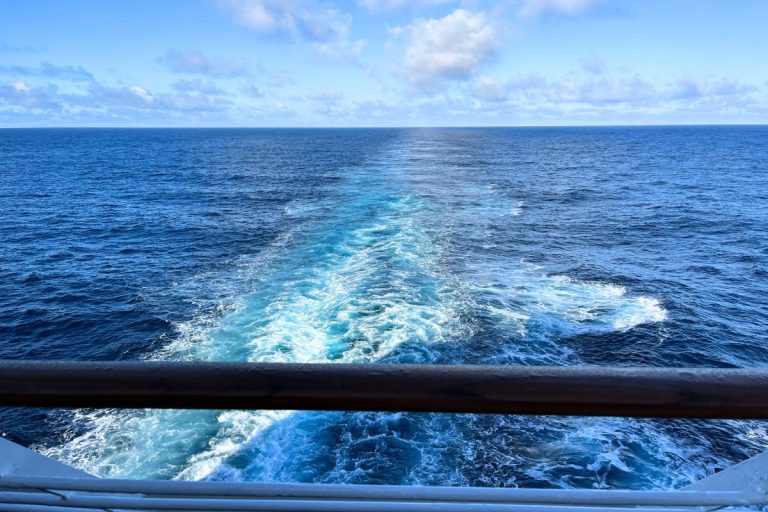
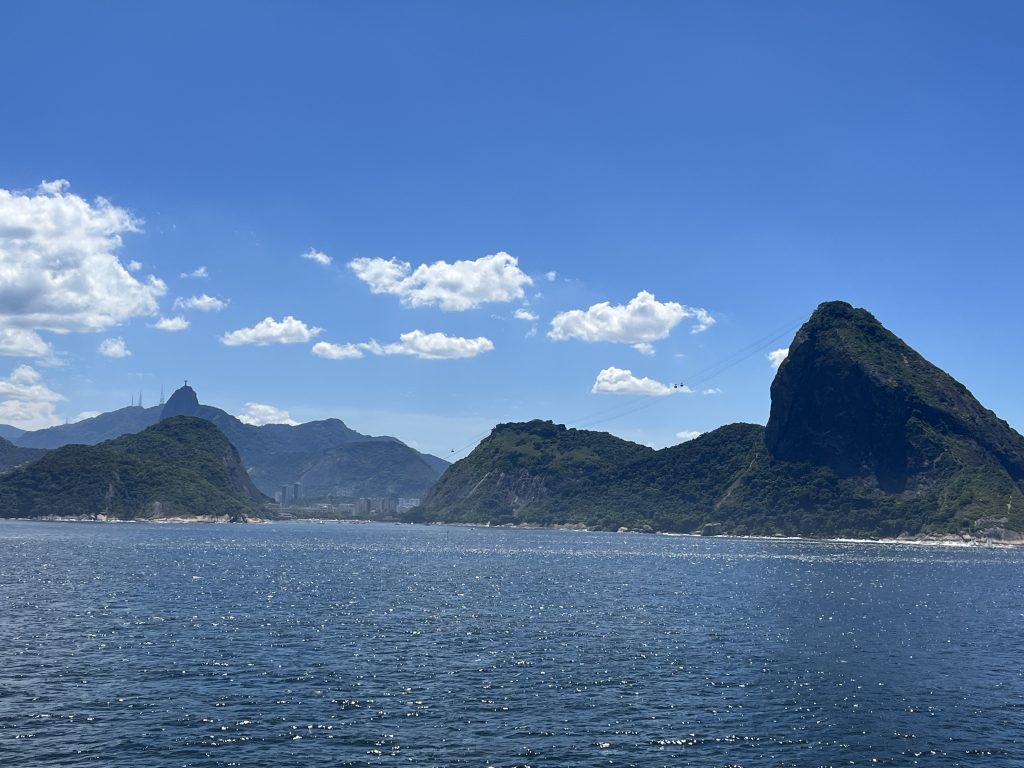
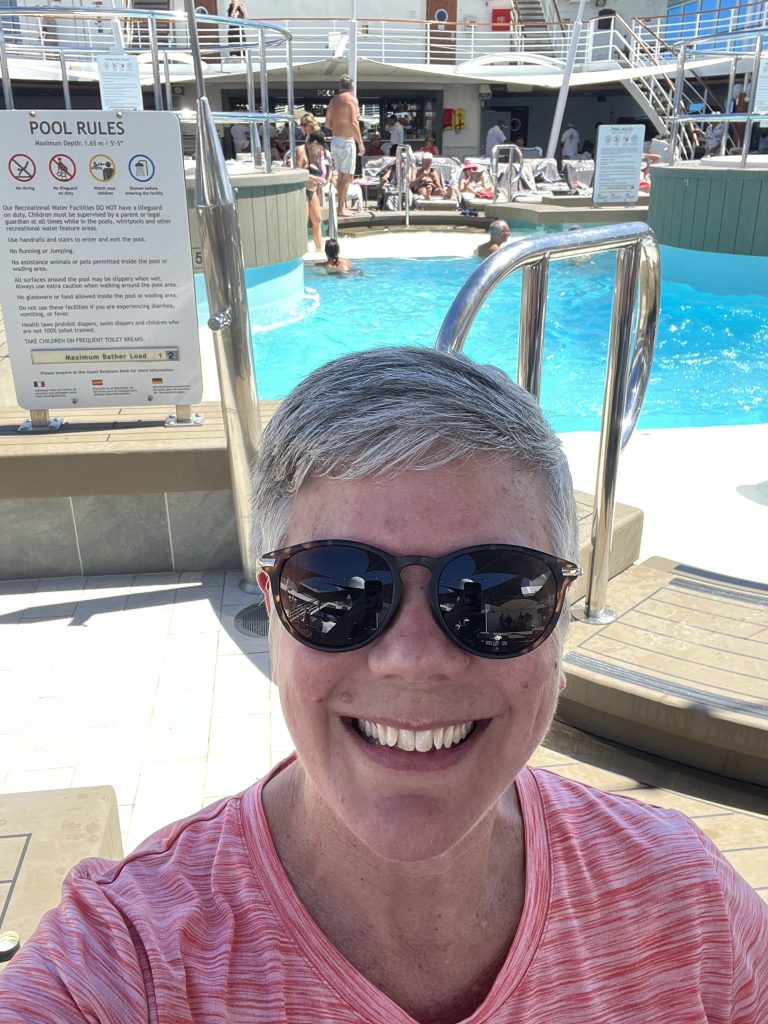
Rio wrapped up with a sail-away under full sun, warm but not hot. Celebratory drink in hand, I watched the ship pull out of Guanabara Bay. Sugarloaf and Christ the Redeemer were both visible in the background one final time. Sweeping harbor views the whole way out.

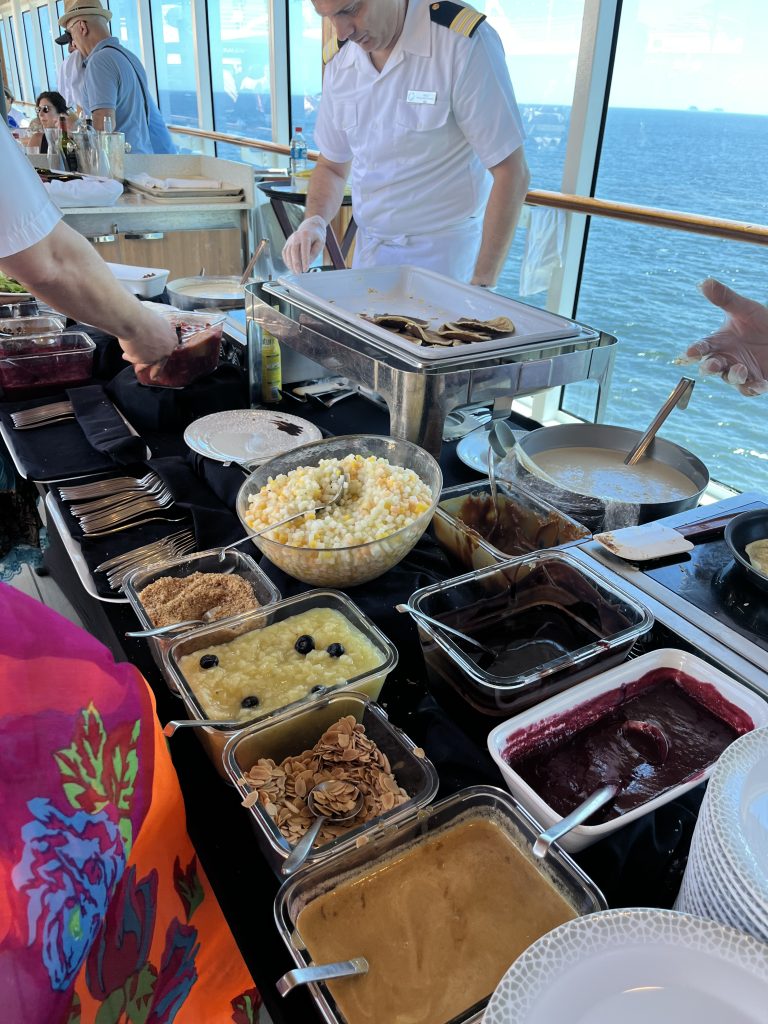
It also happened to be Shrove Tuesday, and Azamara marked the occasion with a watermelon carving on full display and an elaborate pancake and crepe luncheon spread on the pool deck. A fitting way to close out a trip that started with Carnival crowds and ended with a very literal Fat Tuesday.

Worth the Time if You Have It
I did not get to everything, because two and a half days is two and a half days. A few things worth adding if your port call gives you more room:
- Escadaria Selarón, plus Lapa and Santa Teresa. These 215 tiled steps connect the Lapa and Santa Teresa neighborhoods, covered in more than two thousand ceramic tiles from over sixty countries, all donated by visitors over more than two decades. Chilean-born artist Jorge Selarón started the project on the steps outside his own house in 1990 and never really stopped. Pair it with the nearby Arcos da Lapa and a wander through Santa Teresa’s hillside streets.
- Jardim Botânico. A 54-hectare botanical garden founded in 1808 by King João VI, with an avenue of imperial palm trees that has been the signature photo spot for over two centuries. It sits at the foot of Corcovado, so it pairs easily with a Christ the Redeemer visit if you have the extra half day.
- Museu do Amanhã. Right at Pier Mauá, the same spot I was watching Carnival crowds from my balcony. Designed by Santiago Calatrava, the building looks like it is floating over its own reflecting pool, and the museum inside deals in science and the future rather than Rio’s past. A strange, striking contrast to everything else on this list.
- Maracanã Stadium. Built for the 1950 World Cup and still one of the most storied stadiums in world football, with a guided tour that takes you through the locker rooms, the pitch, and a small hall of fame for Brazilian soccer legends. If futebol means anything to you, or to whoever you are traveling with, this earns a half day easily.
Closing Thoughts
Cathedral to Sugarloaf to parade to Christ the Redeemer to beaches, then a sail-away that brought the highlights back into view one final time. That is Rio in two and a half days: too fast, too crowded in places, occasionally exhausting, and somehow still the kind of trip you would take again in a heartbeat.
The full Samba Parade story lives over at Sequins, Samba & Spectacle if you have not read it yet. And there is more Carnival footage where this came from. A dedicated video from that night is still coming.
Common Questions
Not necessarily. I saw vendors selling tickets right at the port, though I never checked what night, section, or price they were offering. Booking ahead through your cruise line’s excursion or a reputable ticket seller gets you a known seat, a known price, and one less thing to sort out once you are actually in Rio. If you are comfortable figuring it out on the ground, that option looks like it exists too.
There is a heavy security presence at major sites and the Sambódromo itself, and Carnival crowds bring the same common-sense precautions as any large event in any big city: watch your belongings, stay aware in dense crowds, and stick with your group when possible. I usually wander cruise ports on my own, but for this one, I stuck to planned shore excursions the entire time, all booked through the ship. A reputable third-party tour operator would have worked just as well. Given the size of the crowds, that felt like the right call.
Yes. Half-day tours combining both are common and popular. My own itinerary split them across two separate mornings instead. If your schedule allows it, doing both in one day is a realistic plan. During Carnival specifically, some tour operators adjust combined itineraries due to parade-related closures, so it is worth double checking timing if you are visiting during that week.
Slow. Streets fill with bloco crowds and parade-related closures, so bus and car transit between sites takes longer than usual. Build in extra time, especially getting to or from the Sambódromo. My shore excursion group had transportation pre-arranged and waiting for us at the scheduled time, which mattered more than I realized until I saw the alternative. As I left, a long line of people were still waiting for taxis and rideshares outside the Sambódromo. If you are doing the parade independently, arrange your return transportation in advance rather than counting on catching something on the spot.
No, there are also van and official shuttle options. The cog train is the most traditional route and adds its own scenery through Tijuca National Park, but it can sell out on clear days, so book ahead if that is the experience you want.