Behind the Booking: Why Your Cruise Fare Isn’t Your Final Price
The Question
“Why does my total keep going up? I thought the fare was $1,499?”
If you’ve ever booked a cruise and watched the number creep upward between “browsing” and “checkout,” you’re not imagining things. And nobody’s nickel-and-diming you either. What you need is a real cruise fare breakdown, the actual structure behind that number. Once you know it, the whole thing makes a lot more sense.
Quick version: the advertised fare covers your cabin and the ship itself. Everything else, taxes, port fees, gratuities, and anything you add on, layers on top of that base price. It’s all disclosed somewhere, just not always obvious.
What’s Actually Happening
That headline price you see, the $1,499, the $2,499, is the base cruise fare. It’s real, and it’s not a bait-and-switch. But it’s also not the whole picture. Here’s what typically shows up next:
- Taxes and port fees — the ports and governments you’ll visit set these fees, not the cruise line. You can’t opt out of them. They usually run somewhere in the range of $150–$250+ per person, depending on the itinerary.
- Gratuities — most mainstream and premium lines add a daily gratuity charge automatically, often $16–$25+ per person, per day. On a week-long sailing, that can add up to $125 or more. Some luxury lines already build this into the fare. That’s part of why their “all-inclusive” price looks higher upfront but ends up more predictable.
- Anything you add on — drink packages, specialty dining, excursions, WiFi, spa treatments. None of this is required. But it’s easy to see how a $1,499 fare turns into a very different number once you’ve built out the trip you actually want.

None of this is the cruise line hiding the ball. It’s an industry-wide pricing structure, and once you’ve seen it once, you’ll recognize it everywhere.
What This Means for You
When you’re comparing cruises, the sticker price alone doesn’t tell you much. Two cruises with very different published fares can end up a lot closer together than you’d expect. Once you factor in fees, gratuities, and what’s actually included, the gap often shrinks more than either fare alone would suggest.
This is where it’s worth asking a very specific question before you get attached to a price. What’s actually included in this fare, and what isn’t? A slightly higher advertised fare can end up being the better deal if the line already includes gratuities and WiFi. It just doesn’t look that way at first glance.

If you’re working this out yourself, that means pulling up each line’s fare inclusions page. You’ll need to read the fine print on what’s bundled versus what’s not, then do the math by hand for every itinerary on your list. It’s doable. It’s just slow, and it’s easy to miss something buried in a policy page you skimmed at 11pm.
The Catch
Not Every Line Plays by the Same Rules
Here’s the part that trips people up. Not every line breaks this down the same way, and not every add-on is optional in practice. Some lines fold more into the base fare. Others keep the fare low and let the add-ons do the heavy lifting. Neither approach is wrong. But comparing them apples-to-apples takes a bit of digging, since the sticker price alone won’t tell you which is the better value for what you actually want out of the trip.
Line A vs. Line B in Practice
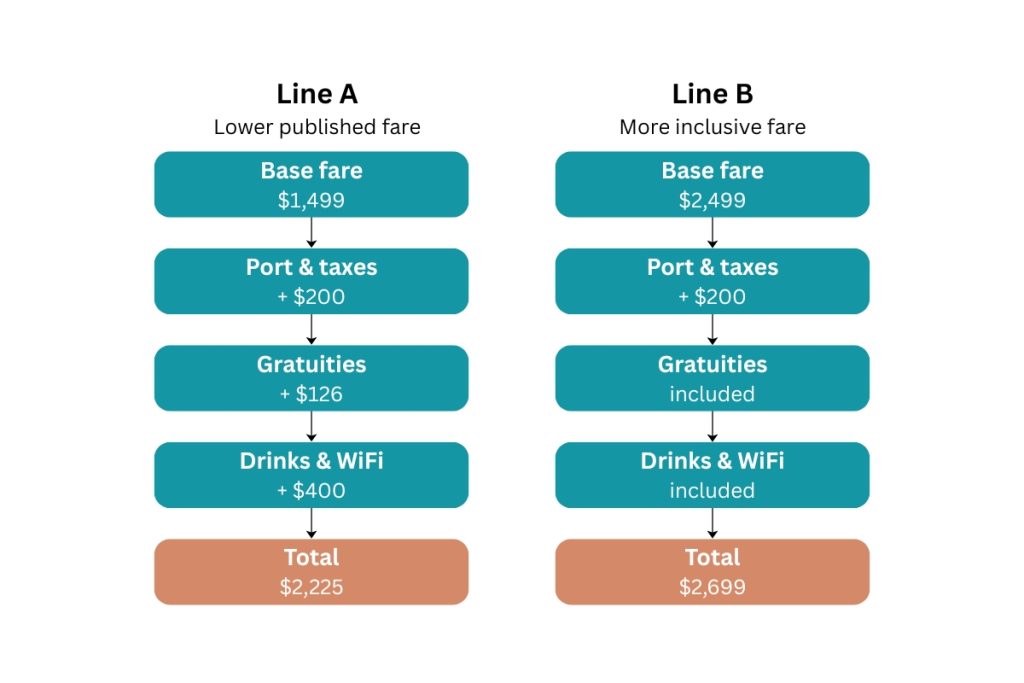
Here’s what that actually looks like. Say Line A publishes a fare of $1,499. Add port fees and taxes (+$200), gratuities (+$126), and a drink package and WiFi (+$400), and the real total lands around $2,225.
Line B publishes a fare of $2,499, a full $1,000 higher at first glance. But Line B already includes gratuities and WiFi. Add the same port fees and taxes (+$200), and the real total lands around $2,699.
What looked like a $1,000 gap at the sticker price is actually less than $500 once you account for everything. And Line B may include a noticeably nicer experience for that difference.
This is honestly one of the more tedious parts of planning a cruise yourself. It’s exactly the kind of thing that’s easy to get wrong when you’re comparing offers from a few different lines side by side, without knowing what’s baked in and what’s added on.
Where I Come In
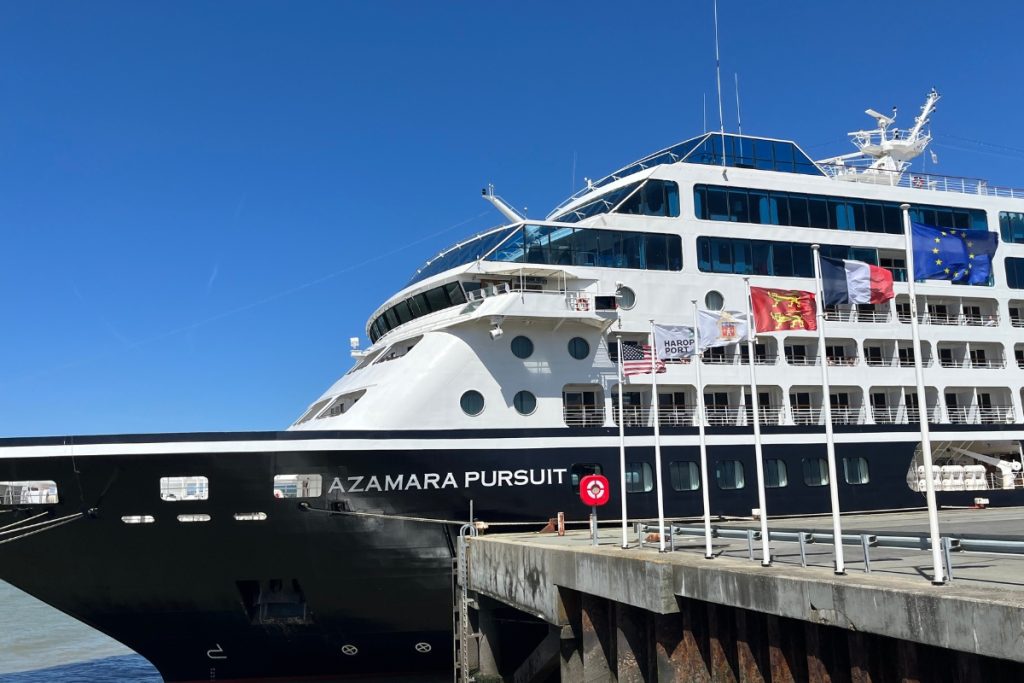
It’s also exactly the kind of thing a travel advisor sorts out as a matter of routine. Part of the job is knowing, off the top of my head, what’s already built into an Azamara fare versus what you’d need to add to a mainstream line to get an equivalent experience. When I put two cruises side by side for a client, I’m not just comparing the sticker price. I’m normalizing them, adding back what’s missing and stripping out what’s redundant, so what you’re looking at is an actual apples-to-apples comparison instead of two numbers that only look like they mean the same thing.
Closing Thoughts
I don’t want any of this to make cruise pricing sound scarier than it is. It’s a system, and once you know how it works, it’s honestly pretty logical. But it does explain why two cruises with similar sticker prices can land in very different places once you add everything up. And why “cheapest fare” isn’t always the same as “best value.” If you’d rather not be the one squinting at fine print to figure out which is which, that’s precisely where I come in.

Looking for a Travel Advisor?
If you’d rather skip the spreadsheets and let someone who does this for a living handle the comparisons, that’s exactly what I’m here for. I’ll dig into the details, catch what’s easy to miss, and make sure you know what you’re actually paying for before you book.
Fill out this quick form and let’s find your next trip together.
FAQs
No. The ports and governing bodies you’ll visit set these, not the cruise line. That means they apply no matter who you book through.
On many lines, yes. Prepaying ahead of time locks in the current rate and avoids having a daily charge show up on your onboard account.
Not always. Because more is bundled into the fare upfront, the total cost is often more predictable, and sometimes comparable to a “cheaper” fare once you’ve added back gratuities, drinks, and WiFi separately.Not always. Because the fare bundles more in upfront, the total cost is often more predictable. It can even land close to a “cheaper” fare once you add back gratuities, drinks, and WiFi separately.
Keep Planning
Curious what a travel advisor actually catches during this process? Why Using a Travel Advisor Makes a Good Trip Great digs into that side of things.