Peak, Shoulder, or Off-Season: What Actually Changes When You Book

The Question
“I’ve got these two weeks off. Where should I go?” and “I really want to go to [destination]. When’s the best time?” are two different questions. But figuring out the best time to book a cruise for either one comes down to the same thing: understanding what season actually means for a given trip, not just on a calendar, but in terms of price, crowds, weather, and what’s even open.
What’s Actually Happening
Every destination moves through three general windows: peak season, shoulder season, and off-season. The labels are consistent, but what each one actually means shifts a lot by region.
Peak season is when demand is highest, usually tied to reliable weather, school breaks, or a destination’s signature event. Prices run highest, ships and hotels book out furthest in advance, and popular excursions sell out fastest.
Shoulder season sits just before or after peak. Prices soften, crowds thin out, and weather is often still good, just less guaranteed. This is usually where the best value lives, if you’re willing to accept a bit more unpredictability.
Off-season is the quietest window. Prices drop the most, but there’s usually a real reason why: weather turns, some businesses close for the season, or the destination’s main draw isn’t fully in play.
Here’s how that plays out in a few regions:
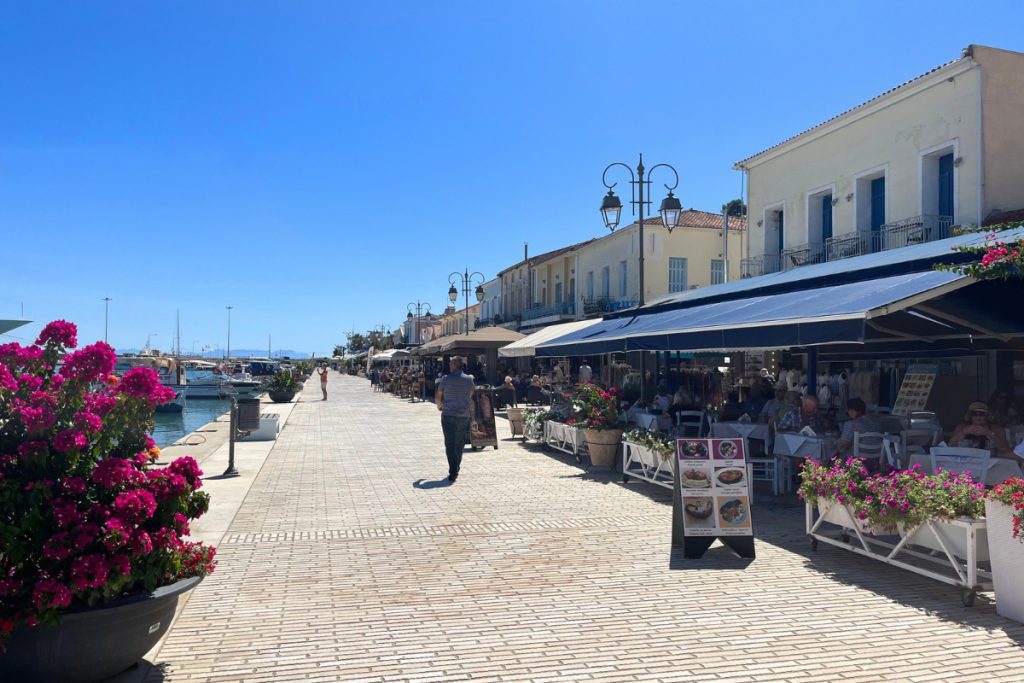
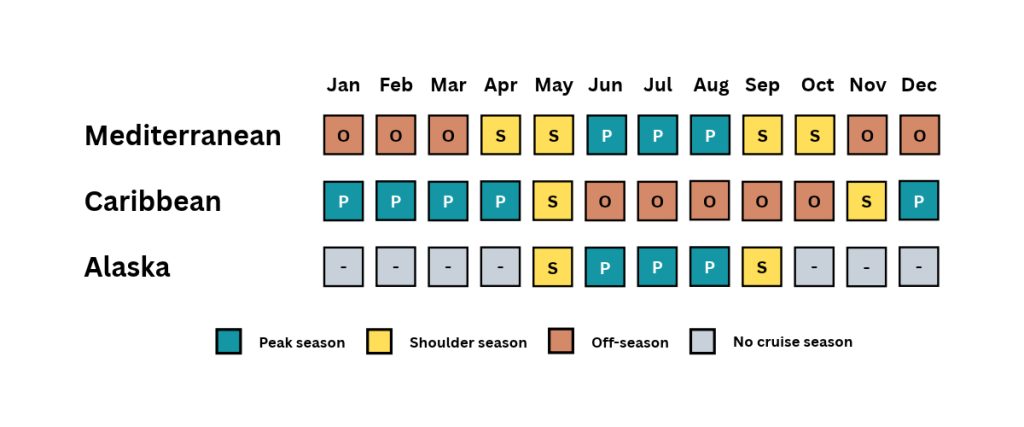
- The Mediterranean — peak runs June through August, when weather is most reliable but ports and popular towns are at their busiest. April, May, September, and October are shoulder months, often warm enough with noticeably thinner crowds. November through March counts as off-season for most of the region, with many smaller ports and excursions scaled back.
- The Caribbean — peak runs December through April, dry season with the most reliable weather. May and November are shoulder months, a bit warmer and wetter, but still very sailable. June through October is hurricane season, the Caribbean’s off-season, where prices drop the most and itineraries can shift with the weather.
- Alaska — the cruise season only runs May through September, so most of the year counts as no season at all for cruising here. Peak runs June through August, when wildlife viewing and weather are both at their best. May and September function as shoulder season, cheaper, thinner crowds, but colder and with a real chance of missing certain excursions tied to spring thaw or fall closures.
What This Means for You
Most people planning a trip start from one of two places, and the seasonality facts above apply differently depending on which one you’re in.
If your dates are fixed, but you’re open on where: use the season, not the destination, as your starting filter. If you’ve only got a window in February, that’s peak season in the Caribbean, off-season in the Mediterranean, and off the table entirely for Alaska cruising. Working backward from your actual dates narrows the map fast, and it can point you toward a destination you hadn’t considered simply because the timing lines up.
If your destination is fixed, but you’re open on when: use the season to find your best window within that destination, not just the cheapest one. Shoulder season is usually the sweet spot, meaningful savings without giving up too much on weather or availability. But it’s worth knowing exactly what you’re trading before you lock in a date, which is exactly where things get tricky.

The Catch
A Lower Price Doesn’t Always Mean a Better Trade-Off
Shoulder season savings don’t always come with shoulder season weather. Sometimes they do, and it’s a genuine win. Other times, “shoulder season” on a calendar still means real risk, an early hurricane, a late cold snap, a popular excursion that hasn’t opened for the year yet. The season label alone doesn’t tell you which kind of shoulder season you’re booking into.
Off-Season Isn’t Automatically a Steal
An off-season price looks like a deal, and sometimes it is. But it’s worth asking why the price dropped. If it’s simply lower demand for an otherwise-great destination, that’s a real win. If it’s because the destination’s main draw isn’t available that time of year, a beach town with rain every afternoon, a wildlife-viewing trip outside migration season, then the “deal” isn’t actually a deal. You’re paying less for less, not paying less for the same thing.

This Is Where Region-Specific Knowledge Matters
General seasonality patterns get you most of the way there, but the exceptions are usually regional and specific: a shoulder month that behaves more like peak due to a local festival, a destination where “off-season” only affects one part of a multi-stop itinerary. Knowing the general pattern tells you where to start asking questions. Knowing the specific destination tells you which questions actually matter.
Closing Thoughts
Season isn’t just a date range, it’s a trade-off, and the right one depends on what you actually care about most: price, weather, crowds, or a specific experience that only happens at a certain time of year. There’s no universally “best” season, only the one that best fits what you’re looking for.

Looking for a Travel Advisor?
If you’d rather not gamble on which kind of shoulder season you’re booking into, that’s exactly the kind of thing I help sort out. I know which destinations reward a shoulder-season bet and which ones don’t, and I can help you find the window that actually fits what you want out of the trip.
Fill out this quick form and let’s find your best timing together.
FAQs
Often, but not always. It’s usually the best balance of price and reliability, but the specifics depend on the destination. Some places have a narrow, well-defined shoulder season; others barely have one at all.
Earlier than you’d think. Popular peak-season sailings and excursions can sell out six to twelve months ahead, especially for smaller ships or high-demand itineraries.
That’s a real possibility, and it doesn’t necessarily mean skip the trip. Some destinations have a mild off-season that’s still very sailable, just quieter. It’s worth understanding what “off-season” actually means for that specific place before ruling it out.
Keep Planning
Curious how cruise line categories play into this too? Cruise Line Types, Decoded breaks down mainstream, premium, and luxury options, useful background if you’re choosing a destination based on season and still deciding what kind of line fits. And since season also affects what you’re actually paying for, Why Your Cruise Fare Isn’t Your Final Price is worth a look too.