Sequins, Samba & Spectacle: A Night at Rio’s Legendary Carnival Parade
When the sun sets over Rio de Janeiro and the first drumbeats echo through the Sambadrome, the city transforms into a living, breathing masterpiece of rhythm and color. The Carnival Samba Parade isn’t just a celebration—it’s an explosion of sequins, soaring floats, thunderous percussion, and unstoppable joy.
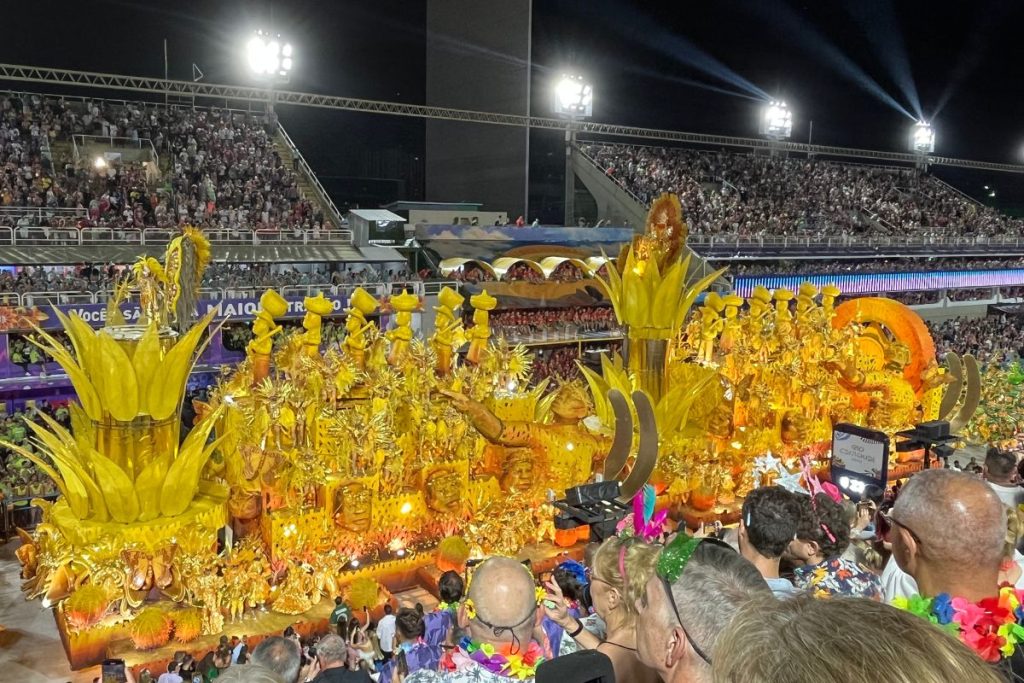
For a few unforgettable nights each year, samba schools compete in a spectacle months in the making, telling powerful stories through dance, music, and jaw-dropping costumes. It’s more than a parade; it’s the heartbeat of Brazil on full display, pulsing with passion, pride, and pure electric energy.
A Night at Rio’s Legendary Carnival Parade
On my 15-night Carnival in Rio cruise on Azamara, I attended a night of the Carnival Samba Parade in Rio de Janeiro. The parade actually occurs over four different days: the Access Group performs on Friday and Saturday, and the Special Group performs on Sunday and Monday. The winners are announced on Ash Wednesday, and the Champions Parade takes place the following Saturday.
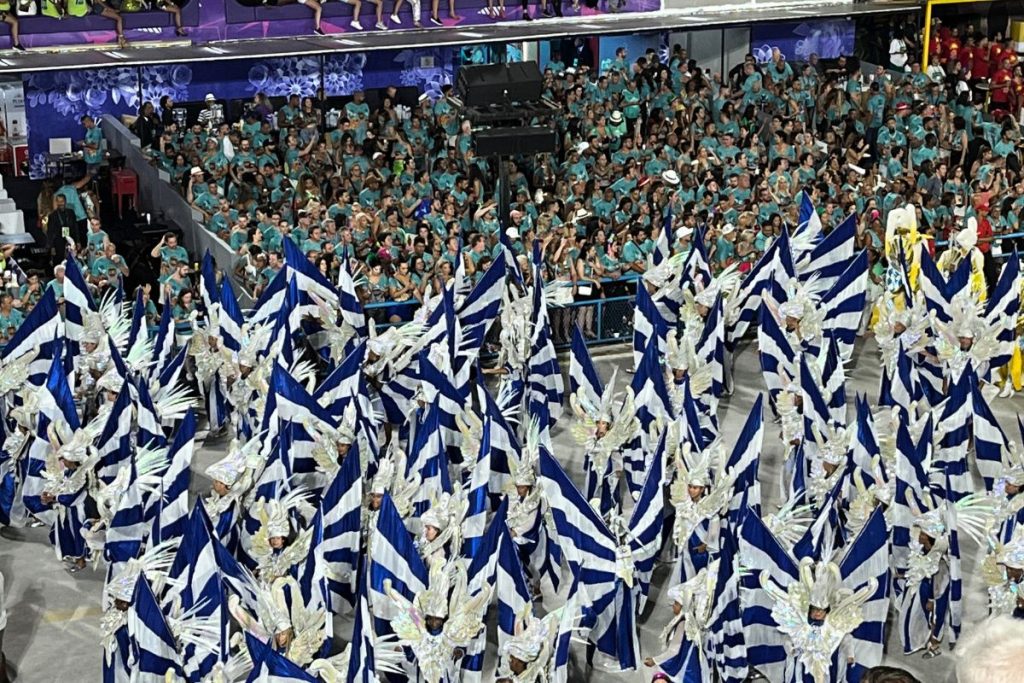
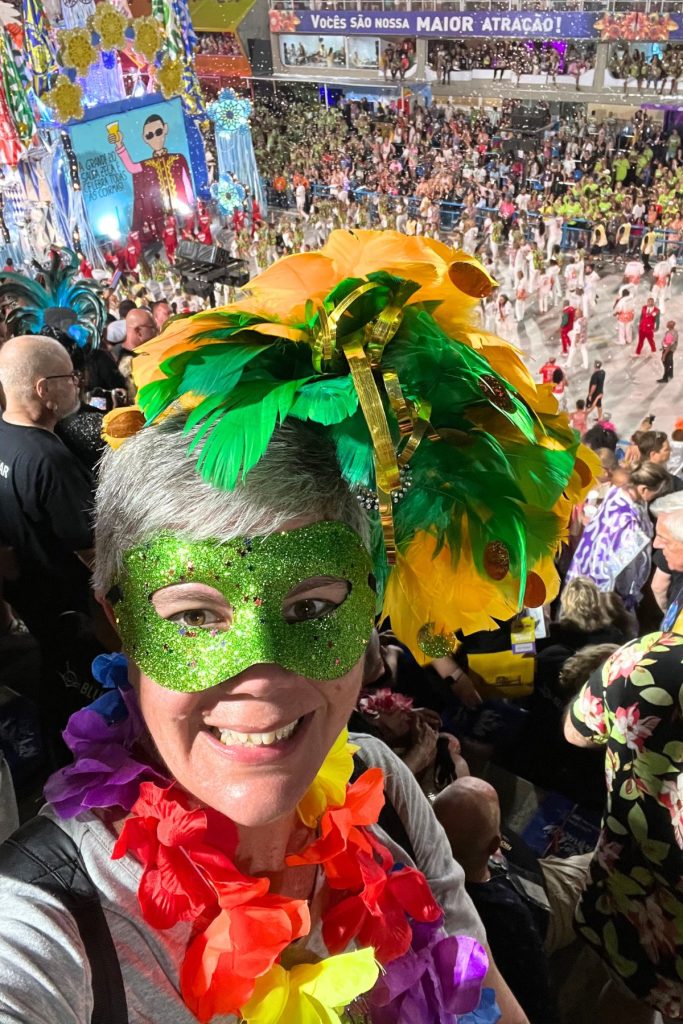
I was lucky to attend the first night of the Special Group, which features the best and most creative Samba dances, musicians, choreography, costumes, and floats. The parade each night is a series of six different groups, called Samba Schools, performing. Each school’s performance lasts at least one hour as they make their way down the half-mile long parade route. It takes place in the Sambódromo, a stadium specifically built to host the annual Samba School parade. The original Sambódromo was built in 1984 with seating for around 70,000 spectators. It was redesigned and enlarged to support the 2016 Summer Olympics, and it currently holds around 90,000 spectators!
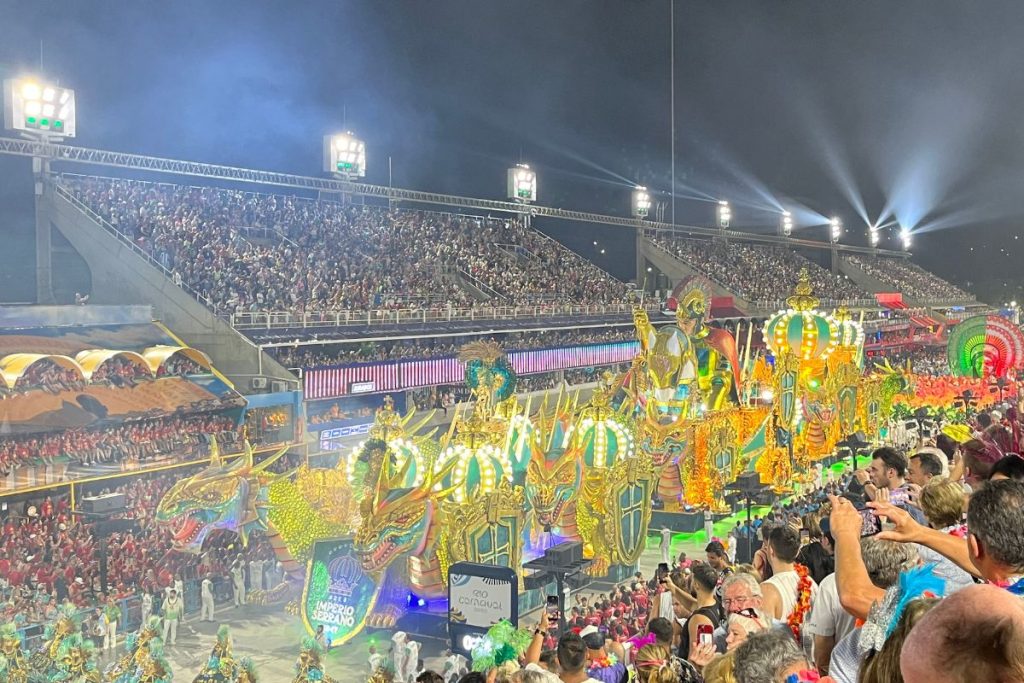
Arriving at the Sambódromo
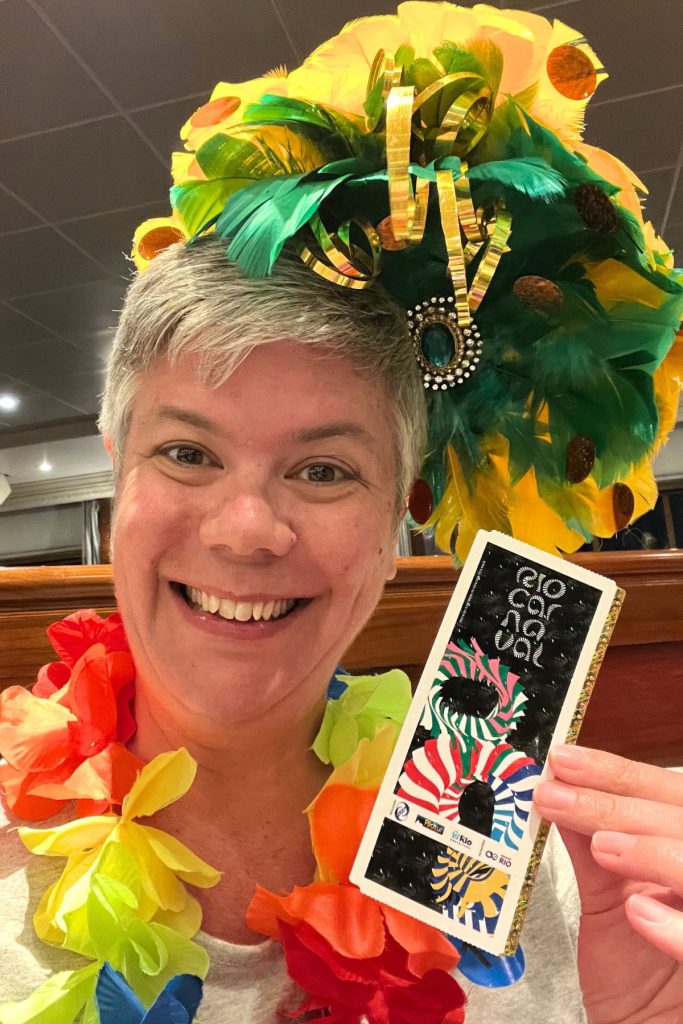
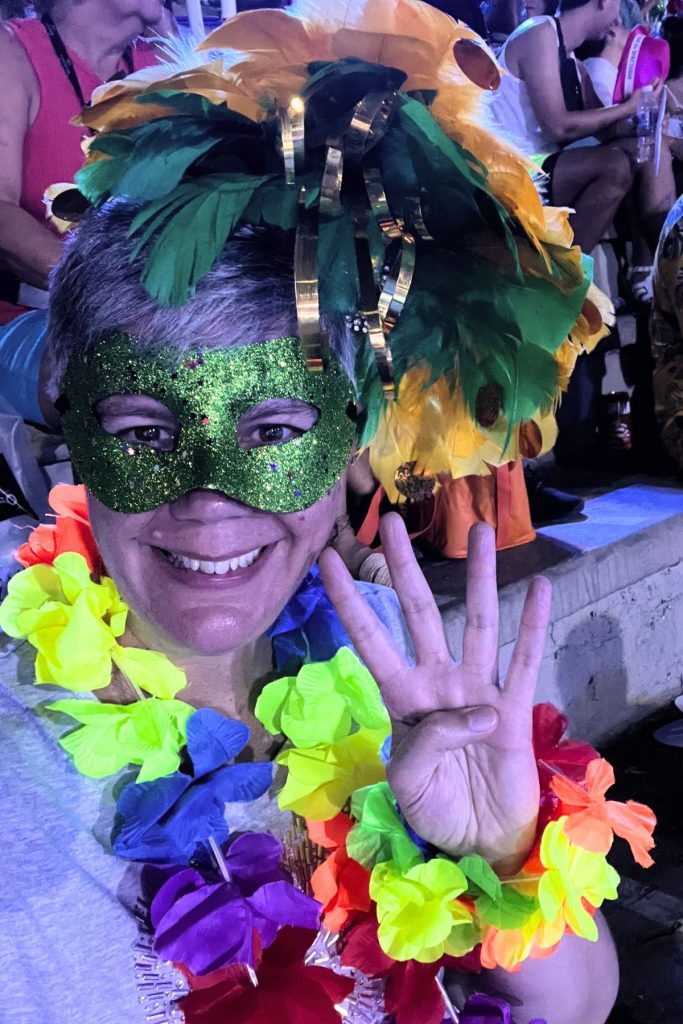
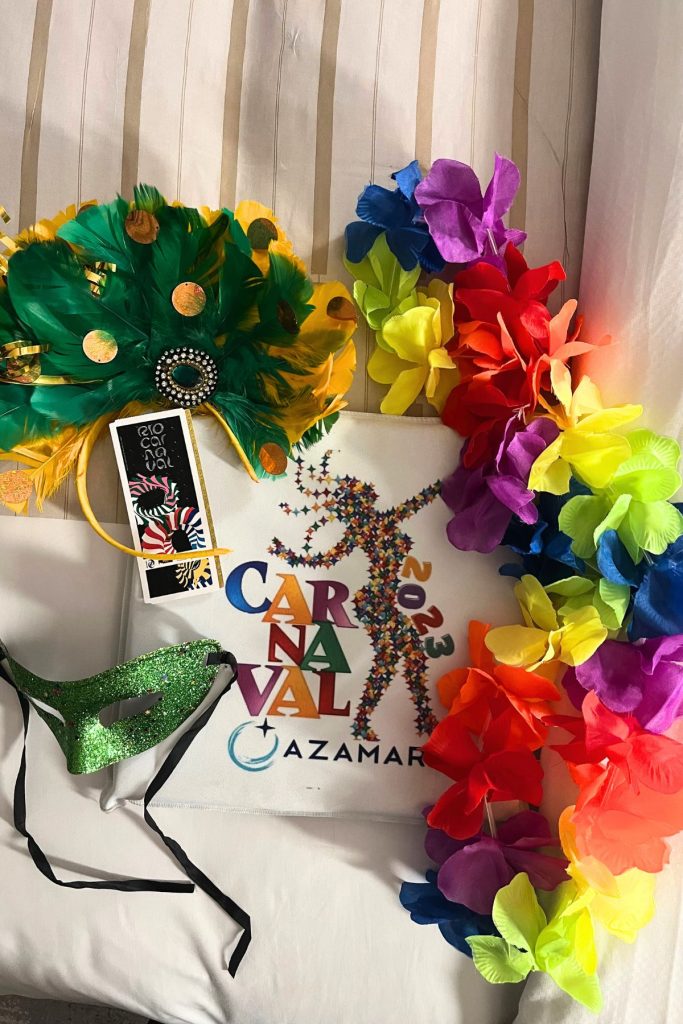
The parade kicked off at 10:00PM, but our group from the ship arrived pretty early to try to beat the crowds. So, I had plenty of time to take in the initial sights of the Sambódromo. Our seats were in Sector 9, which is about half-way down the parade route. The seats themselves are simple concrete benches, but Azamara provided a comfy and festive seat cushion as part of the excursion package. We also got a carnival mask, a colorful flower lei, and some ear plugs (the music does get pretty loud!). I had found a fabulous hair piece at the port earlier in the day, so I was all decked out in my finery and anxiously awaited the start of the parade.
Format of the Samba Parade
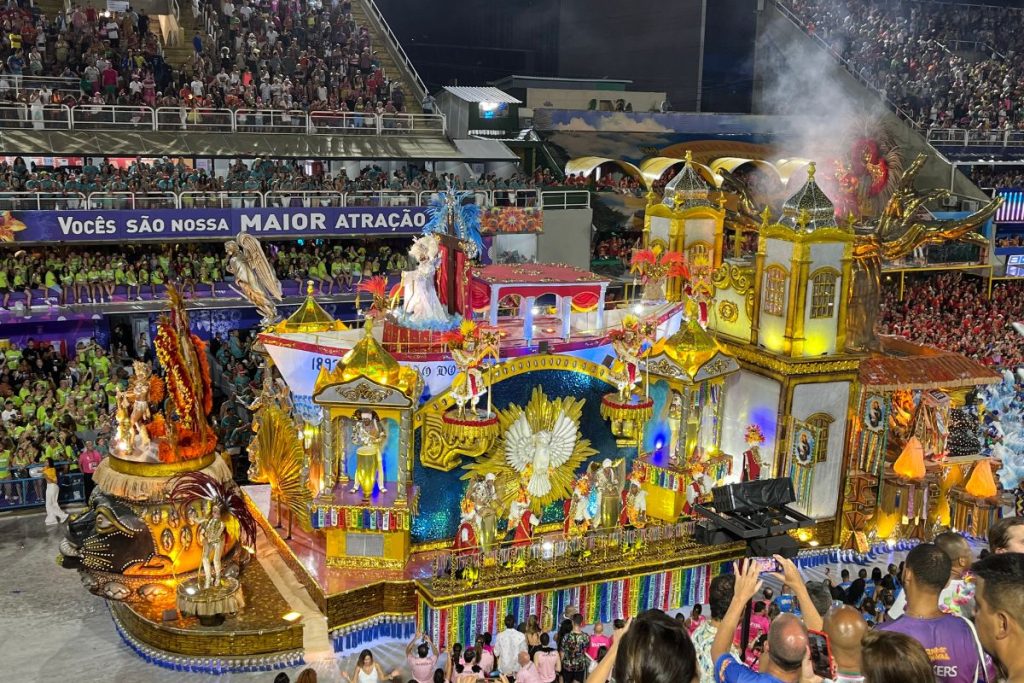
Each school follows the same general format: a fireworks show indicates the start of the school’s parade, which presents a theme portrayed by a huge team of musicians, Samba dancers, and massive floats. Each school’s parade lasts at least an hour, and then there is a 20- to 30-minute break between the schools. The first school typically starts around 10:00PM, and the last of the six schools typically wraps up around 6:00AM!
Below is a recap of my experience:
- The first school stepped off at 10:00PM. The fireworks show lit up the night sky, and then the mesmerizing procession of color, music, and movement followed.
- After the first school wrapped up, there was an approximately 20 minute break to rest and recharge. But before long, the second school kicked off with their fireworks and parade.
- After another well-deserved but quick break between schools, the third school kicked off around 1:00AM. Our group excursion from the ship offered shuttle buses back to the ship starting after the second school, and many in our group chose to call it a night at that point. I was having a great time and did not have anything scheduled for the next day, so I decided to stay for some more fun.
- The fourth school kicked off at a little after 2:00AM. It was yet another fantastic presentation of song, dance, and color throughout the parade.
- After the fourth school wrapped up at around 3:15AM, I decided to call it quits and catch the shuttle bus back to the ship. A part of me wanted to power through and see the last two schools, but I just wasn’t sure I could make it through to the 6:00AM end time! So, I bid a fond farewell to Sector 9 and met up with the others in my group who were heading back home to the ship.
- Once back at the ship, I happily found a delicious late-night (early-morning!) snack in my stateroom. I enjoyed a sandwich and some fruit and relived the wonderful evening I had just experienced.
Each samba school includes the following main characters:
- Rainha da Bateria – leads the percussion section
- Mestre-Sala & Porta-Bandeira – dance while carrying the school’s flag
- Passistas – elite samba dancers
- Baianas – traditional spinning dancers in large dresses
Rainha da Bateria
The Rainha da Bateria (Queen of the Drums) leads the percussion section. She is one of the most glamorous and symbolic figures in the Carnival parade. Dressed in a colorful costume, she dances and leads the bateria, the drum section of the samba school. Her samba is performed with high energy, and her charisma shines as she engages with both the drummers and the crowd.
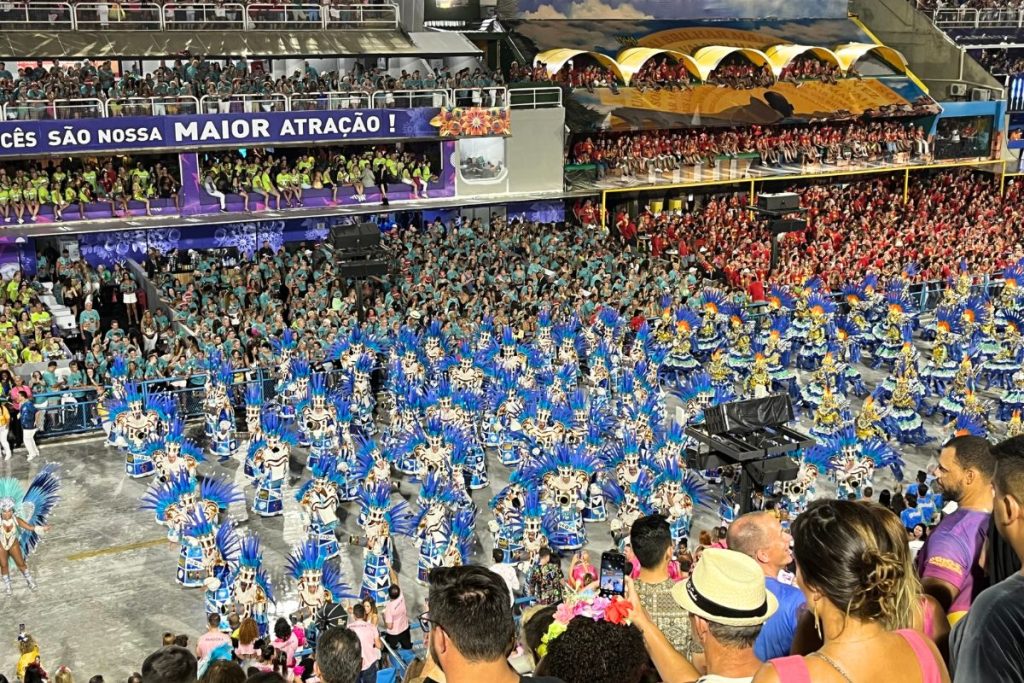
The Rainha da Bateria is a coveted role, known for both glamor and physical stamina…she has to dance the samba and energize the crowd for at least 60 minutes while wearing an elaborate costume! Watch the below video to see a Rainha da Bateria, in her sparkling silver costume, energize the crowd while the bateria performs behind her:
The Rainha da Bateria represents:
- A symbol of Afro-Brazilian heritage
- An embodiment of samba’s spirit and joy
- A bridge between tradition and spectacle
- Both beauty, rhythm and the soul of the drums
Mestre-Sala & Porta-Bandeira
The Mestre-Sala (Master of Ceremonies) & Porta-Bandeira (Flag Bearer) dance while carrying the school’s flag (pavilhão). This is one of the most traditional and respected pairs in the parade, as they are the guardians of the samba school’s official flag.
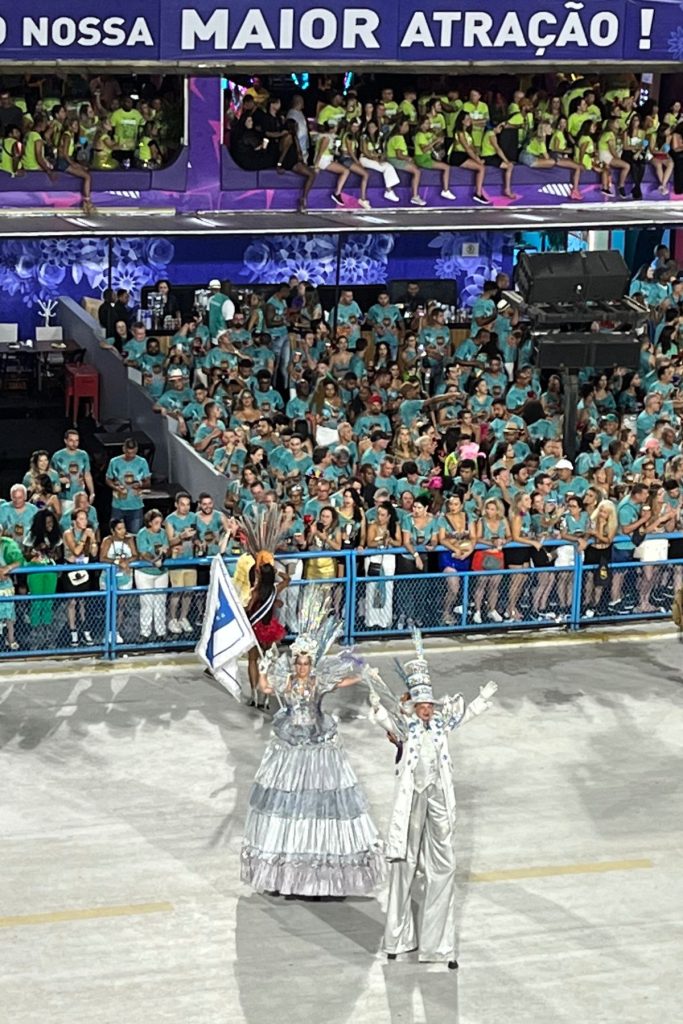
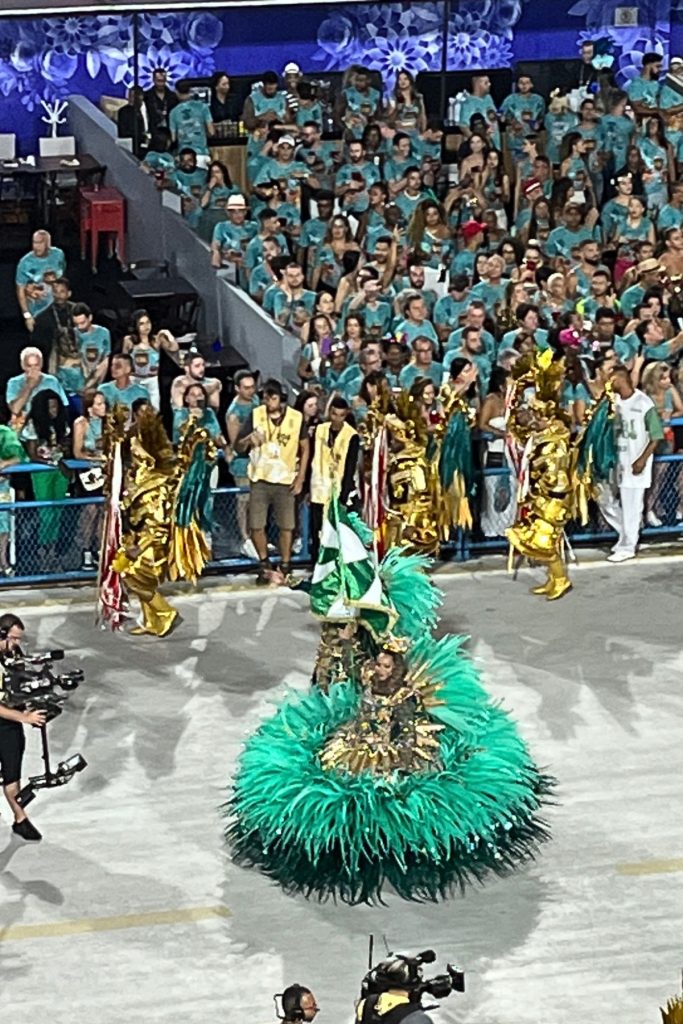
The Porta-Bandeira carries the official flag of the samba school with pride. Dressed in a colorful costume, she spins and displays the flag throughout the parade. She is charged with never letting the flag touch the ground, and she keeps the flag fully visible while dancing and posing during the parade.
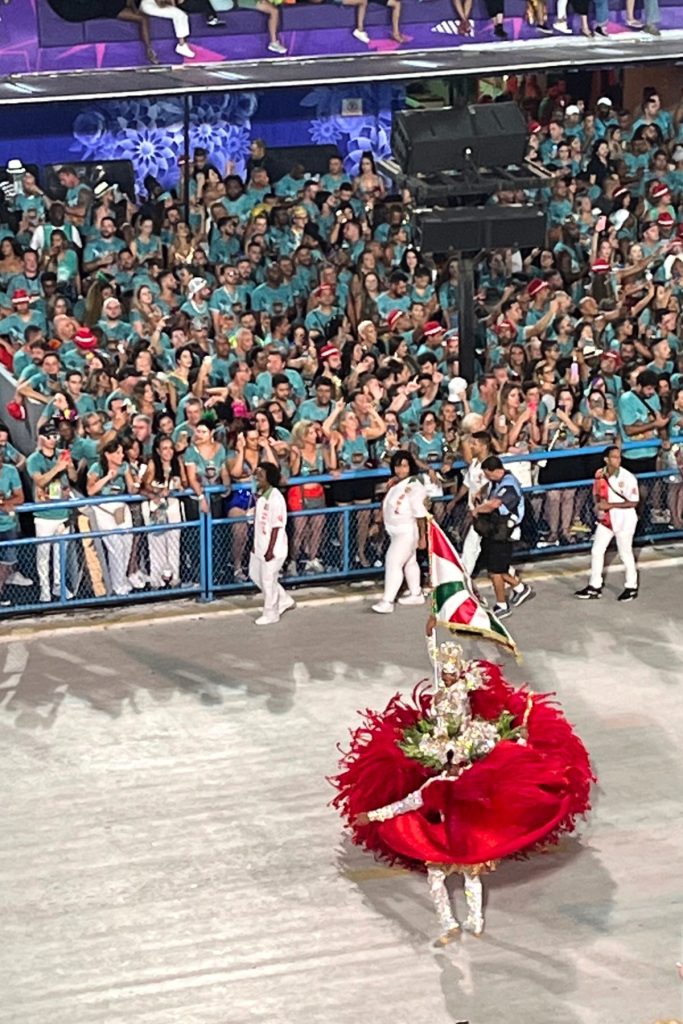
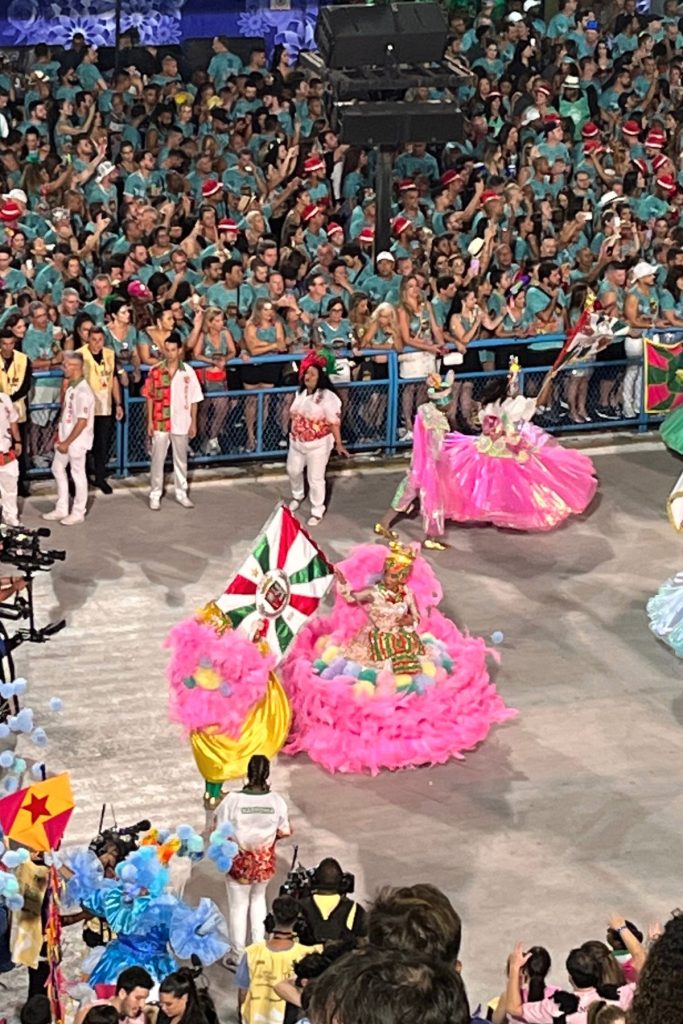
The Mestre-Sala is the partner and protector of the Porta-Bandeira. He dances around her, without ever touching her, throughout the parade. His theatrical bows and flourishes present and honor both her and the flag she bears. The Mestre-Sala must combine a formal posture and controlled footwork with elegance.
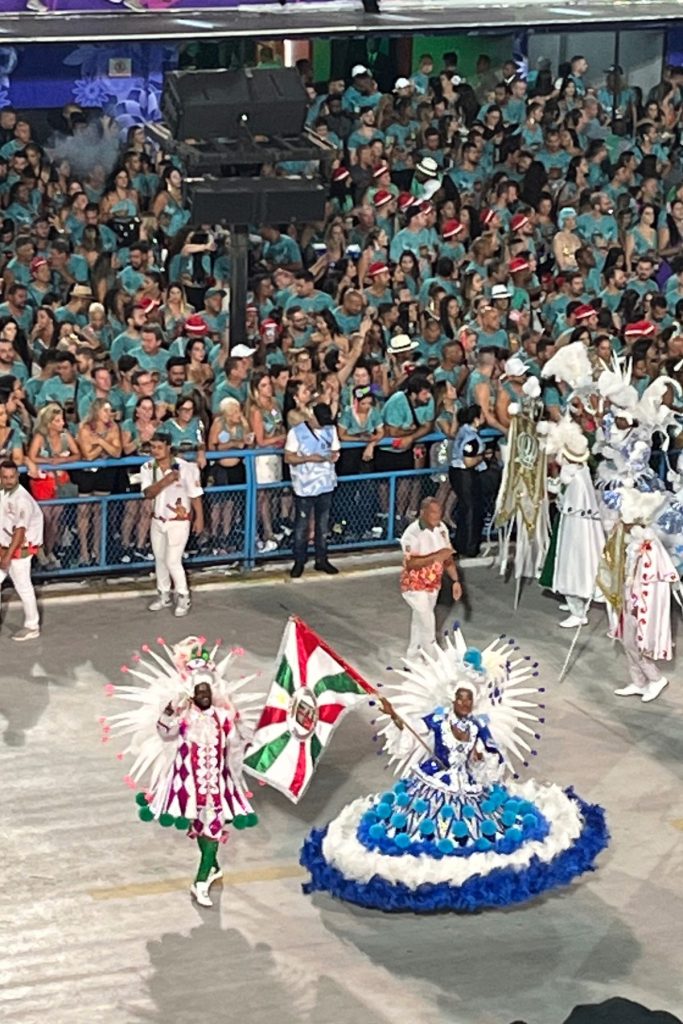
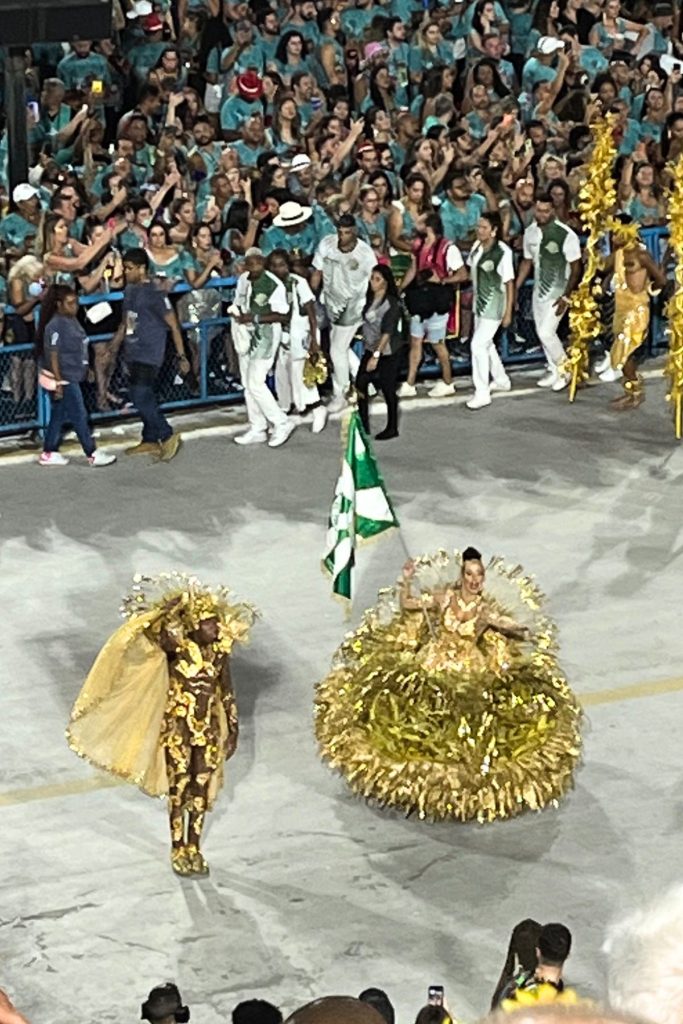
The Mestre-Sala and Porta-Bandeira are vibrant representations of the identity and pride of the samba school. The ceremonial heart of the parade, they are a link to Afro-Brazilian and imperial-era cultural traditions.
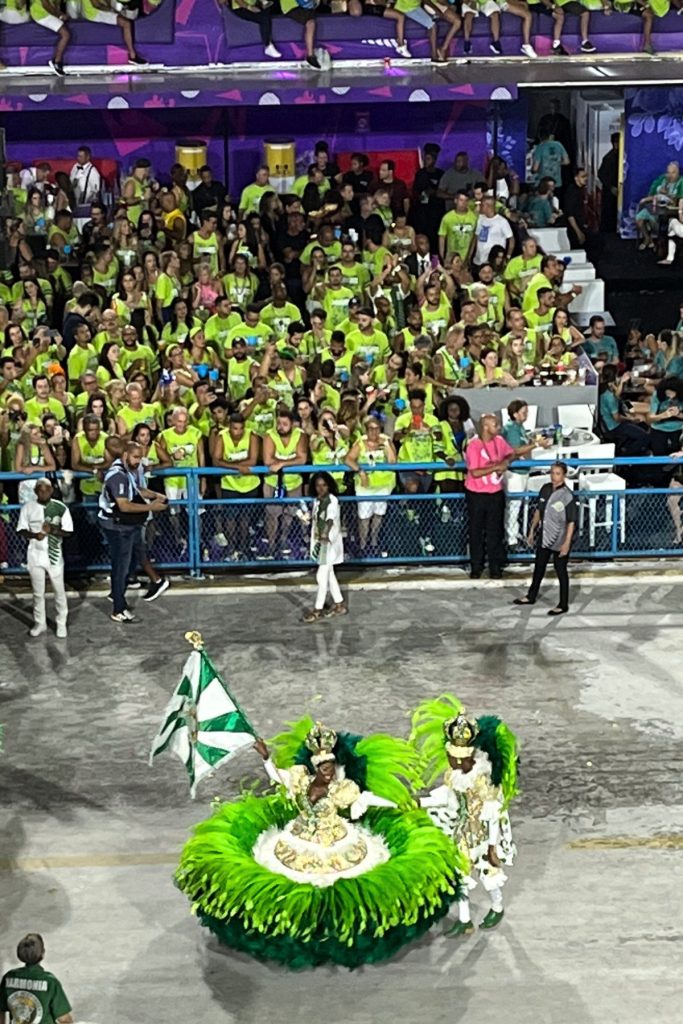
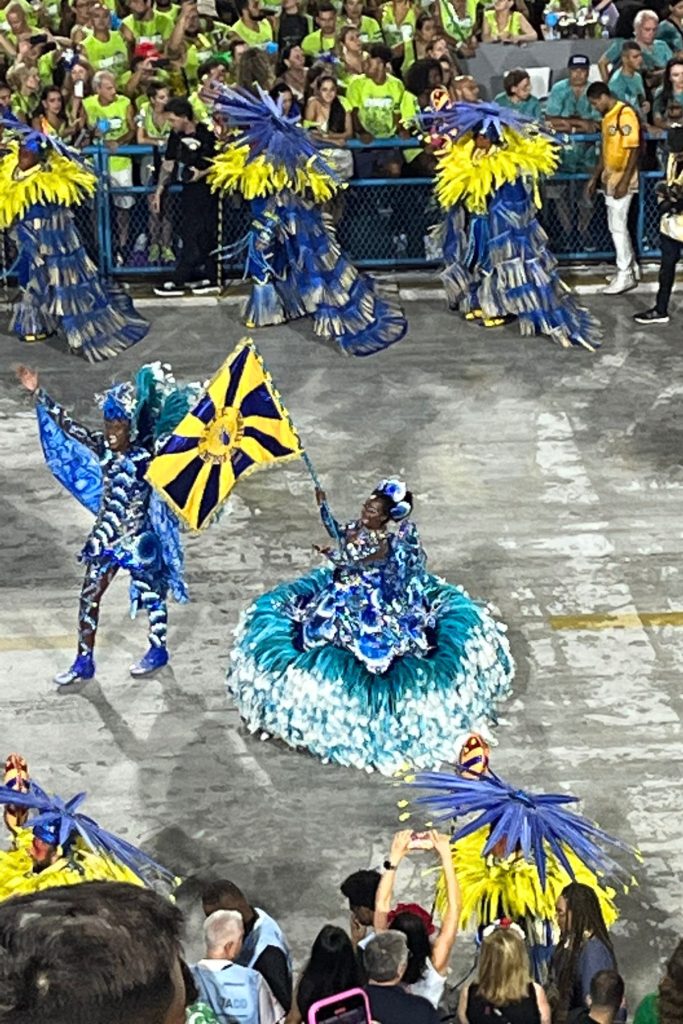
This pair is one of the most heavily judged categories in the parade. The eagle-eyed judges are looking for the following from the Mestre-Sala and Porta-Bandeira:
- Synchronization
- Harmony between the pair
- Proper handling of the flag
- Elegance and posture
- Respect for tradition
Passistas
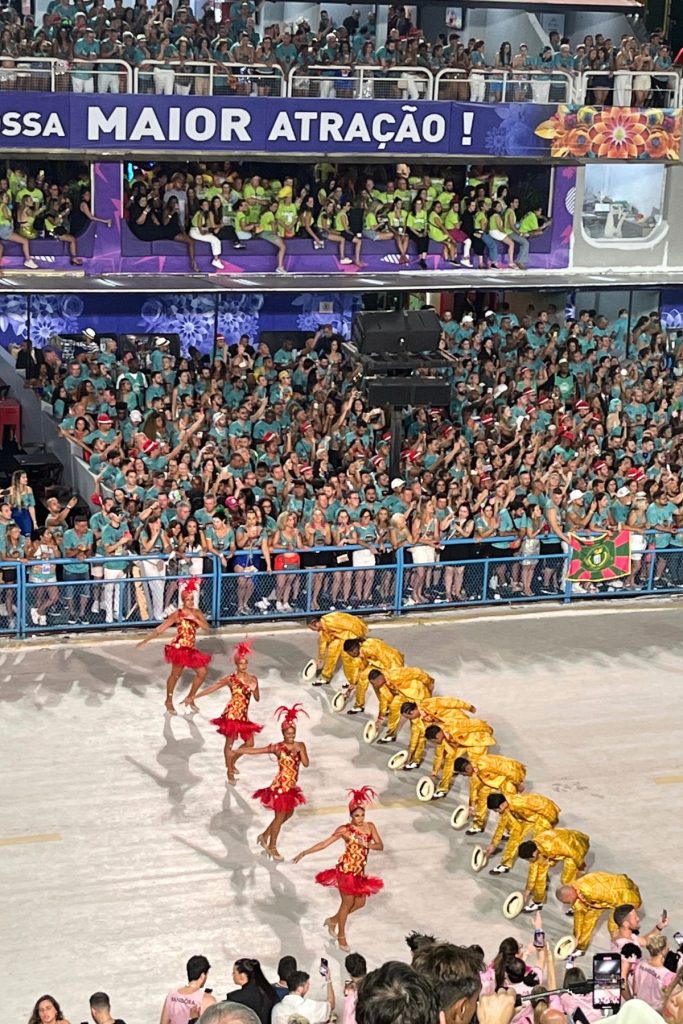
The Passistas are elite samba dancers. These samba specialists showcase the purest and most technically refined samba moves in the parade. Often considered the heartbeat of the dance, they use fast, intricate footwork to translate the rhythm of the drums. The Passistas dance near the bateria and wear featured dance wings.
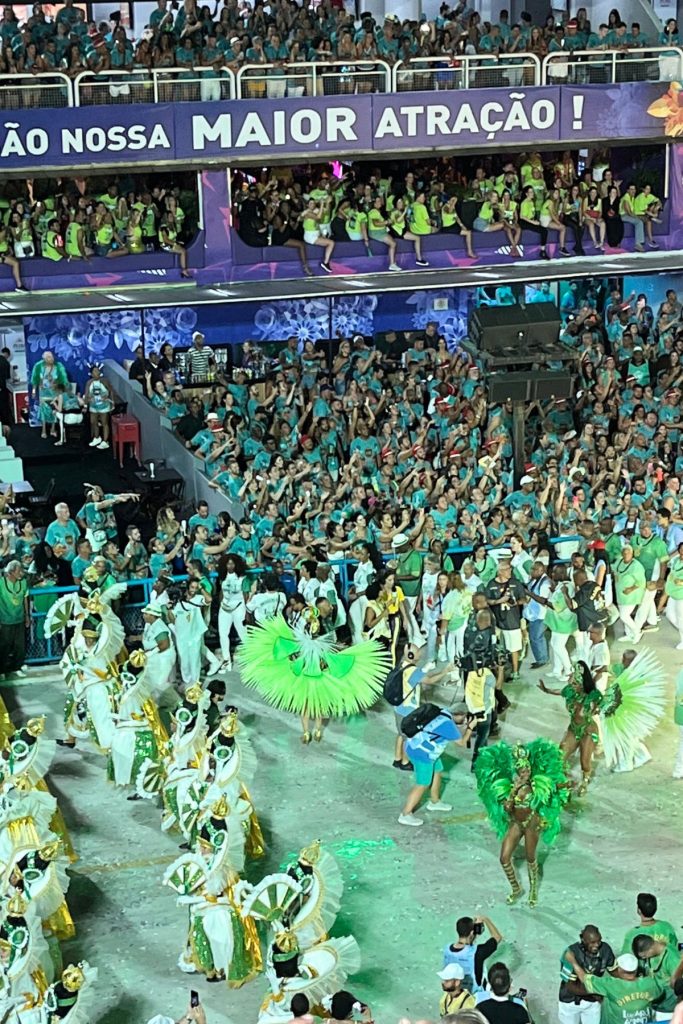
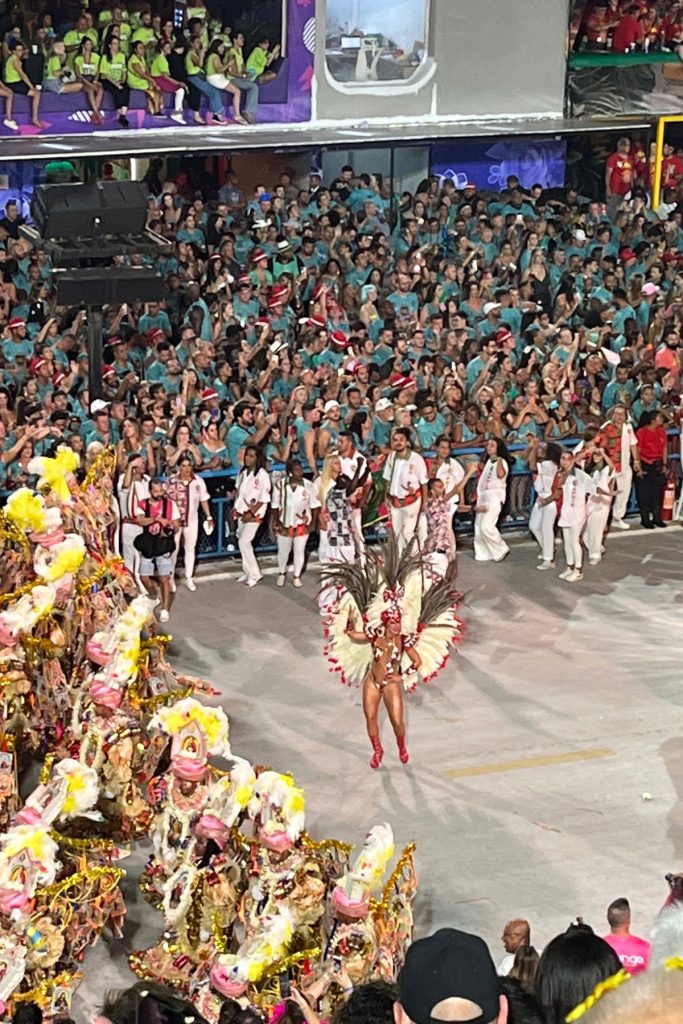
The talented Passistas perform individually or in small groups. Their solo samba footwork (samba no pé) is energetic and rhythmic. They combine both technical mastery and improvisational flair, entertaining and energizing the crowd from start to finish.
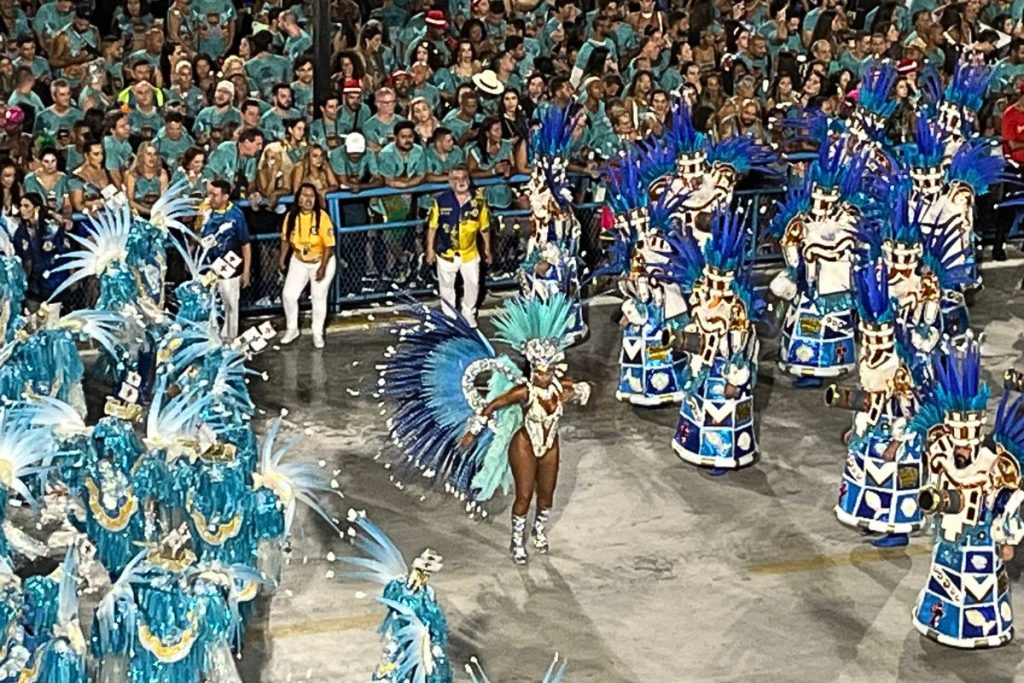
Some of the key skills of a Passista:
- Stamina
- Precision footwork
- Strong sense of rhythm
- Body control and expressiveness
- Ability to smile and project energy the entire time
Baianas
The Baianas (women from the northeastern Brazilian state of Bahia) are traditional spinning dancers in large dresses. They are the matriarchs of the samba school and proudly represent the Afro-Brazilian roots of samba.
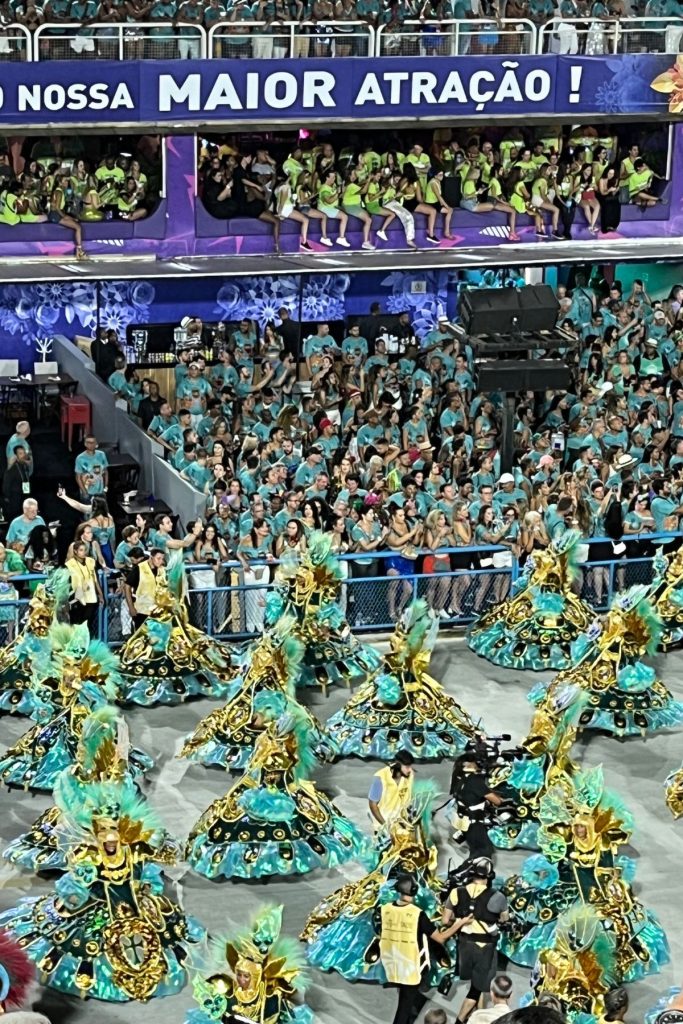
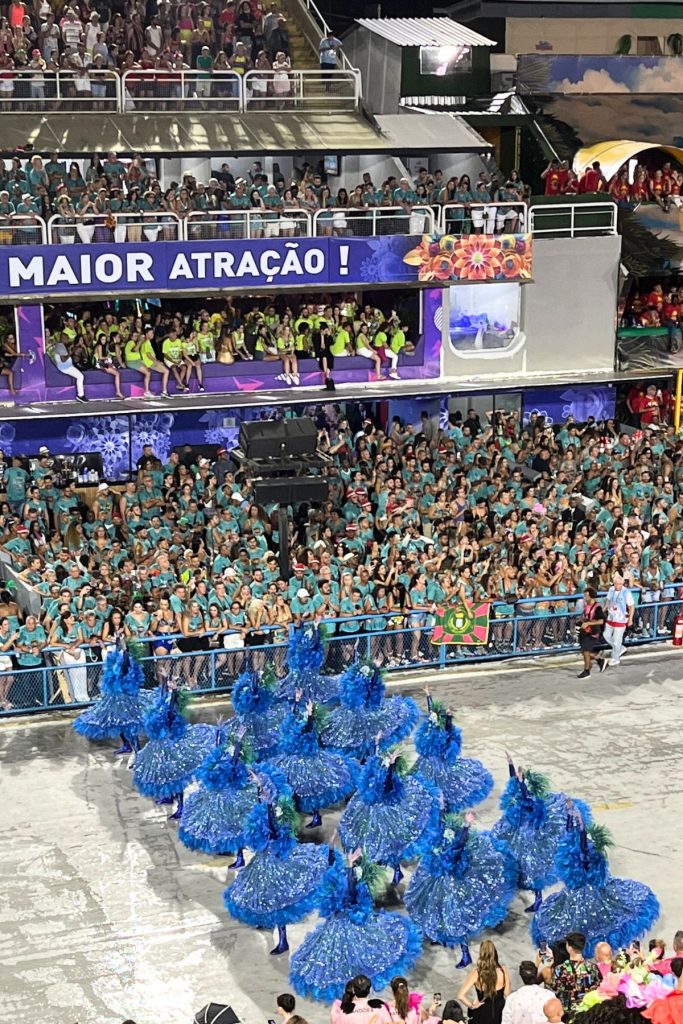
The Baianas represent memory, ancestry, and soul in the parade. They embody the historical roots of samba and the spiritual and maternal force of the community.
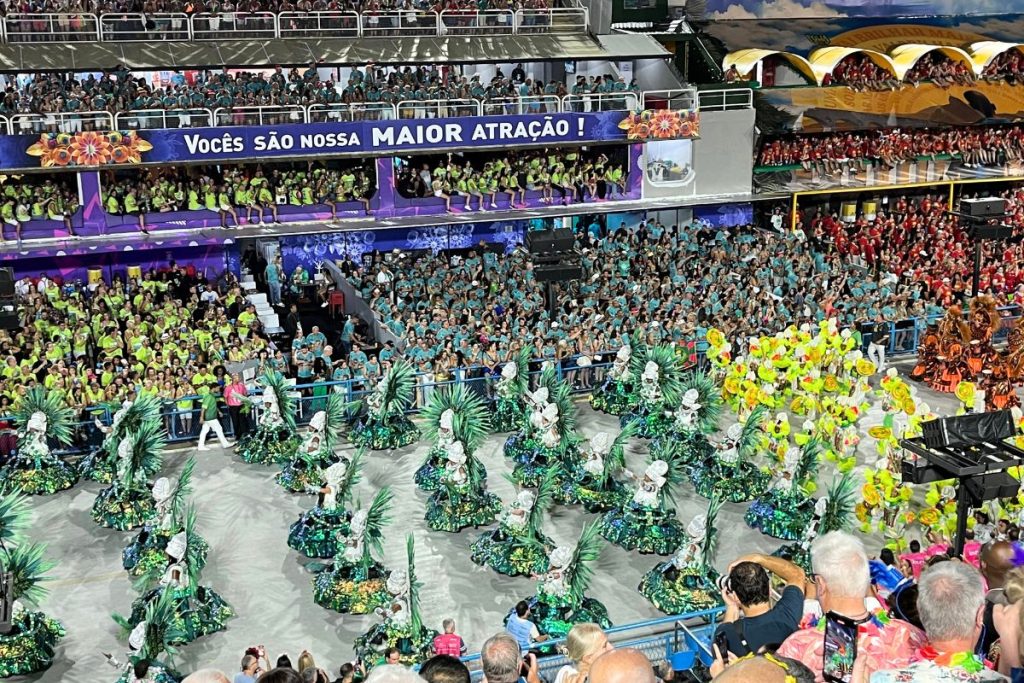
Throughout the parade, the Baianas march together as a unified group, performing slow and graceful spins along the way. Their movements are slow and dignified, a stark contrast to the fast and energetic samba steps.
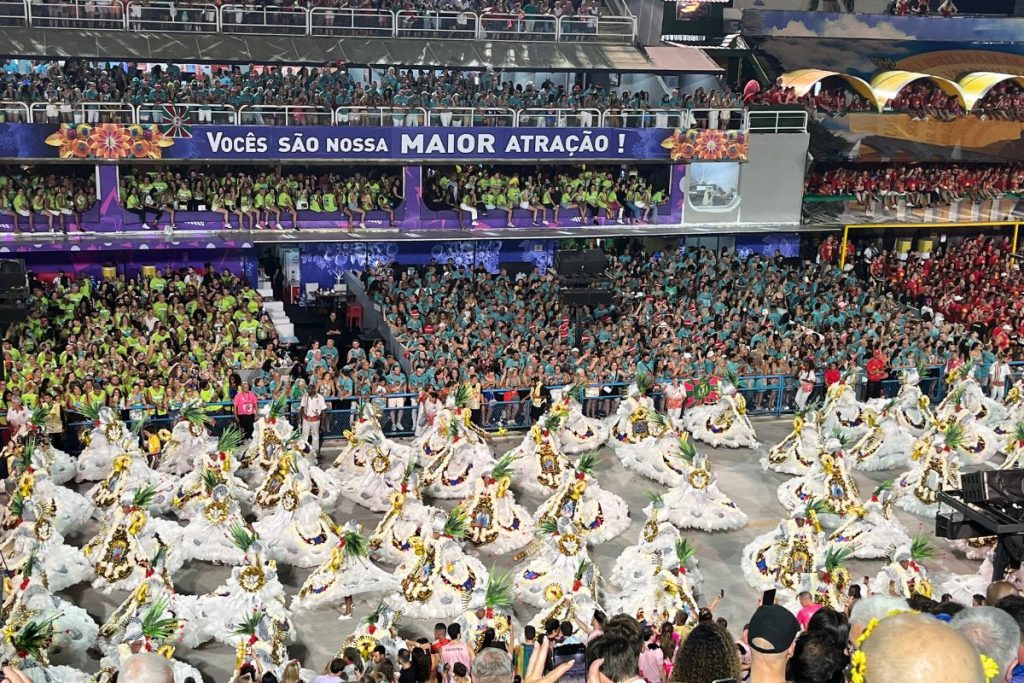
Judges are looking for synchronization, costume presentation, harmony with the samba theme, and a respect for traditional style in the Baianas.
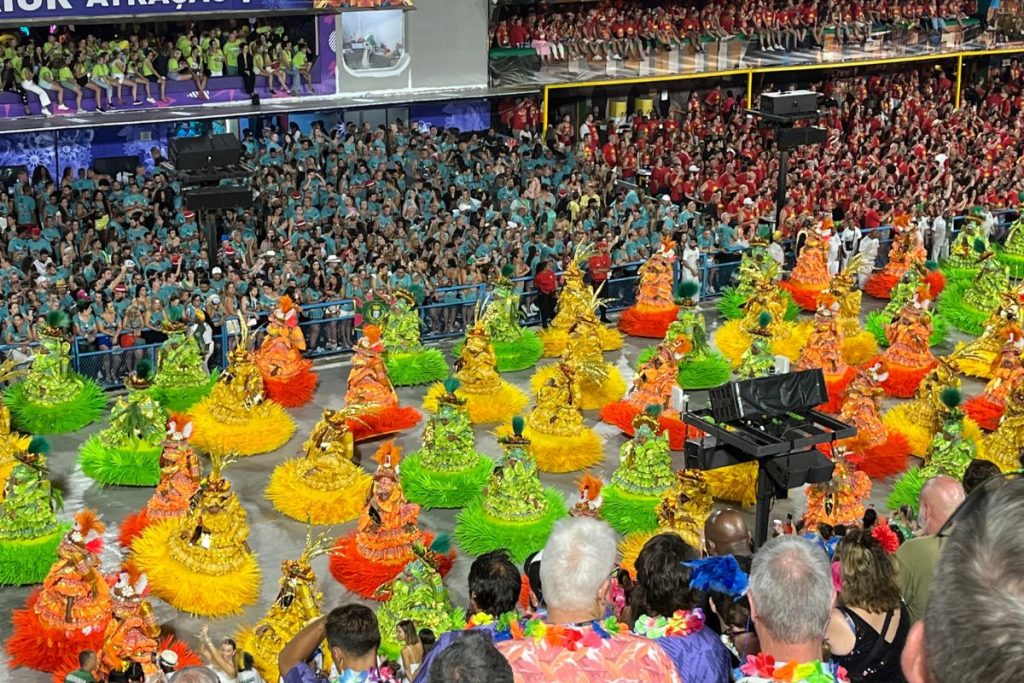
The Baianas costume is one of the most iconic and recognized in the parade. Large, circular skirts are layered over petticoats. Lace blouses are also worn, with beaded necklaces layered on top. The Baianas also wear turbans or head wraps.
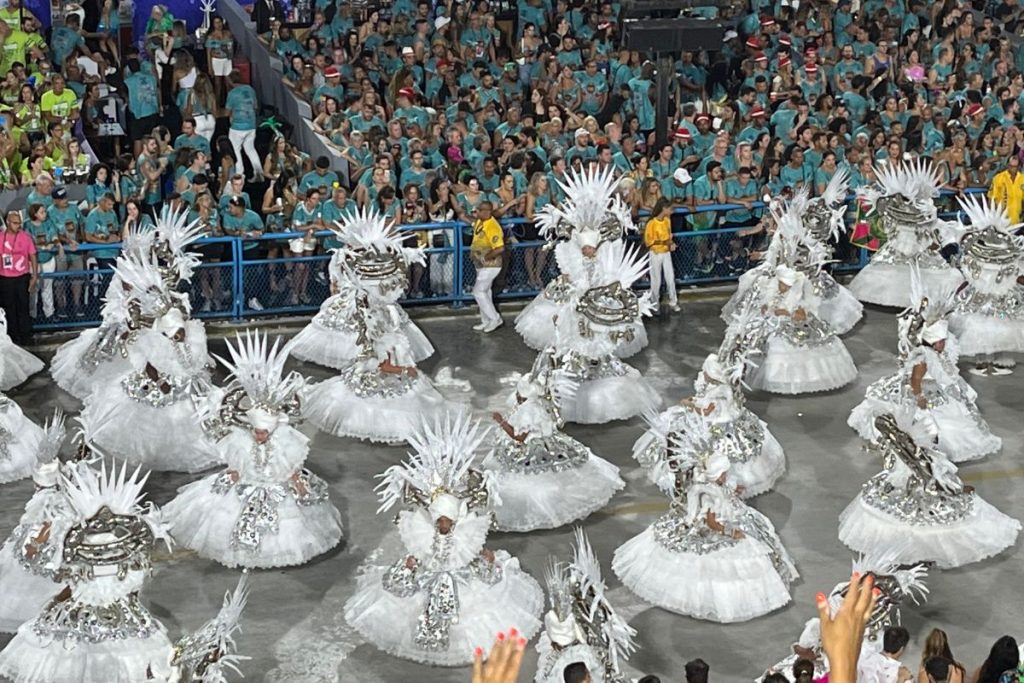
While the original Baianas were older women from the community, today they are all ages. The role symbolizes:
- Wisdom
- Respect
- Ancestry
- Spiritual heritage
Closing Thoughts
This parade was just one night of a whirlwind two and a half days in Rio, bookended by a modernist cathedral, two cable car rides up Sugarloaf, and a sail-away past Christ the Redeemer. Read the full recap here: Two and a Half Days at Rio Carnival: Sugarloaf, Christ the Redeemer, and Everything In Between
Common Questions
When and where is the Samba Parade held?
The Samba parade is held each year during Carnival (February or March). The top samba schools parade on Sunday and Monday night, winners are announced on Ash Wednesday, and the Champions Parade is held the following Saturday. The parade is held at the Sambódromo Marquês de Sapucaí, in Rio de Janeiro.
How many samba schools participate in each parade, and how long does each school have to perform?
There are six samba schools that participate in each parade, and each school has about 60-75 minutes to complete the parade route.
What are the samba schools judged on in the parade?
The parade judges are scoring each school in a variety of categories, including:
- Samba song (samba-enredo)
- Theme (enredo)
- Costumes
- Floats
- Harmony
- Percussion section (bateria)
- Overall performance
Is it safe to attend the Samba Parade?
There is a large security presence, visible and unseen, at the Sambódromo. As with any large gathering, major event, or large city, you should always take precautions and be aware of your surroundings at the Samba Parade.
Keep Wandering
Two and a Half Days at Rio Carnival: Sugarloaf, Christ the Redeemer, and Everything In Between
Fall in Love with Iguazu Falls
Passport & Pour: Five Wine and Spirit Experiences I’ll Never Forget