Iguazu Falls, Brazil vs. Argentina: A Soggy Two-Day Guide
Iguazu Falls sits near the spot where Argentina, Brazil, and Paraguay meet. The name is spelled Iguaçu in Portuguese and Iguazú in Spanish. Many people describe it as the largest waterfall system in the world. Roughly 275 individual falls make up the system, and that number rises and falls with the water level. The tallest drops reach 269 feet (82 meters). Since the falls straddle the border between Argentina and Brazil, you can see them from either country. The two sides are very different.
I visited both on a short post-cruise land tour. This post covers what each side offers. It also covers how I got soaked twice for two completely different reasons.
Here is how it went. Two days, two countries, and one rain poncho that was not up to the job. The falls delivered. The weather had opinions. So did my hair. If you are trying to decide which side deserves your time, keep reading. I will tell you what each one is actually like.
Exploring Iguazu Falls from Brazil and Argentina
The falls sit on a border, so each country gets a different view. Brazil gets the panorama. Argentina gets the proximity. I spent three nights in the area on a short land tour with G Adventures. I visited one side each day. That turned out to be a good way to do it.
The Brazilian Side
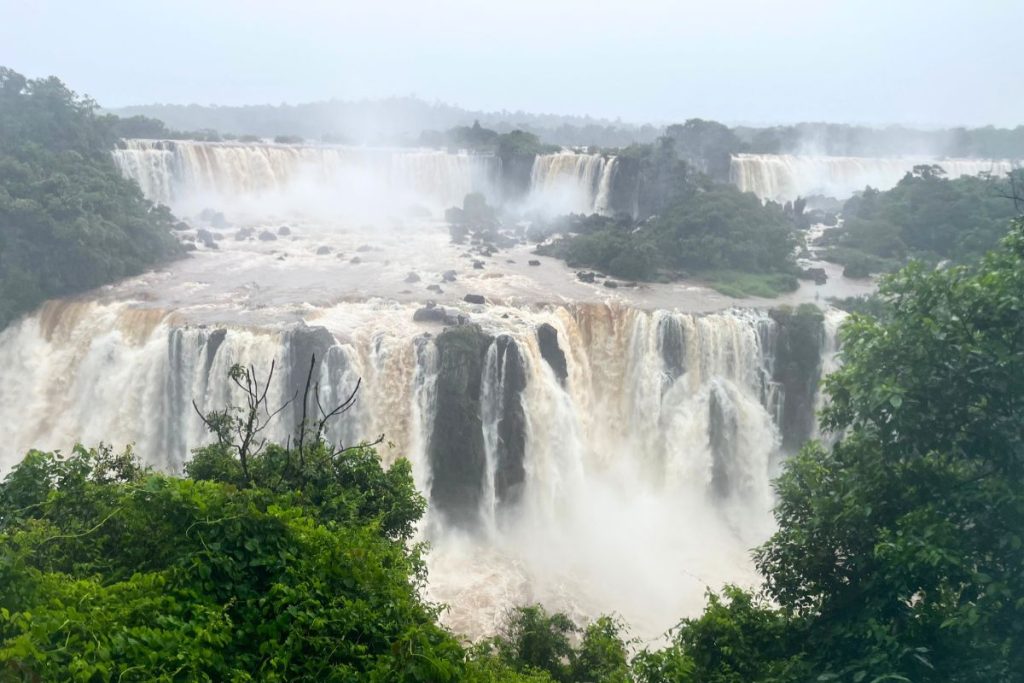
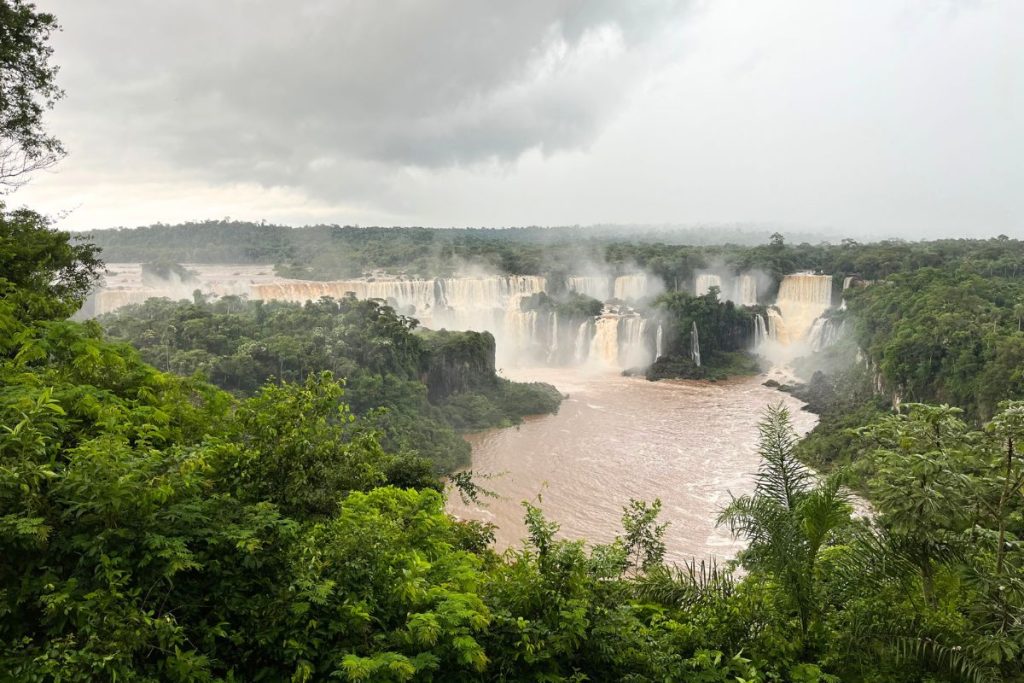
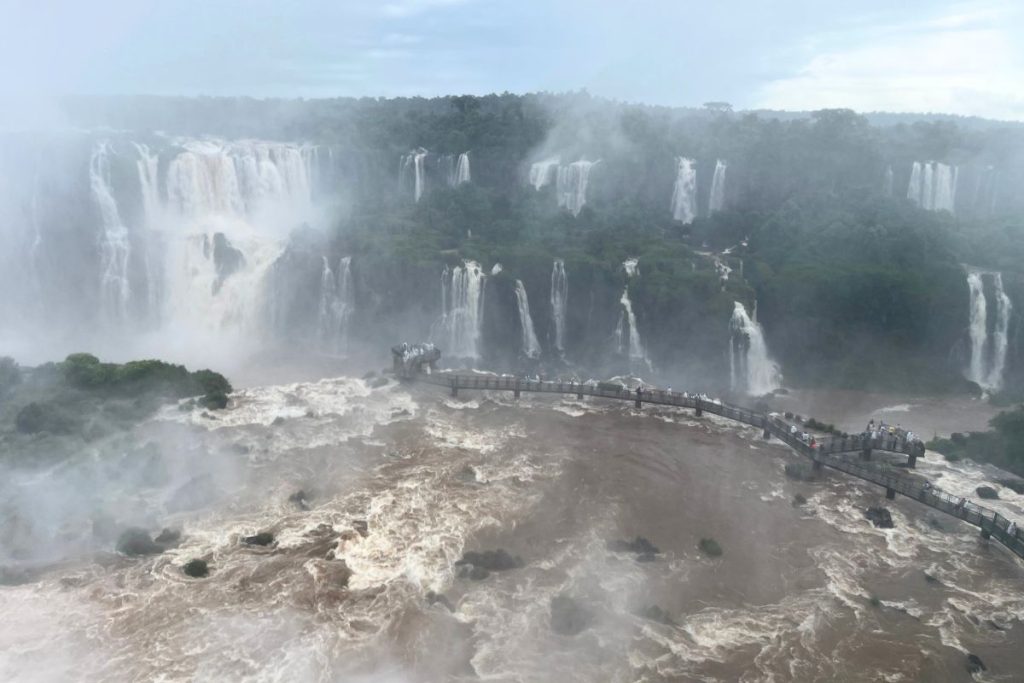
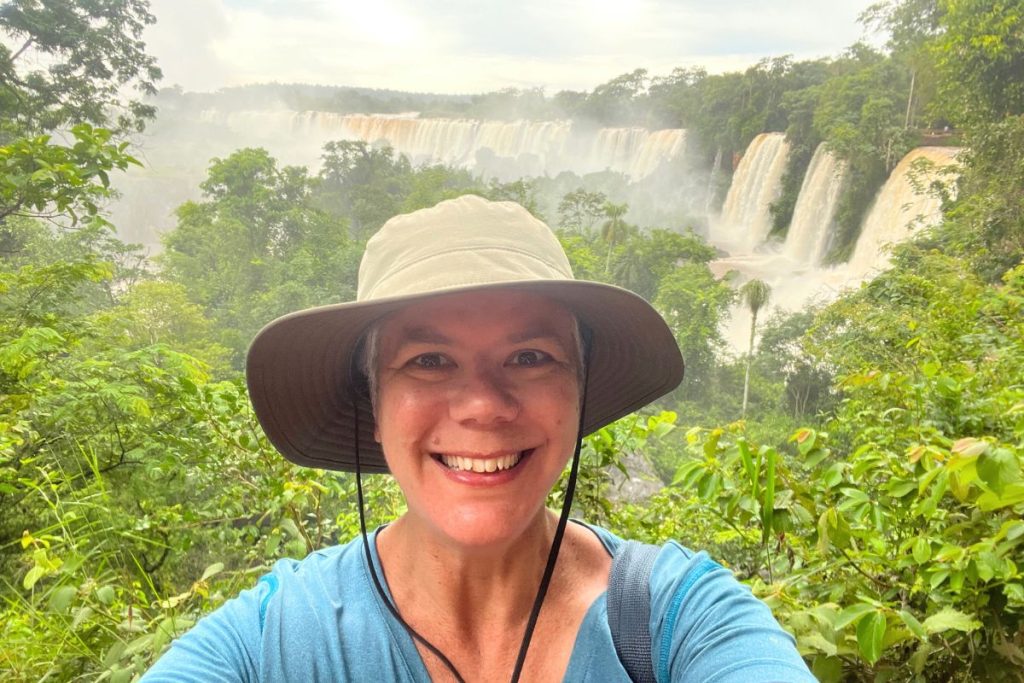
The Brazilian side is the view side. From the main trail, the falls spread across the far bank like a postcard nobody cropped. The paved path runs roughly 0.6 mile (one kilometer) through the rainforest, parallel to the river. Viewing platforms are tucked in along the way. The walkway is easy to navigate, which is a gift when everything else is slippery.
Rain, Ponchos, and a Very Full River
Then it rained. The skies opened shortly after we arrived, and our small group crowded under the overhang of a snack bar. I pulled out my poncho. By the time I got it on, I was already soaked, so the poncho became a formality. We waited about twenty minutes. The rain showed no interest in leaving.
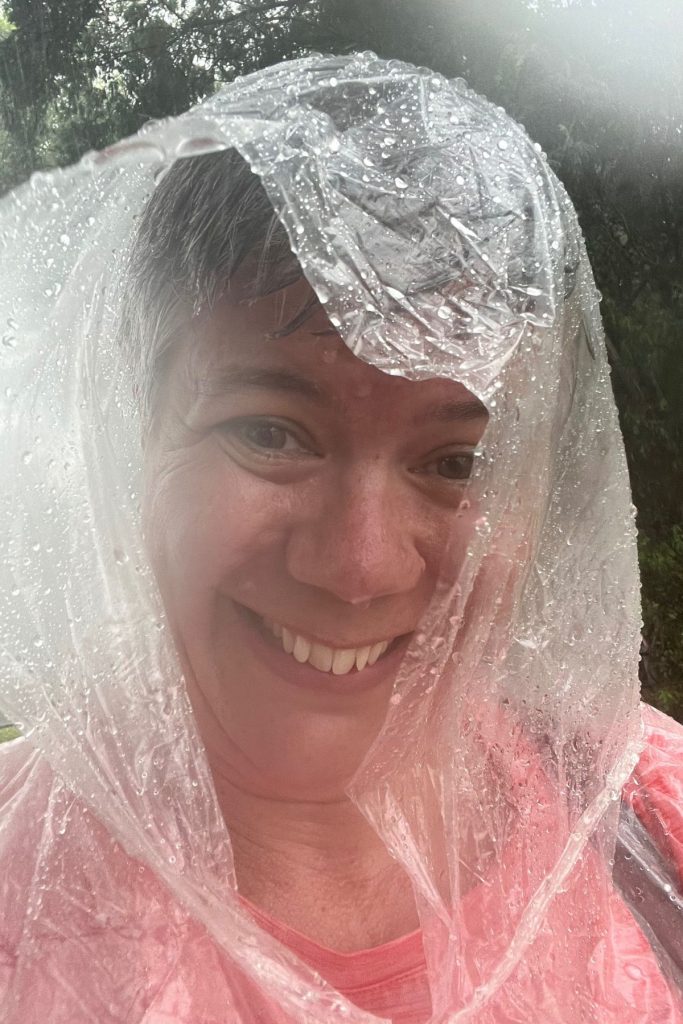
We agreed to keep going. We were already wet, and we had come a long way to see these falls.
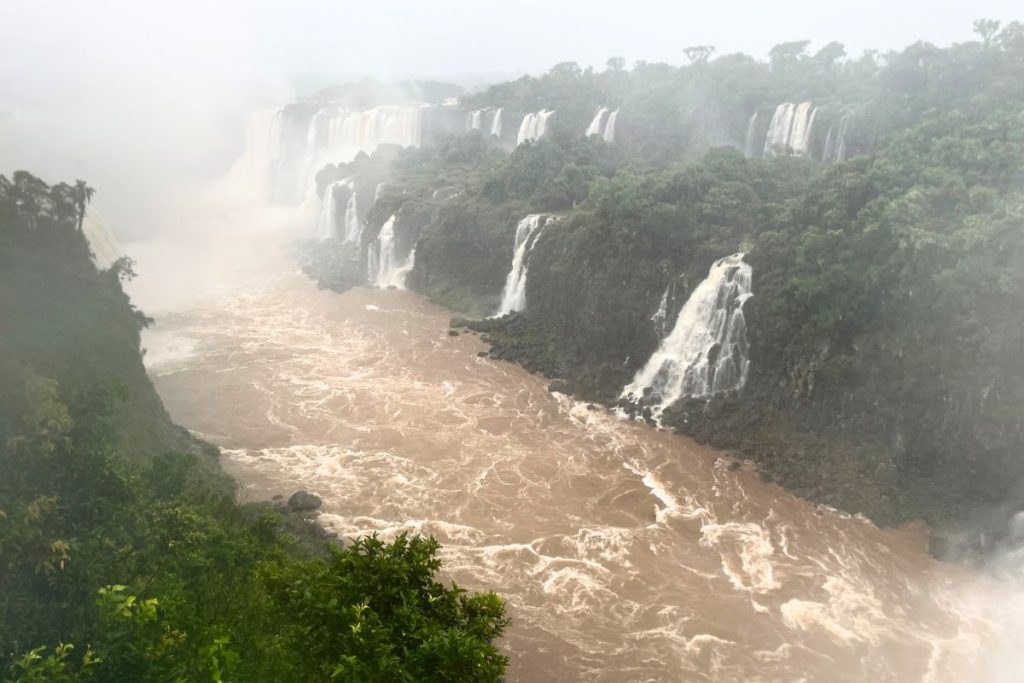
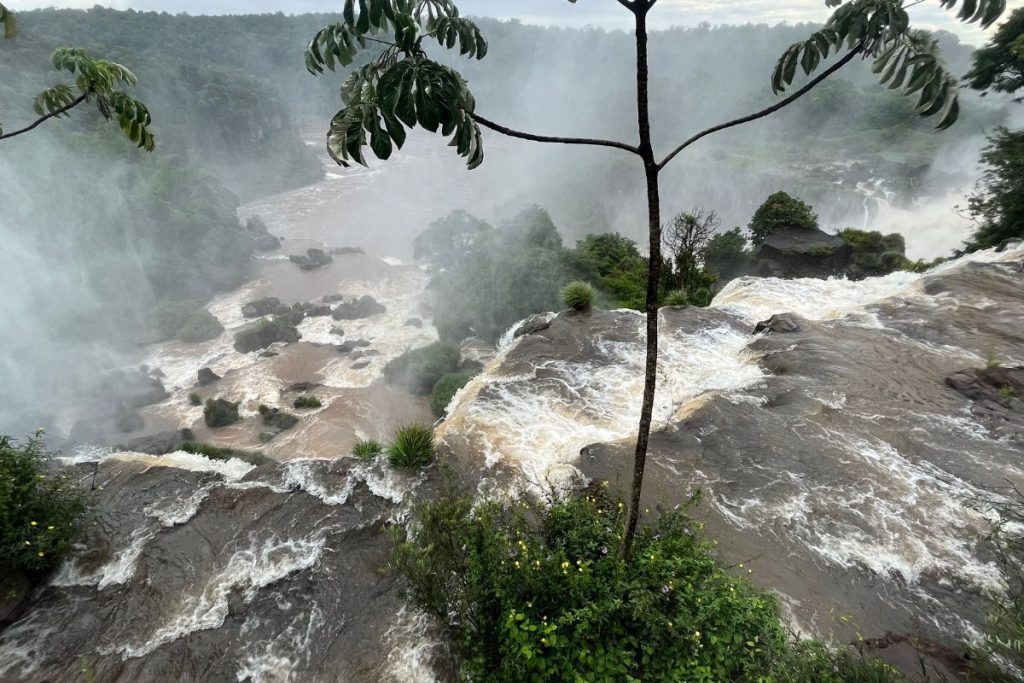
The timing worked in our favor, in a soggy way. Steady rain upstream in the days before my visit meant the falls were running full. According to our guide, the area had been in a drought for several months. Even she was surprised by the volume. The river was the color of chocolate milk, and every fall was running hard.
The Platform and the Panoramic Elevator
The walkway ends at a large platform that reaches out over the falls. Standing on it, you feel the full force of the water. Even on a dry day, you would get wet here. On this day, a little extra water did not bother me.
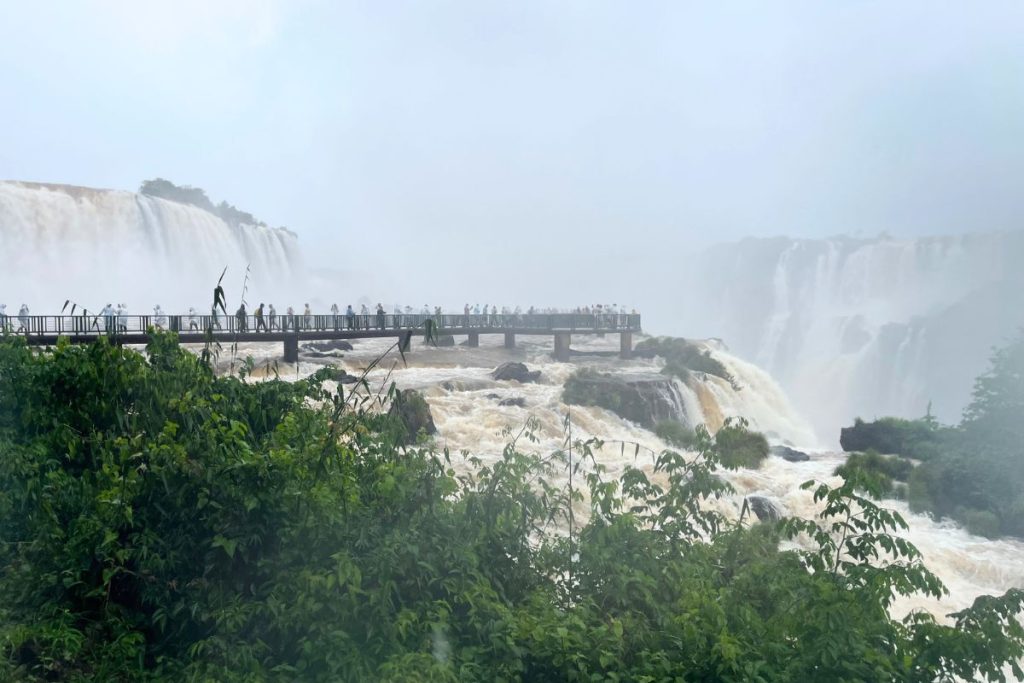
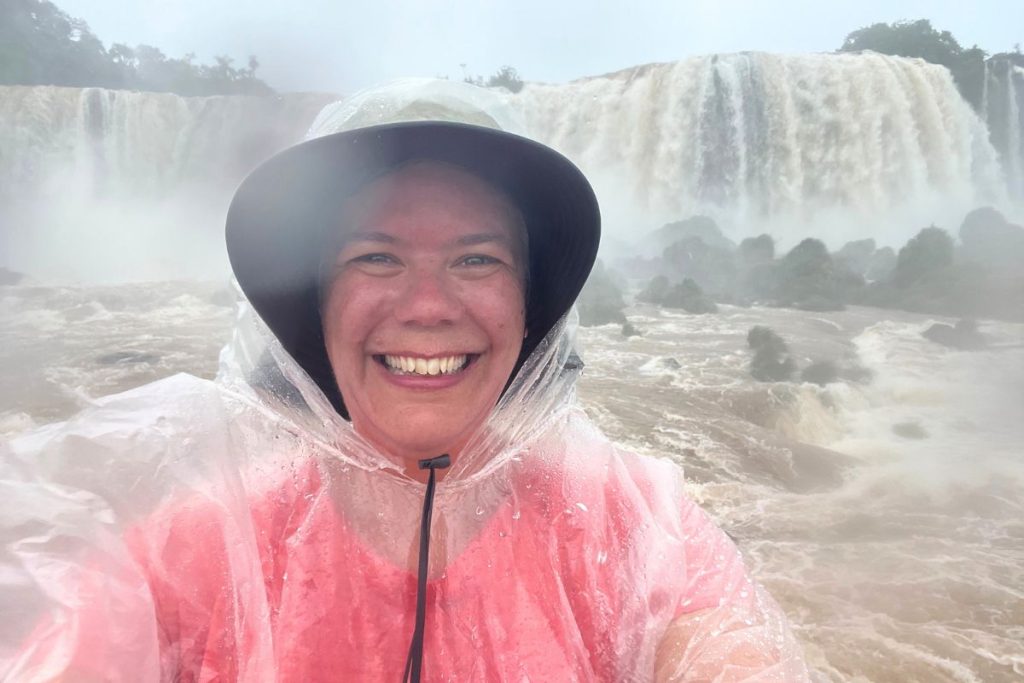
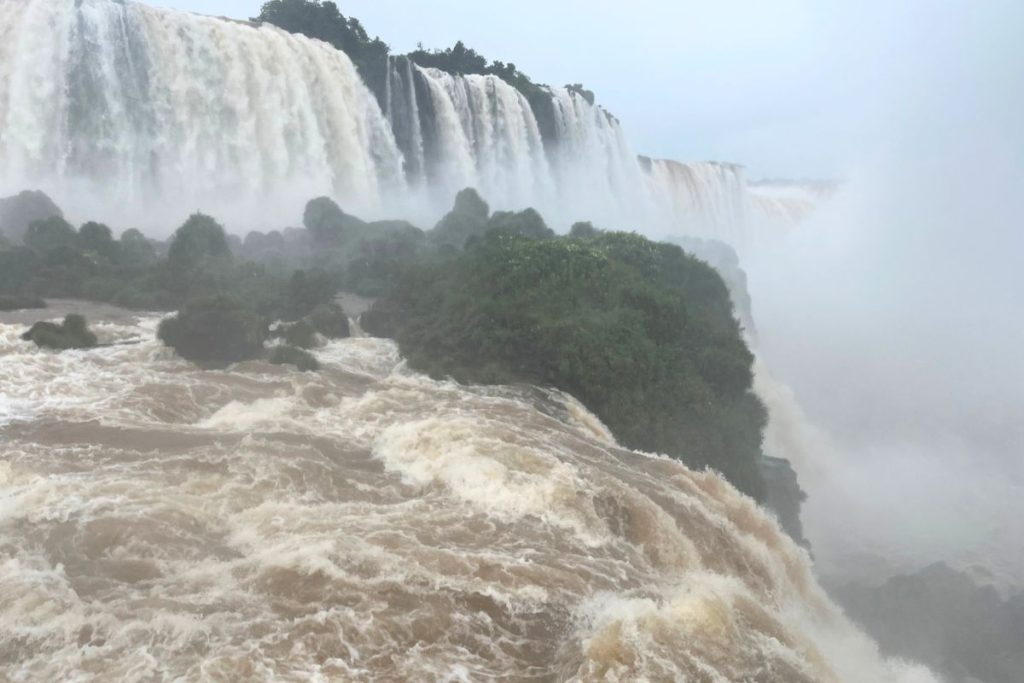
At the end of the walkway, a tower houses the panoramic elevator. It lifts you back up to the park’s transport area. The observation area at the top gives you one last wide view. It is also where I discovered that a Brazilian flag looks very official in a downpour.
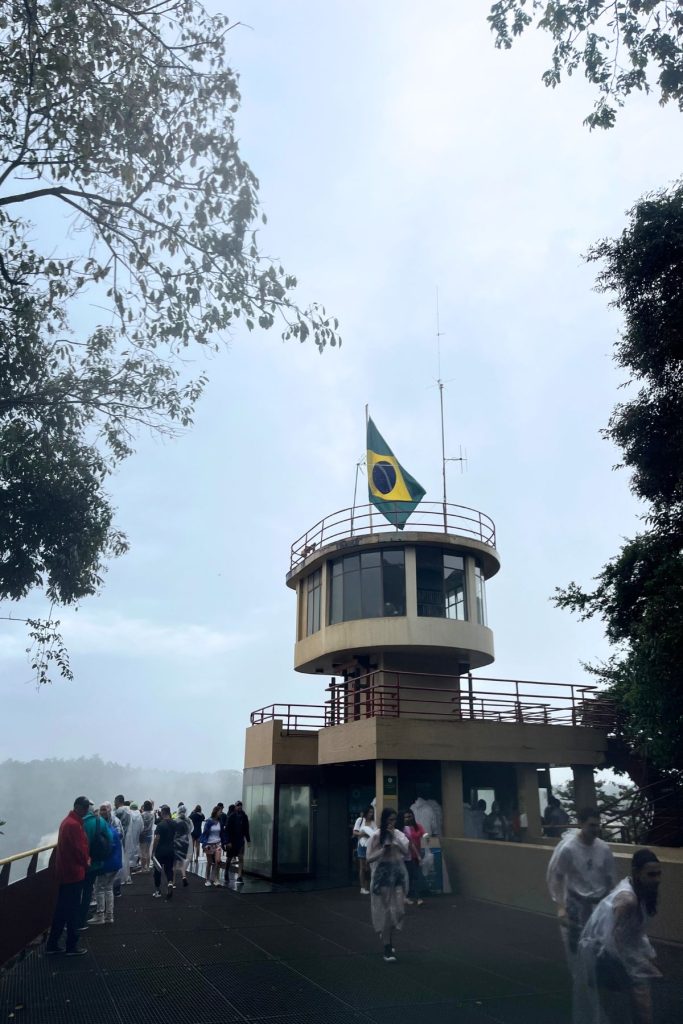
The tower that houses the panoramic elevator.
The Argentine Side: Hiking the Trails
The Brazilian side shows you the falls. The Argentine side puts you on top of them. Two main walkway routes cover the area: the Upper Circuit (Circuito Superior) and the Lower Circuit (Circuito Inferior). We walked the full Upper Circuit and part of the Lower.
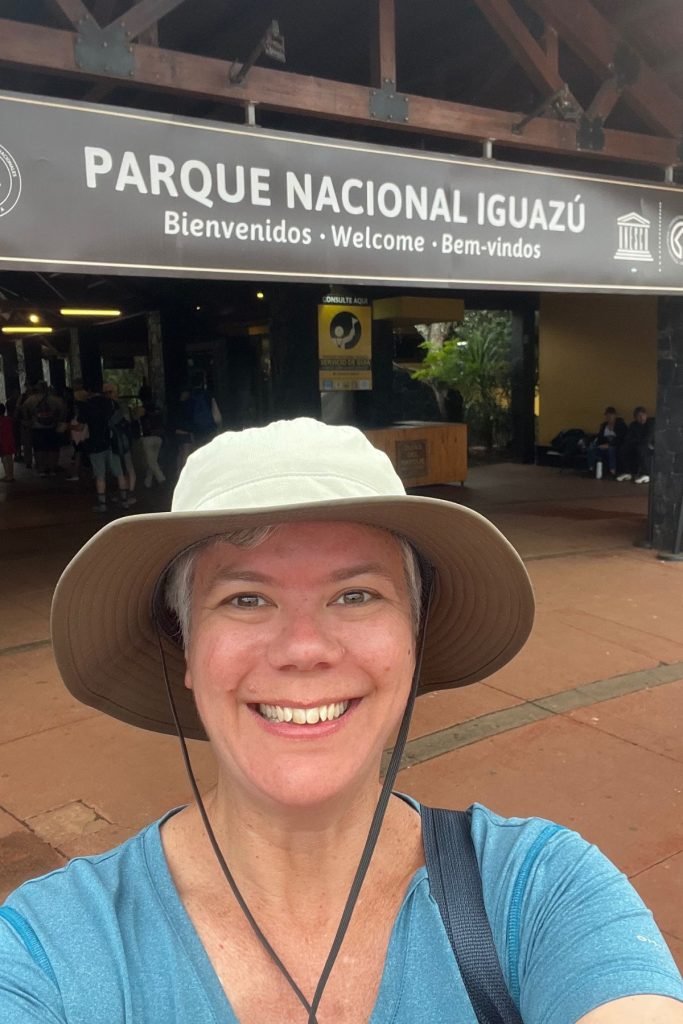
The park entrance welcomes visitors in Spanish, English, and Portuguese. That is a fair preview of who is standing in line with you.
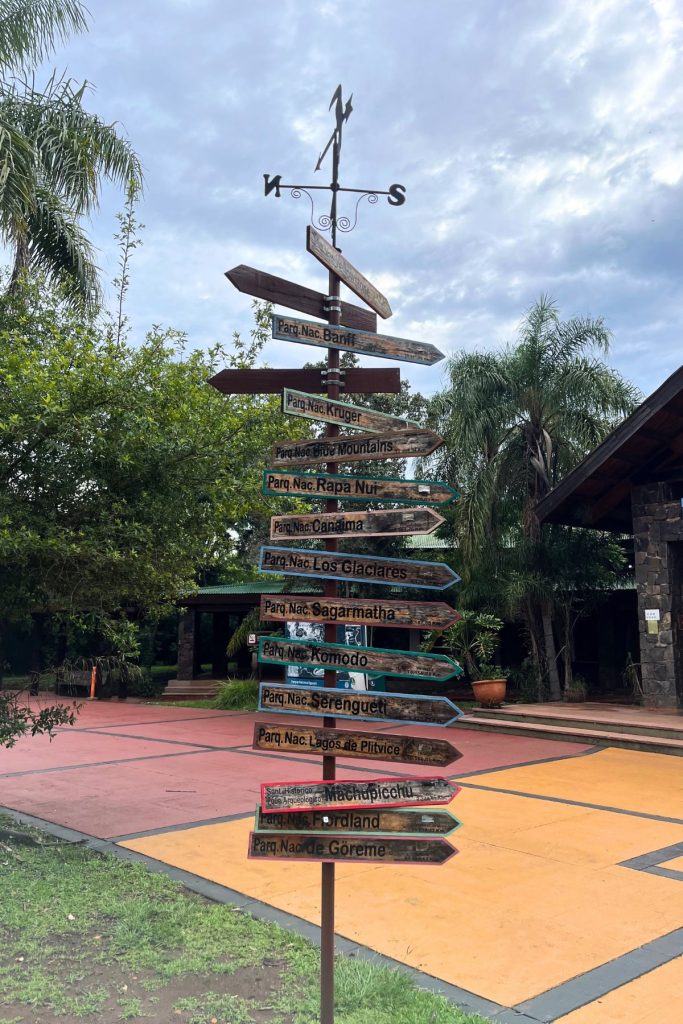
Near the entrance, a wooden signpost points to national parks around the world. The list runs from Banff to Serengeti to Komodo, and each sign has a distance. I read every sign. The list of places I have not been never gets shorter.
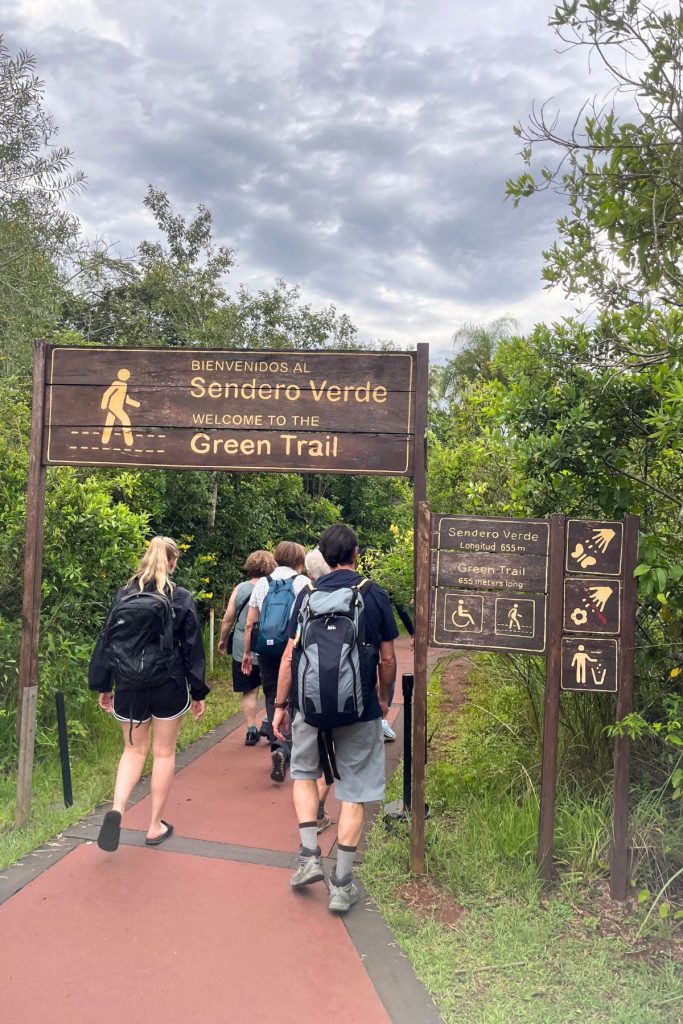
The Green Trail starts here. According to the sign, it is 655 meters (about 2,150 feet) long. It is paved, flat, and leads toward the main falls area.
The Upper Circuit runs along the top of the falls. Walkways lead out over the river as it nears the edge. You stand above the water just before it drops. This is the closest I have been to the moment a river decides to leave.
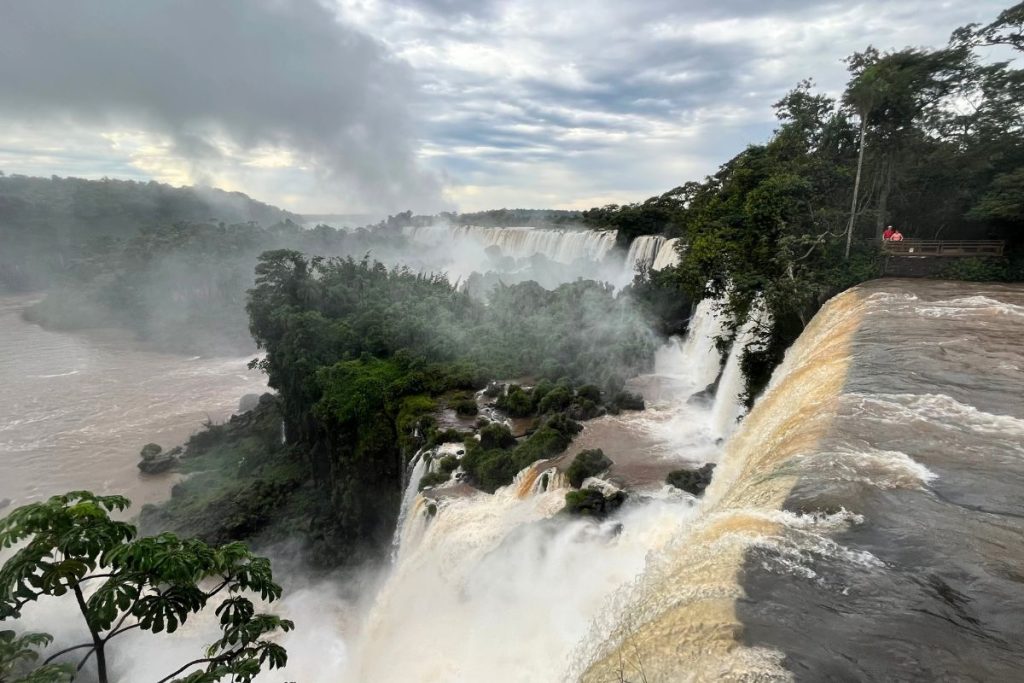
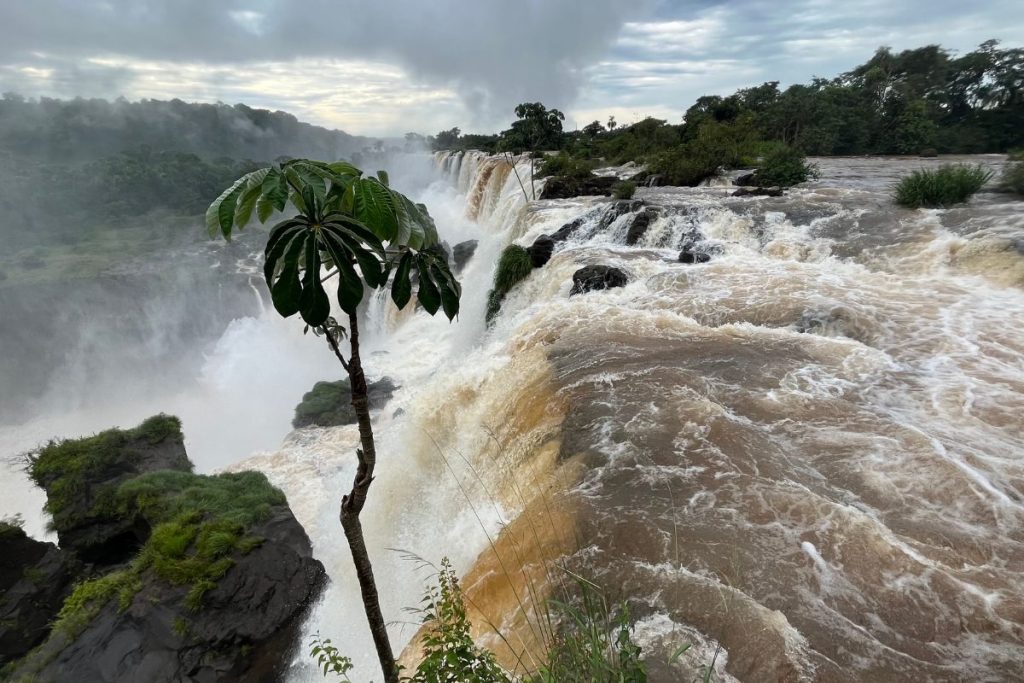
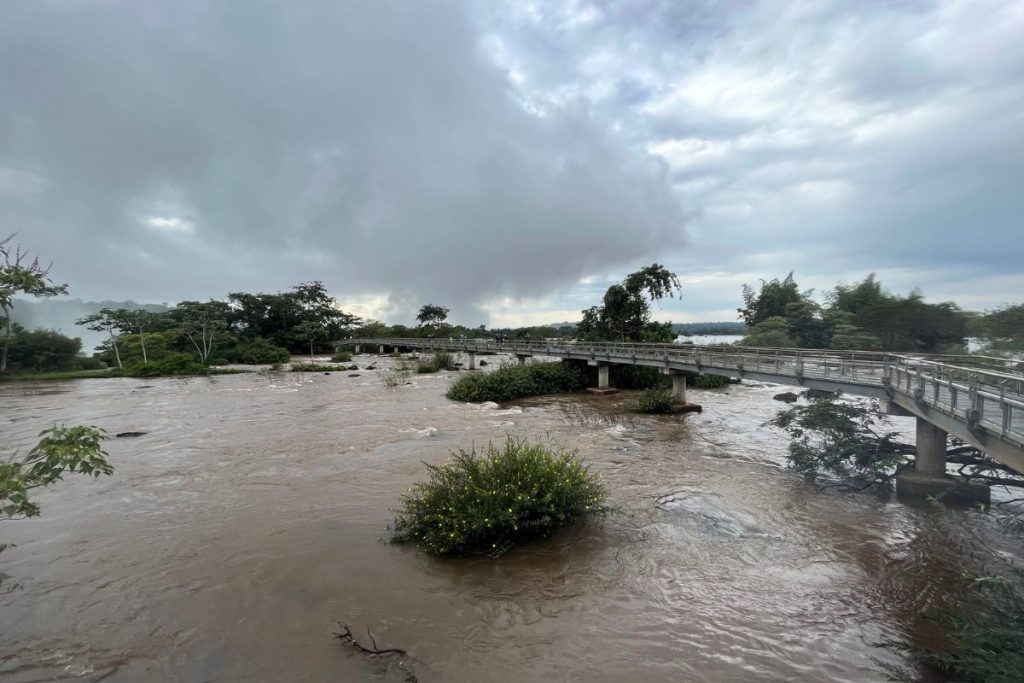
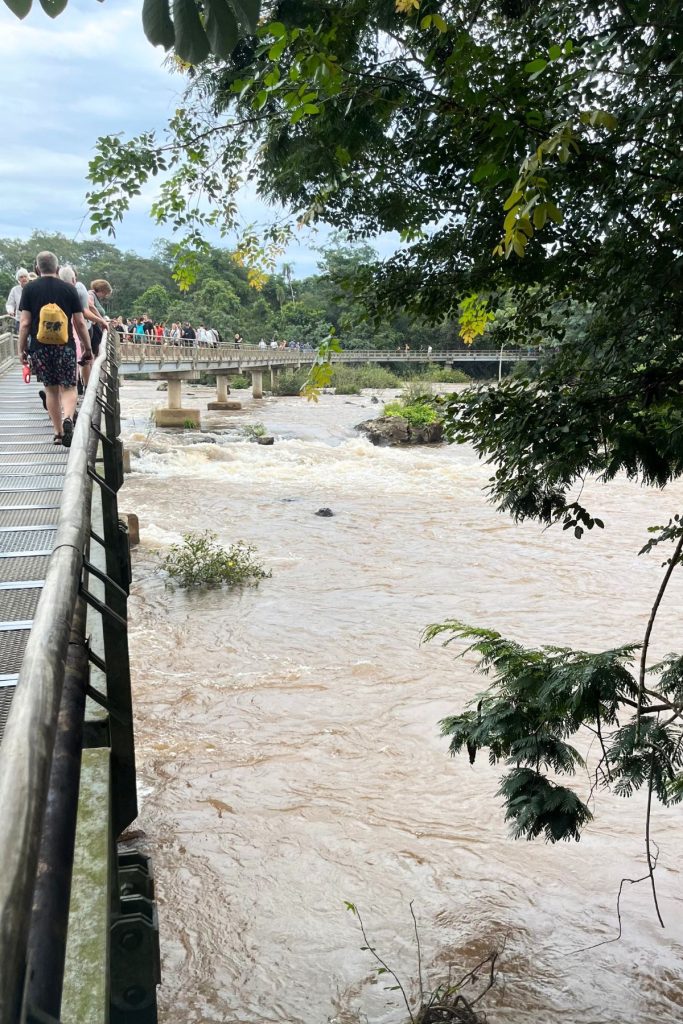
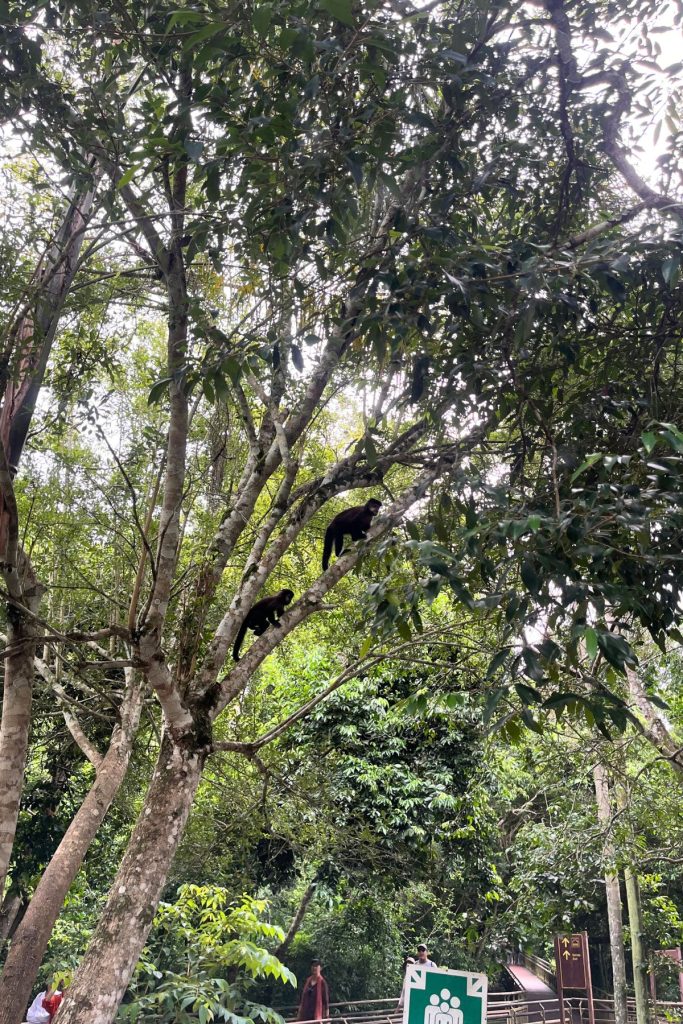
The Lower Circuit goes below the falls and shows them from the front. We walked only part of it. That stretch included a small snack and gift shop. A family of monkeys had claimed the trees above the path. Keep all food packed away in the park. The monkeys have noticed you.
The Argentine Side: The Speedboat Adventure Under the Falls
The speedboat ride is called the Gran Aventura. It costs extra and is not included in park admission. It also does exactly what the brochure says, which is rare enough that I am noting it.
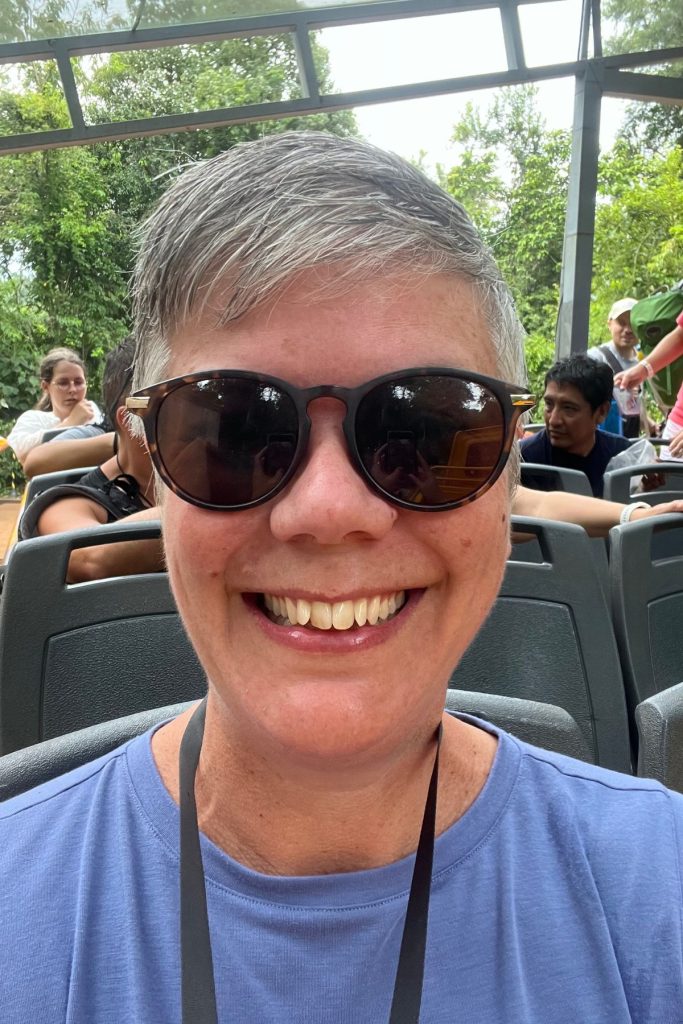
The adventure starts on land. An open-sided 4×4 truck takes you through the rainforest for about 20 minutes. The seats are in rows, and the ride is bumpy. This is the last time you will be dry.
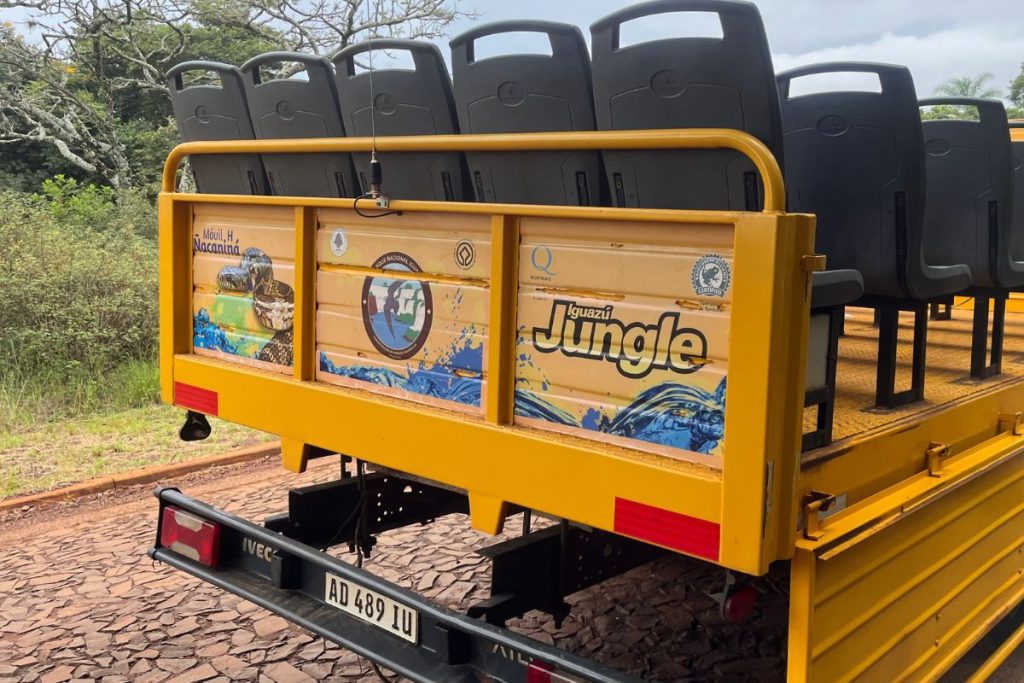
At the water’s edge, the crew hands you a life jacket and a large dry bag. Everything you want to keep dry goes in the bag. Everything else is about to get wet.
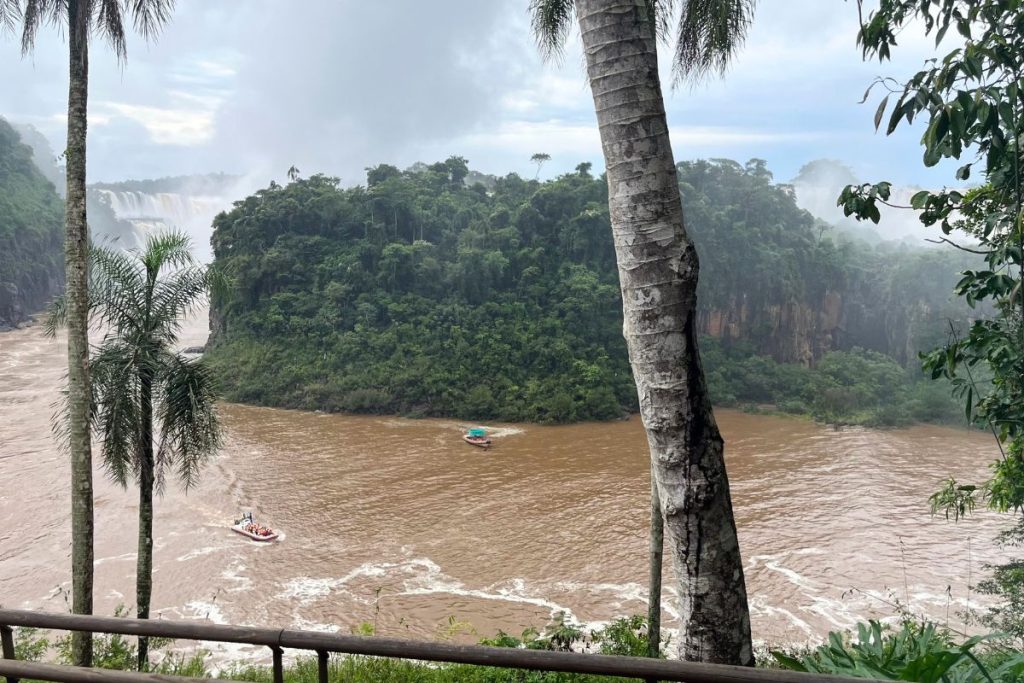
The first stretch is a slow cruise along the shore. Then the driver opens it up. We zipped across the river toward the base of the largest falls in the park. Then we kept going. The boat went directly into the falls and under them. The word “under” is accurate. It was very, very intense.
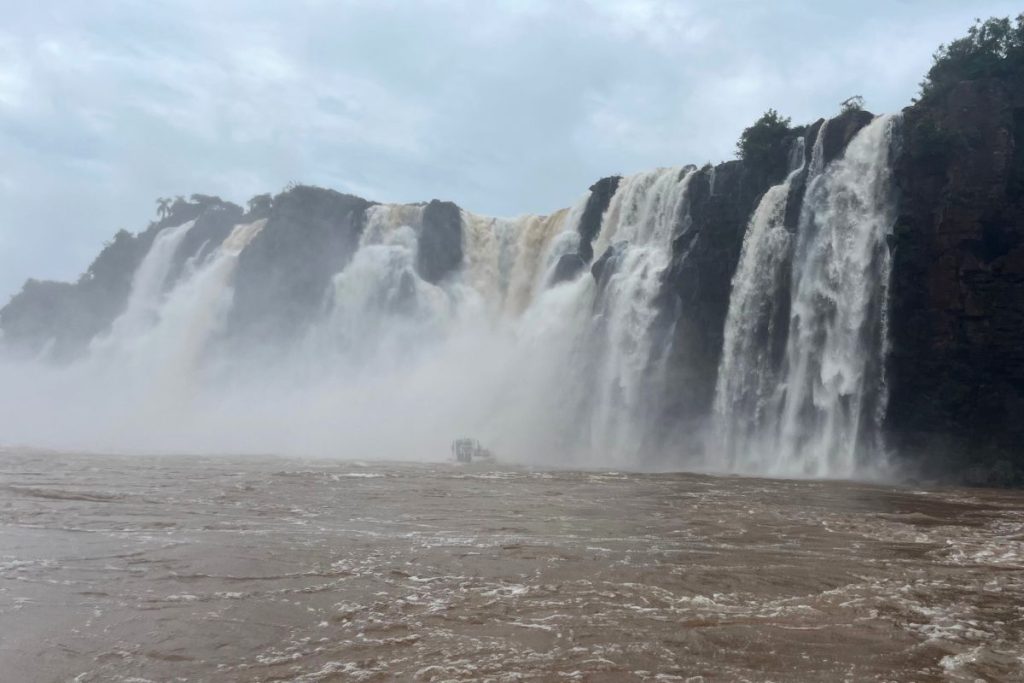
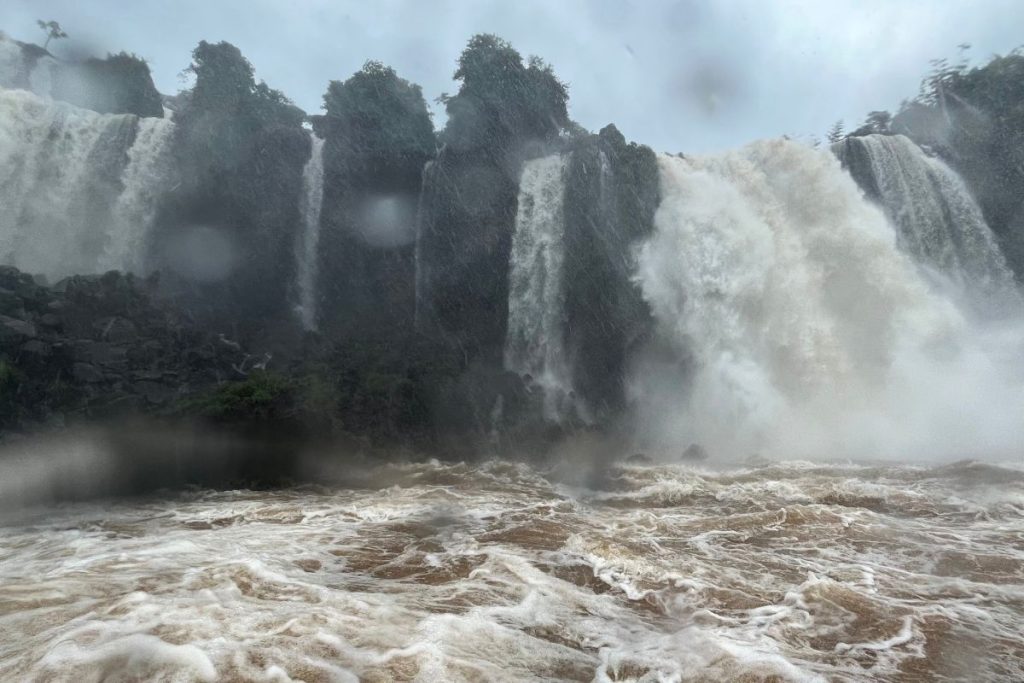
You will be drenched. I wore a rain poncho under my life jacket, and it was completely unnecessary. You will get wet no matter what. I used a waterproof phone case to take photos. The boat operators reward noise, too. The louder our group got, the closer the boat went.
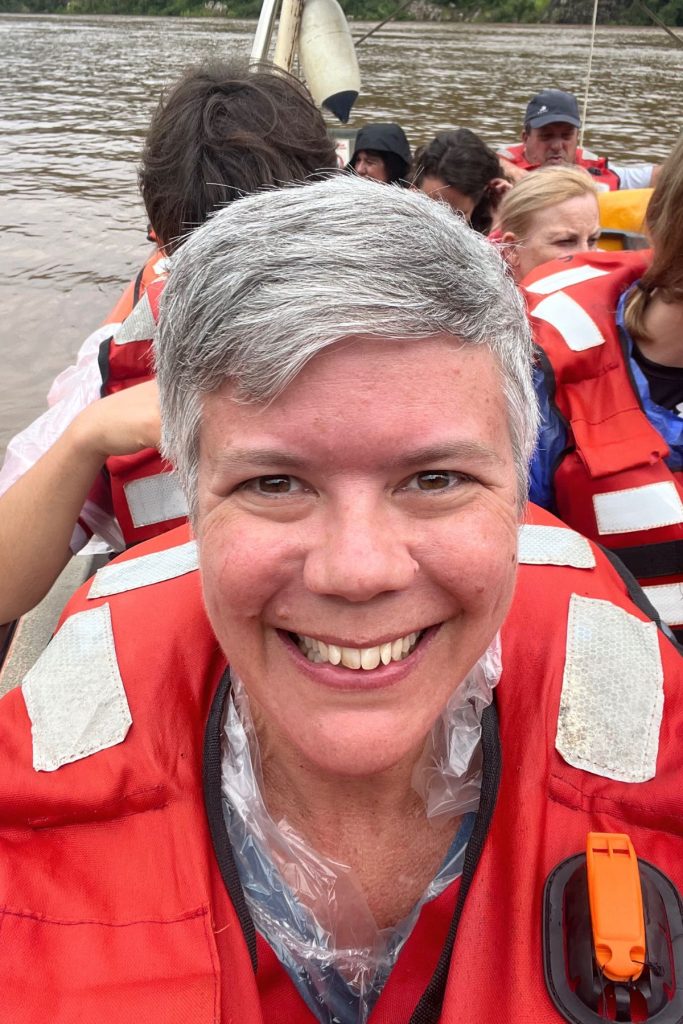
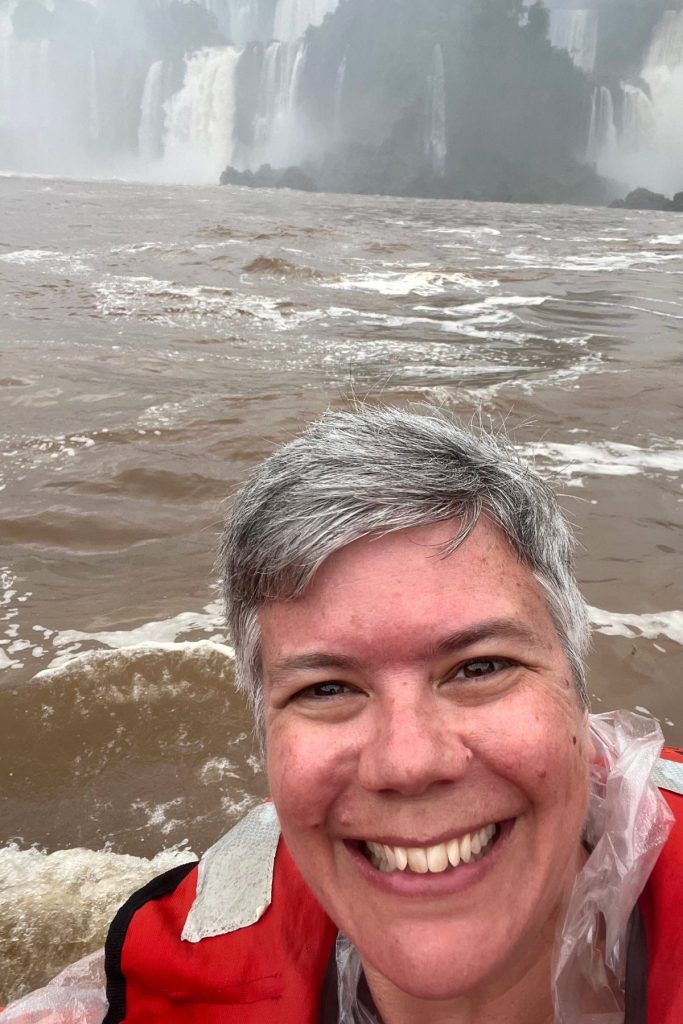
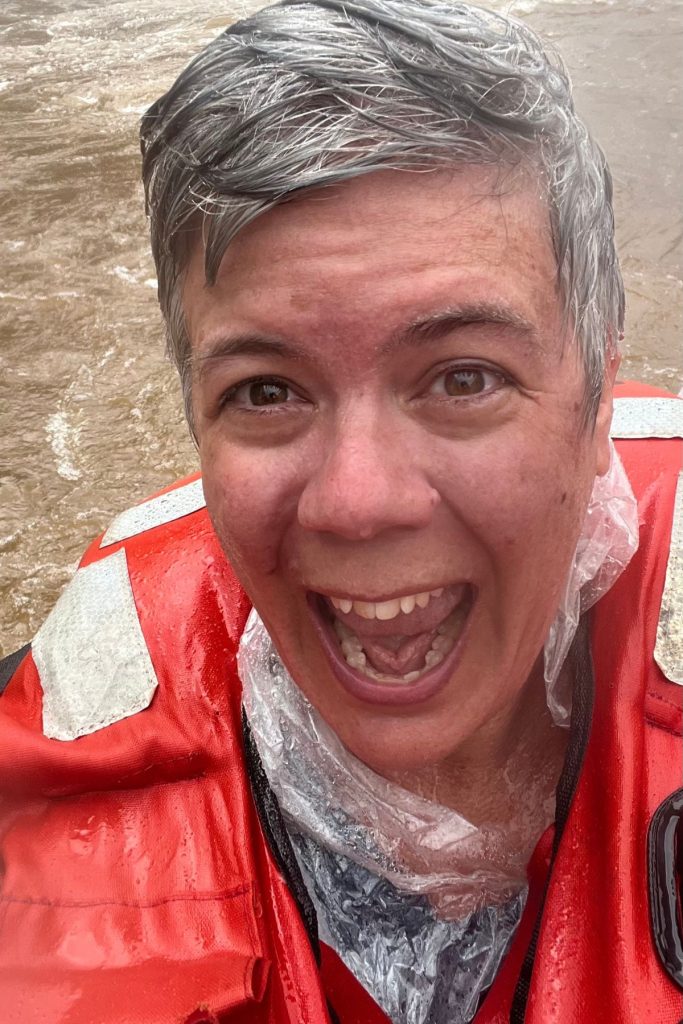
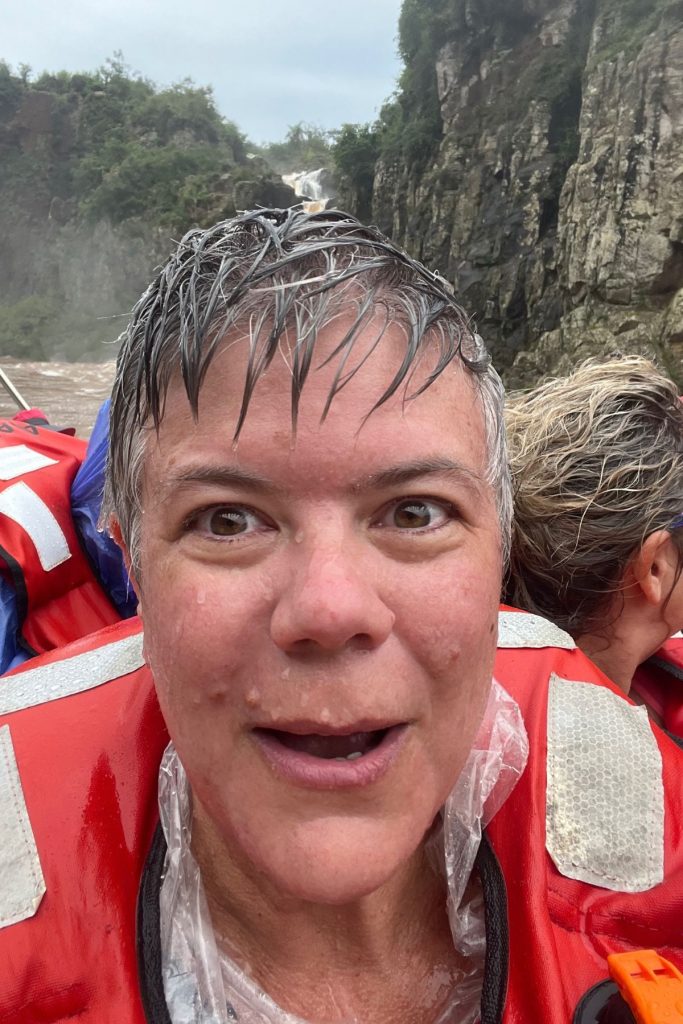
After the ride, there is an area to dry off and change. Bring a towel and dry clothes. The 4×4 returns you to the meeting point, where you can keep exploring. By the ride back, I was dry again and quietly smug about it.
Worth the Time If You Have It
Two stops did not make it onto my itinerary. Both are worth a look if your schedule allows.
The Devil’s Throat (Garganta del Diablo)
I did not make it to the Devil’s Throat. It is the most famous stop on the Argentine side. I am aware of that.
An open-air train runs from the Cataratas station to the Devil’s Throat station. From there, a walkway crosses the upper river to a platform at the edge of the drop. The round trip on foot is about 1.4 miles (2.2 kilometers). On the Brazilian side, you see this fall from below. On the Argentine side, you stand at the top. High water can close sections of the walkways, so confirm what is open before you plan around it.
Parque das Aves (Bird Park)
Parque das Aves is a bird park near the entrance to the Brazilian national park. My tour offered it as an optional stop. On the way back to the hotel, the van pulled over, and anyone who wanted to explore could get out. The van would return later to pick them up. I stayed in the van. Soaking wet, all I wanted was dry clothes. I regret nothing, but I am told the park is worth it on a drier day.
The park sits about 300 meters (1,000 feet) from the national park gate. Inside, you will find large aviaries, along with butterflies and reptiles. Plan on roughly 1.5 to 2 hours. Many tours pair it with the Brazilian side of the falls, so ask whether yours does. Check the current opening hours before you commit to a schedule.
Closing Thoughts
Iguazu Falls does not need my help. The water does the work. What I can offer is the real version. Both days involved water arriving from directions I had not planned for. Brazil gave me the view. Argentina gave me the spray. The poncho gave me false hope… and I would do it all again tomorrow.
Common Questions
Planning Your Visit
Both sides are worth your time. They offer different things. The Brazilian side gives you the panorama. The Argentine side gives you proximity, with trails that run along and over the falls. If you can only visit one side, decide what you want. Do you want the wide view, or do you want to be in it?
Plan about two to three hours for the Brazilian side. Add time if you linger or wait out a downpour, as we did. The Argentine side takes a full day. It has several walkway routes and a few optional extras, including the Gran Aventura boat ride.
Two days works well. Spend a full day on the Argentine side and a half day or more on the Brazilian side. I had three nights on my tour, with one day on each side. That pace gave me time to dry out in between.
It depends on your passport. US, Canadian, and Australian passport holders have needed an e-visa to enter Brazil since April 10, 2025. My trip was in 2023, before that rule took effect, so I did not need one. Argentina does not require a visa for US and Canadian tourists on short stays. You also need your passport to cross between the two countries. Requirements change, so confirm them with official government sources before you book. Leave time for the application.
On the Trails
They are not strenuous. The Brazilian walkway is paved and easy to navigate. Most of the Argentine walkways I used were flat or had slight inclines. The Lower Circuit is generally described as the more demanding of the two Argentine circuits. Wear sturdy, waterproof shoes or hiking boots. Wet surfaces get slippery.
Pack for water. Bring a rain poncho, a hat, and waterproof shoes. A waterproof phone case is useful. If you plan to ride the boat, add a towel and dry clothes. Keep all food packed away on the trails. The monkeys have noticed you.
Timing and the Boat Ride
The falls are open year round, and each season offers something different. Water flow peaks in the rainy season, roughly December through March. The falls are louder, browner, and wetter, and high water can close some walkways. March, April, and September are popular shoulder months because the water is still strong and the heat is easier to handle. The cooler months of roughly June through August bring lower flow and clearer water. I visited in late February, at the high end of the flow.
It depends on what you want. If you want to look at the falls, skip it. If you want to be in them, do it. The ride costs extra and is not included in park admission. You will be drenched. The ride can be cancelled for river level or weather. Sources list age restrictions, including no children age 12 and under, so check the operator’s current rules before you book.
Keep Wandering
Paraty, Brazil: Waterfalls, Cachaça, and a Gold Trail
Two and a Half Days at Rio Carnival: Sugarloaf, Christ the Redeemer, and Everything In Between