From Crashing Waves to Castle Walls: A Perfect Day in Kochi, Japan
Kochi doesn’t show up on many travel itineraries, and honestly…that’s exactly what makes it special. Tucked away on the Pacific coast of Shikoku, this laid-back city packs a surprising amount into a single day. From crashing waves on a dramatic beach to a feudal castle that’s been standing since the 1600s, there’s a lot to discover here. If you’ve been sleeping on Kochi, consider this your wake-up call.
Whether you’re a first-time visitor to Japan or a seasoned traveler looking to escape the tourist crowds, Kochi has something that’s hard to put your finger on: a relaxed, authentic energy that bigger cities like Tokyo and Kyoto just can’t replicate. In this post, I’ll walk you through everything you need to make the most of one day in the city, from getting there and getting around to the two stops you absolutely cannot miss. Ready? Let’s go.
Kochi: Small City, Big Surprises
My day in Kochi was fantastic. I visited this beautiful city during a cruise in Japan and South Korea. With a population of around 315,000 and a total area of 120 square miles (309 square kilometers), Kochi is a relatively compact city. It has a distinctly small-town, unhurried feel. My excursion took me to two of the highlights in Kochi: Katsurahama Beach and Kochi Castle. I really enjoyed getting a “best of both worlds” experience. We started with soaking in the sun and salt air of the beach. We ended by getting lost in the history of a stunning feudal castle.
Getting To and Around In Kochi
Before we dive in, let’s talk logistics. Getting to Kochi is easier than you might think. Whether you’re coming from Osaka, Kyoto, or Tokyo, the most popular options are the express bus or the limited express train through the mountains of Shikoku, both of which drop you right in the heart of the city. Trains from Osaka or Kyoto will take roughly 3.5 to 4 hours. A train from Tokyo will be about 6 hours total (a combination of the Shinkansen and a limited express train). Once you’re in Kochi, a combination of trams, buses, and the occasional taxi will get you everywhere you need to go.
Katsurahama Beach
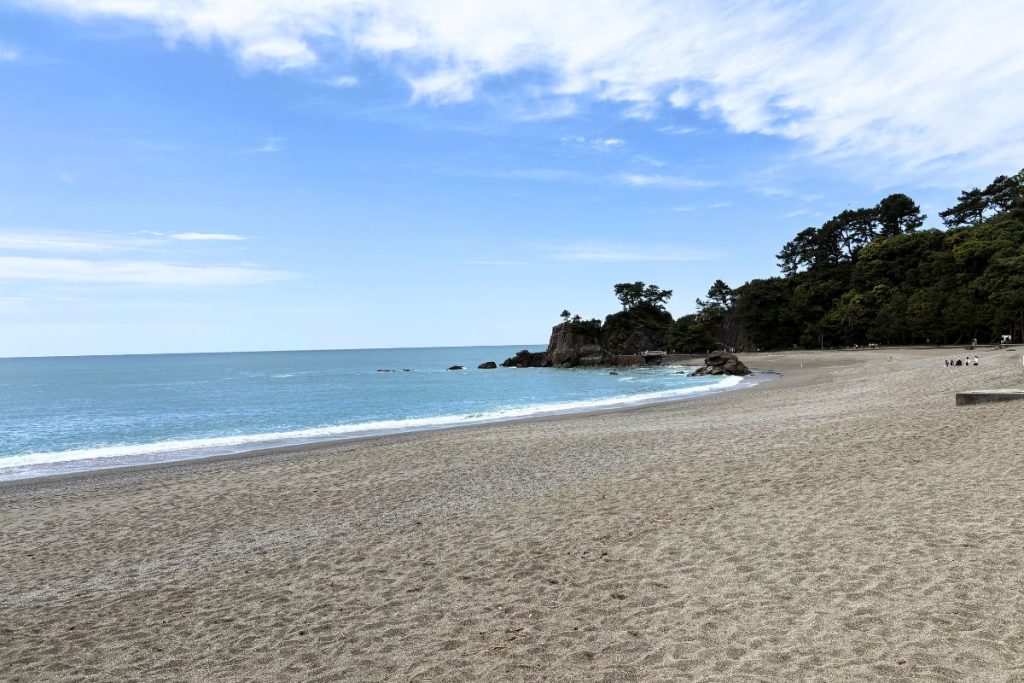
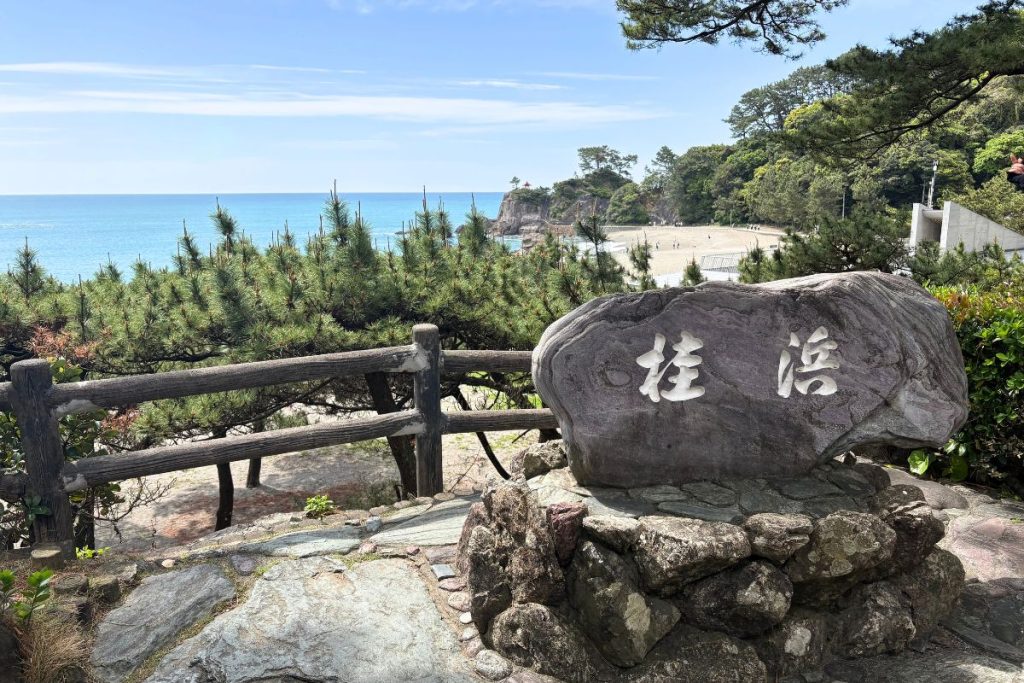
Unlike a typical swimming beach, Katsurahama Beach is a place to appreciate the rugged, wild coastline. With a mix of soaring pine trees, a gravelly sand beach, sparking blue water, and a high rocky point with a small shrine, there is a lot to enjoy here.
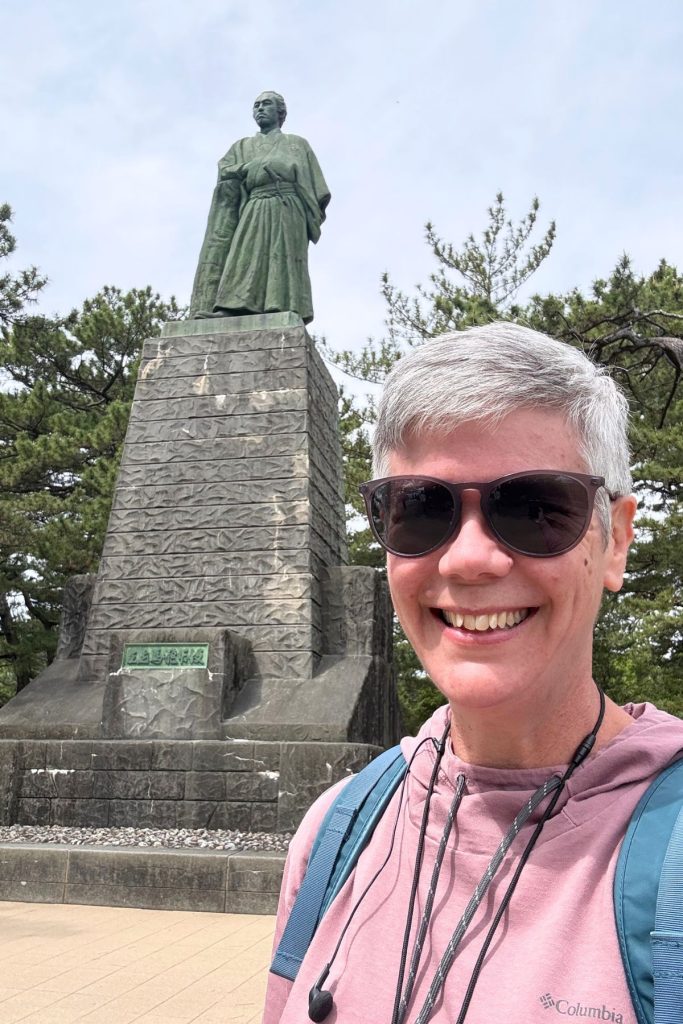
Sakamoto Ryoma Statue
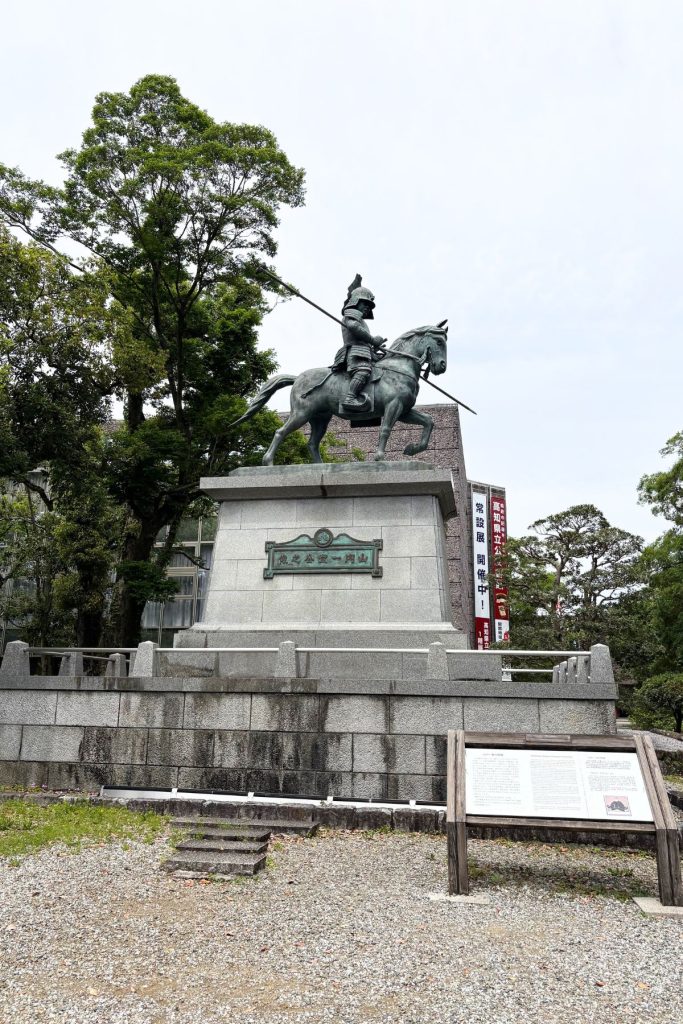
The beach’s most iconic landmark is the towering bronze statue of Sakamoto Ryoma, a beloved 19th-century samurai and revolutionary figure who was born in Kochi. He played a pivotal role in the Meiji Restoration. He was instrumental in negotiating an alliance between the Choshu and Satsuma clans, helping to bring Japan’s feudal age to an end in 1868. Erected in 1928, the statue stands 17 feet (5.3 meters) tall…an impressive 44 feet (13.5 meters) tall including the pedestal.
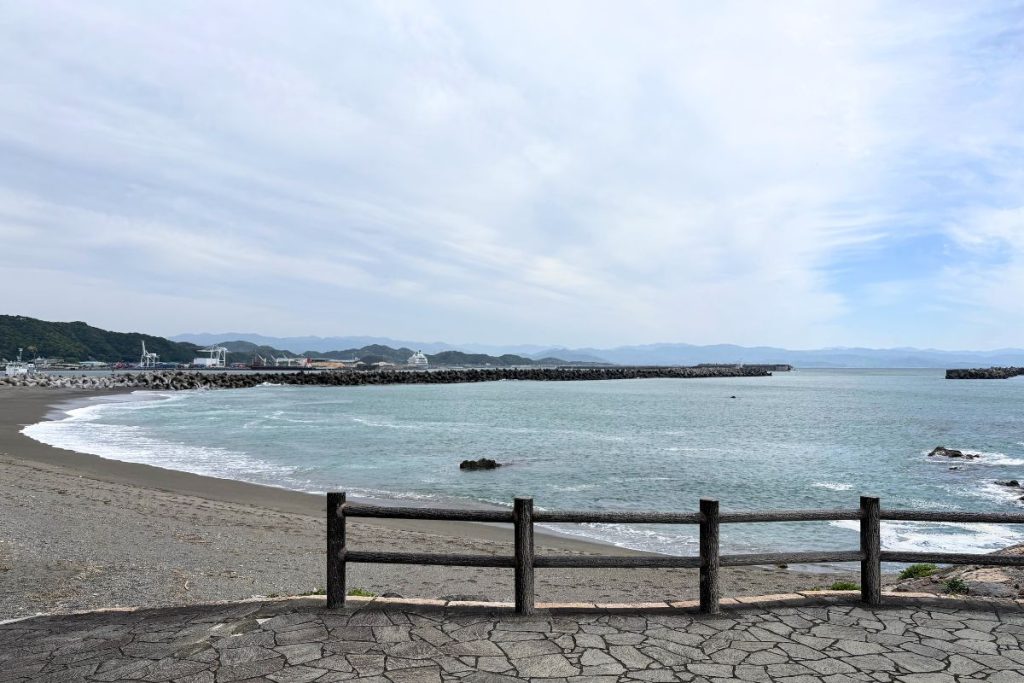
Beautiful Beach
Katsurahama Beach is one of Japan’s three most celebrated scenic shores. Poetry, art, and legend have immortalized this beach for over a thousand years. Due to the strong currents, swimming is prohibited here. But that dramatic surf just adds to the wild, elemental atmosphere here.
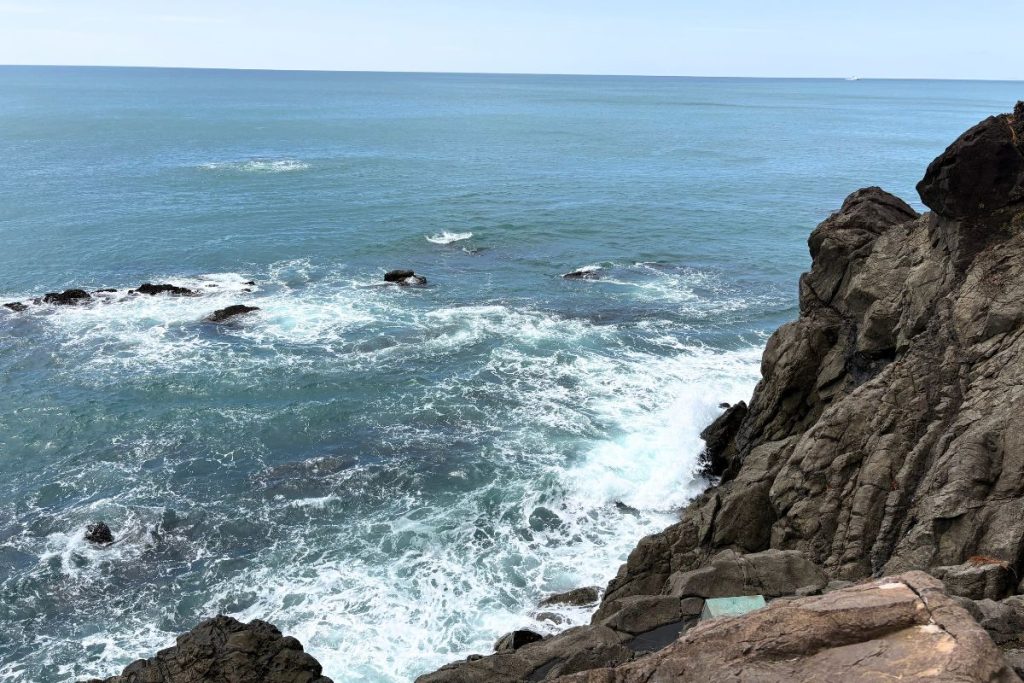
Watatsumi Shrine
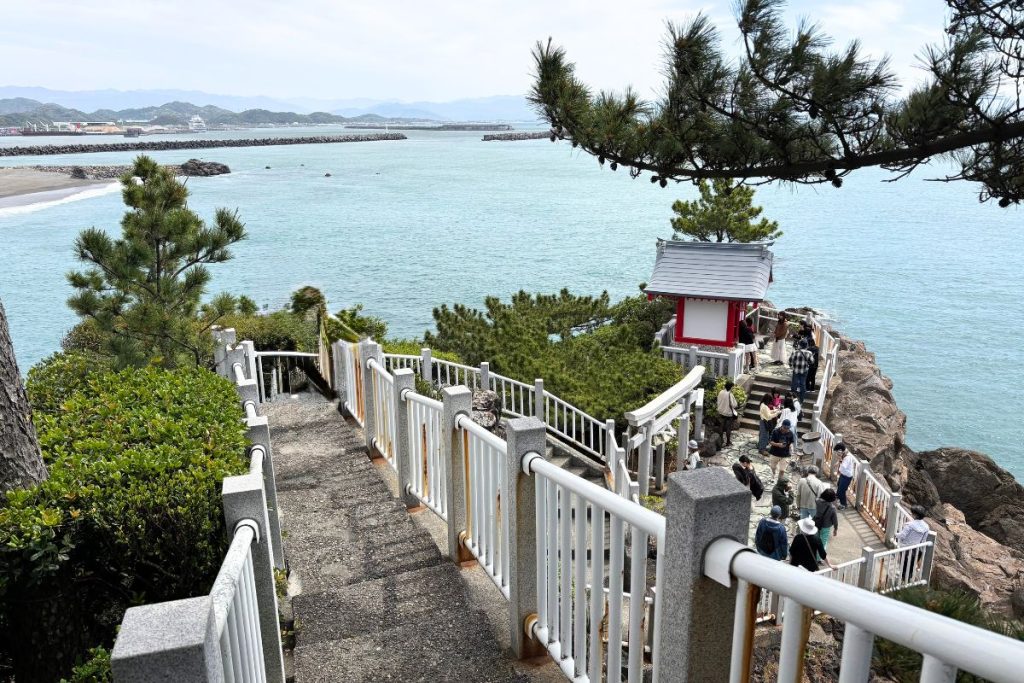
A small Shinto shrine, Watatsumi Shrine (also called Ryuogo Shrine) is a popular spot for visitors to Katsurahama Beach. I crossed the Ryugu Bridge at the southern end of the beach and climbed the (relatively steep!) steps to the top of the cliff to get to the shrine. From Watatsumi Shrine, a rudimentary stairway under the trees connects to another shrine, Hayataka-jinja, which also offers splendid views of the Pacific Ocean.
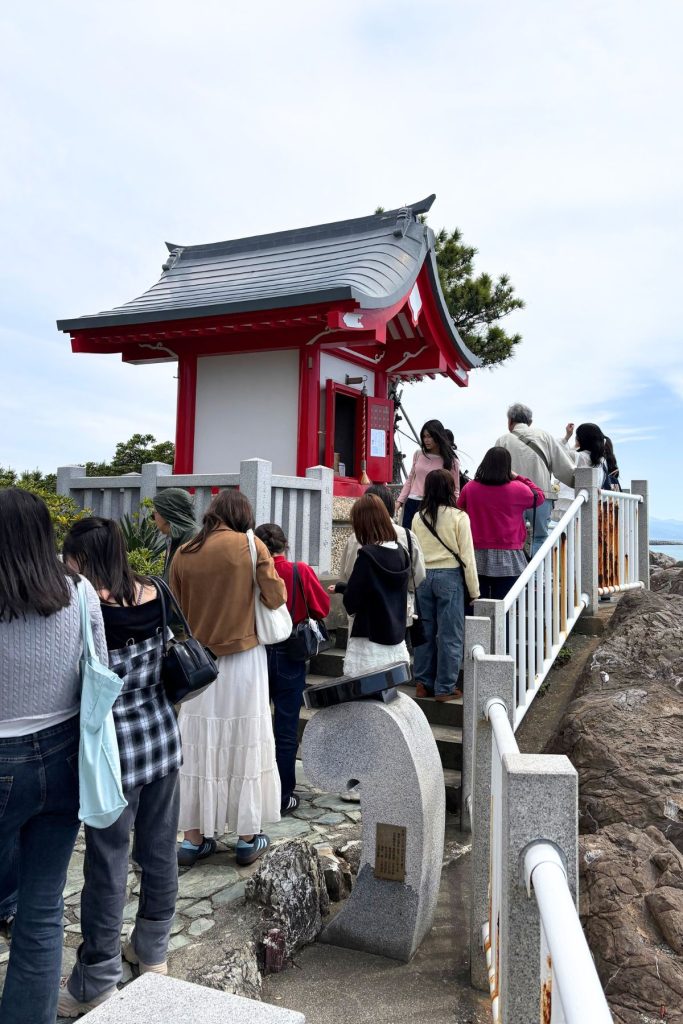
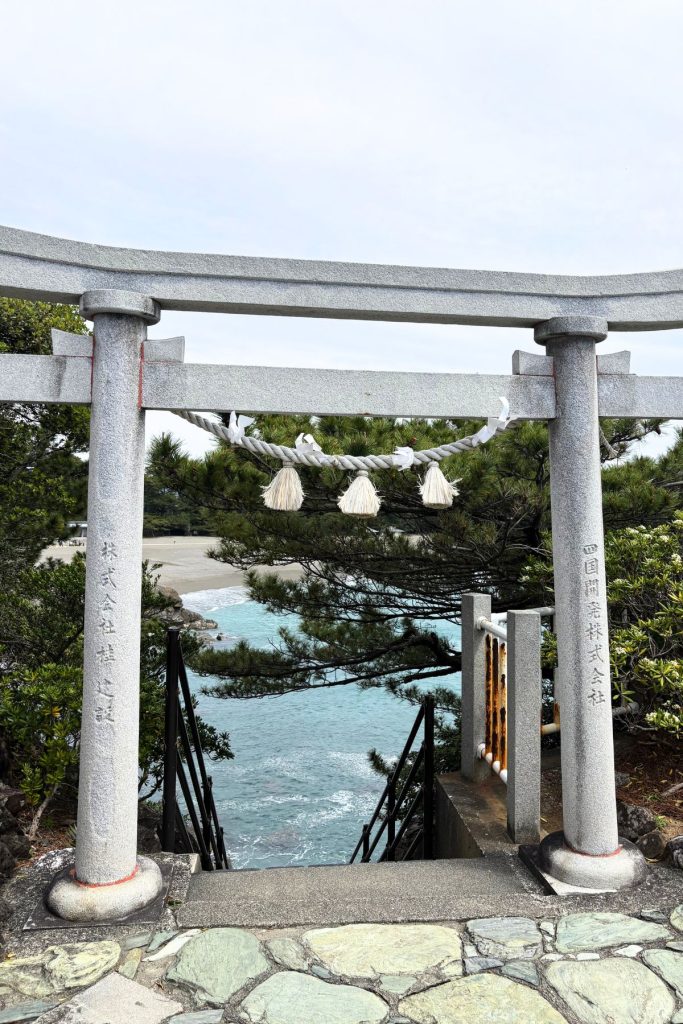
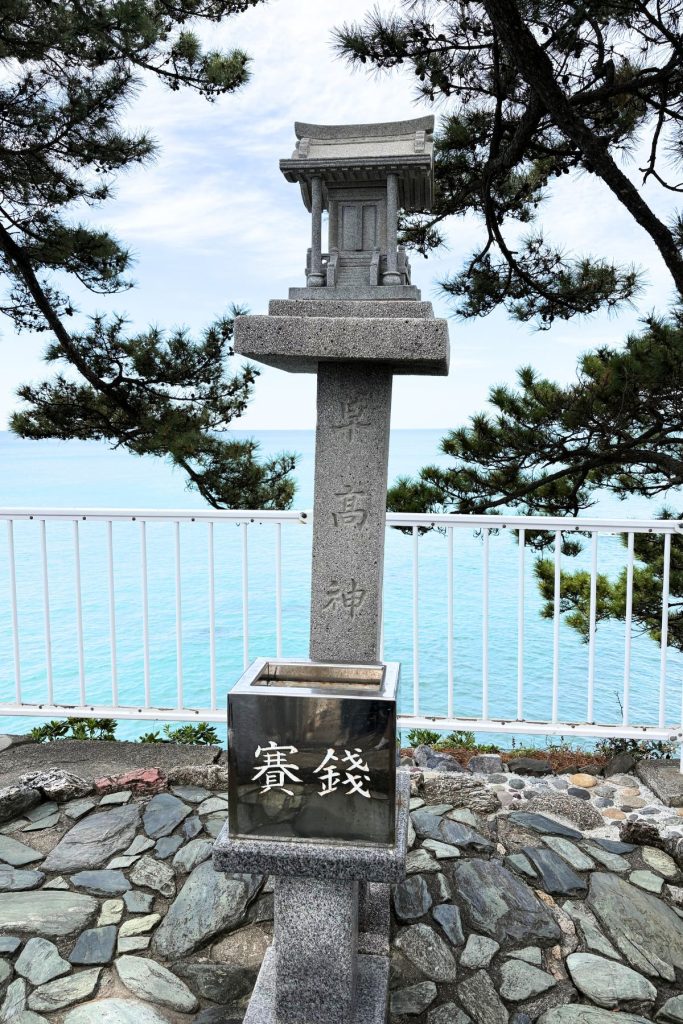
Watatsumi shrine is white with red framework and shutters. Red is seen as a way to ward off evil spirits in the Shinto religion. The shrine enshrines the deity Ooawatatsumi no Kami (Great God of Watatsumi). It brings blessings for protection of the sea, prosperity of the fishing industry, traffic safety, and the fulfillment of love. According to Shinto tradition, Watatsumi Shrine honors the spirit of the sea (Watatsumi, the sea serpent or sea dragon).
Yuzu
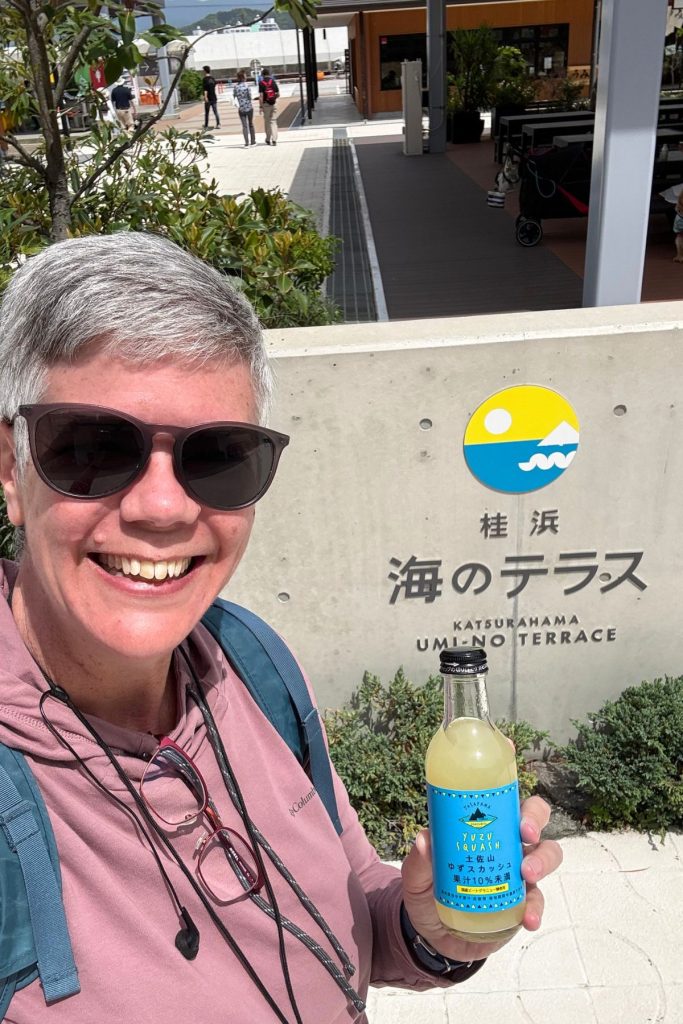
After exploring the beach, I made my way back to the terrace area. This relatively new area includes several shops and restaurants. I stopped into one store to get one of Kochi’s famous products: yuzu. Yuzu is like a hybrid of a lemon and lime, with a hint of bitterness and a floral sweetness. It is one of Japan’s best-known citrus fruits. Kochi boasts the biggest production of yuzu in all of Japan. So, there are a LOT of different yuzu products for sale here in the shops! I enjoyed a refreshing drink.
Kochi Castle
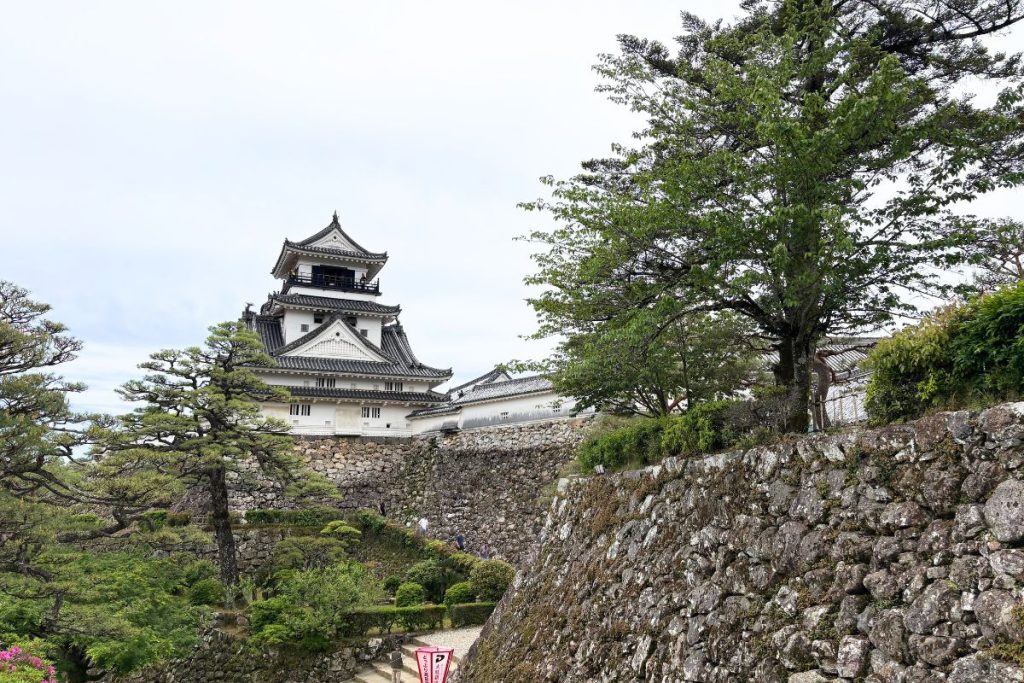
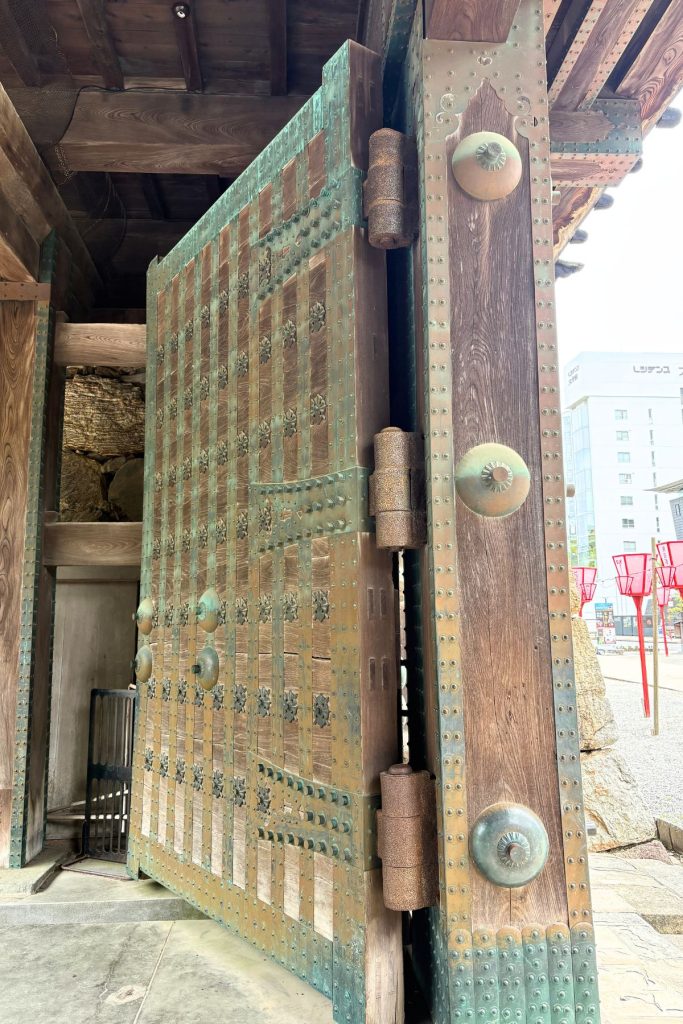
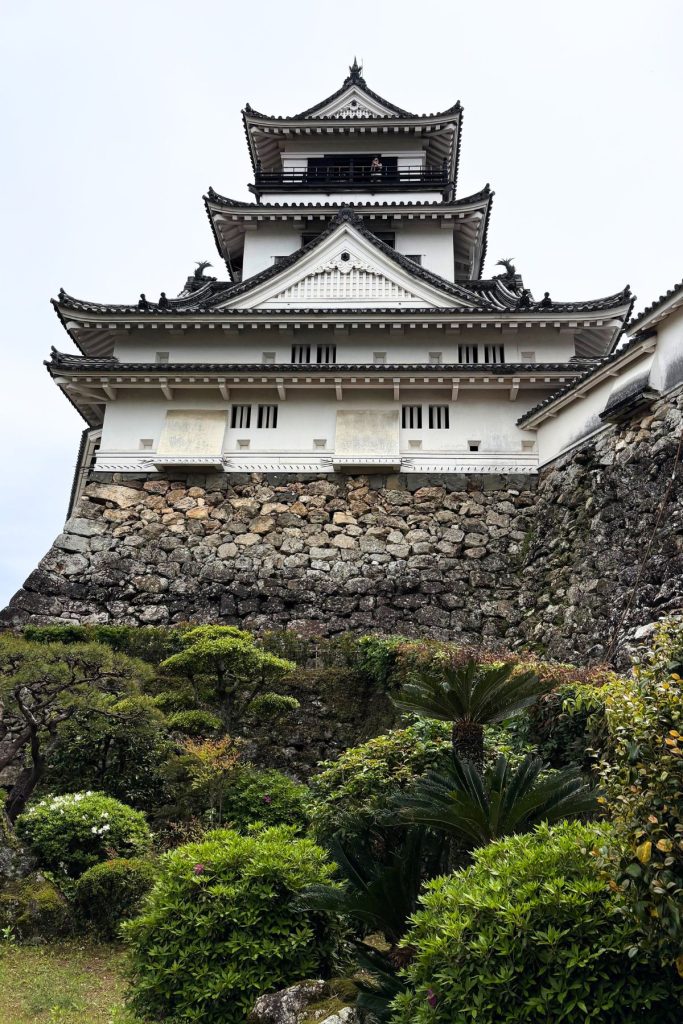
The construction of Kochi Castle began in 1601 and was largely completed by 1611. It burned down and was rebuilt in the mid-18th century. The rebuilt structure was completed in 1753 and is what stands today. Kochi Castle holds a rare and prestigious distinction — it is one of only 12 original castles remaining in Japan (meaning its main tower was never destroyed and rebuilt in concrete like most others). Even rarer, it is the only castle in Japan where both the tenshu (main keep) and the kuro-mon (main gate) from the Edo period survive together intact. This makes it exceptionally valuable historically and architecturally.
Approaching the Castle
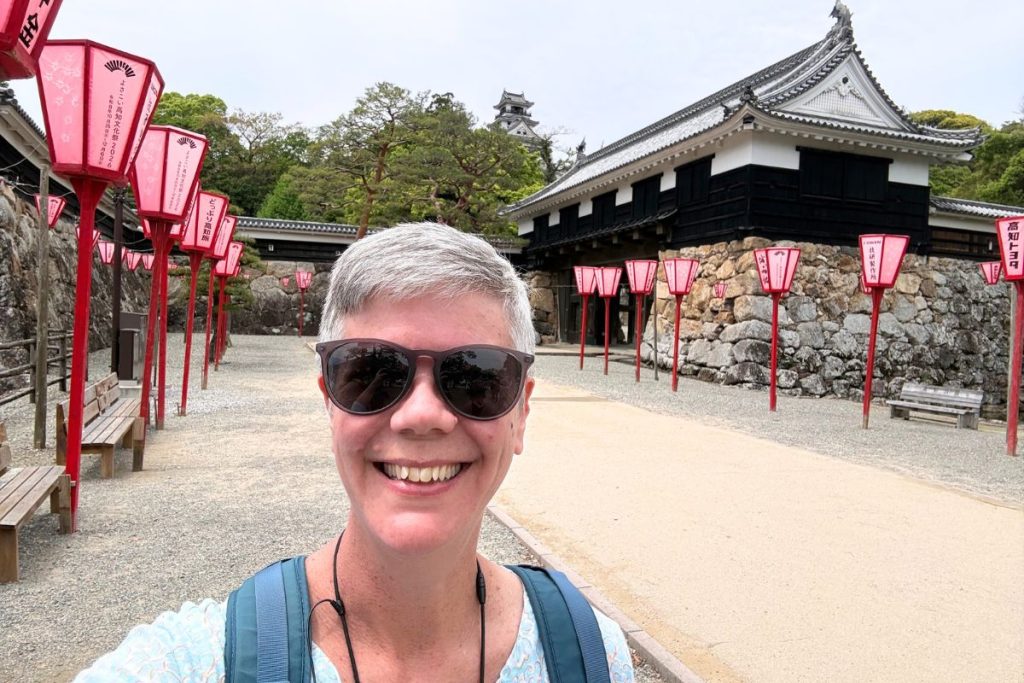
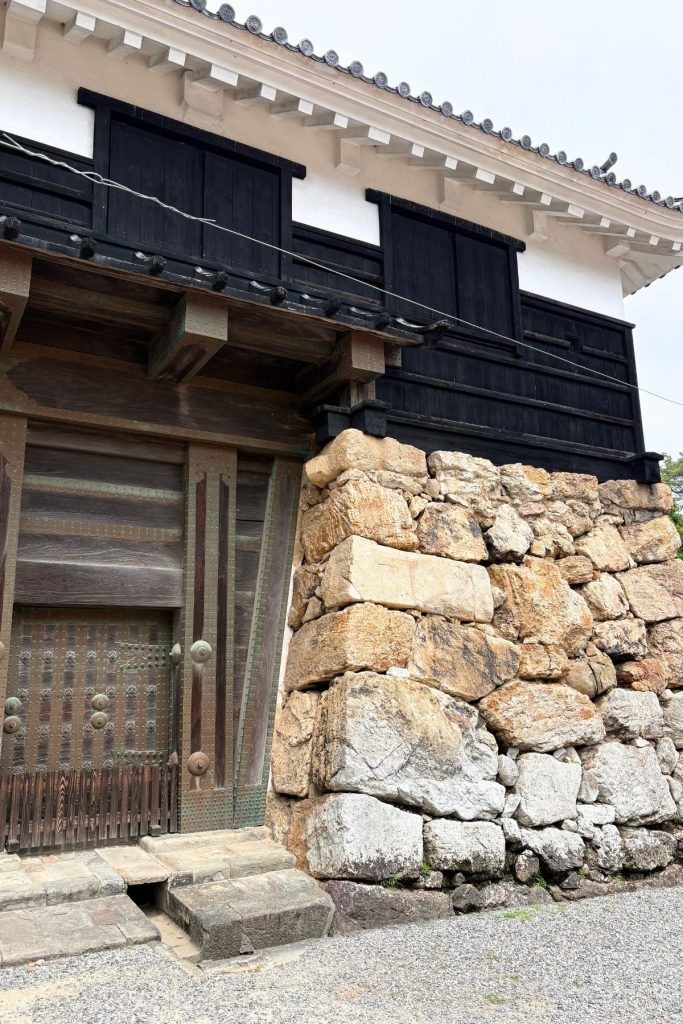
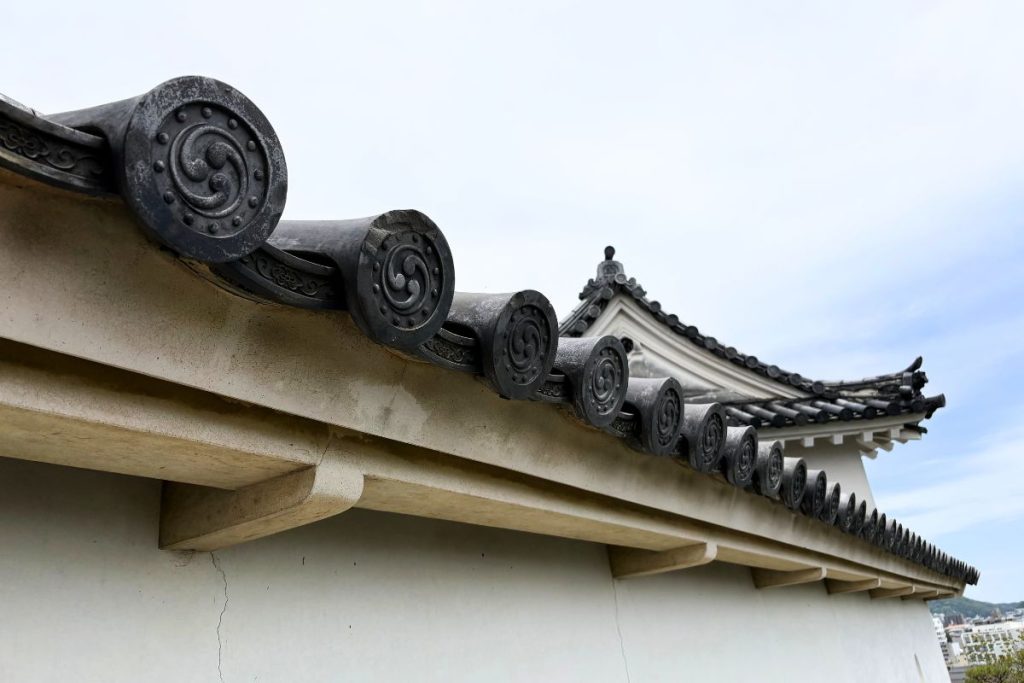
It was very interesting to see all of the intimidating features around the castle. There are a series of foreboding gates to navigate. The walkway and steps leading up to the castle are also quite interesting. The steps have inconsistent sizes and shapes. This makes people walking on them purposely have to slow down (which can delay pesky attackers!). A rare defense feature known as “shinobigaeshi,” or anti-ninja spikes, encircles the main keep. These projections are installed along the base of the outer wall to prevent intruders from climbing up. Kochi Castle is the only one where they remain intact today
Exploring the Castle
Much of the original fortress burned down in 1727 and was reconstructed between 1729 and 1753 in the original style. The castle survived the Boshin War, the post-Meiji Restoration orders to destroy all remaining feudal fortifications, and World War II unscathed. A unique feature of Kochi Castle is that its main tower was not only used for military purposes, but also as a residence. In most other castles, the lords usually resided in separate palace buildings rather than in the castle keep.
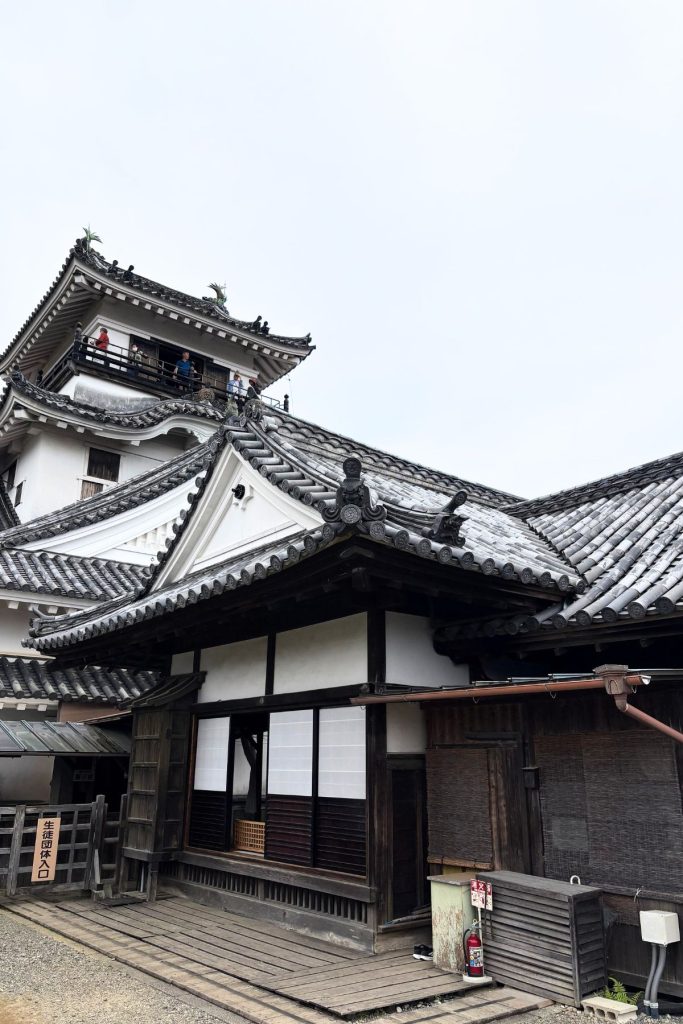
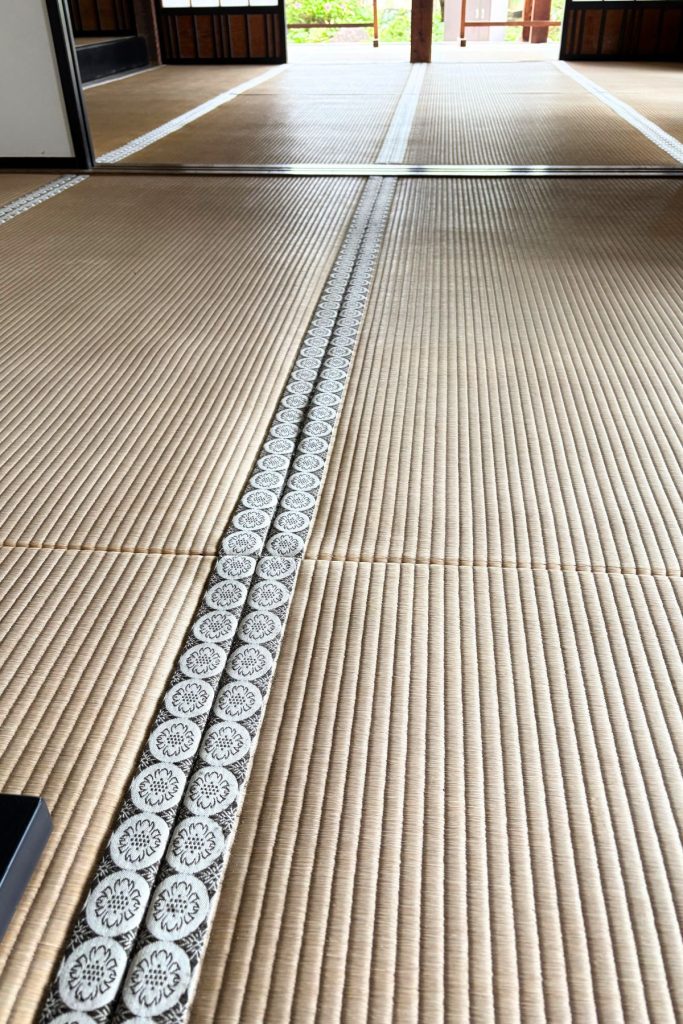
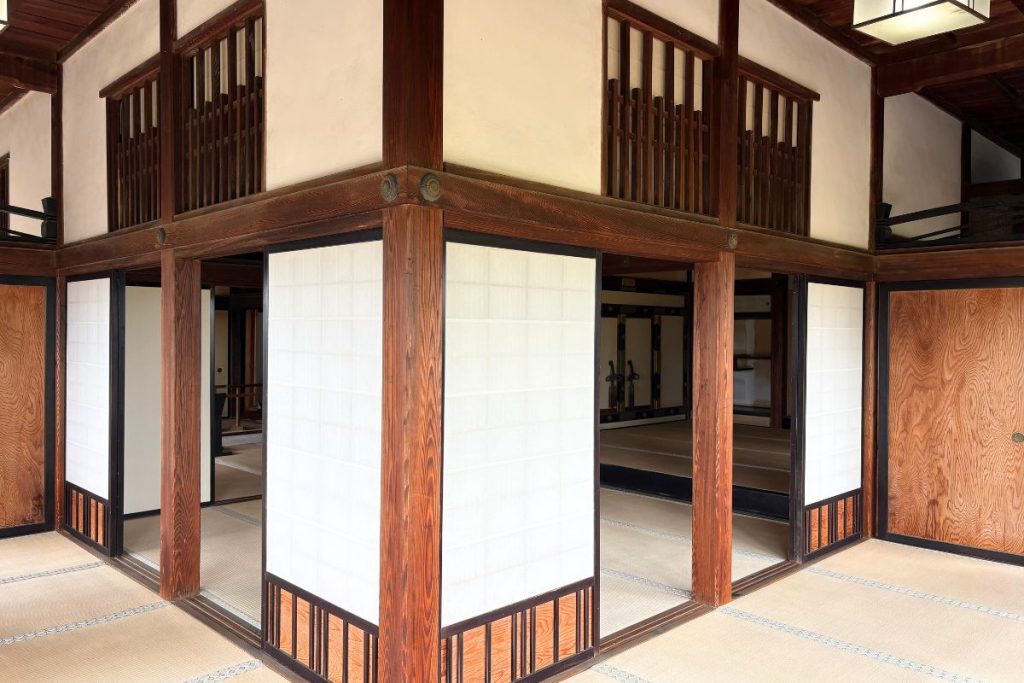
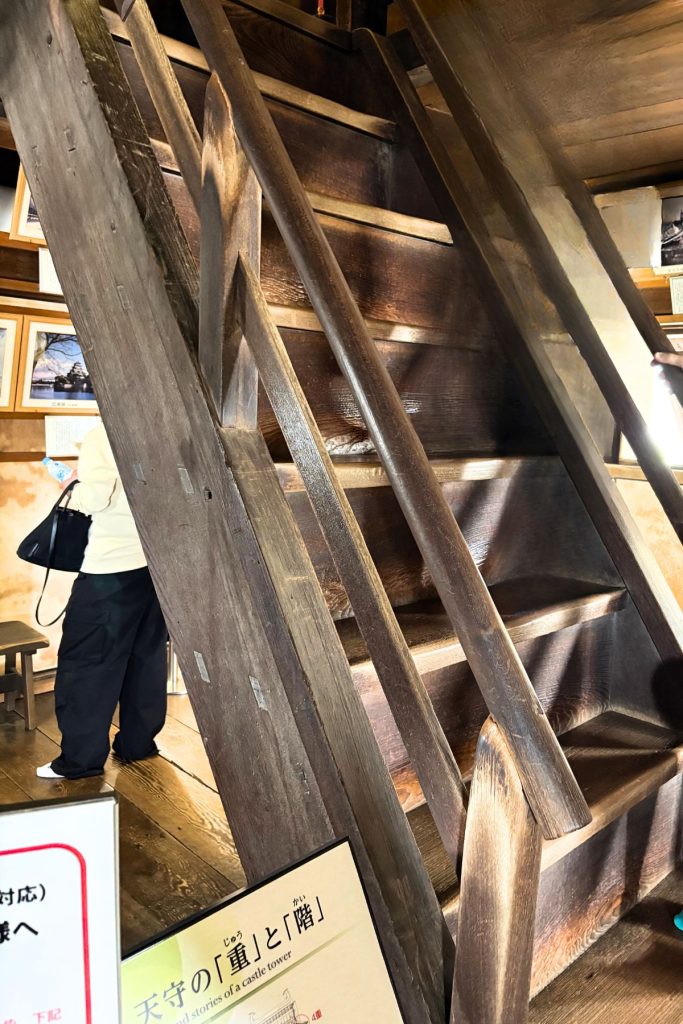
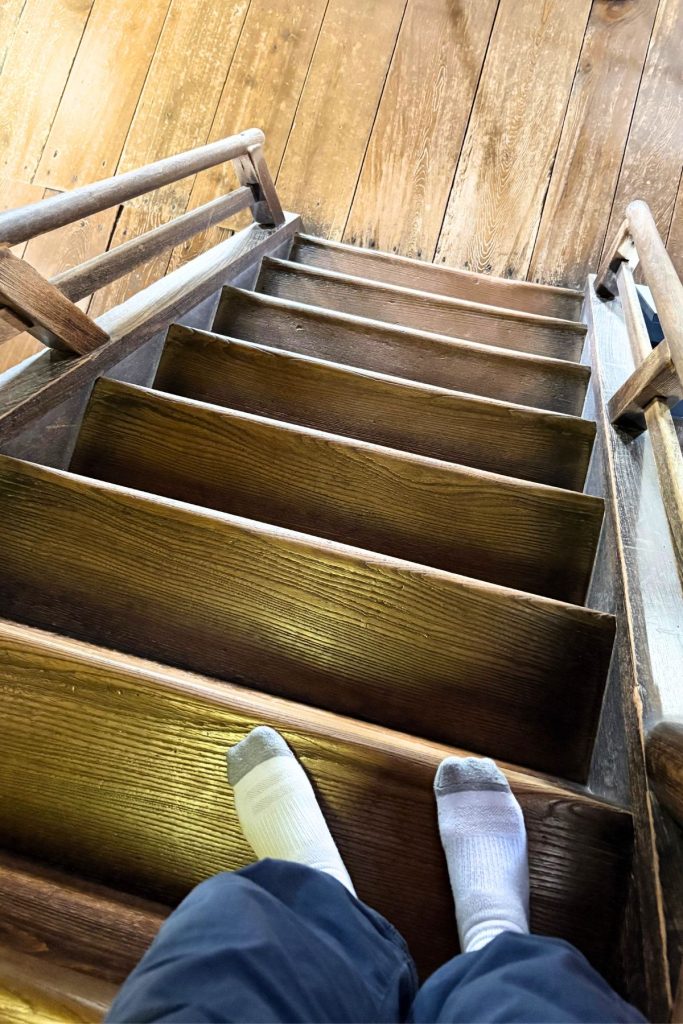
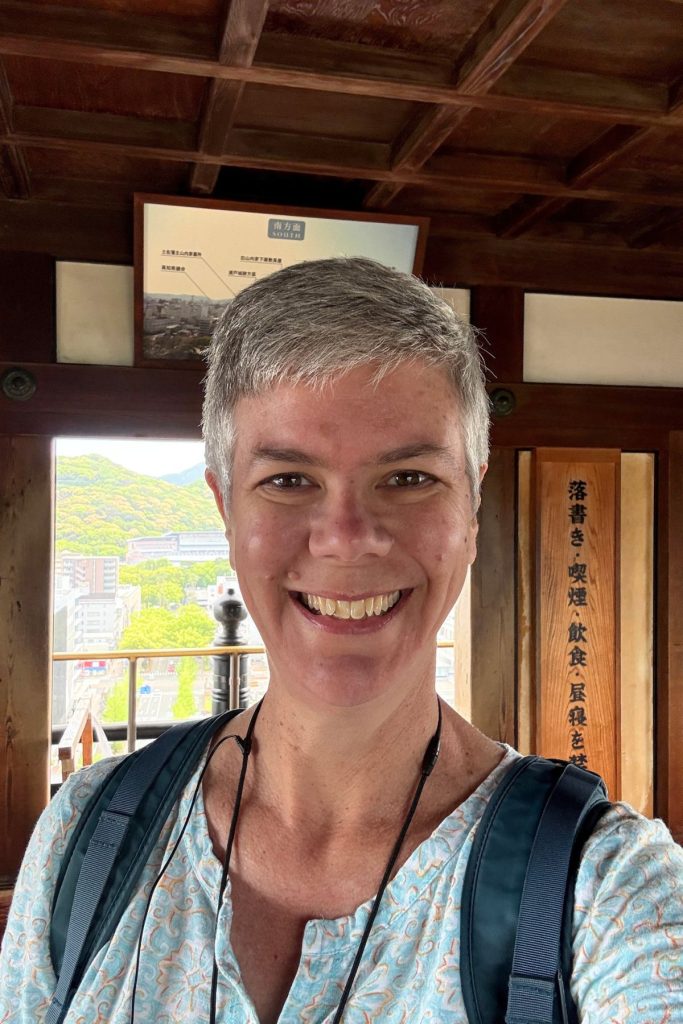
We climbed many steep staircases to reach the top for some amazing views! There are six floors to climb in the 60 foot (18.5 meter) tall tower, using wooden staircases. All visitors must remove shoes before entering, so navigating the steep, slippery steps in stocking feet can also be a bit tricky! But slow and steady will win the race here.
Views from the Top
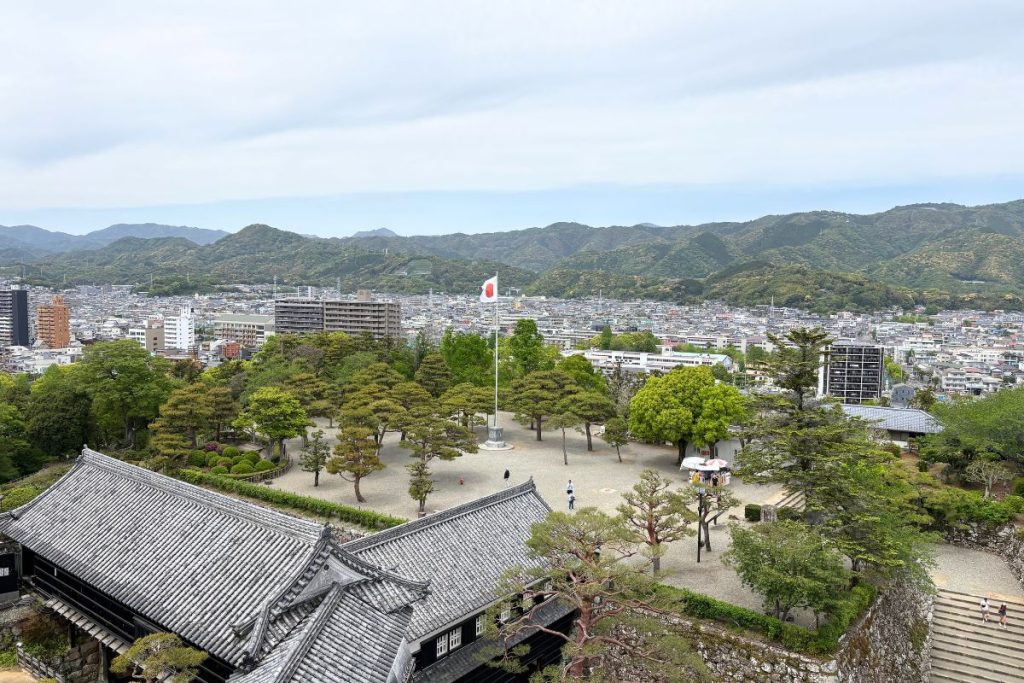
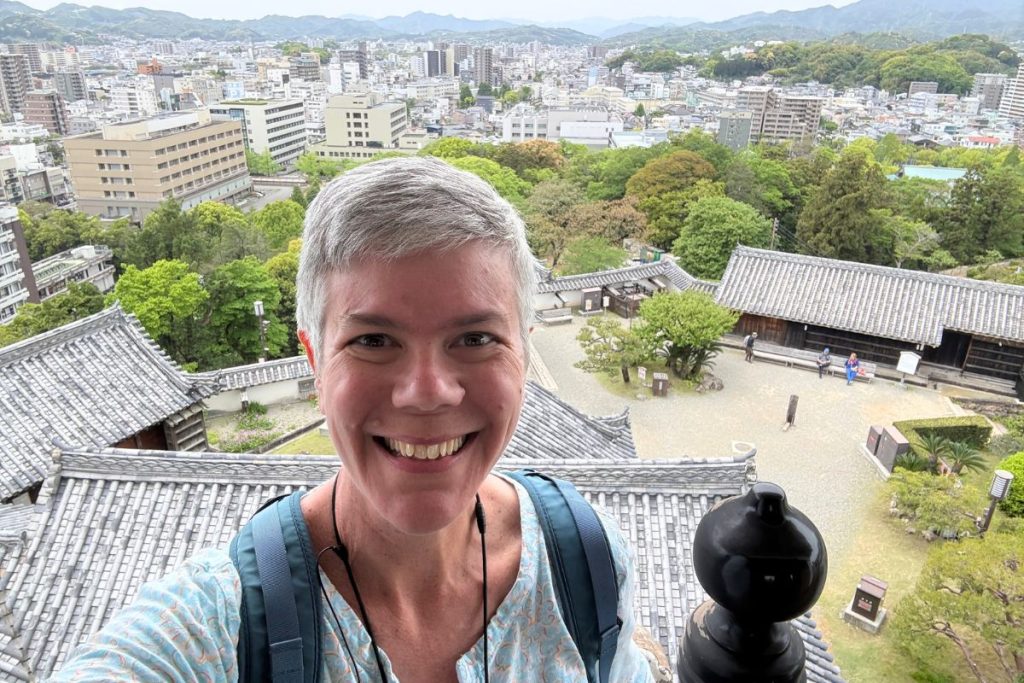
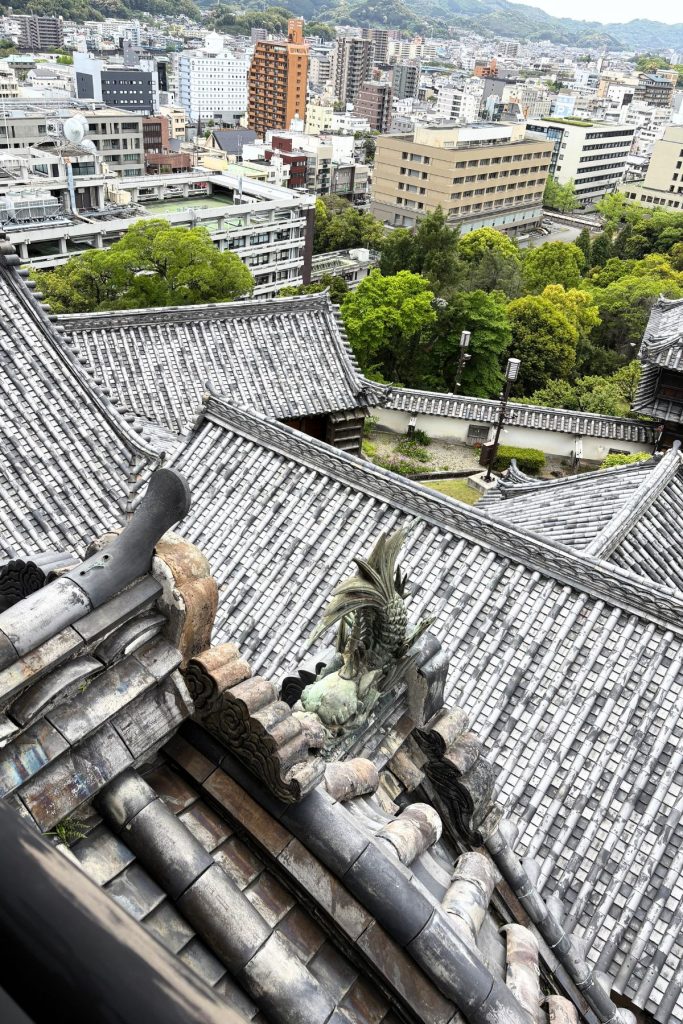
Arriving at the top of the tower, however, is well worth the effort. Situated 145 feet (44.4 meters) on top of Otakasa Hill, the panoramic views of the city are amazing! There is an open air balcony that surrounds the top of the tower, and walking around it provides stunning views of the city.
Other Places to Visit in Kochi
While my excursion only included these two wonderful places, there are many other great places to visit in Kochi.
- Within Kochi City:
- Hirome Market
- Tosa Sunday Market (open every Sunday)
- Makino Botanical Garden
- Chikurinji Temple
- Yosakoi Festival (celebrated as one of Japan’s 10 largest festivals, held every summer from August 9th to 12th)
- Beyond the City:
- Ryugado Cave
- Shimanto River
- Shikoku Karst
Common Questions
One day is absolutely doable. I certainly enjoyed my one day there! But if you have the flexibility, it’s recommended to spend at least two to three days to fully experience Kochi’s attractions, with a longer stay leaving time to enjoy local food and festivals. A second day opens up the chance to explore beyond the city — the crystal-clear Niyodo River, the Shimanto River, or some of the prefecture’s stunning coastline. That said, if you’re passing through on a tighter itinerary, one well-planned day will leave you with zero regrets.
Honestly, Kochi is worth visiting any time of year, but most travelers agree that spring is the sweet spot. Cherry blossoms typically bloom in late March and early April, transforming Kochi Castle’s surroundings into a sea of pink and white. Autumn is a close second, with gorgeous foliage and cooler temperatures perfect for exploring. Summer is hot and humid, with average highs often reaching above 86°F (30°C). But if you’re into festivals, that’s when the legendary Yosakoi Festival takes over the city in August. Winter is quiet and mild by Japanese standards, making it a peaceful time to visit without the crowds.
For a smaller city, Kochi is surprisingly welcoming to international visitors. Free guided tours can be arranged in English, Chinese, or Korean at the Tourist Information Center at Kochi Castle. Major attractions like the castle and Katsurahama Beach have English signage, and the My Yu tourist bus makes getting around straightforward even without knowing Japanese. The locals are famously warm and friendly. What stands out most to many visitors is how friendly the people are, with staff at diners and shops always eager to chat, giving a real sense of family and warmth. Just don’t expect the same level of English fluency you’d find in Tokyo, but that’s part of the charm.
Even More Travel Ideas
Ancient Gates, Endless Streets: A Quick Dive into Tokyo’s Soulful East Side
Golden Walls, Nightingale Floors, and Cherry Blossoms: The Magic of Kyoto Awaits