A Quick Visit to Istanbul: The Blue Mosque, Hagia Sophia, and the Basilica Cistern
I spent two days in Istanbul on my own before boarding a Crystal cruise to Venice. That sounds like more time than it was. The first day was a slow start, a late lunch, and then a guide who packed four empires into one afternoon. The second day was a suitcase and a taxi to the port. Which meant everything people usually spend three or four days doing in Istanbul, I did in one afternoon.
Here is what that afternoon actually looked like, what I saw, what I skipped, and whether a single guided afternoon is enough to call it an Istanbul visit. Short answer: no. Slightly longer answer: it is enough to make you furious you only booked two days.
Prefer to watch instead of read? Watch the video →
One Afternoon, Four Empires
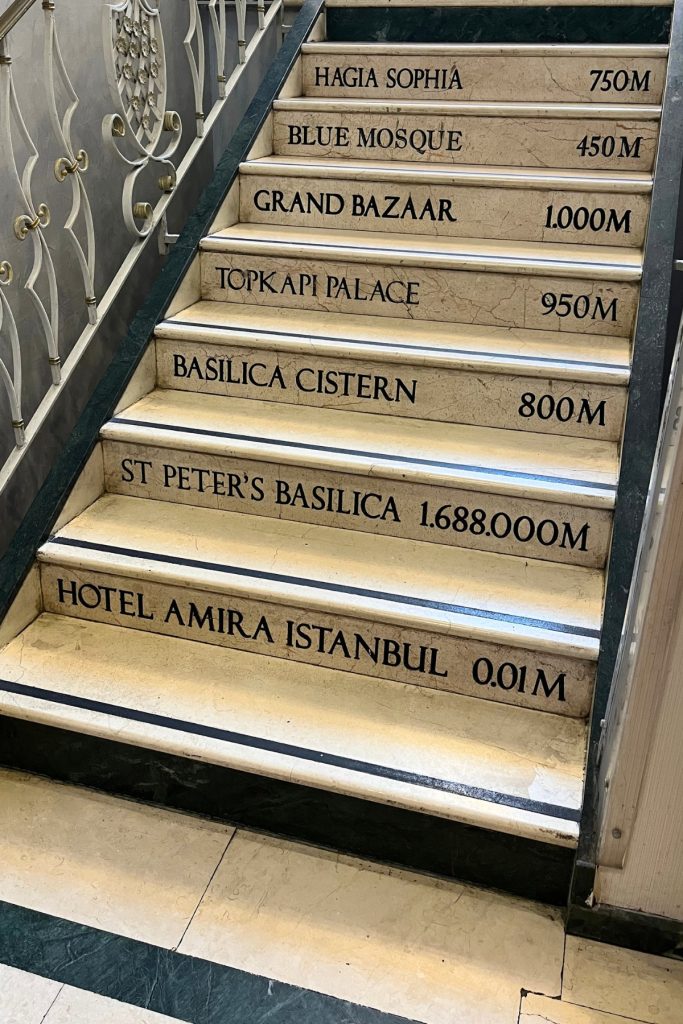
I spent my morning the way I spend most mornings alone in a new city. Slowly. Coffee, a walk with no destination, lunch at a place I picked because it had a courtyard and no English menu translation taped to the window. Then, at one in the afternoon, a guide named Atakan met me at my hotel and the pace of the day changed entirely.
The Quiet Morning Nobody Puts on a Postcard
I did not have an itinerary before one o’clock. I had a hotel with a courtyard, a phone I mostly ignored, and the general idea that jet lag responds better to walking than sitting. So I walked. No landmarks, no map open, just streets.
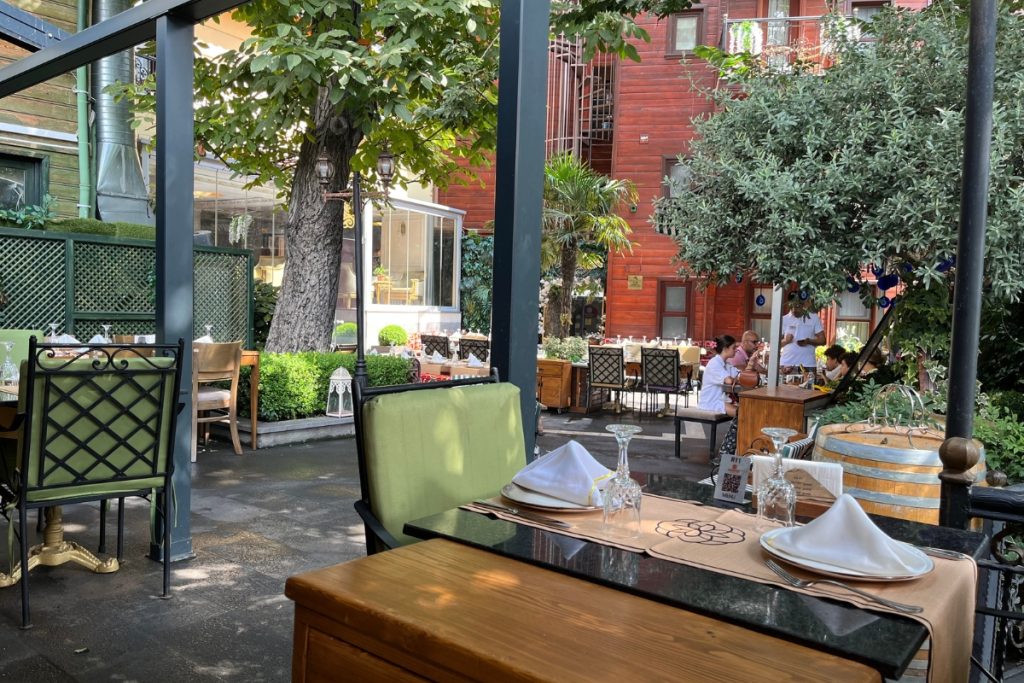
Lunch happened because I got hungry near a restaurant with tables under a tree and string lights that were clearly not on yet. The waitress took one look at my menu confusion and steered me toward the mezze plate. It was her pick for a solid overview of the local favorites. She was right.
The Mezze Spread
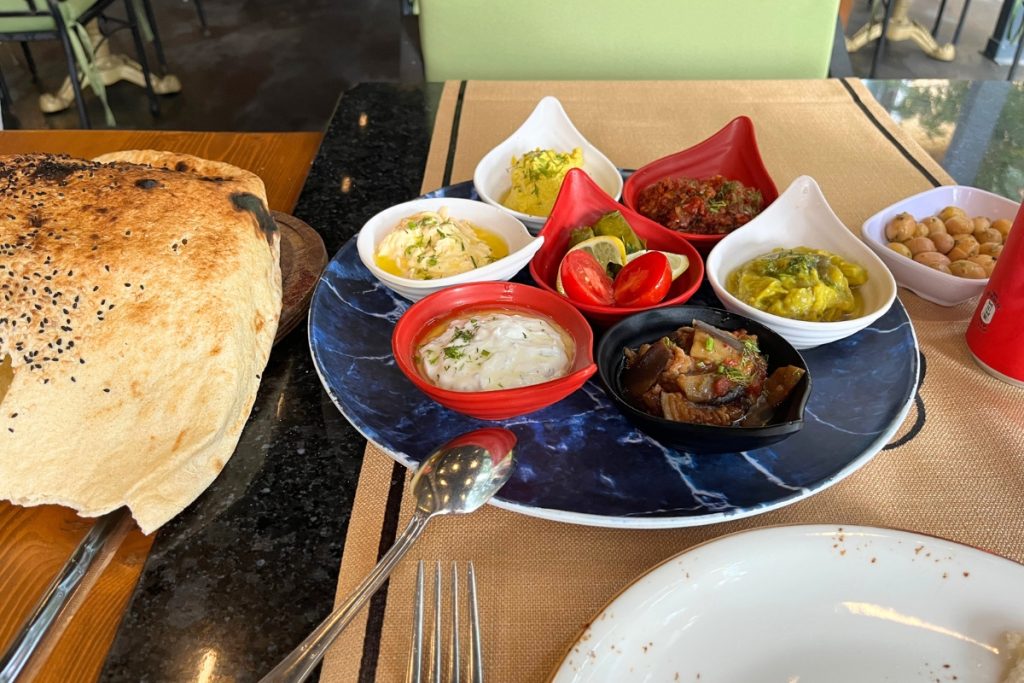
What arrived was a full mezze spread: a red pepper dip, a garlicky yogurt sauce, stuffed grape leaves, a plate of olives, warm sesame flatbread the size of a hubcap. Nobody at the table next to me was speaking English, which felt like the correct amount of “not a tourist trap” for a solo afternoon.
Baklava and Tea
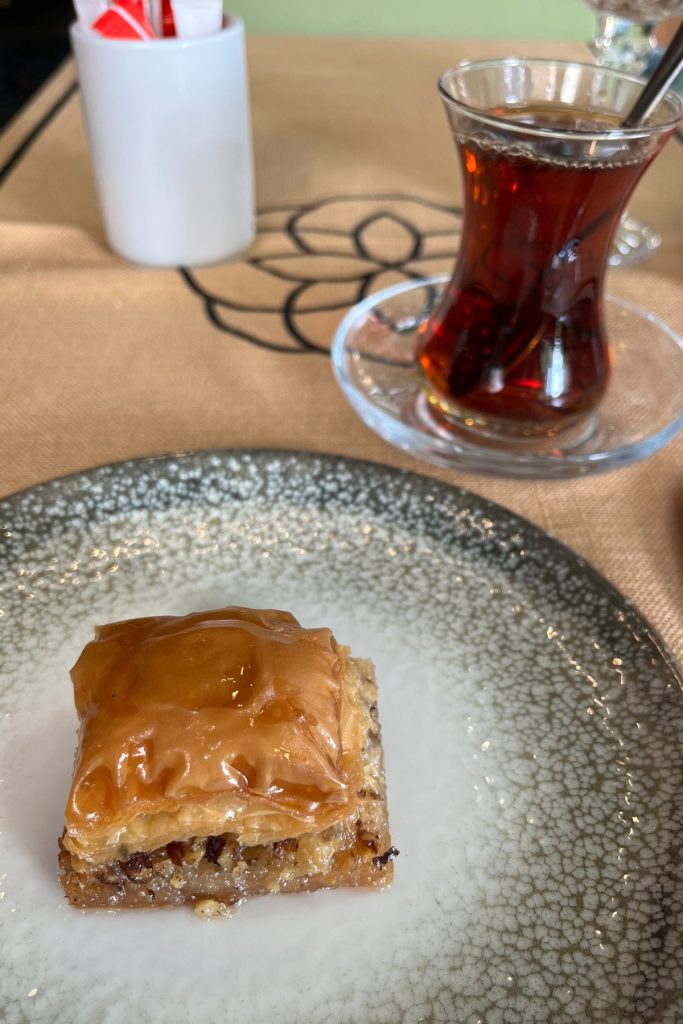
I do not remember the name of every dish. I remember eating slowly, in no hurry, because the entire rest of my day was about to be nothing but hurry. Lunch ended with a square of baklava, honey still warm enough to be sticky. I paired it with a glass of hot tea poured into one of those tulip-shaped glasses every restaurant in the city seems to own. It was, without argument, the correct way to end a meal I was in no rush to finish.
The Blue Mosque: Take Off Your Shoes, Borrow a Scarf
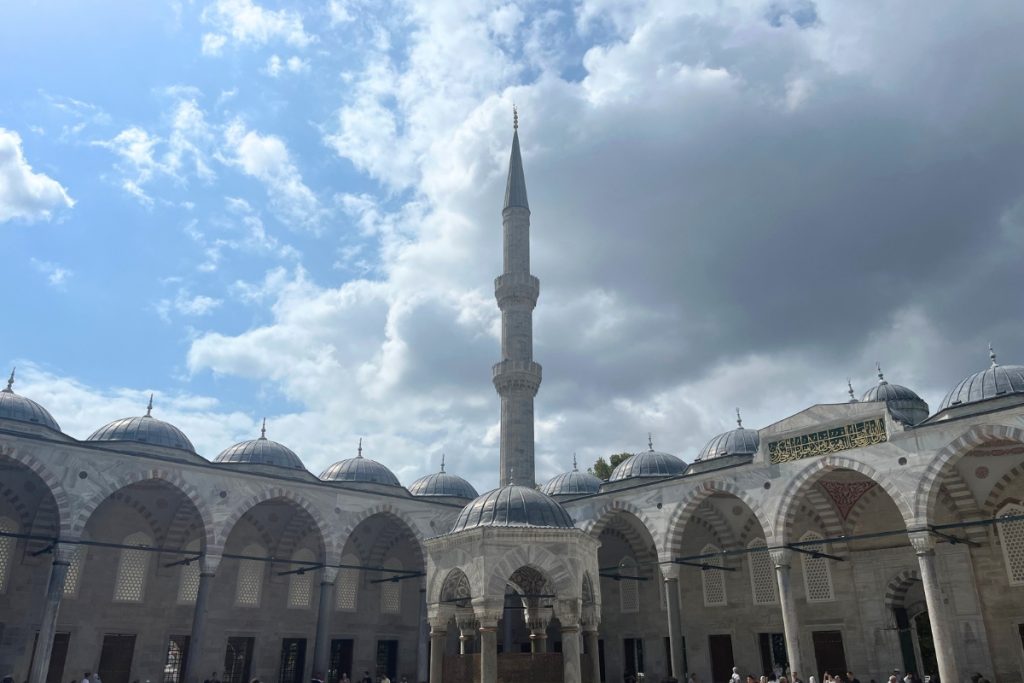
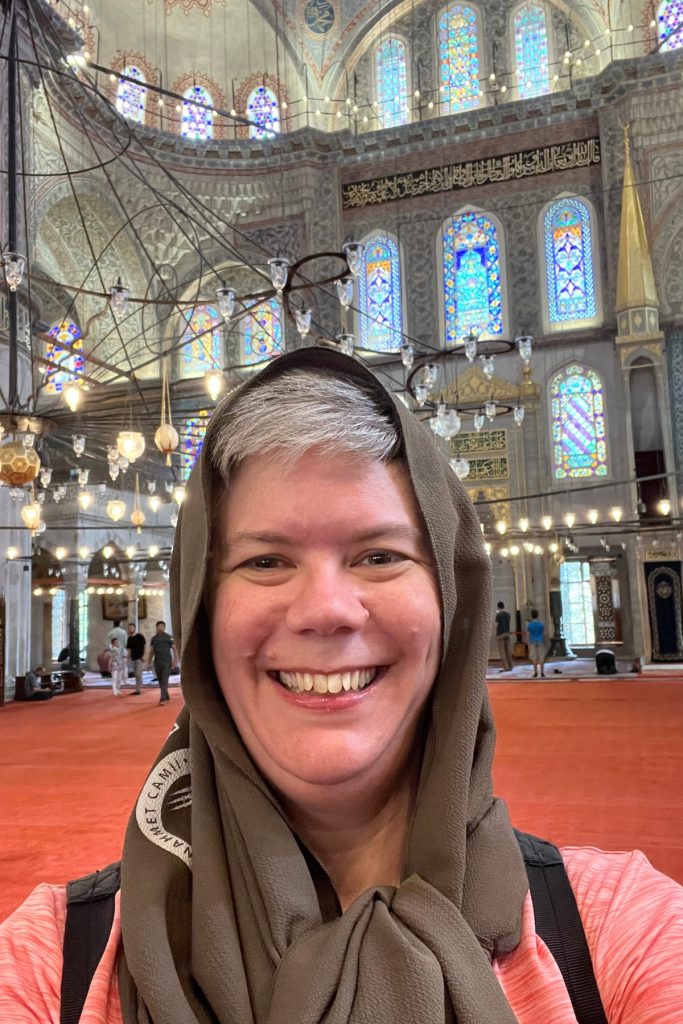
You do not walk into the Blue Mosque so much as get funneled into it. There was a small queue at the entrance, everyone slipping out of their shoes and tucking them into one of the wooden cubbies lining the walls. I had not thought to bring a head covering. Atakan picked one up for me right at the door before we went any further.
Domes, Glass, and Two Hundred Windows
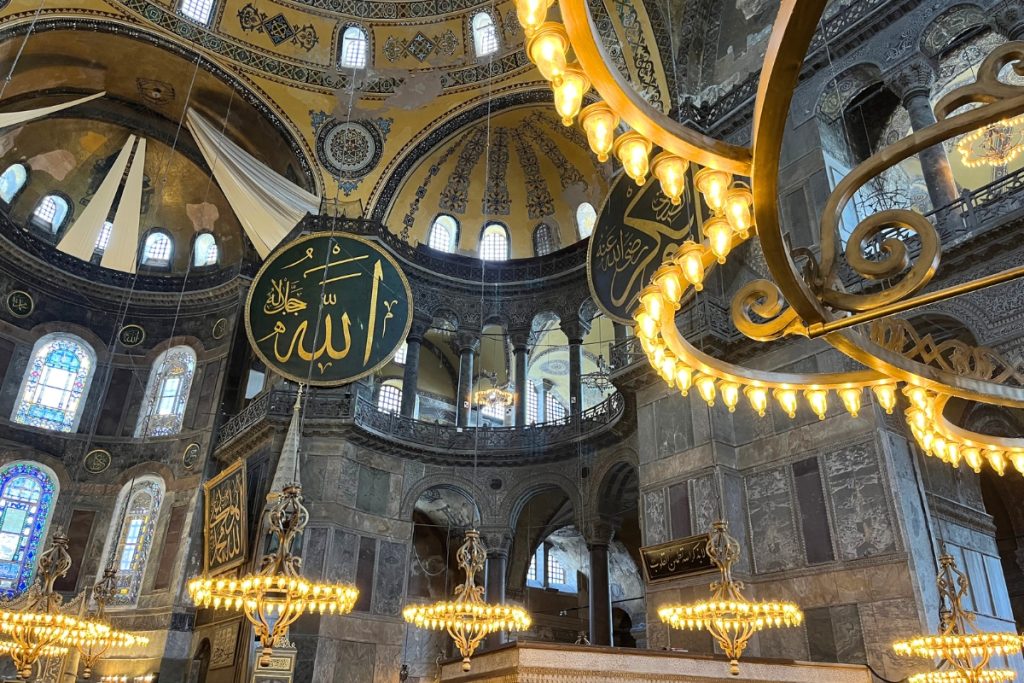
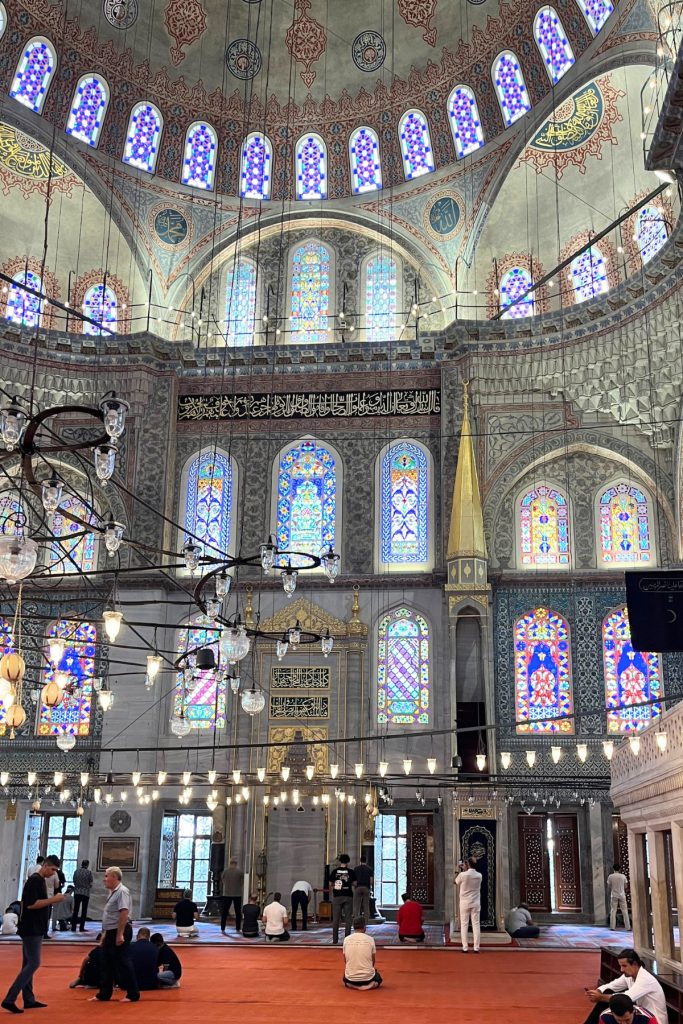
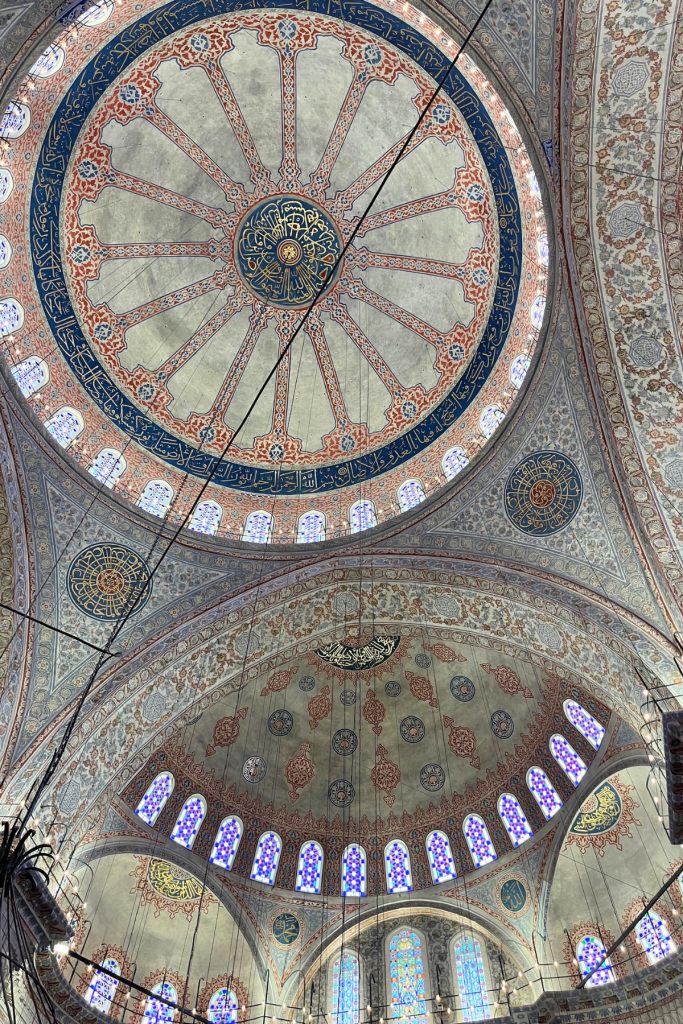
Inside, the scale of the place stops being an abstract number. It becomes something your neck has an opinion about. Domes stack on domes, and stained glass throws color across red carpet. Over two hundred windows keep the whole space from feeling as dark as a building this old has any right to be.
Men, Women, and Visitors: Three Sections, One Building
Atakan explained the layout as we stood in the tourist section at the back. Men worship in the large open area facing the mihrab. Women worship in a separate section, historically screened off with carved wood partitions. Visitors, regardless of gender, stay in a roped-off area at the rear, out of the way of both.
It is a practical answer to a practical question. How do you keep a building this size functioning as an active mosque while thousands of tourists shuffle through every day? The mosque solves it by giving everyone, worshippers and visitors alike, a clearly defined lane.
A Six-Hundred-Year-Old Sound System
Atakan also pointed out a raised marble platform off to one side, called the müezzin mahfili. Before microphones, a mosque this size needed a workaround for sound. A person standing there would repeat the imam’s prayers aloud, relaying them to worshippers too far from the front to hear on their own. It is, essentially, a six hundred year old sound system made of one very reliable human being.
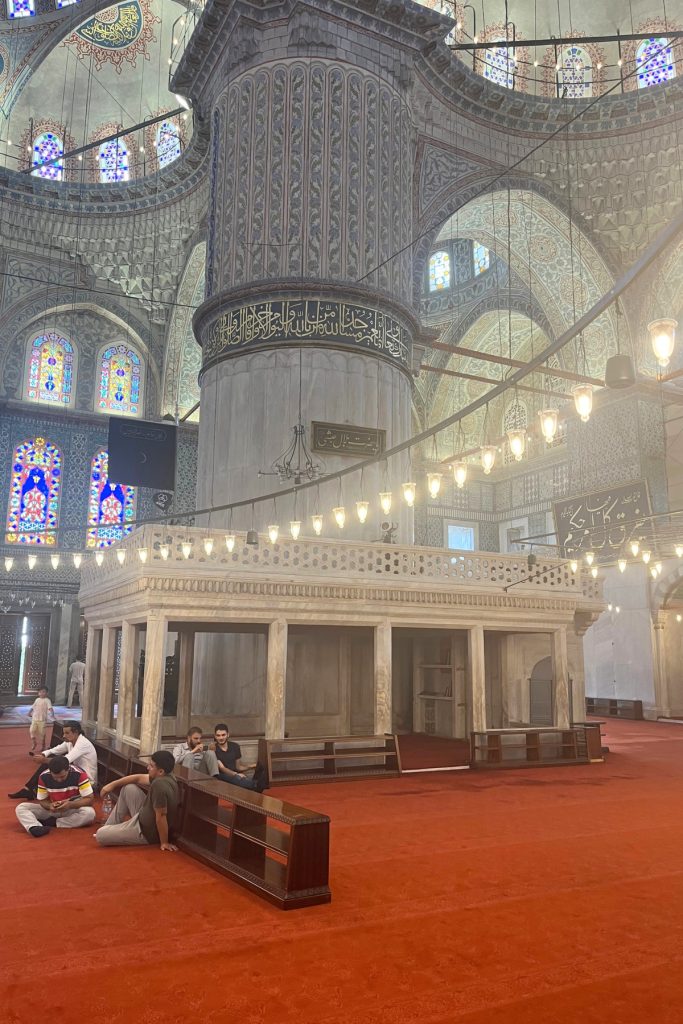
The Low-Hanging Chandeliers
He also mentioned that the chandeliers hang unusually low. One common explanation is soot control, keeping candle smoke from staining the domes and walls above. I cannot confirm that is the historical reason and not just a good story. But looking straight up at that ceiling, unmarked after centuries, it is hard to argue with the results.
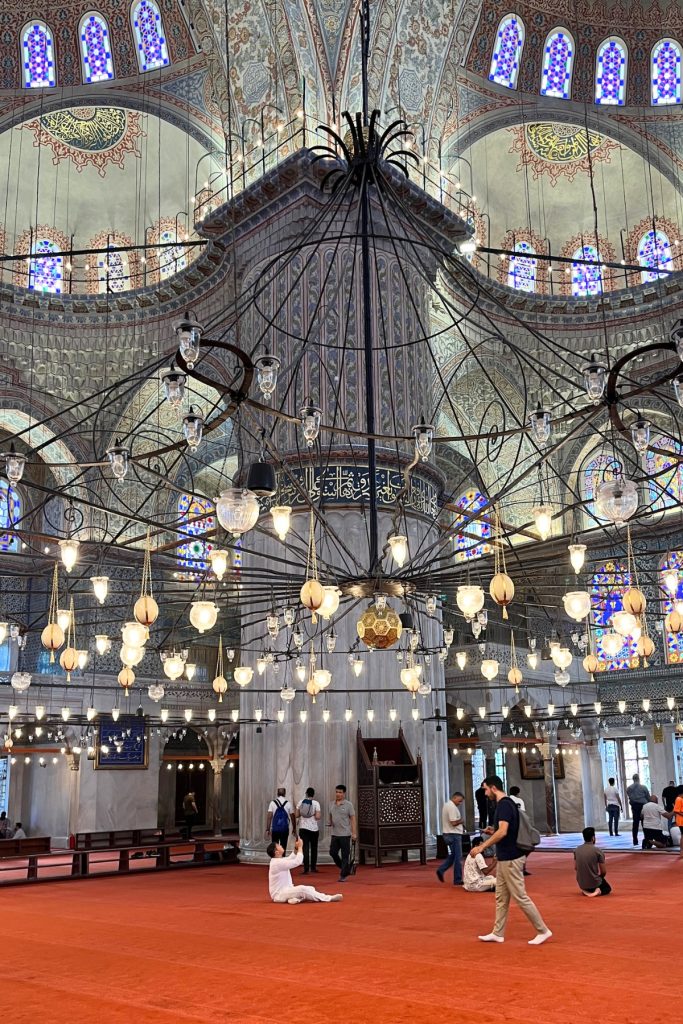
The Hippodrome: A Chariot Track With Nothing Left But Souvenirs
After the Blue Mosque, we headed to the Hippodrome. Sultanahmet Square used to be the Hippodrome of Constantinople, a Roman chariot racing stadium that once held an estimated 100,000 people. Today it is an open plaza between the Blue Mosque and Hagia Sophia. Nothing about it looks like it used to host chariot races, except for three objects still standing roughly where the emperors left them.
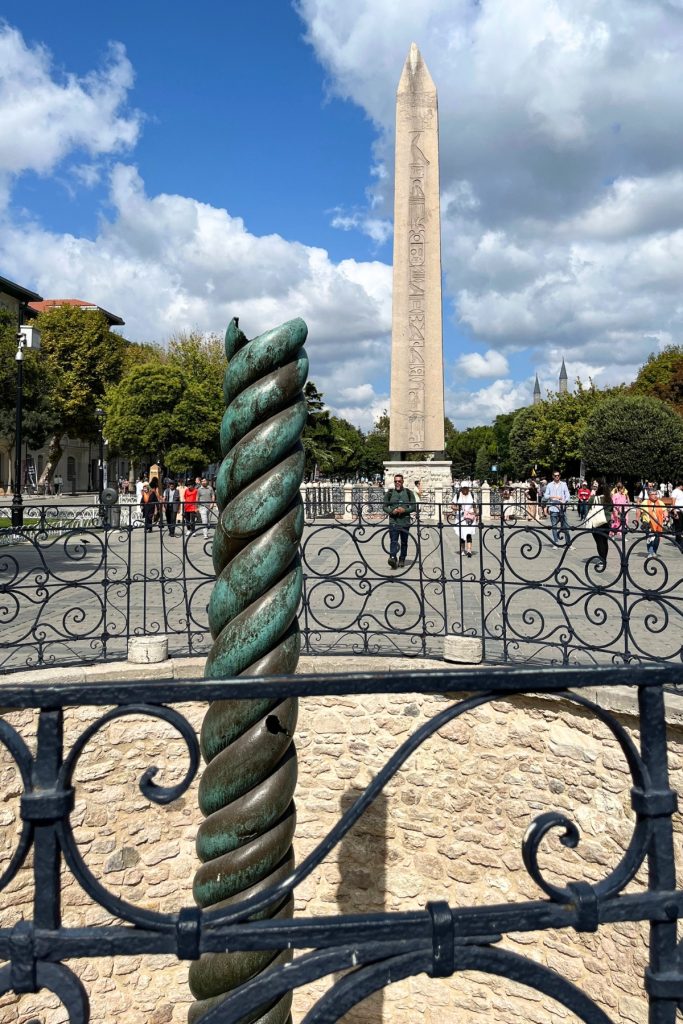
An Obelisk With Its Ending Cut Off
The first is an Egyptian obelisk. Pharaoh Thutmose III commissioned it around 1450 BC for the Temple of Karnak. Atakan called it, bluntly, stolen. Emperor Theodosius I had it hauled to Constantinople in 390 AD. What stands here today is missing about a third of its original height. Somewhere in the process of moving a thirty-meter stone needle by boat, that missing third disappeared.
You can see the seam yourself: a visible gap where the obelisk meets its base, evidence that what arrived was shorter than what left Egypt. “The hieroglyphics here tell a story of great victory,” Atakan said, “but the end of the story got cut off.” Whether that gap is from damage in transit or a deliberate trim to fit the ship, the effect is the same. An ancient victory speech is missing its final paragraph.
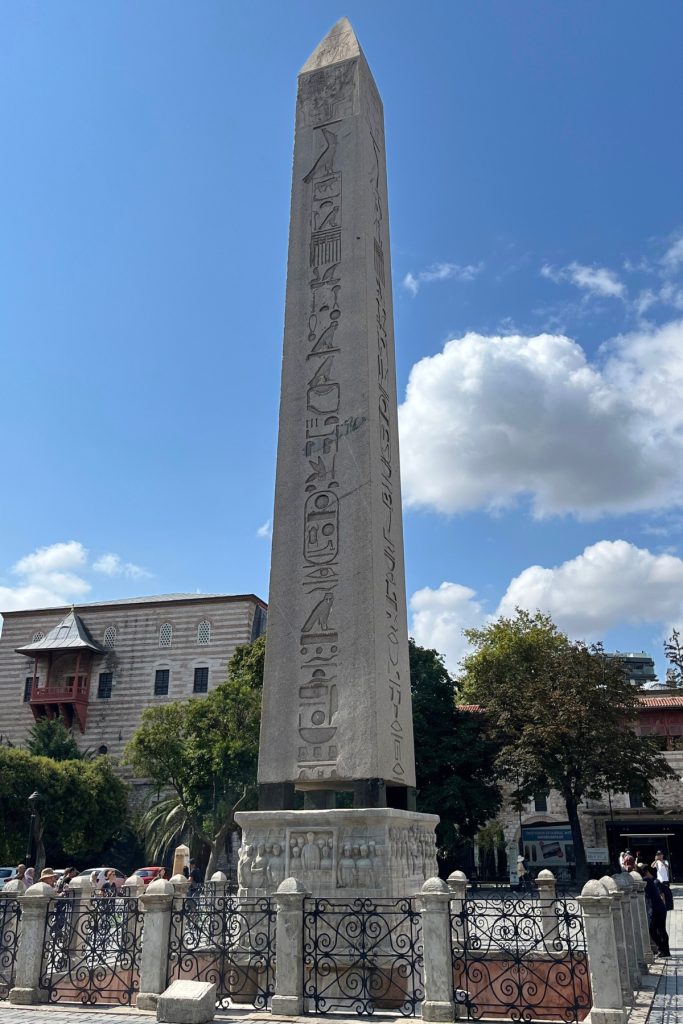
The marble pedestal underneath tells its own story better than the obelisk itself does. Carved into it is Theodosius and his court, watching chariot races from the imperial box. The base has outlasted the sport it was built to commemorate.
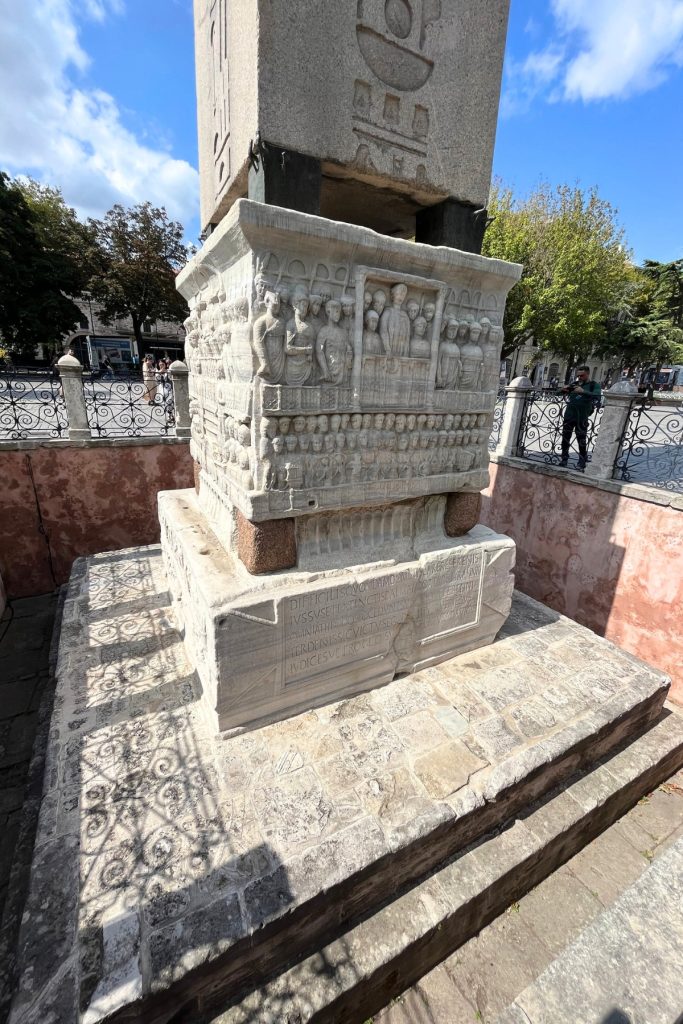
The Serpent Column That Lost Its Heads
Second is a squat bronze column that looks, at first glance, like abandoned plumbing. It is actually the Serpent Column. Greek city-states cast it around 478 BC to commemorate a victory over the Persians, and Constantine later moved it here. It originally had three serpent heads at the top. All three are long gone. That is why the whole thing now reads as an oddly elegant coil of metal rather than the dramatic monument it was designed to be.
A German Kaiser’s Gold-Domed Fountain
Third, and by far the newest of the group, is the German Fountain. Kaiser Wilhelm II gifted this octagonal gazebo to the city in 1901, newer than the other two monuments by about fourteen centuries. Its gold mosaic dome stops people mid-step. It also happens to be the most heavily guarded object in the square. Police patrol the fountain regularly, presumably on the theory that gold ceilings and unattended tourists are not always a great combination.
An Egyptian pharaoh, a Byzantine emperor, ancient Greek city-states, and a German kaiser all left something in the same hundred meters of pavement. Somehow none of it feels out of place standing next to the others.
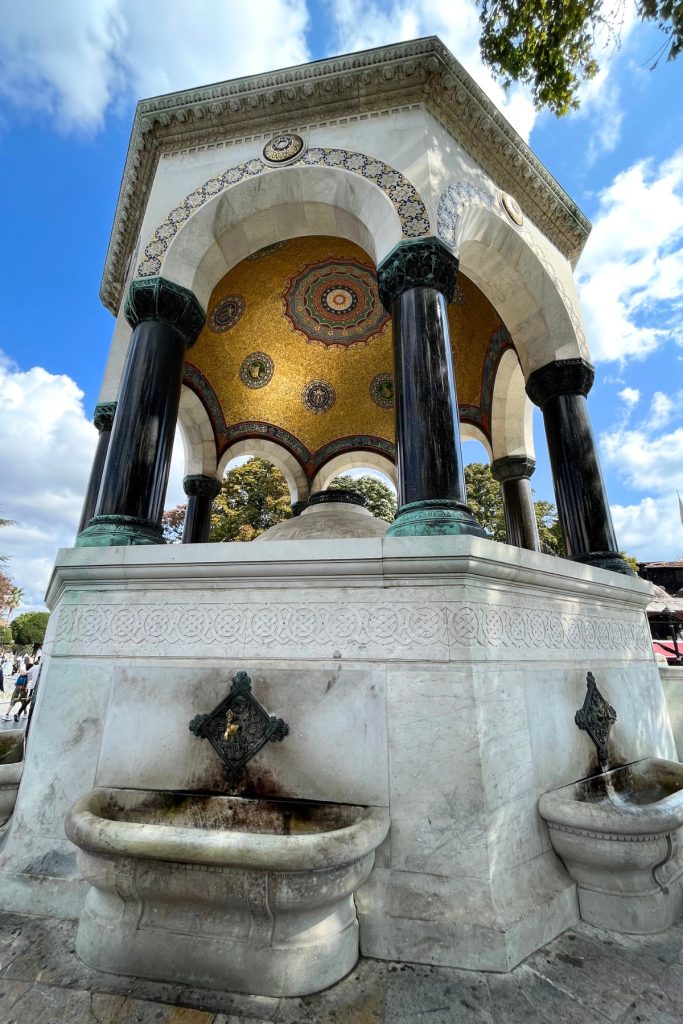
Hagia Sophia: A Building That Changed Religions Twice
Nothing prepares you for walking up to Hagia Sophia after the Blue Mosque. The two buildings sit close enough to photograph in the same frame. Yet Hagia Sophia looks like it was built by people arguing about the plan the entire time. Buttresses jut out at odd angles. Minarets of different heights lean in from different centuries. It does not read as one coherent structure. It reads more like a very old building that kept getting renovated by whoever was in charge at the time. As it turns out, that is exactly what happened.
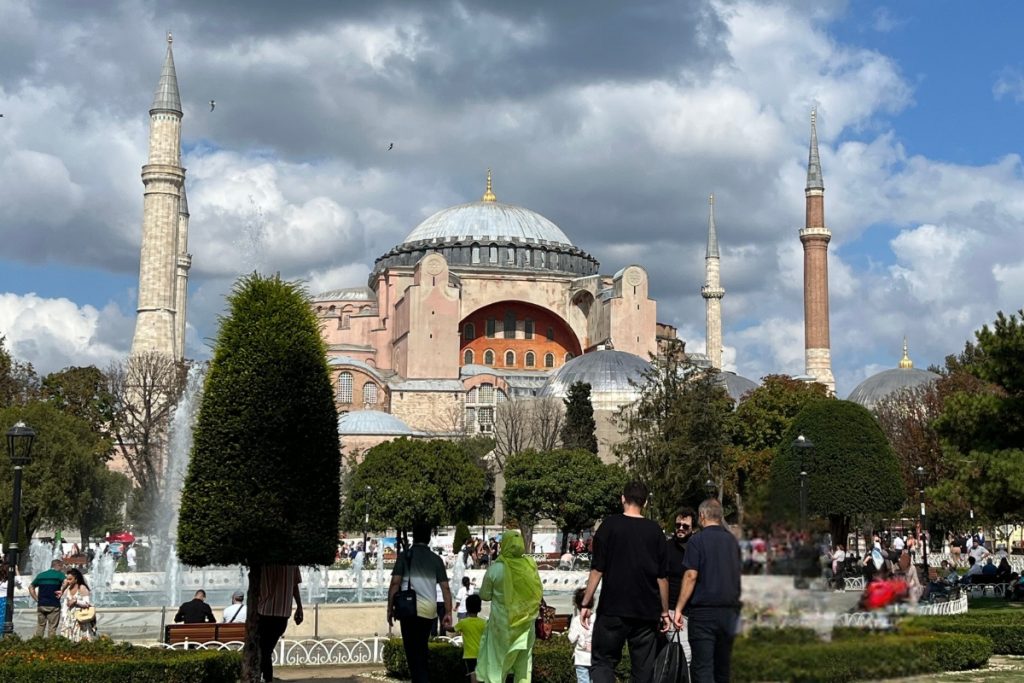
Byzantine builders completed Hagia Sophia in 537 AD as a cathedral. Ottoman conquerors converted it to a mosque in 1453, Turkey’s government turned it into a museum in the twentieth century, and in 2020 it became a working mosque again. For nearly fifteen hundred years, whoever controlled the city kept renegotiating what this building was for. Atakan did not just point out the architecture. He pointed out the evidence.
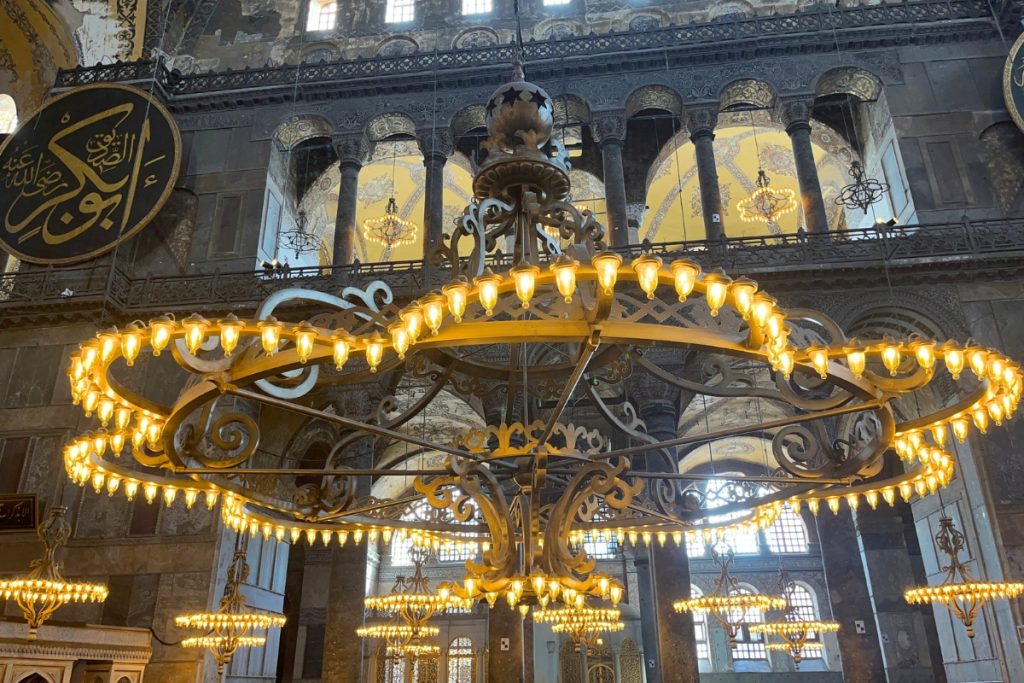
The Cross That Became an Arrow
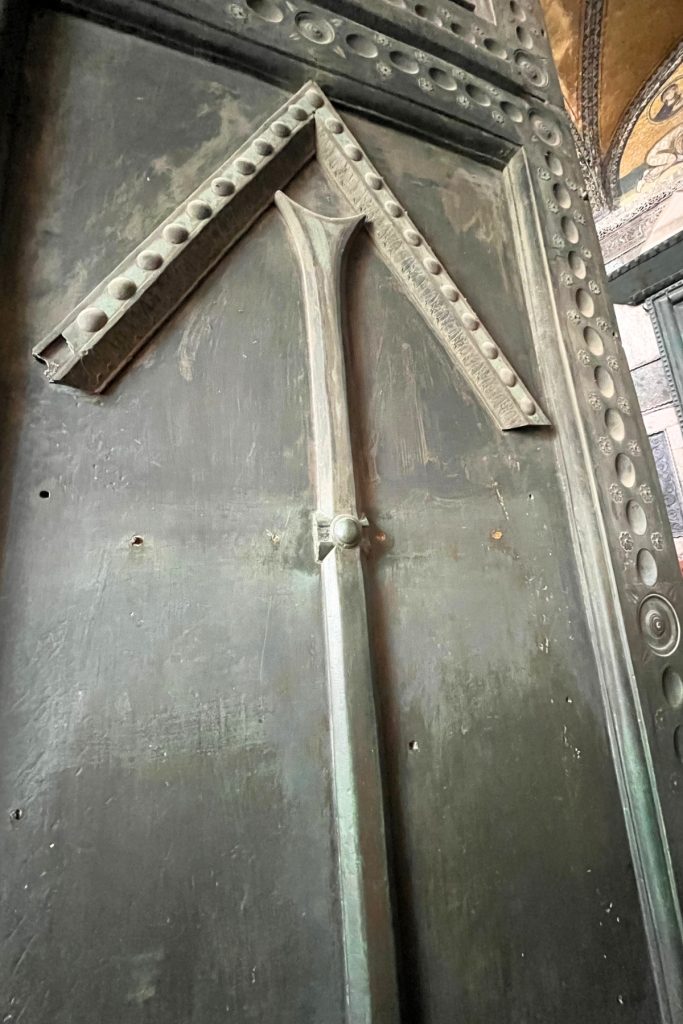
At one doorway, he showed me a detail I would have walked straight past. What is now a decorative arrow shape at the top of a bronze door used to be a cross. Someone unbolted the crossbars and moved them upward to form the arrow. If you look closely, you can still see the empty nail holes where the horizontal bar used to sit lower down. Nobody removed the cross. They just rearranged it into something else.
A Prayer Niche Pointed Slightly Off
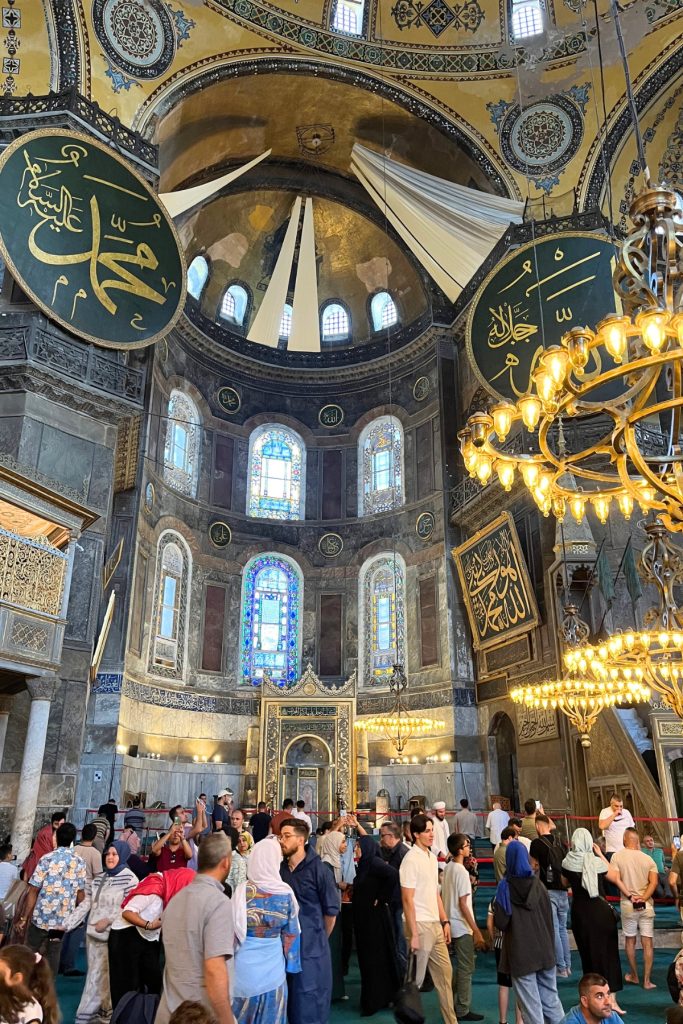
Inside, the layering gets even stranger. The mihrab, the niche marking the direction of Mecca, sits slightly off center in the apse. That is not a construction error. The church’s original builders set the whole building on a north-south, east-west axis, and Mecca simply does not line up with it. Later builders installed the mihrab at the correct prayer angle anyway, whatever angle the building itself already faced. The result is a room where the walls point one way and the prayer niche points slightly another. It is a small but permanent disagreement between two buildings occupying the same physical space.
The Mosaic You Almost Miss
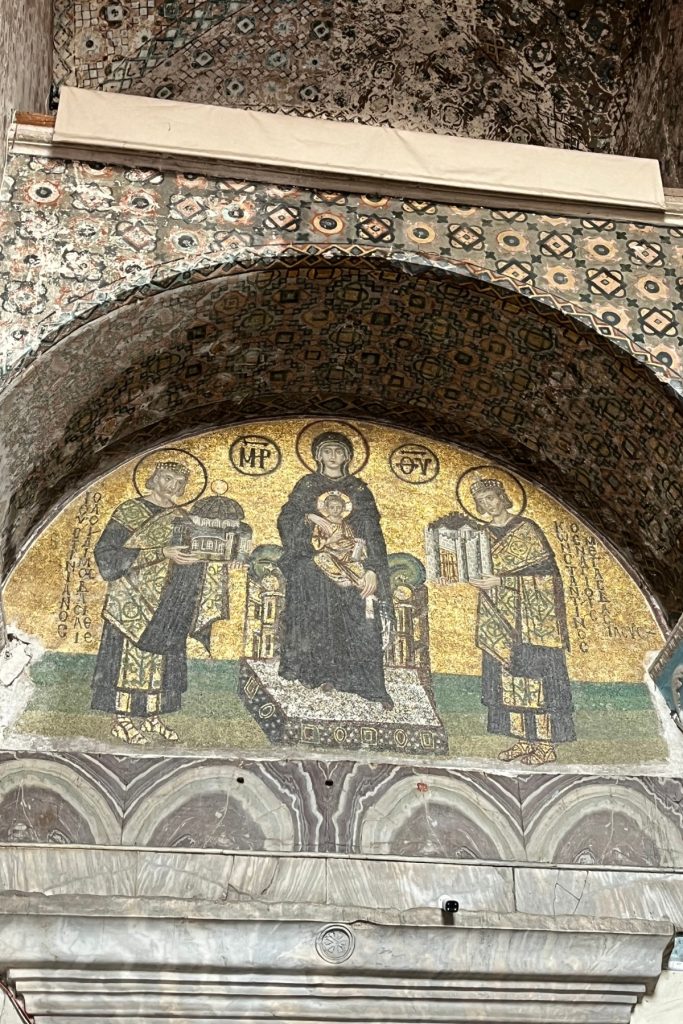
Above one of the exit doors is a Byzantine mosaic of the Virgin Mary and Christ Child. It is easy to miss, since you are, by definition, on your way out when you pass beneath it. The mosaic shows Emperor Constantine offering a model of the city and Emperor Justinian offering a model of Hagia Sophia itself.
Because visitors walk under it rather than into it, the building’s caretakers installed a mirror in the doorway ahead. It is angled so you catch the mosaic in reflection as you leave instead of missing it entirely. I could not find out how old that mirror is. It may be a recent addition, or a decades-old fix for the same problem every visitor has had since the museum days. Either way, it works. I saw it on the way out, not the way in.
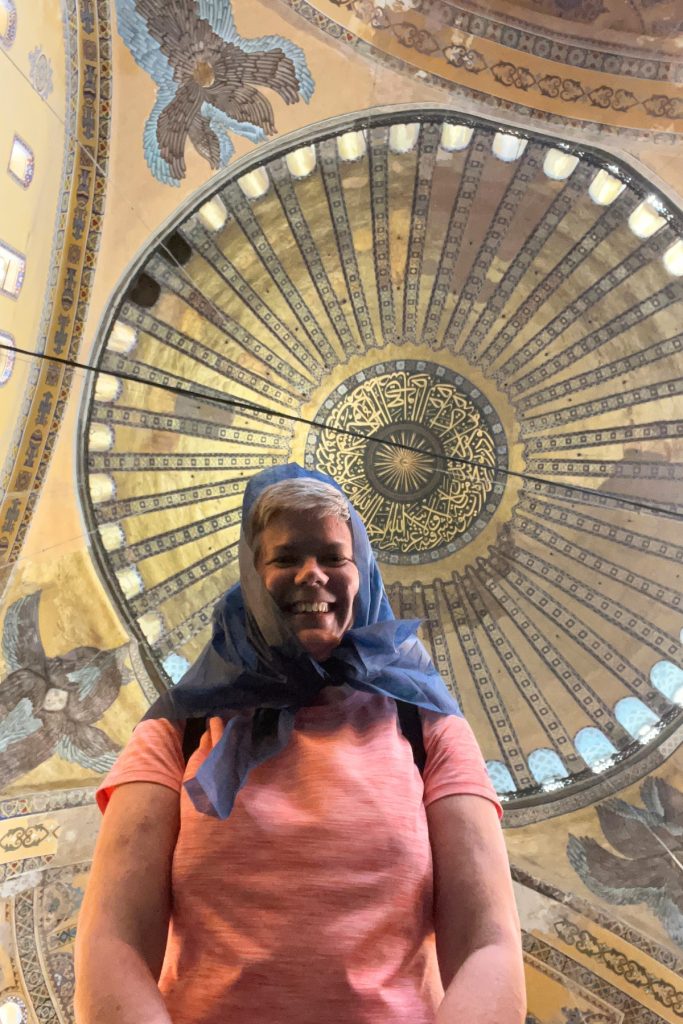
Failing to Photograph a Dome
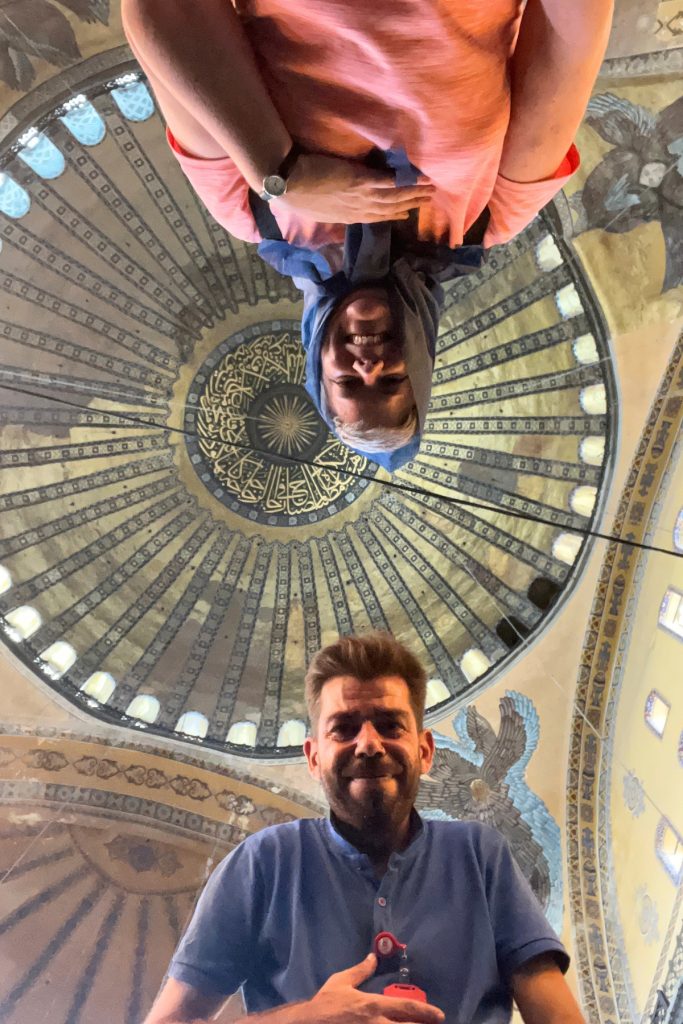
Atakan and I spent an unreasonable amount of time trying to get selfies with the central dome using my phone’s timer. Both of us crouched over my phone on the floor while strangers walked around us. We did not get a great picture. We got several genuinely funny pictures of two people failing to get a good picture of the dome, which, on reflection, is a more accurate souvenir of the visit anyway.
The Basilica Cistern: Rome’s Leftover Columns, Repurposed Underground
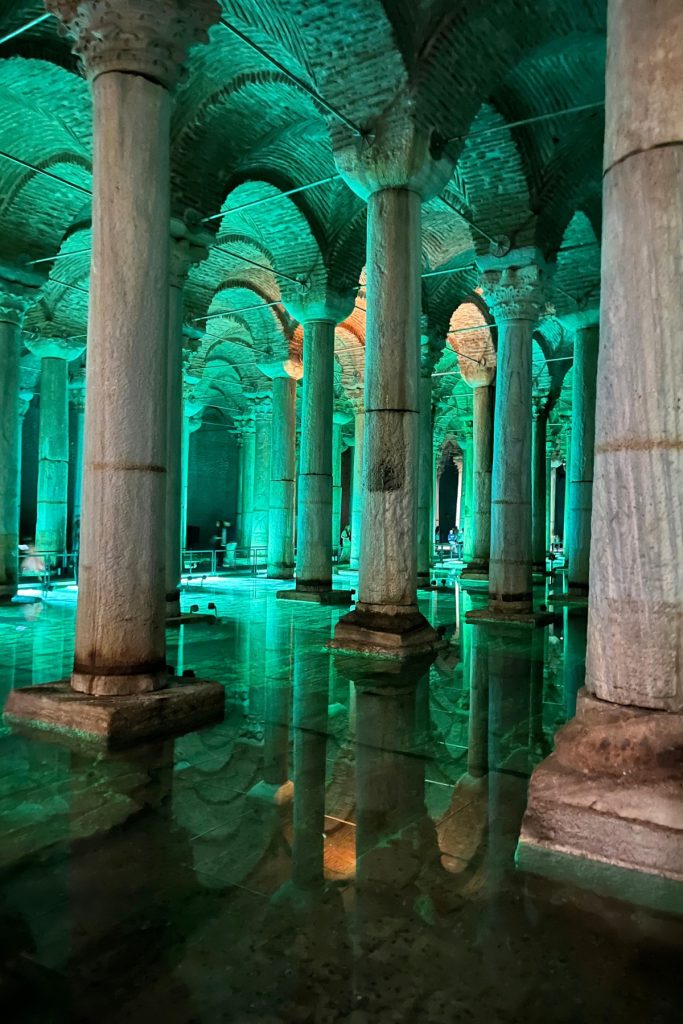
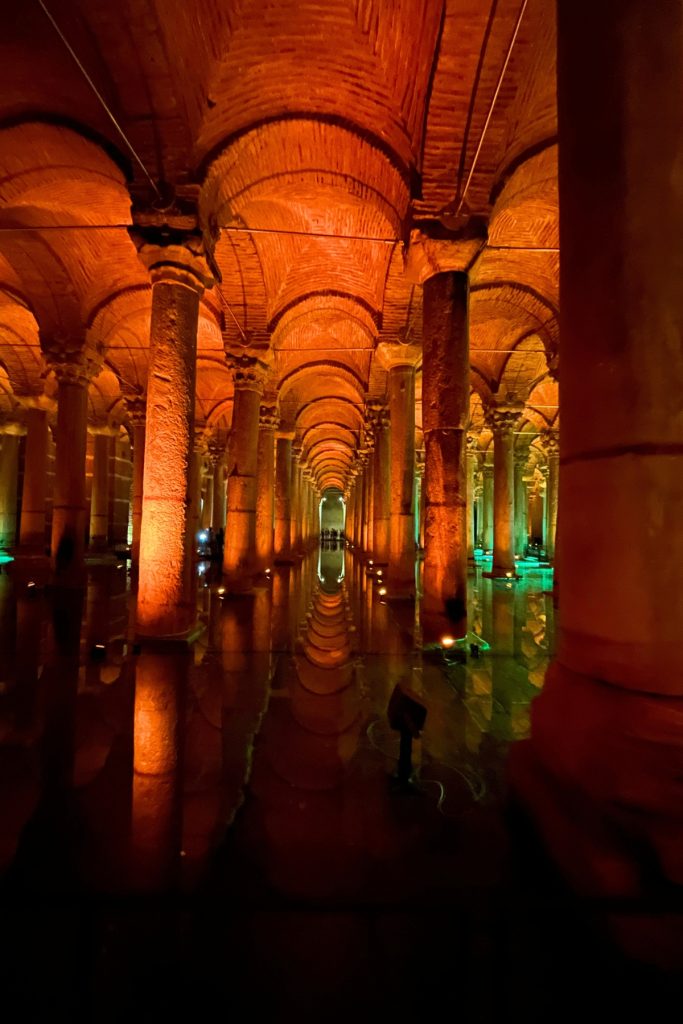
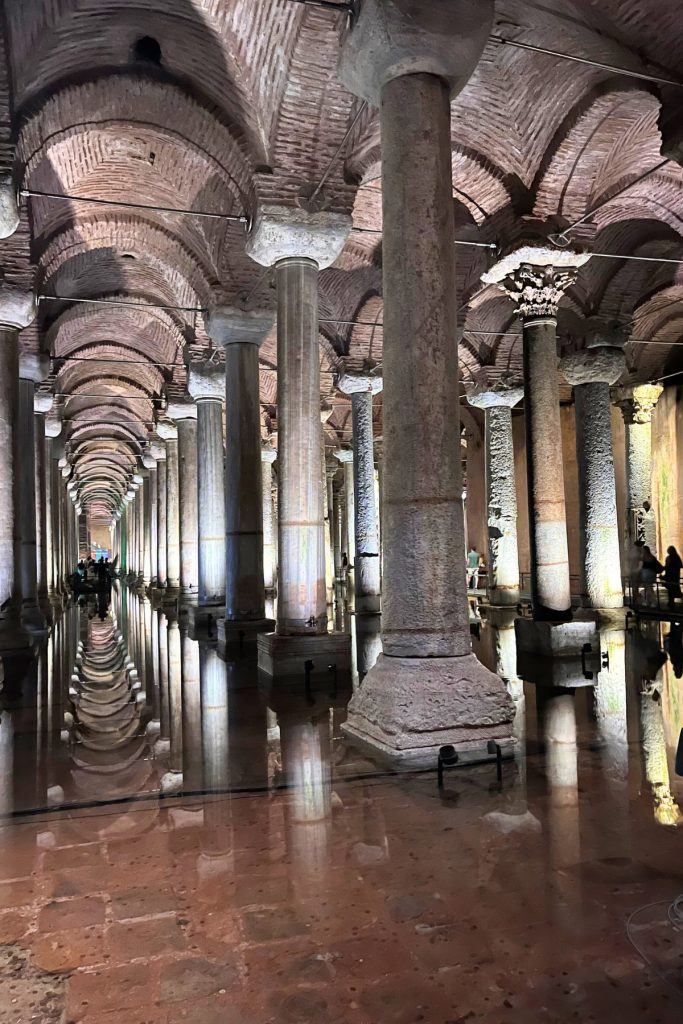
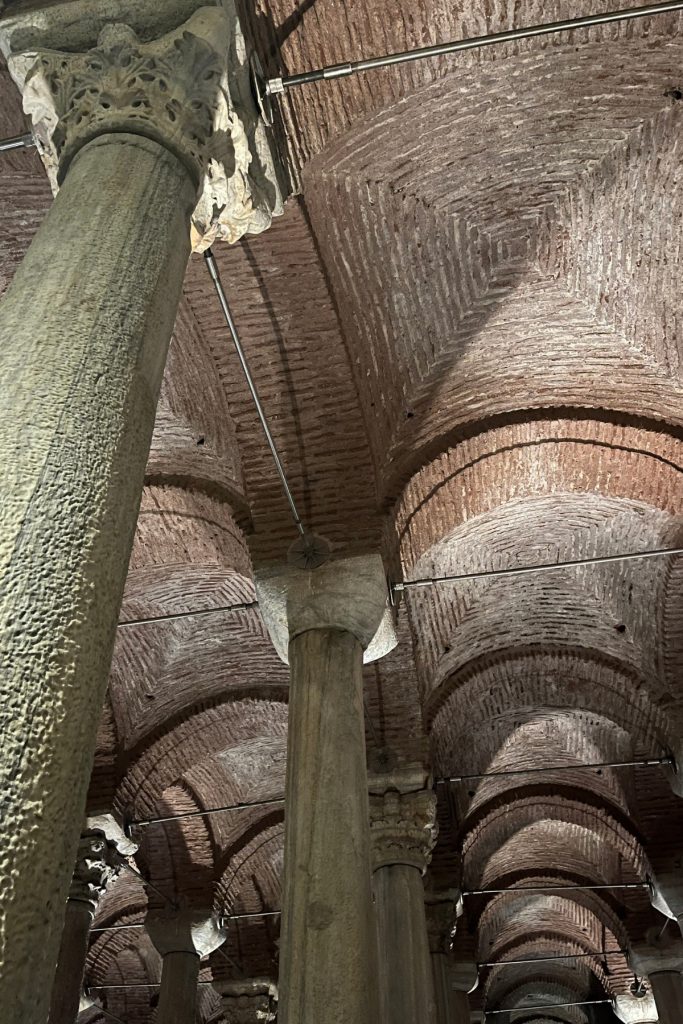
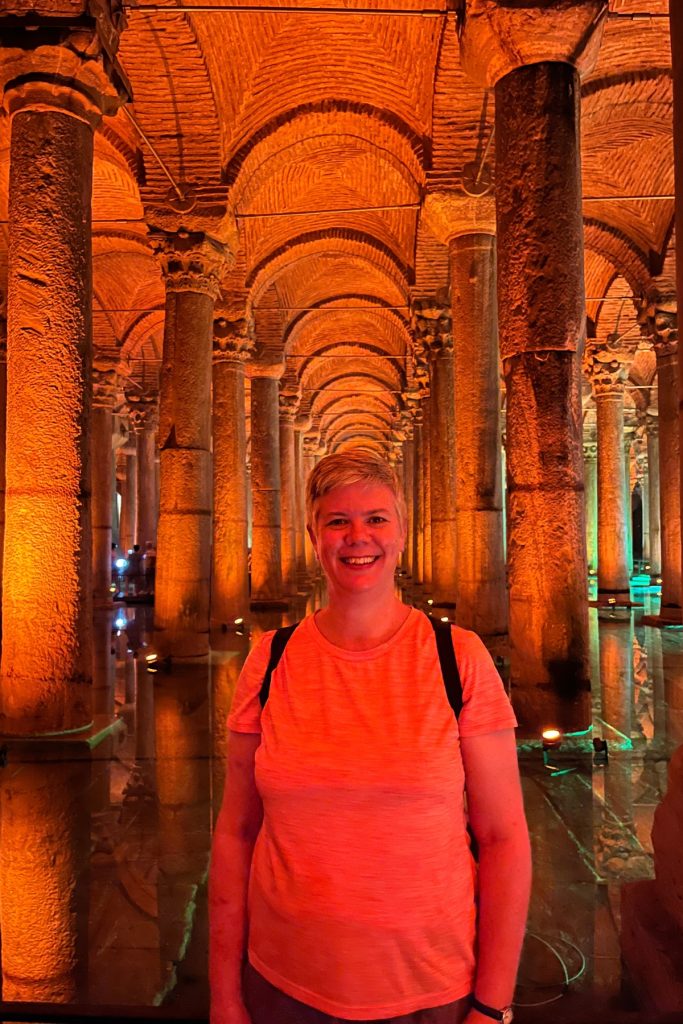
After two mosques and a plaza full of monuments, the Basilica Cistern is the first stop of the day that is not, technically, a building. It is a hole in the ground, roughly the size of a cathedral, holding over three hundred columns and a few feet of water. Built in the sixth century under Emperor Justinian I, it once stored the city’s entire water supply. None of that explains why it looks nothing like a water tank has any right to look.
Rediscovered By Accident, Centuries Later
The columns themselves are the giveaway that this was never meant to be beautiful. They do not match. Some are plain, some are carved, and some look like they were pulled from three different buildings. Whoever installed them assumed nobody would ever come down here to notice. Nobody did, for centuries.
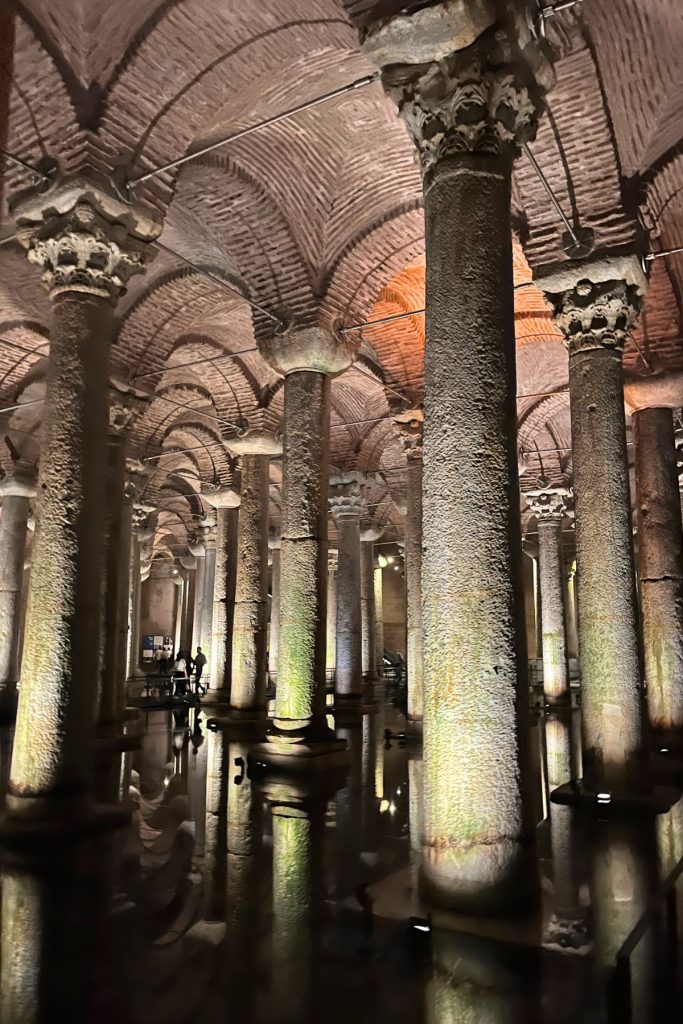
City authorities forgot about the cistern sometime before the Ottoman conquest in 1453. It stayed that way until 1545, when a French scholar named Petrus Gyllius started asking questions. He was in Istanbul researching Byzantine ruins when he heard a strange rumor. Local residents, he learned, were catching fish and lowering buckets for water through holes in their own basement floors.
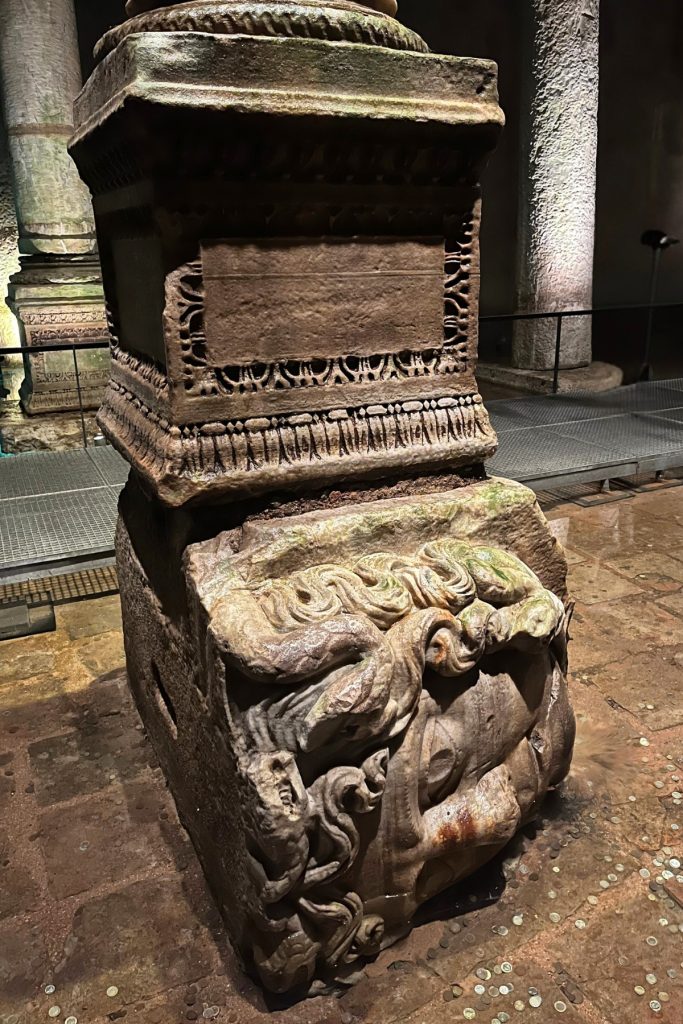
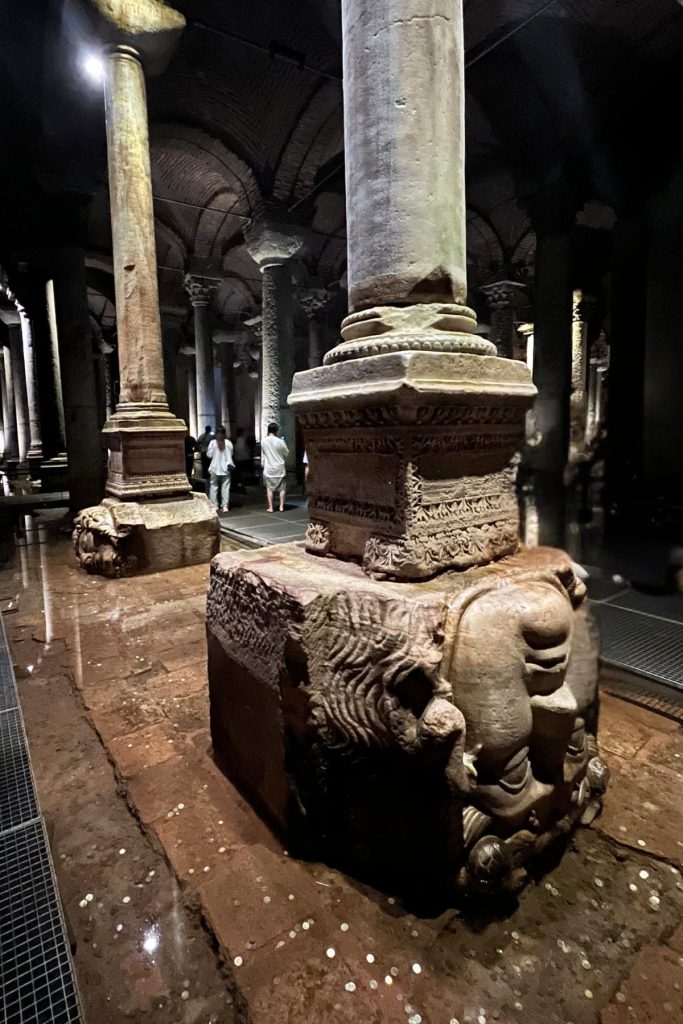
Two Medusas, Sideways and Upside Down
In the northwest corner, two of those recycled columns rest on carved stone Medusa heads. Someone turned one sideways. Someone installed the other completely upside down. Nobody knows why. The going theories range from the practical to the symbolic. One theory says the heads were simply the right size and shape to use as column bases. Another says placing Medusa’s face at an angle robbed her mythical stare of its power to turn onlookers to stone. Atakan told me both versions with equal enthusiasm. I appreciated that, since a definitive answer would have been less fun than getting to pick which explanation I liked better.
Four Stops, One Pattern
Standing in the amber light with columns reflected in still water, it occurred to me that this was the fourth stop of the day. Each one, at least in part, was built out of something older. An obelisk carved for a pharaoh. A bronze column cast for the Greeks. A cathedral reoriented for Mecca. And now a Roman water tank, held up by stone faces that used to guard the entrances of buildings nobody can identify anymore. Istanbul does not really erase its past. It just keeps finding new uses for it.
Embarkation Day: Rooftops, Sunset, and One Last Turkish Breakfast
My second day in Istanbul had exactly one item on the agenda: get to the ship. Everything else was a bonus.
One Last Gözleme
I left my hotel in Sultanahmet that morning, but not before one last stop at breakfast. Hotel Amira serves gözleme, a savory Turkish flatbread, made to order at breakfast and complimentary for guests. A woman sat at a small griddle in the corner of the breakfast room, rolling out dough and cooking it fresh while you waited. There was no assembly line and no heat lamp, just someone making one at a time as guests asked for them.
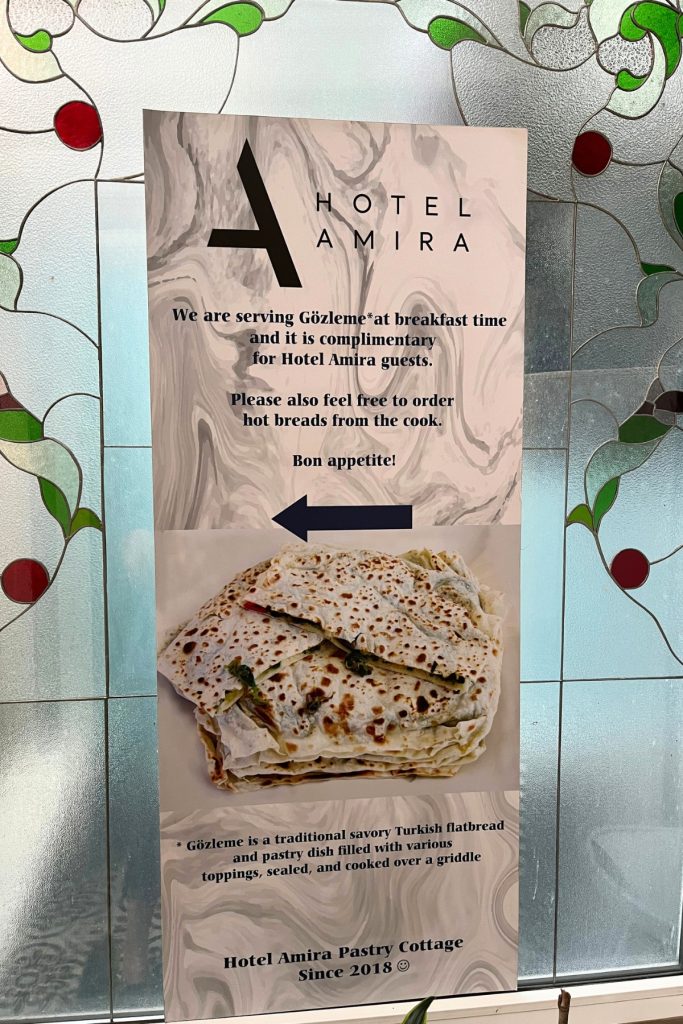
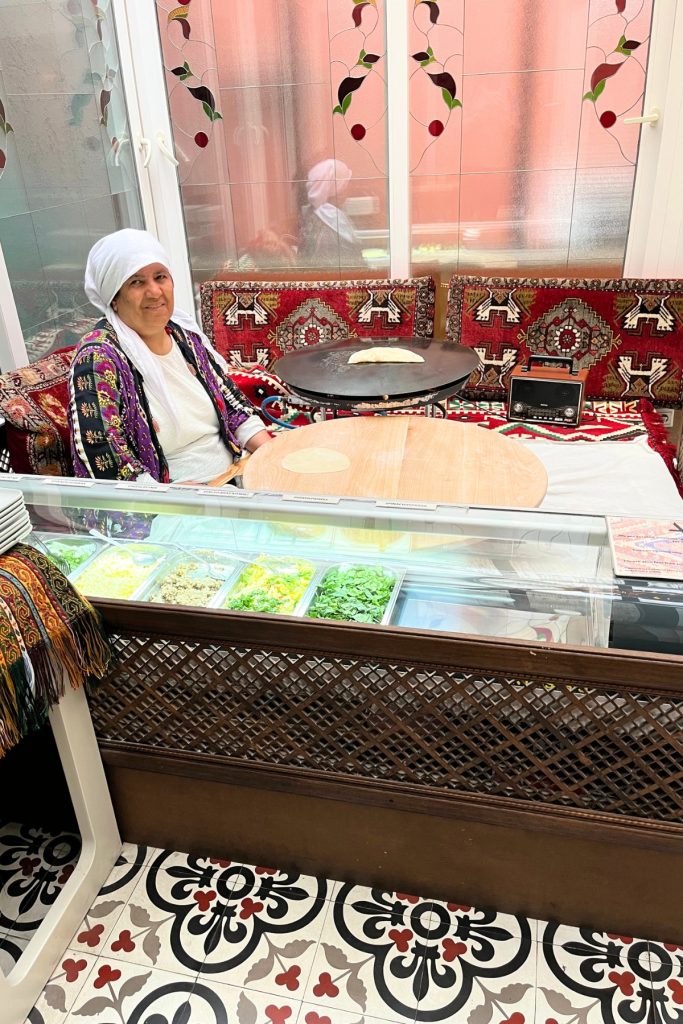
I chose feta cheese and spinach and carried it back to the main dining room. I sat down to a full breakfast spread of fruit, pastries, and the best gözleme I did not know I needed until it was in front of me.
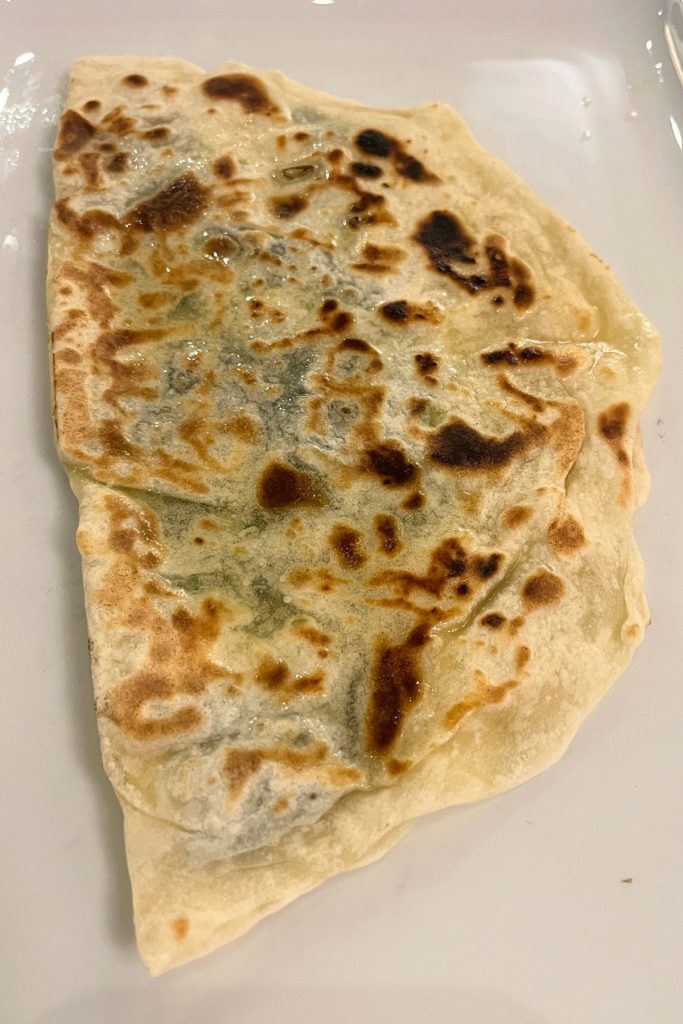
From Sultanahmet to Galataport
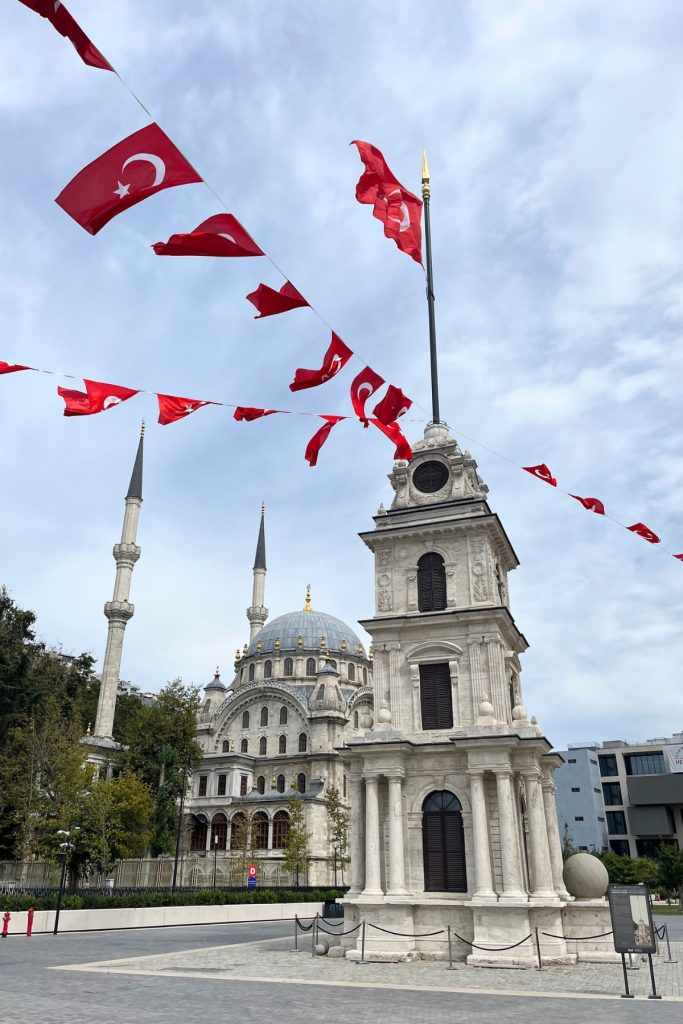
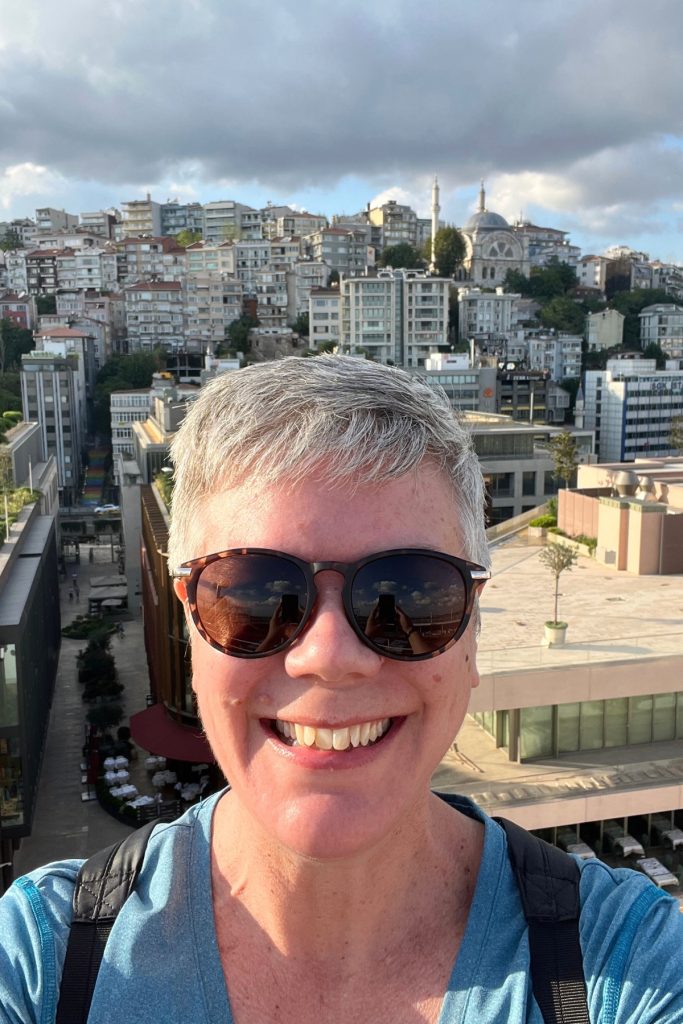
From there, it was on to Galataport, Istanbul’s cruise terminal in the Karaköy neighborhood. It was a short taxi ride away and still solidly on the European side, despite feeling like a different city entirely from Sultanahmet. I went straight to the ship rather than exploring Galataport itself. Once onboard, I headed up to one of the top decks for a last look at the city from above. Hills of apartment buildings stacked up behind a rooftop shopping complex, with the Bosphorus somewhere just out of frame.
Boarding the Crystal Symphony
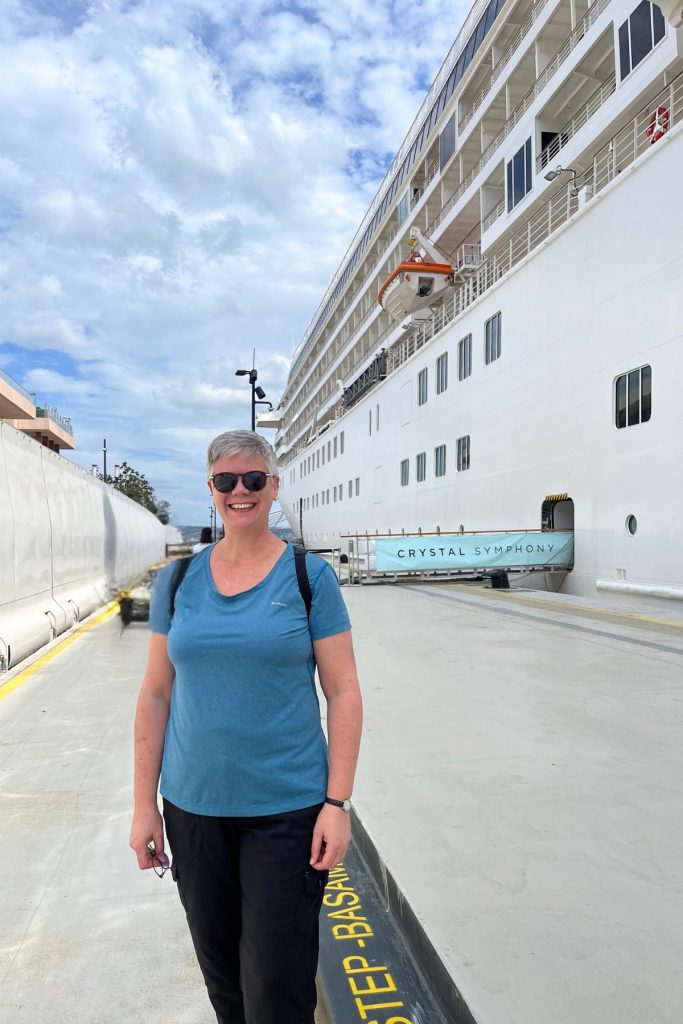
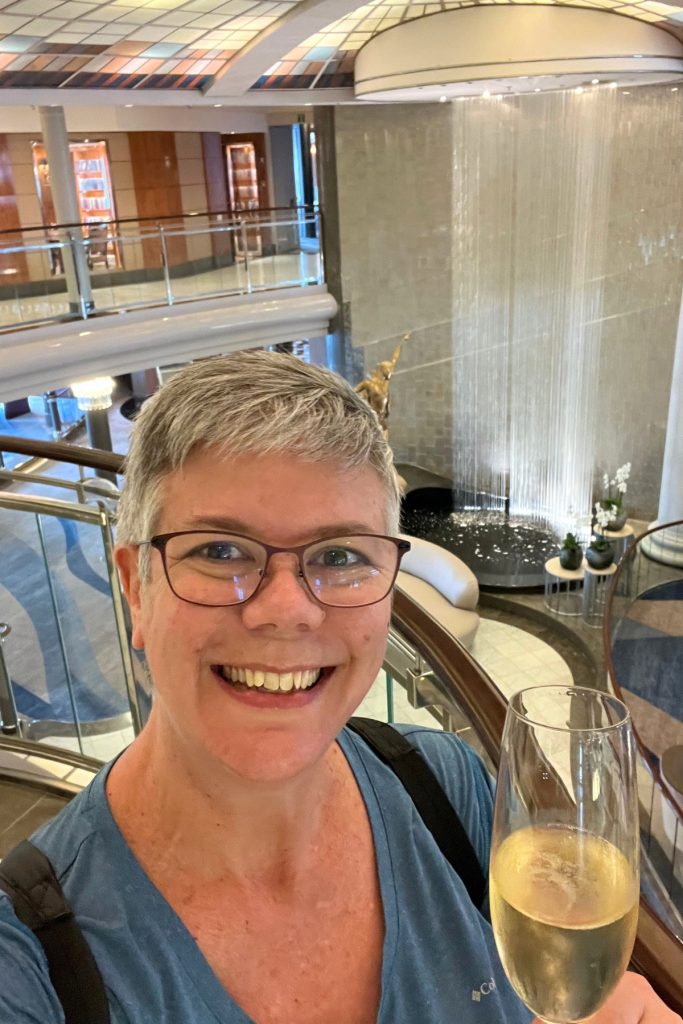
Boarding a ship always resets the pace of a trip, and this one was no exception. One minute I was standing at street level next to a gangway reading “Crystal Symphony” in banner letters. The next, I was toasting the start of a cruise with a glass of champagne in an atrium two decks tall.
A Delayed Sailaway, Watched From Waterside
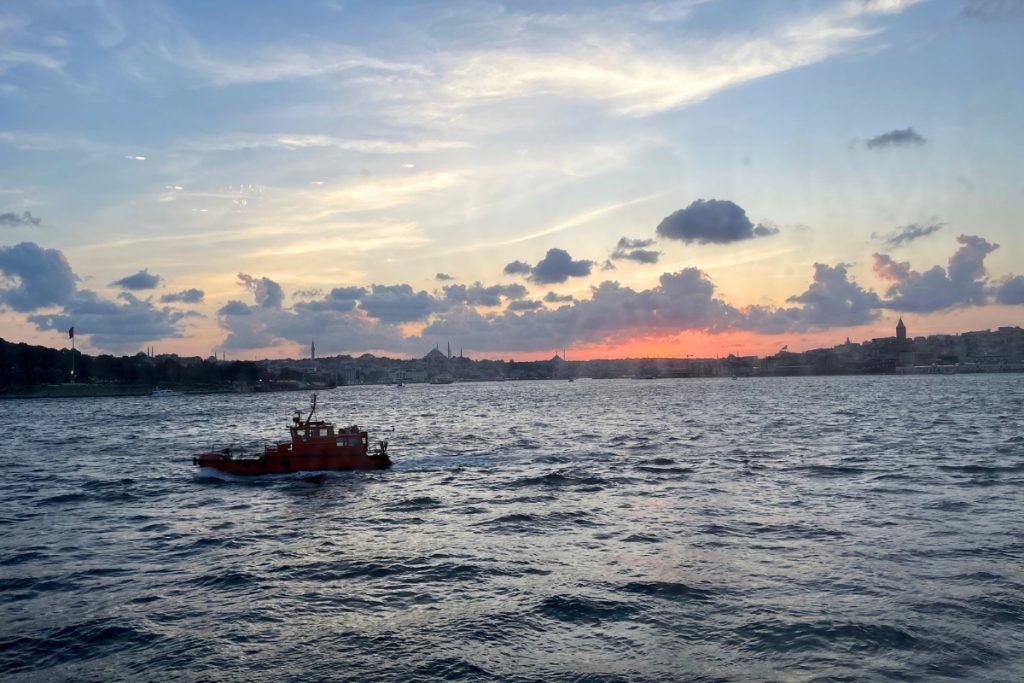
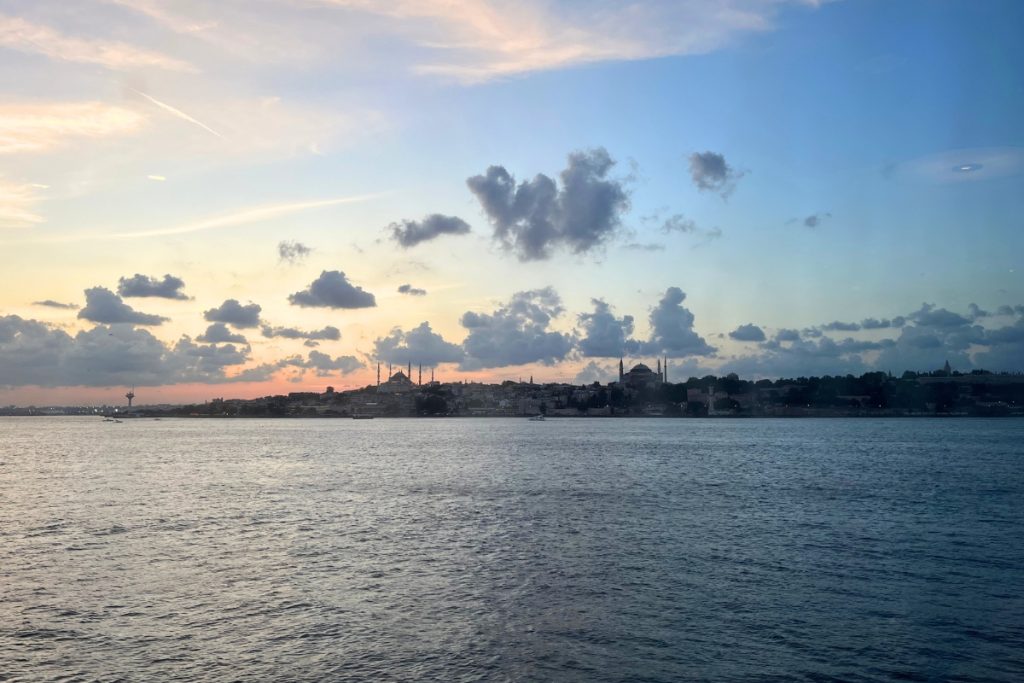
Our sailaway ran late that evening, for reasons nobody explained to me. My plan to watch Istanbul disappear from the top deck turned into watching it linger for another hour instead. Eventually hunger won, and I headed down to Waterside, the ship’s main dining room, for dinner. That is where I actually watched the skyline go orange, then pink, then dark, from a window table. The ship finally pulled away from a city that gave me exactly what two days could hold, and left me wanting the rest of it anyway.
Worth the Time if You Have It
A few things I did not get to, purely because the clock ran out, not because they are not worth your time:
- Topkapi Palace. The former residence of Ottoman sultans sits a short walk from the Hippodrome, and everyone who has been tells me to budget at least half a day for it alone. It did not fit into mine.
- The Grand Bazaar. One of the oldest covered markets in the world, in continuous operation since 1461, and reportedly a place where you can lose track of both time and your sense of direction within the same ten minutes. I saw the outside of it, briefly, from a taxi window.
- A Bosphorus cruise. Seeing the city’s skyline from the water, rather than sailing away from it on a much larger ship, is apparently a different experience entirely. Something to save for a trip with more than one afternoon to spend.
- Galata Tower. Visible from multiple points across the city, including a few of my rooftop photos, but I never made it to the base of it, let alone up.
If you have more than a single afternoon in Istanbul, and most people booking pre or post cruise time will, put at least one of these on your list. I intend to, next time.
Closing Thoughts
Four stops, one afternoon, and every single one of them was something old wearing a new job. An Egyptian obelisk missing its final chapter. A Greek victory column with its heads knocked off. A cathedral doing double duty as a mosque, its prayer niche pointed at an angle the original architects never intended. A Roman water tank held up by stone faces nobody can name. Istanbul does not tear things down and start over. It just keeps finding a new use for what is already there, and somehow the result feels less like clutter and more like a city that refuses to waste anything, including its own history.
One afternoon was not enough, and I knew that going in. What I did not expect was how much a single guide, a good pair of walking shoes, and zero patience for wasted time could still pack into a few hours. If you find yourself with a short pre-cruise stay in Istanbul and a choice between “see less, slowly” or “see a lot, fast, with someone who knows what they are looking at,” I am now solidly in the second camp. You will not see everything. You will see enough to know exactly what you are coming back for.
Common Questions
You could see all four of these sites without a guide, but the guide is what turned a checklist into a story. I booked mine through ToursByLocals a few months ahead of time. You can likely still book a private tour with less notice, though your options may be more limited the closer you get to your date. If you are working with a limited window, like I was, a private guide also means no waiting around for a tour group to assemble.
No, but it does not hurt to have one anyway. Scarves are provided free at the entrance to the mosques, and I did not think to bring my own. My guide handled it before we got near the door.
Enough to see all four, yes. Enough to linger at any of them, no. All four sites sit within a five to ten minute walk of each other in the Sultanahmet neighborhood, which is the only reason this was possible in one afternoon at all.
As of 2020, it is a working mosque again, after decades as a secular museum. That means prayer times affect visiting hours, similar to the Blue Mosque, so it is worth checking the schedule before you plan around it.
Shoulders and knees covered, for everyone, and a head covering for women. Shoes come off at the door, so wear socks or bring a pair with you.
I did not book ahead since it was part of my guided tour, but if you are visiting independently, advance tickets are worth looking into, especially during peak season, to skip the line at the entrance.
Keep Wandering
Two Days, Three Gaudí Buildings: A Pre-Cruise Barcelona Stay
Six Tips for Successful Solo Travel
Golden Walls, Nightingale Floors, and Cherry Blossoms: The Magic of Kyoto Awaits