Zip It Good: The Ultimate Guide to Packing Smart
Packing can feel like a high-stakes game of suitcase Tetris—will it zip, or will you be sitting on it five minutes before your ride arrives? In this post, we’re ditching the overstuffed bags and last-minute panic in favor of strategy, style, and sanity. Whether you’re jetting off for a weekend getaway or a two-week adventure, this guide will show you how to pack lighter, smarter, and with total confidence—so you can spend less time wrestling your luggage and more time chasing unforgettable experiences.
The real magic of packing smart actually starts long before your suitcase hits the bed. It’s about thinking through your itinerary, checking the forecast (and then checking it again), and being honest about what you’ll realistically wear and do. A little pre-trip strategy—mapping out key activities, building a flexible plan, and setting clear limits for yourself—can save you from overpacking and overwhelm. When you approach packing as a thoughtful process instead of a last-minute scramble, you’ll find that zipping it up becomes the easiest part of the journey.
The Ultimate Guide to Packing Smart
After many trips, large and small, I have finally mastered the art of smart packing. I was a chronic over-packer in my early travel years. My suitcase was often the biggest one I could buy, and that baby was chock full of anything and everything…just in case! But along the way (and several mishaps with delayed luggage!), I have slowly but surely embraced the carry-on-only culture. Read on to learn some of the key steps I take before each trip to ensure I am packing smart.
Planning: Weather and Itinerary
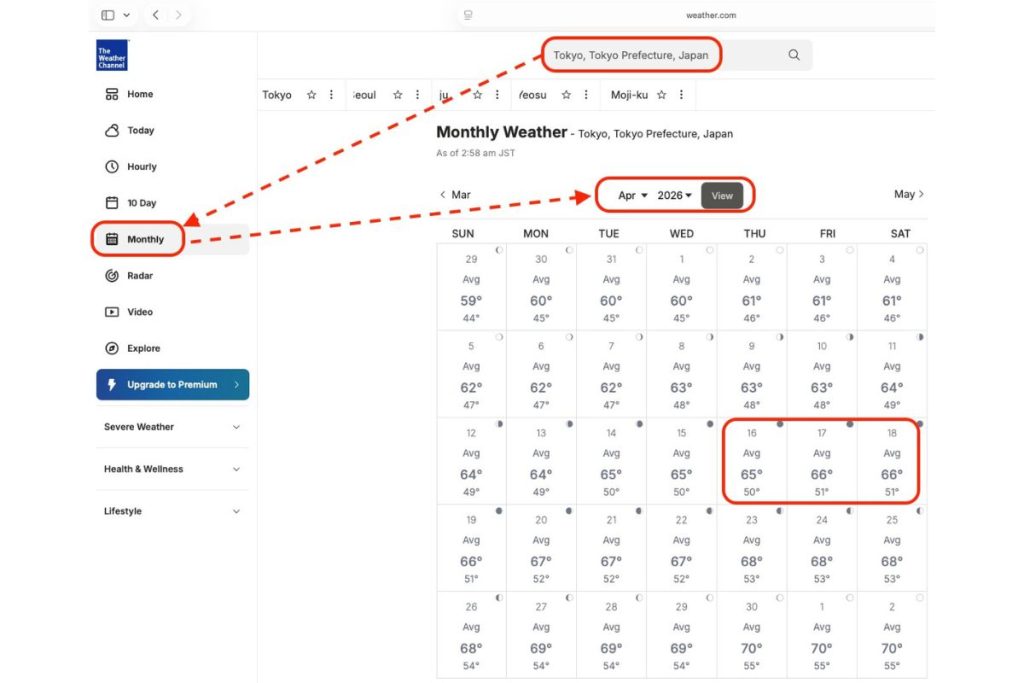
Checking the weather is the first step I take when planning what to pack for any trip. I like to use The Weather Channel (weather.com), but any weather site will work. Find each city you will visit to see what the average high and low temperatures are for the time you will be visiting. If you are visiting more than one city, take the same steps for each city.
- Search for the city you are traveling to
- Select the ‘Monthly’ view
- Change the month and/or year to match your travel dates
- Find the day(s) you will be there to see the average high and low temperatures
After checking the average temperatures, I review my itinerary to see what sorts of activities or special events I need to prepare for. Look for things like active excursions (hiking, jogging, zip lining, etc), beach visits, theme nights, or formal nights that may require some specific clothing or accessories to pack.
- Understanding the weather forecast helps determine the type of clothing you will need – short sleeves and shorts for hot weather, or long sleeves and layers for cold weather. Consider whether any accessories may be needed as well, such as hats, gloves, scarves, or rain ponchos.
- Your itinerary will help guide your packing list – active excursions like hiking or zip lining may require sturdy, closed-toed shoes, whereas beach days will require a swimsuit and coverup.
- Cruises may require a specific color for a theme night (although these are typically optional), or formal attire for a formal evening event.
Planning: How Much to Bring
The hardest part of smart packing is determining how much to bring…and what to leave behind! For a week’s worth of clothing, I follow these guidelines: 1 shirt for every 1-2 days, 1 pair of pants (or shorts, capris, skirts, etc) for every 2-3 days, and 1 evening outfit (shirt and pants, or dress) for every 2-3 evenings.
Everything I pack will be worn or used at least twice (this may have some exceptions, such as a formal dress). My clothes coordinate, so pieces can be mixed and matched to create some different looks. Accessories are also an easy way to make outfits look different – a scarf, a statement necklace, or a hat can change the look easily, without bulking up your suitcase
Moisture-wicking clothing is wonderful when traveling for a couple of different reasons: it is lightweight and easy to pack (very few, if any, wrinkles!), and it tends to go longer between washing. I also bring a small bottle of wrinkle release spray with me on every trip. It works great to help remove any wrinkles that appear. But, it also helps to freshen up clothes between loads of laundry.
A Real-World Example
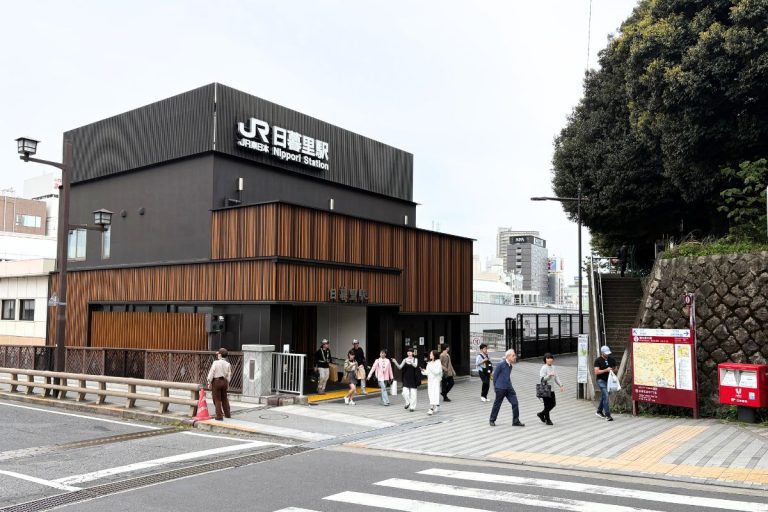
As an example, I am taking a 13-day cruise from Tokyo to Seoul in April. The average high temperature for each stop on the cruise ranges between 65-71 degrees (F). I have a couple of active excursions booked, and there are two special nights on the cruise (a White Night party and a Formal Night). For this trip, I am packing the following:
- Daytime wear:
- 7 shirts (a mix of short sleeves and long sleeves)
- 3 sweaters / sweatshirts
- 4 pairs of pants (3 full-length pants, 1 pair of capri pants)
- Evening wear:
- 2 blouses
- 1 pair of pants
- 4 dresses (including one each for White Night and one for a Formal Night)
- Shoes:
- 1 pair of lightweight hiking shoes (will be worn on the flights)
- 1 pair of black flats (can be worn on sea days on the ship and in the evenings)
- 1 pair of dressy sandals
- Undergarments:
- 8 pairs of socks
- 8 pairs of underwear
- 4 bras
Preparation: Using a Collection Zone
I love having a separate space I can use as my “collection zone” when preparing for a trip. This is a separate area where I can start putting things I know I will need for the trip (and that I am not actively using). As I get closer to the trip, my collection zone becomes more full as I keep adding things along the way. It is a fantastic way to get everything you need in one spot!
Fortunately, I have a large closet in my home office / TV room that is not regularly used, so this is a perfect place for this. However, if you don’t have any extra closet space available, try finding a corner where you can start stashing things you’ll need for the trip. Where you set up your collection zone is not as important as having one to begin with.
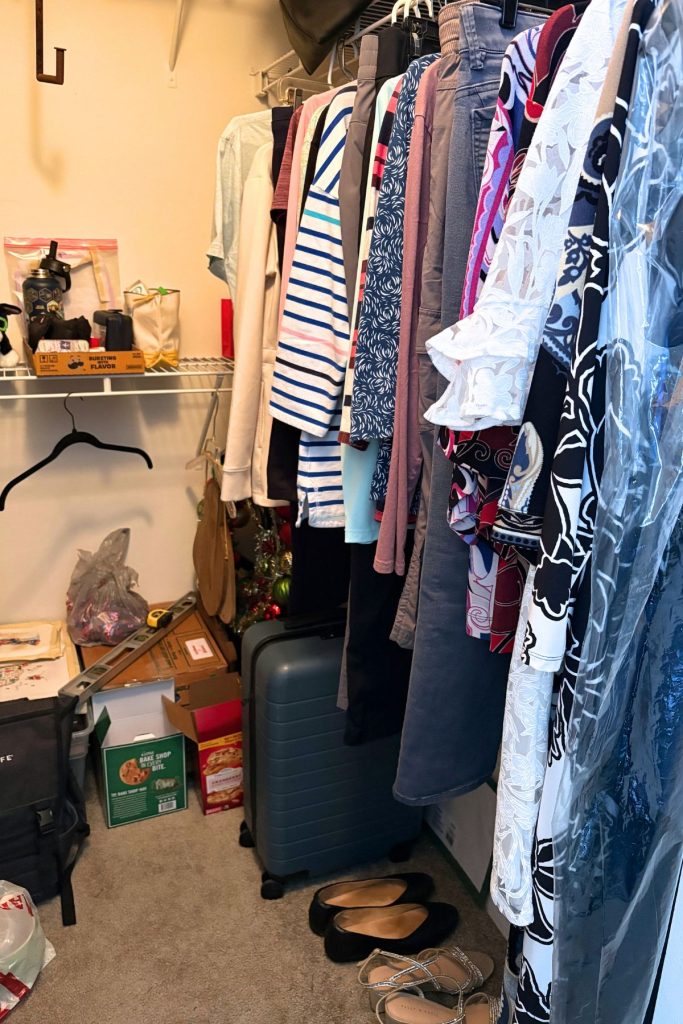
- Find and use a “collection zone” to start gathering things you will need for your next trip
- Keep travel-specific items such as packing cubes, travel-sized toiletries, and suitcases or bags here full time
- Add trip-specific things like clothes, shoes, and accessories along the way
Packing: Using Packing Cubes
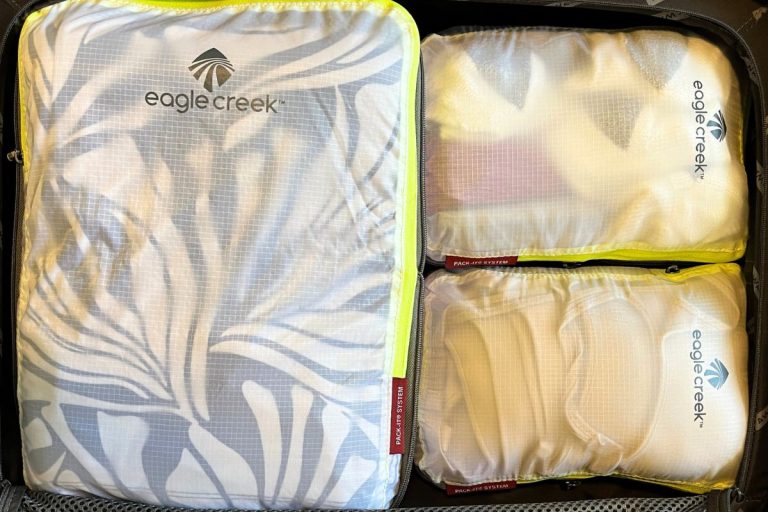
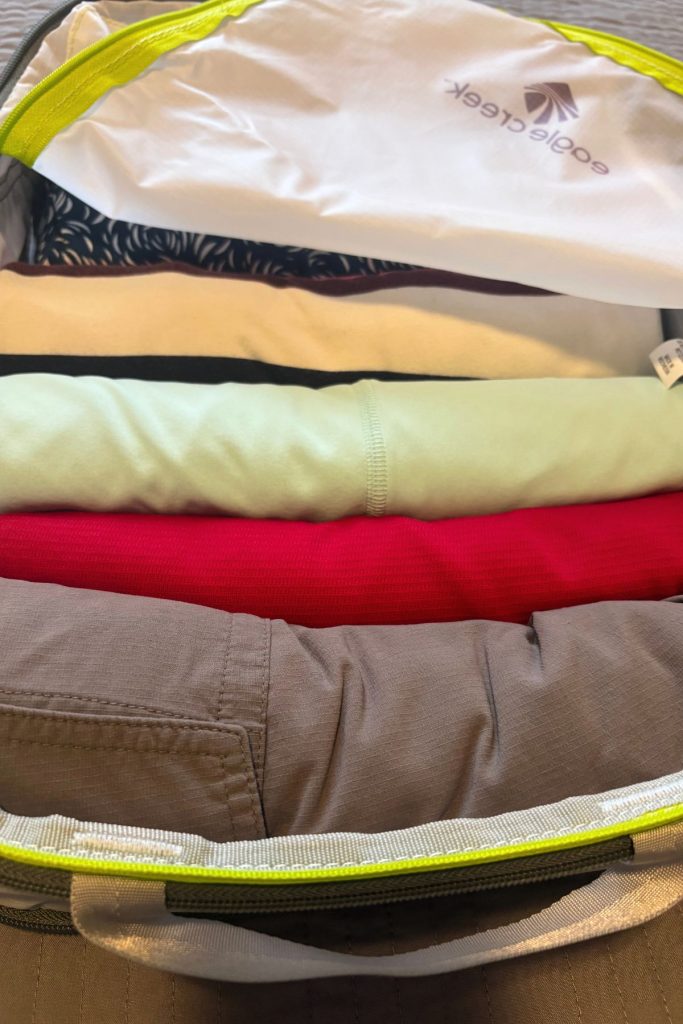
If you have read my earlier post about packing cubes, you know I am a huge fan of them. I like them for two main reasons: they help keep things organized, and they help maximize space when packing. Rolling clothing before putting it in packing cubes helps both maximize space and minimize wrinkles…a win/win in my book!
When filling packing cubes, I like to place a layer of rolled clothing in the bottom. Then, I layer on some folded items on the top to fill the packing cube completely.
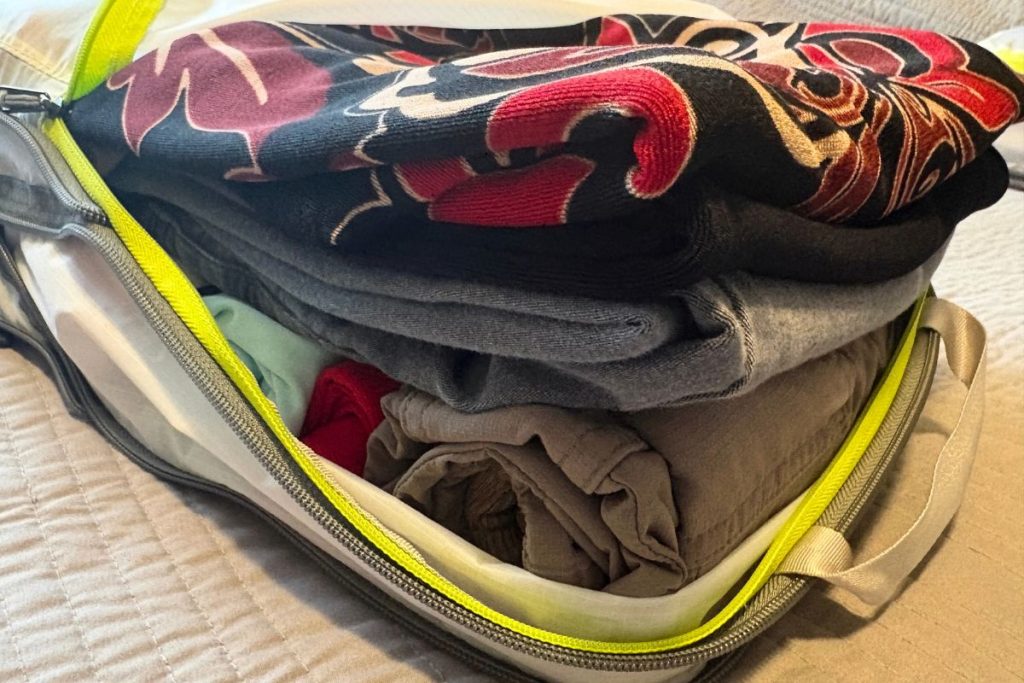
Packing cubes can be used in a couple of different ways to keep yourself organized while traveling. You can fill cubes by clothing type: shirts in one cube, pants in another cube, etc. This works well if you are only unpacking once. Or, you can use cubes to separate clothes you will need at different points in the trip: everything for the first 3 days in a hotel in Tokyo in one cube, daytime clothes for the cruise in a second cube, and evening clothes for the cruise in a third, etc. I will use this second option for my upcoming trip, so I can just pull out one cube in Tokyo and keep the other two neatly packed away until I embark on the ship.
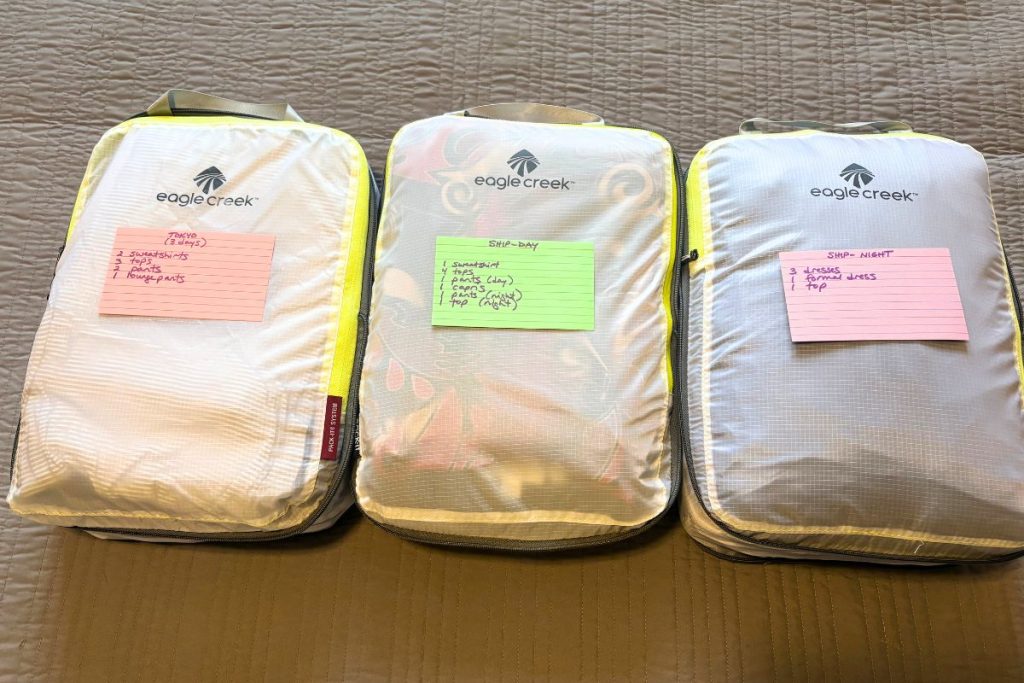
- Packing cubes help keep everything organized while traveling
- Combining rolled clothes and packing cubes gets you the most bang for your buck
- Consider what you need, and when you need, to understand the best method for each trip
Packing: Filling the Suitcase
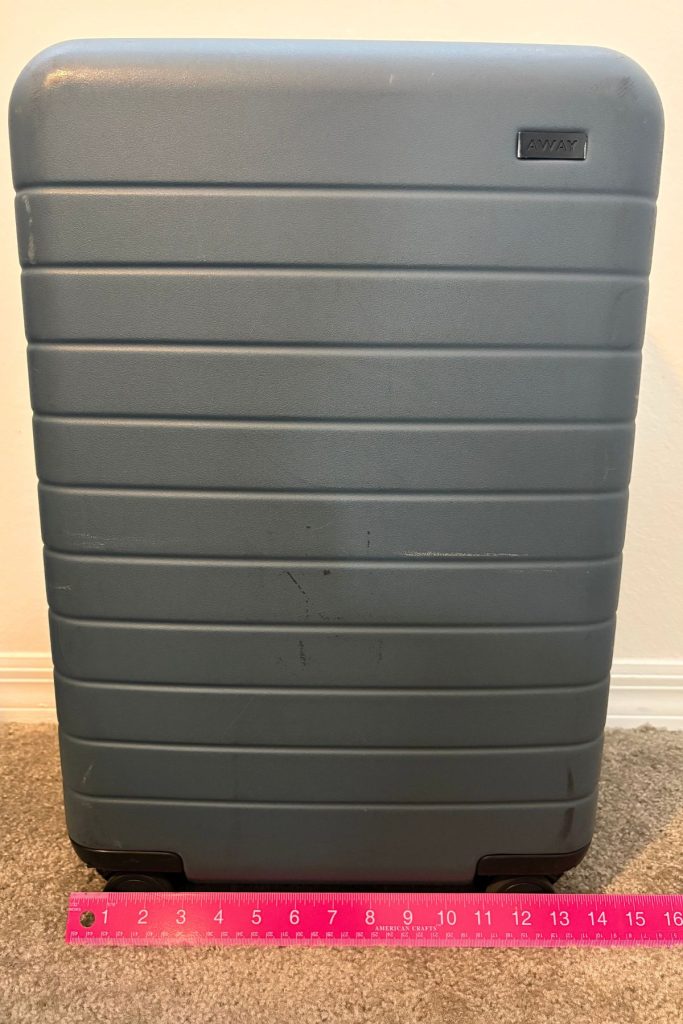
Once you have skillfully filled all of your packing cubes, it is time to fill the suitcase! For this 13-day cruise from Tokyo to Seoul in April, I can fit everything I need in my “Bigger Carry-On” from Away. This suitcase meets carry-on requirements for most major US airlines. It measures 22.7″ x 15.4″ x 9.6″ (exterior measurements, including wheels), has a capacity of 49 L, and weighs 7.9 pounds.
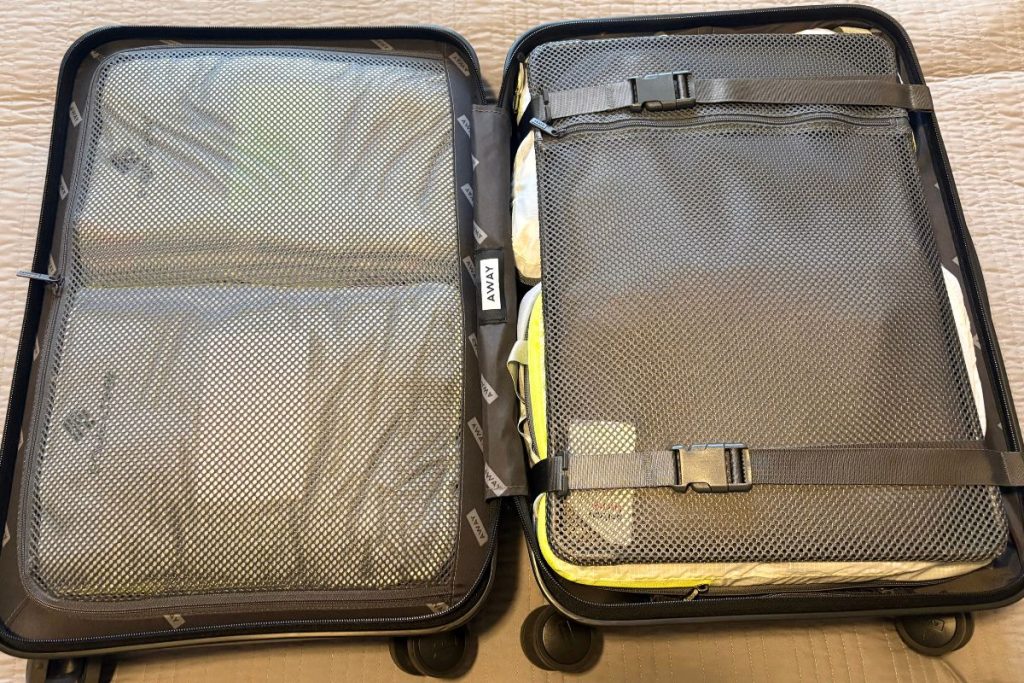
In the half that has the handle bars imbedded, I place my shoes and other small accessories like belts, scarves, or hats. Then I place one large cubes and two smaller cubes (each has some undergarments inside).
In the half that does not have the handle bars, I place two large cubes. So, I have a total of three large cubes and two small cubes in the carry-on, as well as shoes and small accessories. I will put my toiletries and other small accessories such as my laptop, water bottle, etc. in my personal item.
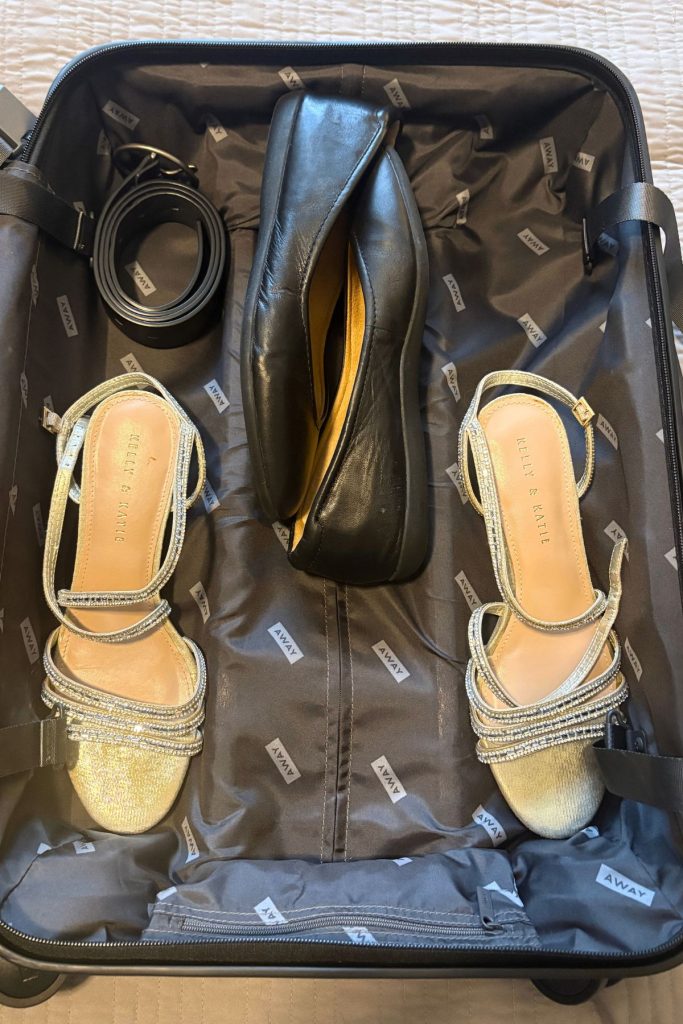
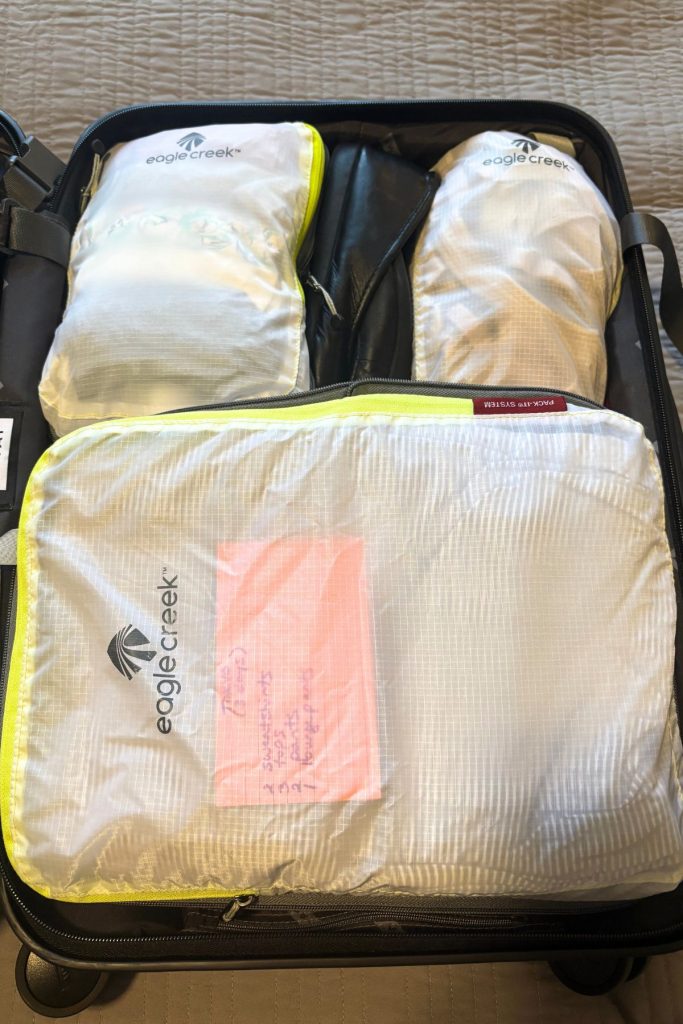
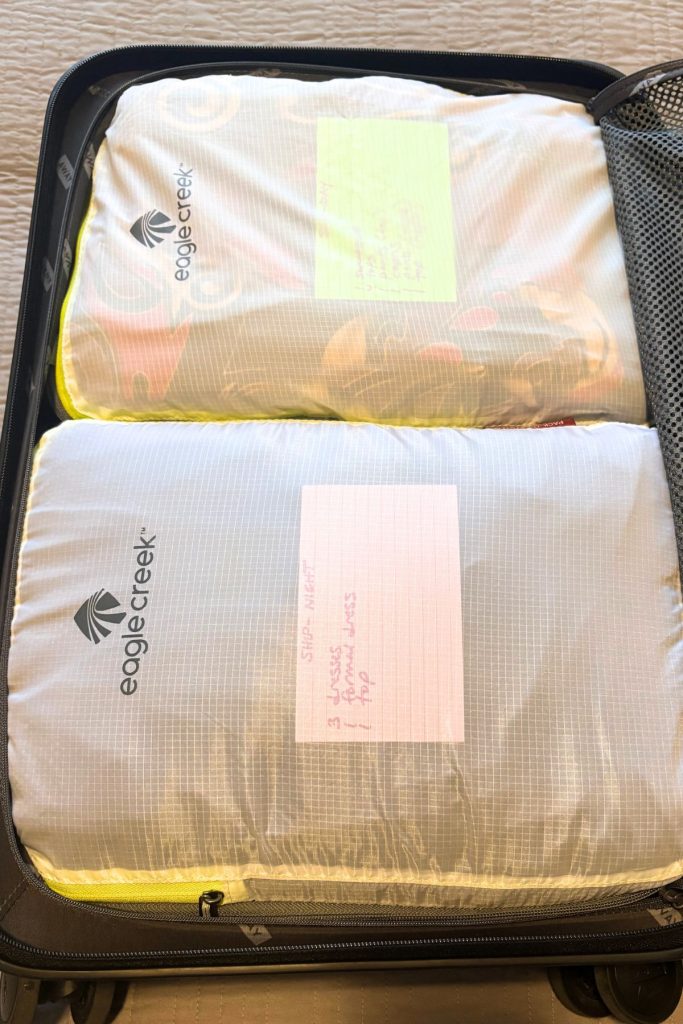
- Use all available space by filling the gaps between the handle bars with smaller items like shoes or accessories
- A combination of small and large packing cubes can maximize the different ways to fill a suitcase efficiently
Common Questions
How far in advance should I start packing?
I start planning my packing strategy several weeks or months in advance! But I typically do not actually start packing until a day or two prior to departure. Starting to plan early helps me ensure I have checked everything and I don’t forget things. However, I like to wait to pack until just prior to leaving because I have found that clothes do tend to wrinkle more the longer they are packed.
Should I check a bag or carry-on only?
This is mostly up to personal preference and comfort. I started as a huge checked bag gal…the bigger, the better! But I quickly learned how difficult it is to lug a large bag through crowded areas like airports and train stations. Plus, I have been the victim of delayed checked luggage one time too many. So, I almost always do carry-on only these days. For me, it is much easier and less stressful to have everything in one carry-on. I do not find that I am missing anything by packing lighter. Besides, nobody is really looking at what you are wearing every day!
Should I pack toiletries or buy them at my destination?
This is another personal preference question, and may vary from one person to another. For me, I do not have any special needs when it comes to my toiletries, and I am not terribly picky about them. So, I never pack things like shampoo, conditioner, lotion, or soap. Instead, I find that these are almost always provided in the hotel or cruise ship. If, for some reason, I don’t have what I need when I get there, I have found it to be quite easy to buy what I need at my destination.
Even More Travel Ideas
Pack Like a Pro with Packing Cubes