Siem Reap, Cambodia: Temples, Tuk-Tuks, and Apsara Dance
Siem Reap is the gateway to Angkor, the temple complex that was once the center of the Khmer Empire. The temples are the reason most people come. Angkor Wat gets the fame, but it has serious competition. Bayon, Ta Prohm, and Banteay Srei each hold their own.
I went in expecting temples. I had not planned on developing opinions about tree roots. A circus with no animals was another surprise. So was the shopping center. More on that later. Climb into the tuk-tuk. We have a lot of ground to cover.
Sampling the Highlights of Siem Reap
I spent two full days in Siem Reap in February 2020, before a Mekong River cruise with Avalon Waterways. Yes, that was right before the world shut down for Covid. Good timing, as it turns out. My small group of 25 people had guided tours of four temples. In the evenings, I also saw an Apsara dance performance and the Phare Circus.
Angkor Wat
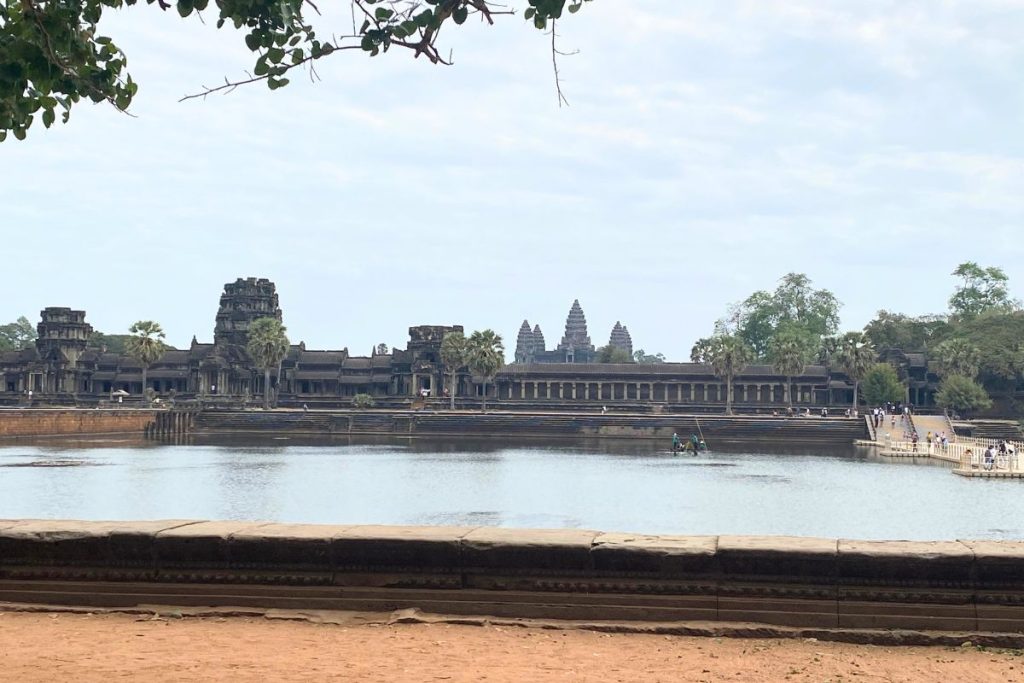
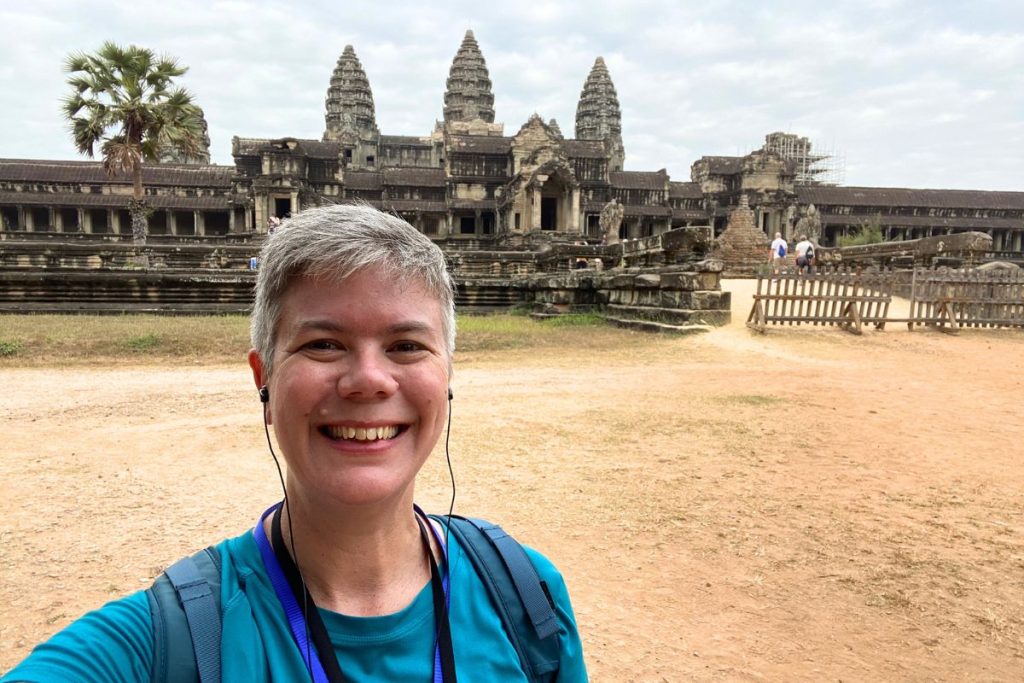
Angkor Wat is the most famous temple in Cambodia. It is also the largest religious structure in the world, covering about 402 acres (162.6 hectares). King Suryavarman II built it in the 12th century as a Hindu temple dedicated to Vishnu. Over the centuries it became a Buddhist temple. Five towers rise from the center, and a drawing of them sits on the Cambodian flag.
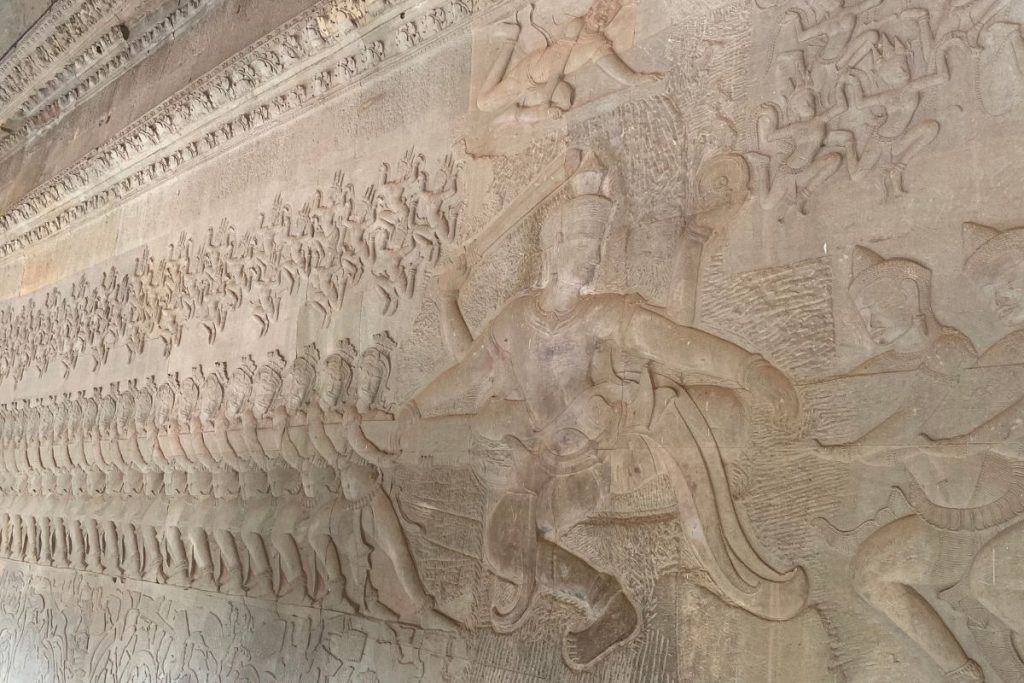
Long walls inside the temple are covered in carvings. They tell Hindu stories, including the Ramayana and the Mahabharata. One gallery shows the Churning of the Sea of Milk. Gods and demons pull on a giant serpent to produce the elixir of immortality. Another gallery shows a historic procession of King Suryavarman II.
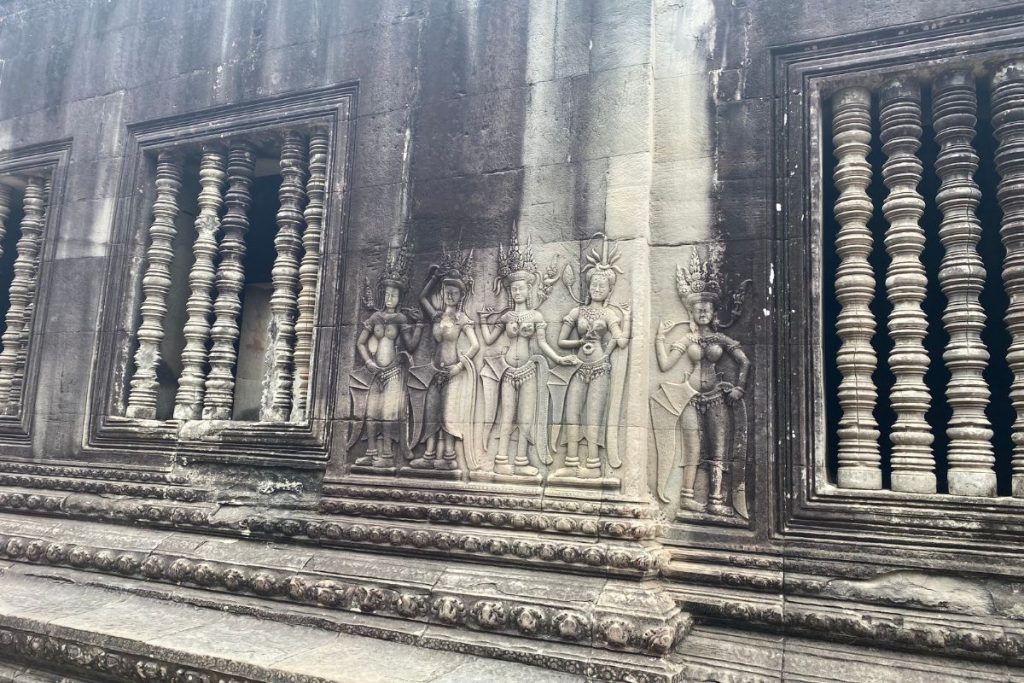
Look closely at the walls and you will find apsaras, the celestial dancers. Researchers have documented about 1,800 of them. Guides will tell you that no two are exactly alike.
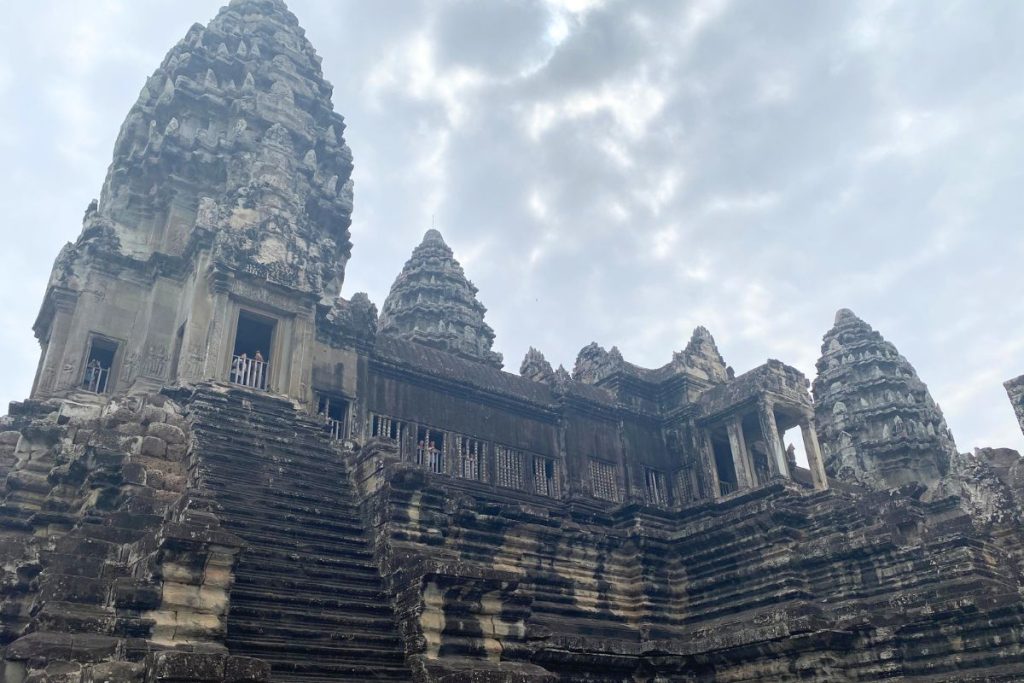
Visitors can climb the steep stairs to tour the inside of some of the towers. I did not. Photos from the bottom will have to do.
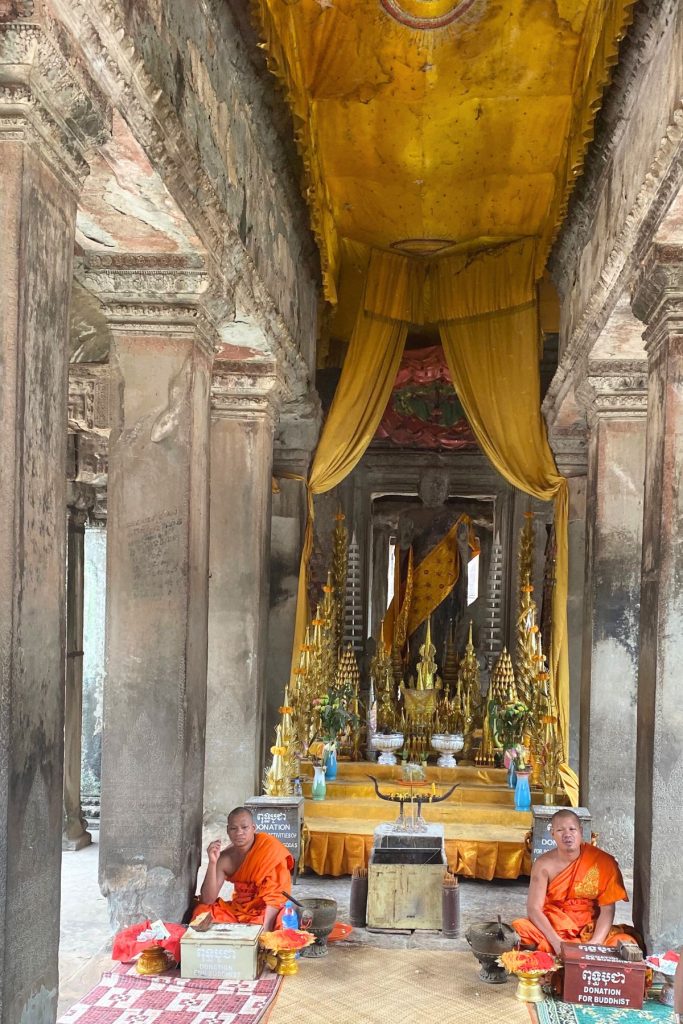
Shrines are tucked throughout the temple. In one gallery, two monks sat beside donation boxes in front of a gold-draped Buddha.
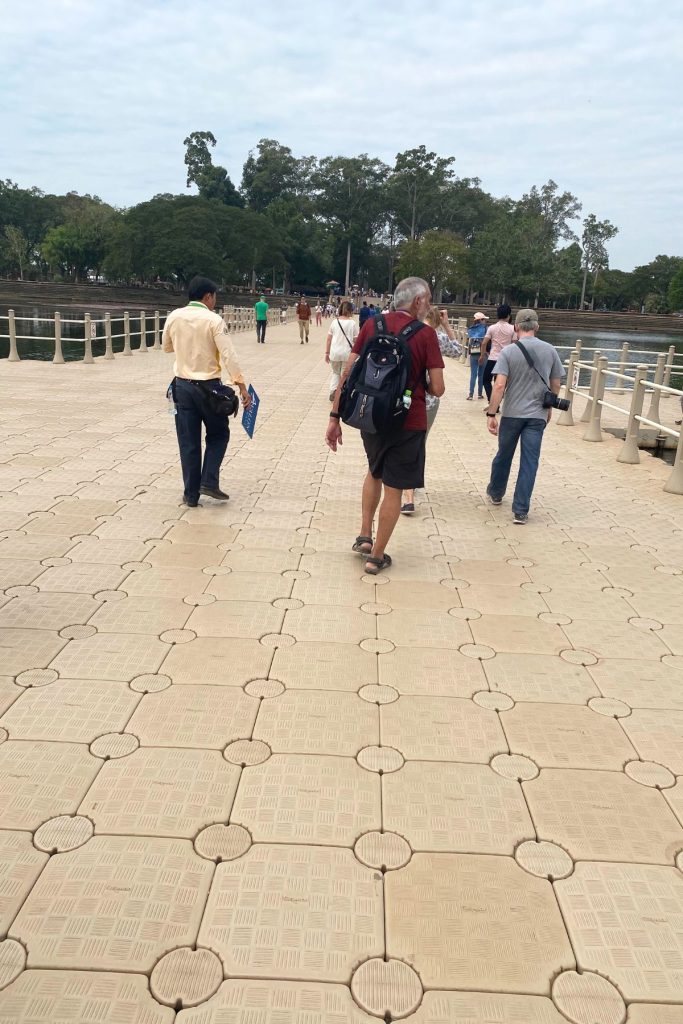
When we finished, we crossed the moat on a floating bridge on our way out, headed for Angkor Thom. The moat is about 620 feet (190 meters) wide. The stone causeway was closed for restoration at the time. A temporary bridge of linked plastic tiles sat directly on the water instead. It moves a little under your feet. Everyone discovers this at the same moment. The restored causeway reopened in late 2023. Reports at the time said the floating bridge would stay in use as the exit.
Bayon Temple at Angkor Thom
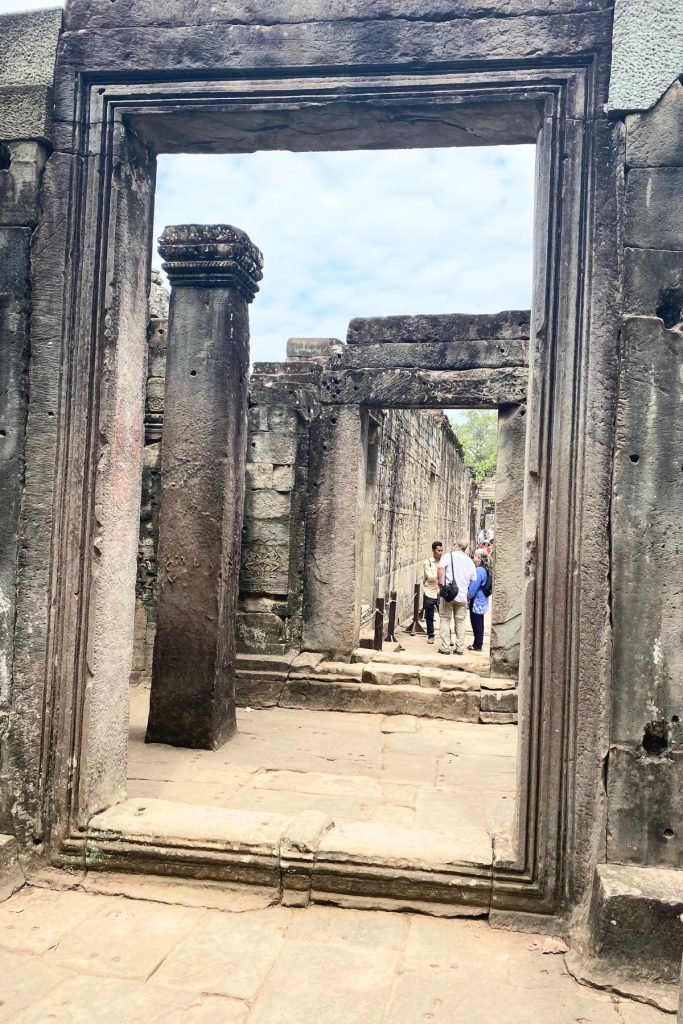
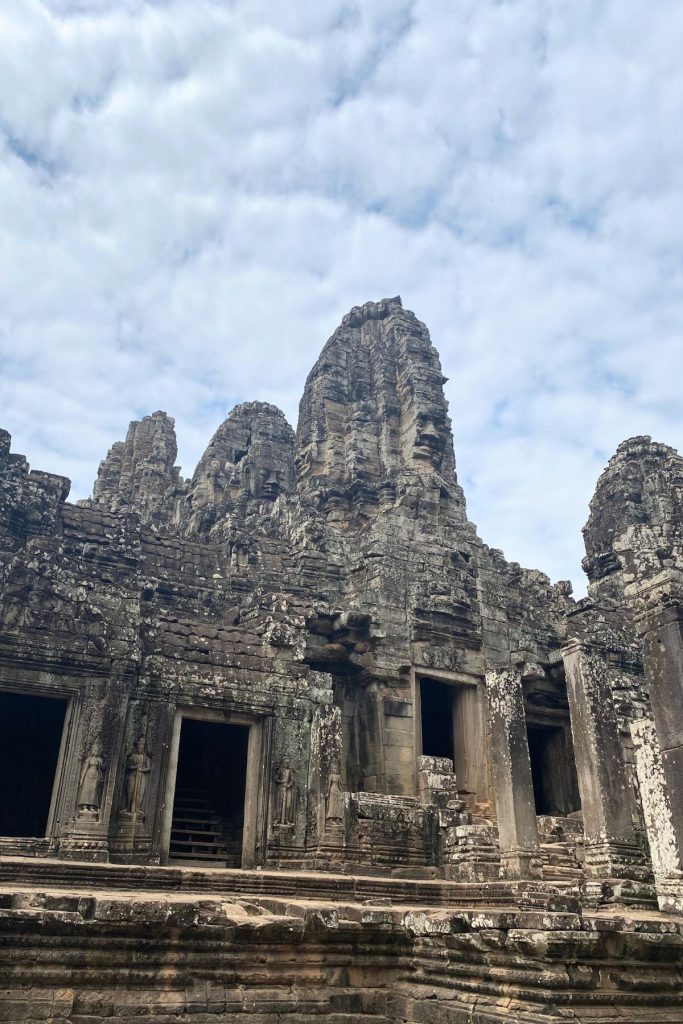
Next stop was Angkor Thom, the last great capital of the Khmer Empire. Bayon sits at its exact center. King Jayavarman VII built it in the late 12th or early 13th century. It is best known for its faces. About 200 faces are carved into the 37 surviving towers. Each tower looks out in the four cardinal directions.
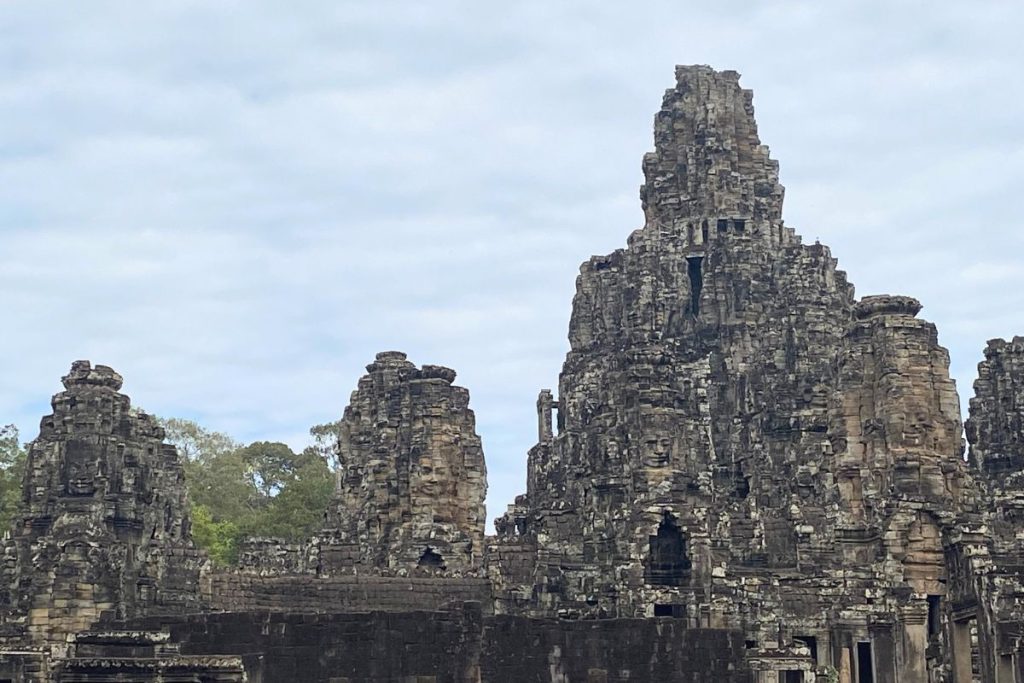
Nobody knows for certain whose face it is. Scholars debate whether it shows Avalokiteshvara, the Buddhist bodhisattva of compassion, or Jayavarman VII himself. Either way, someone is watching you from every direction. Guides will tell you the mood of the faces changes with the light. Morning makes them look calm. Afternoon makes them look stern. Sunset makes them look amused.
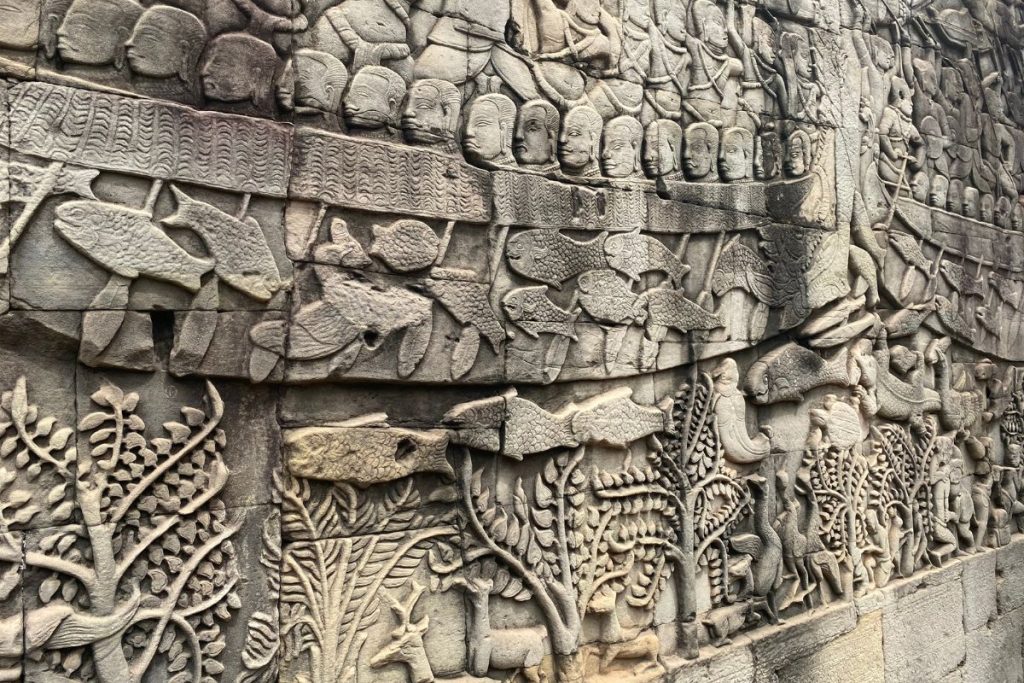
The other draw is the bas-relief carvings. Angkor Wat focuses on gods and kings. Many panels at Bayon show ordinary life instead. Look for markets, open-air cooking, fishing boats, and a cockfight.
Angkor Wat has a clean, symmetrical layout. Bayon does not. Over the centuries it was expanded, altered, and partly dismantled. It began as a Mahayana Buddhist temple. Then it was reworked for Hindu worship in the 13th century. Theravada Buddhism later brought more changes. Walking through it is a bit of a maze. Follow your guide.
Ta Prohm
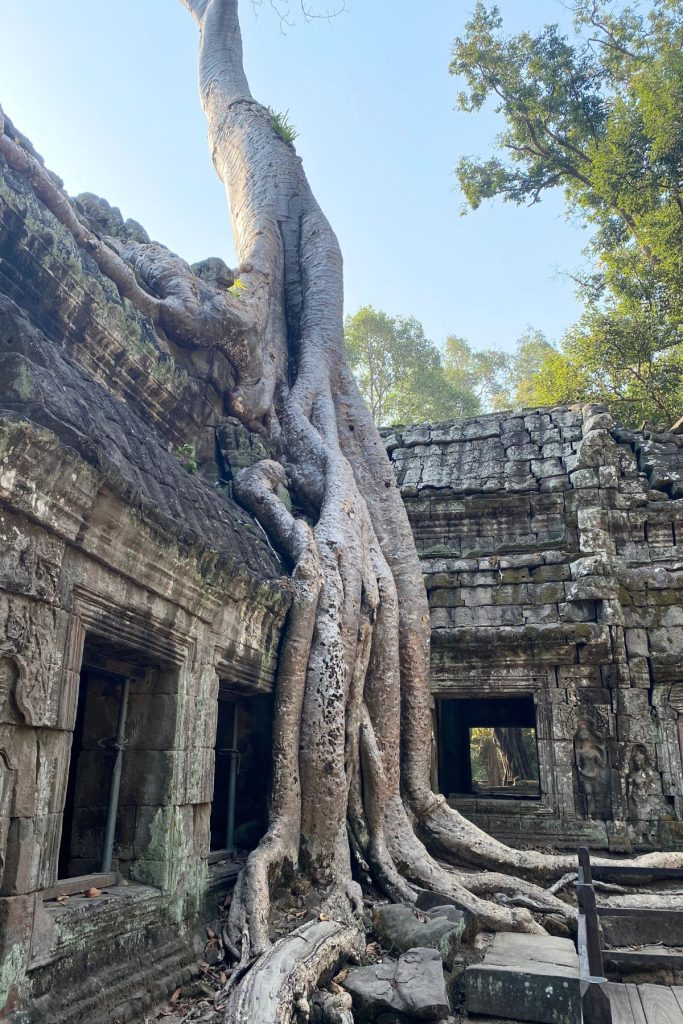
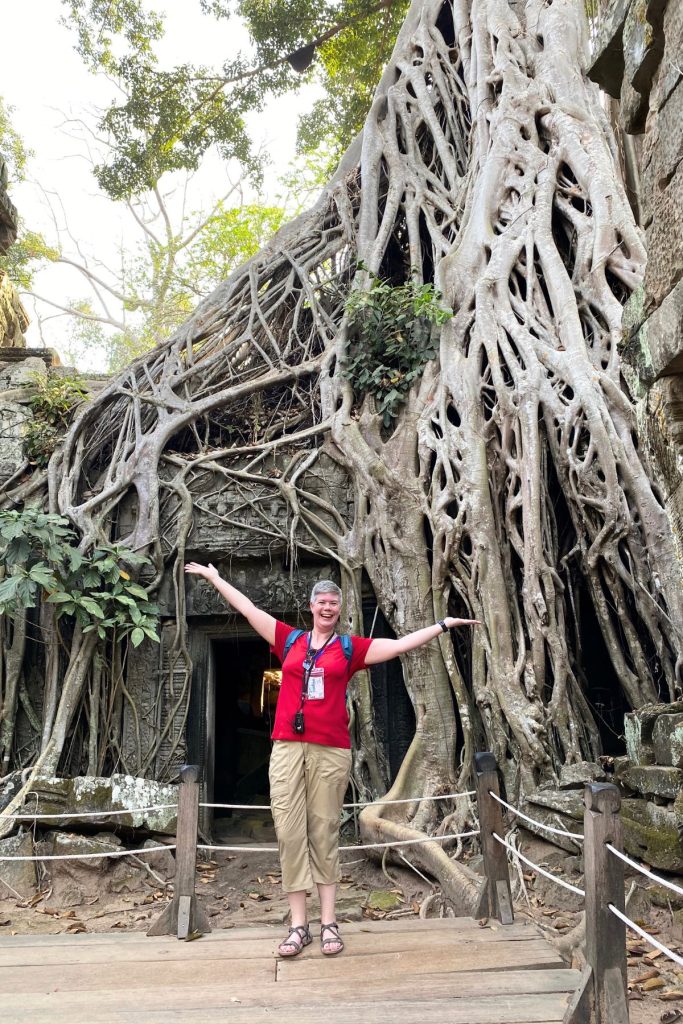
Ta Prohm was founded by King Jayavarman VII in the late 12th century, in the Bayon style. Its original name was Rajavihara, which means Royal Monastery. Large trees have grown in, through, and over the structures. The temple was a filming location for Lara Croft: Tomb Raider (2001). Many people know it as the Tomb Raider temple. Angkor Wat is the most famous temple in Siem Reap. Ta Prohm was unquestionably my favorite of the four.
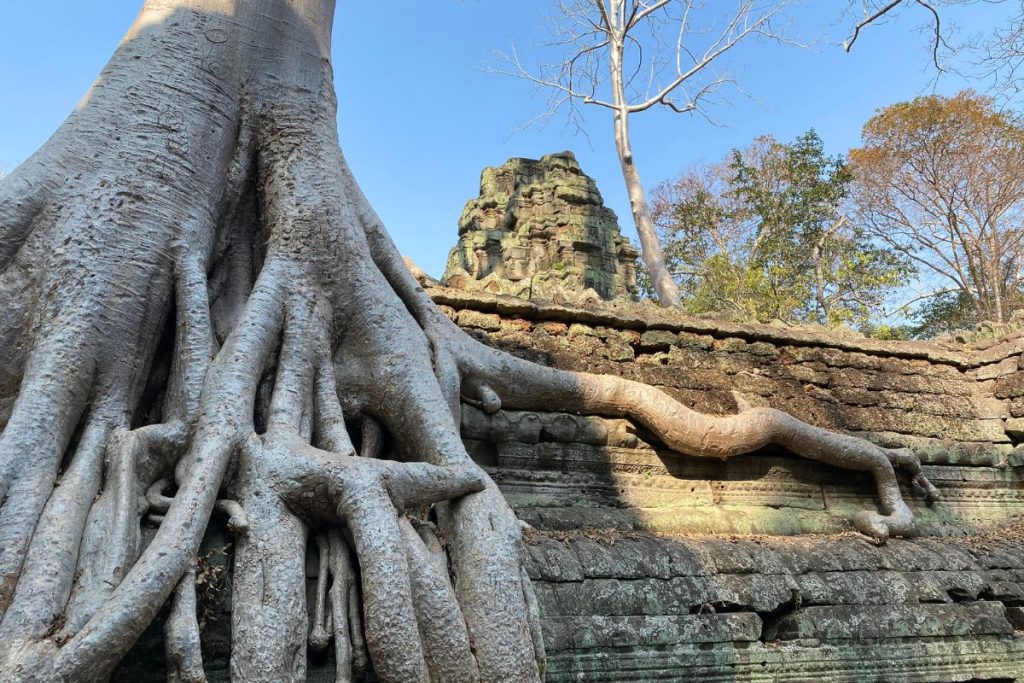
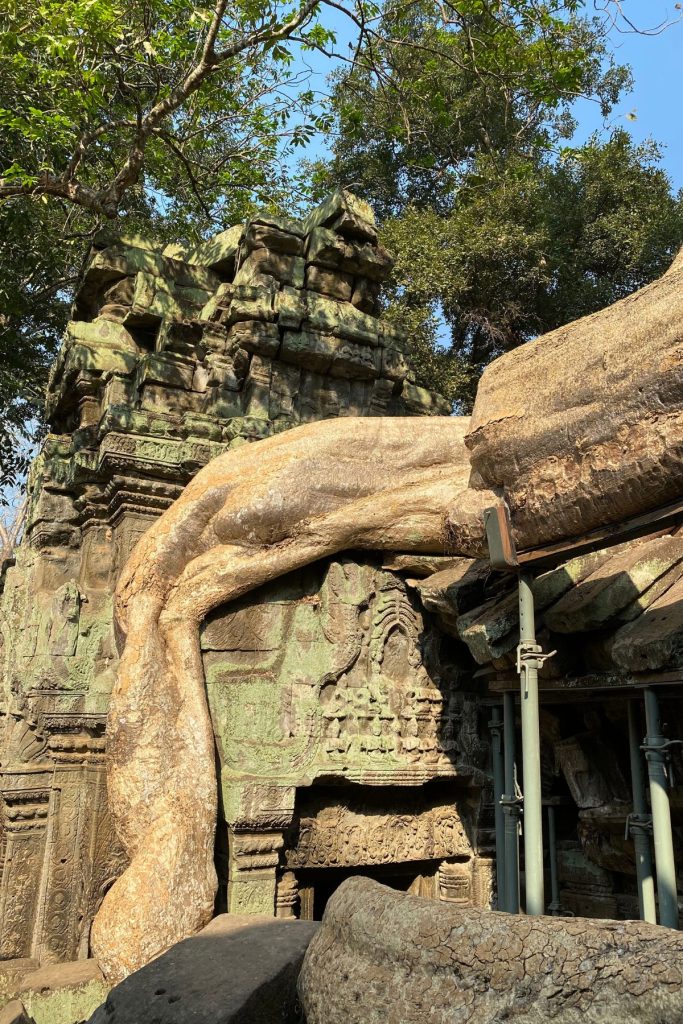
The trees are silk-cotton and strangler figs, according to most guides. The roots look destructive. Guides will tell you they are actually holding some of the ruins together. Steel poles quietly help out in other spots.
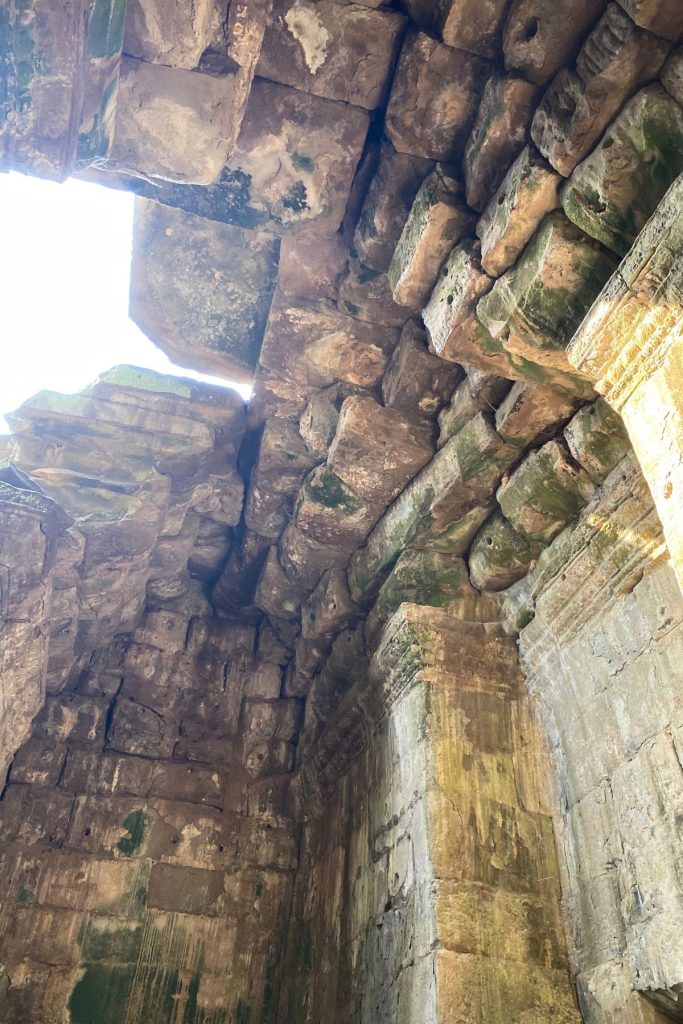
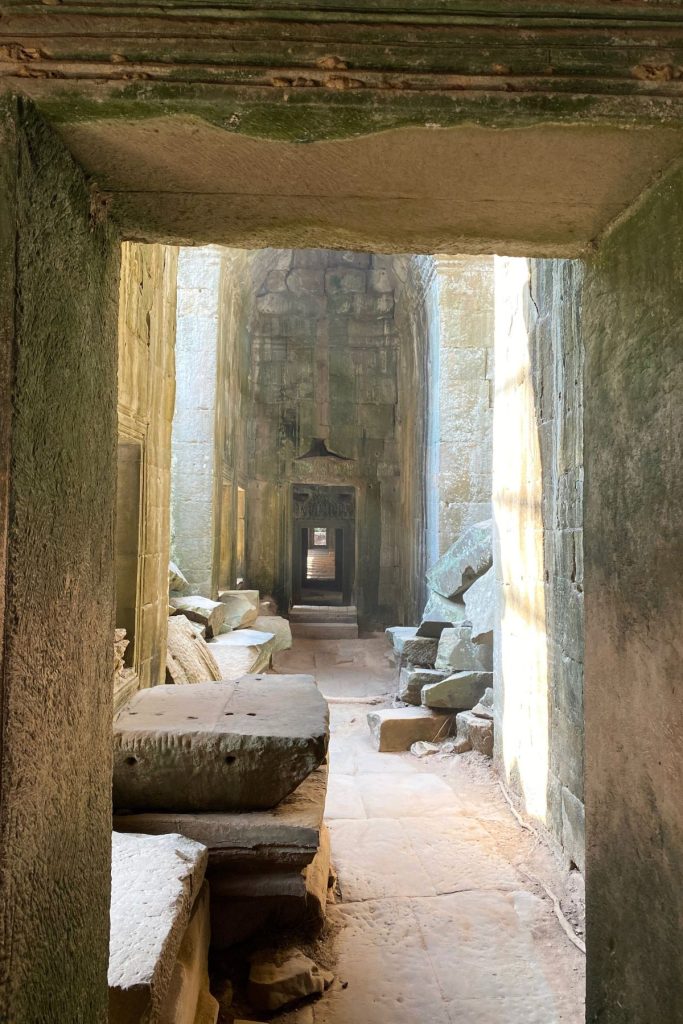
In its heyday, Ta Prohm was a major monastery, dedicated to the king’s mother. A stele records more than 12,500 people on site, including 18 high priests and 615 dancers.
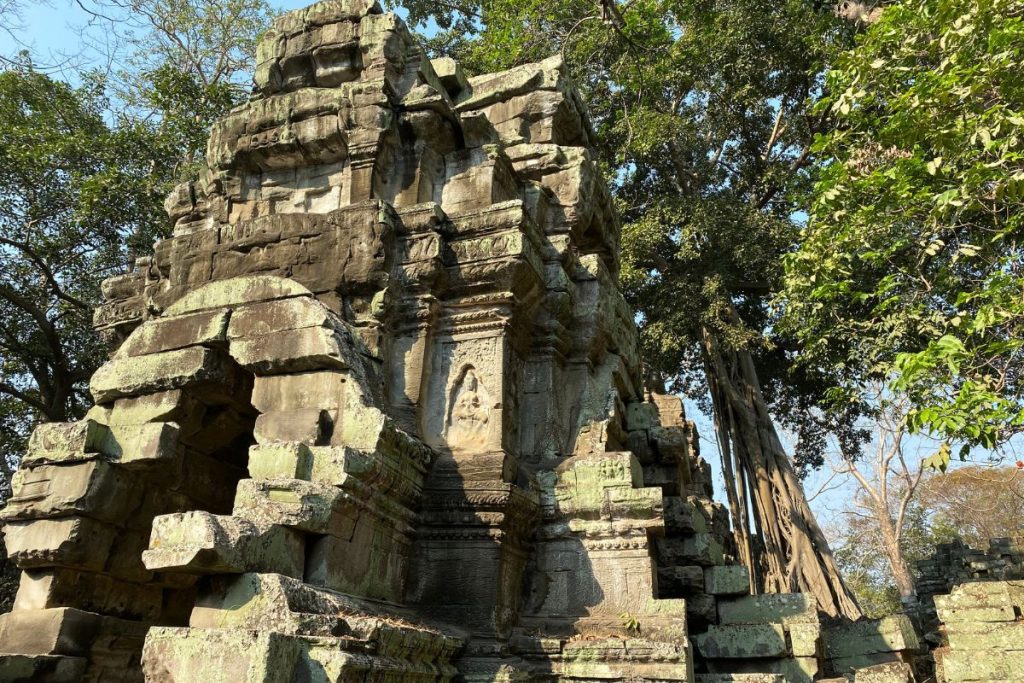
As at other Angkor temples, the walls carry apsaras and floral carvings. Unlike most of them, Ta Prohm was left in a semi-ruined state on purpose. French conservators chose to keep it much as they found it. It looks neglected. That is the plan.
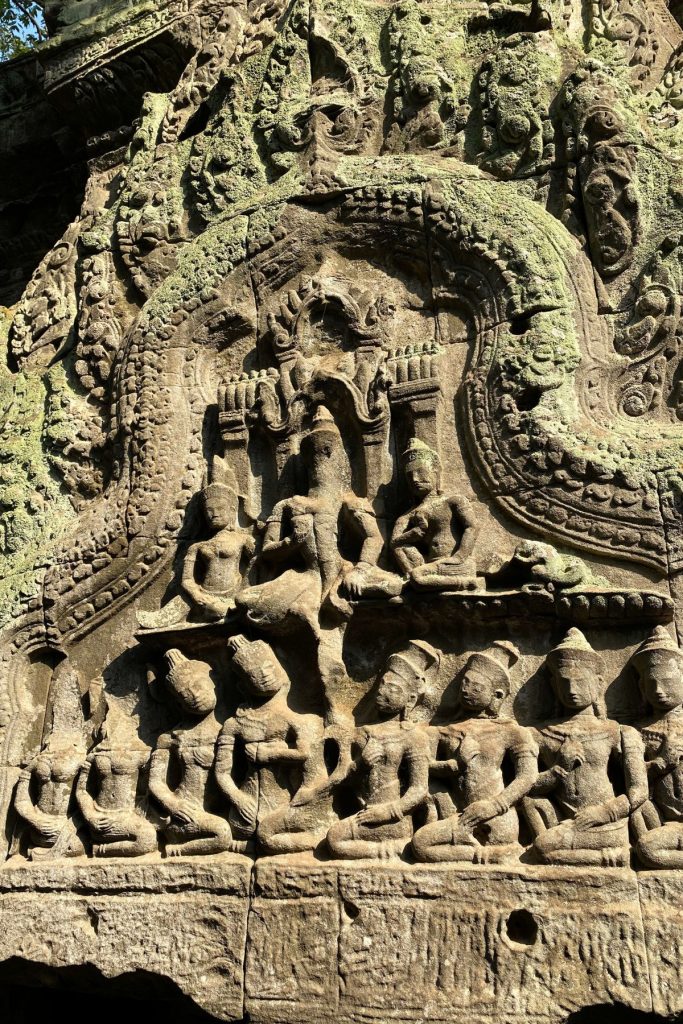
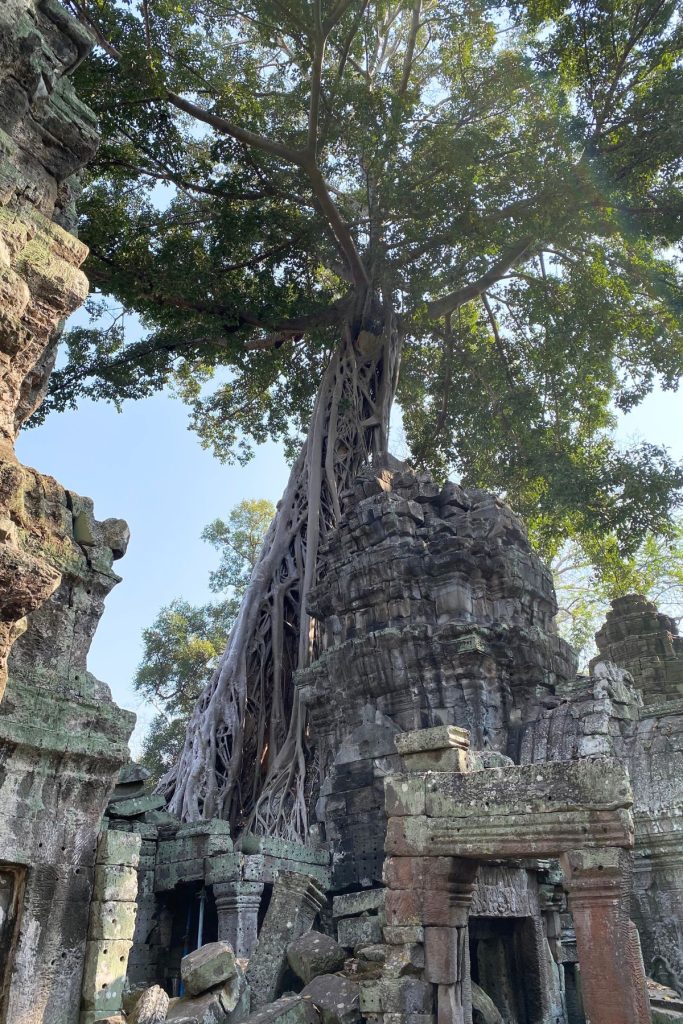
The vibe is wild, with a slightly eerie edge. It is often called the most haunting of the Angkor temples. Wooden walkways and rope railings keep visitors off the roots. That seems fair. The roots were here first. Conservators have long wrestled with a tough call. Remove the trees and risk collapse, or leave them and let nature continue?
Banteay Srei
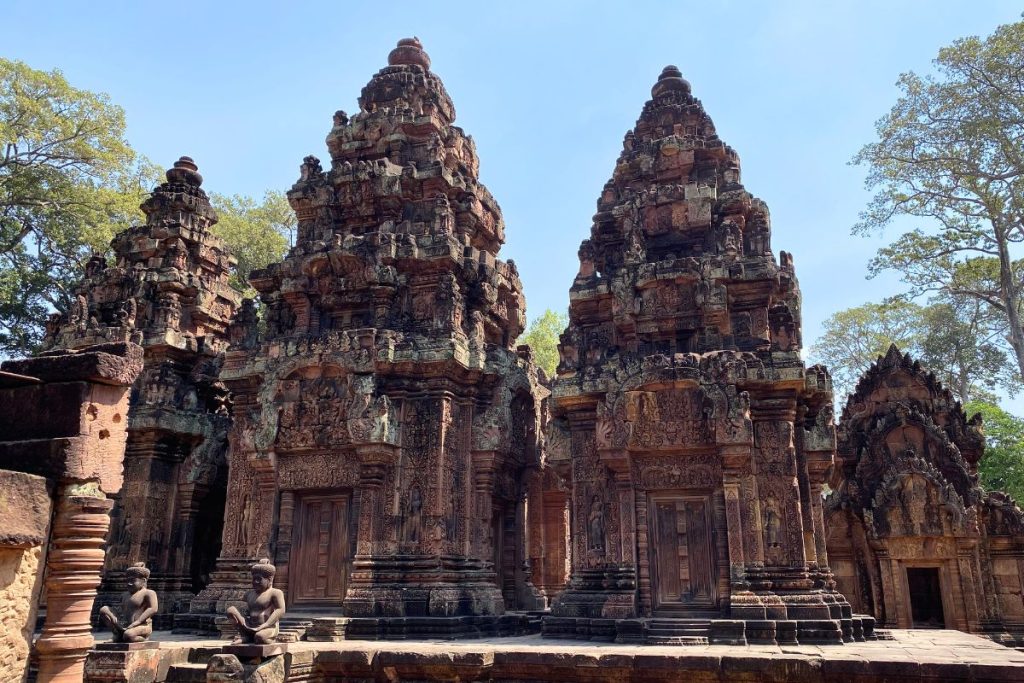
Banteay Srei is the smallest of the four temples I visited. It sits about 16 miles (25 kilometers) northeast of the main Angkor group. It was consecrated in the 10th century and dedicated mainly to Shiva.
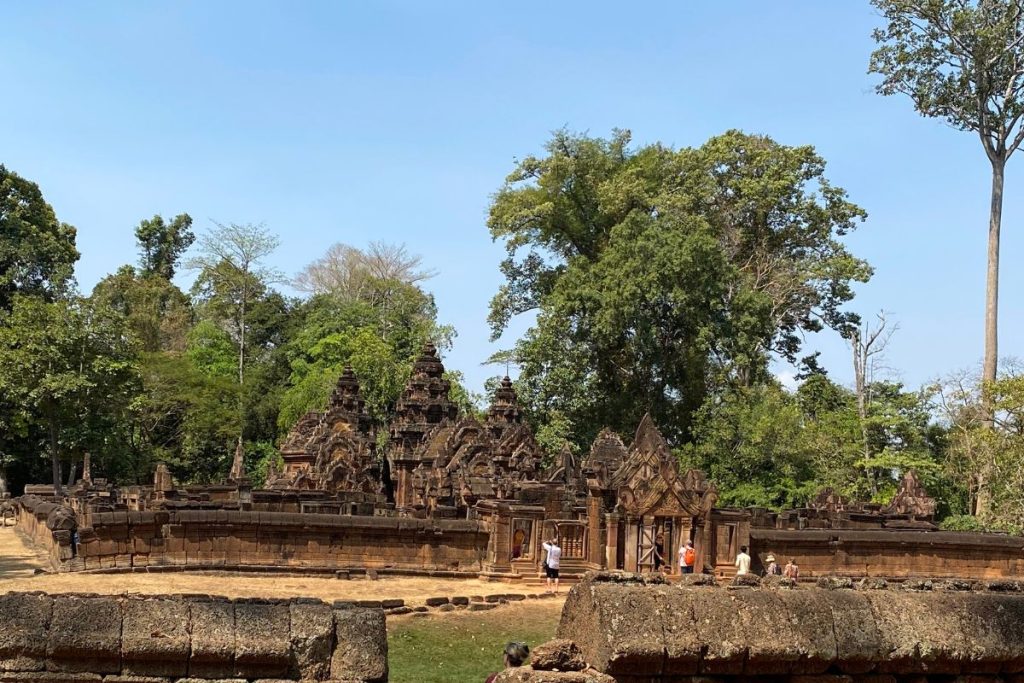
Red sandstone makes up most of the temple, a color change from the gray stone at the other three. It is also easy to carve, and the carvers took full advantage. The reliefs show scenes from Hindu epics. Many guides say the storytelling is so clear that you can read the walls like a comic strip.
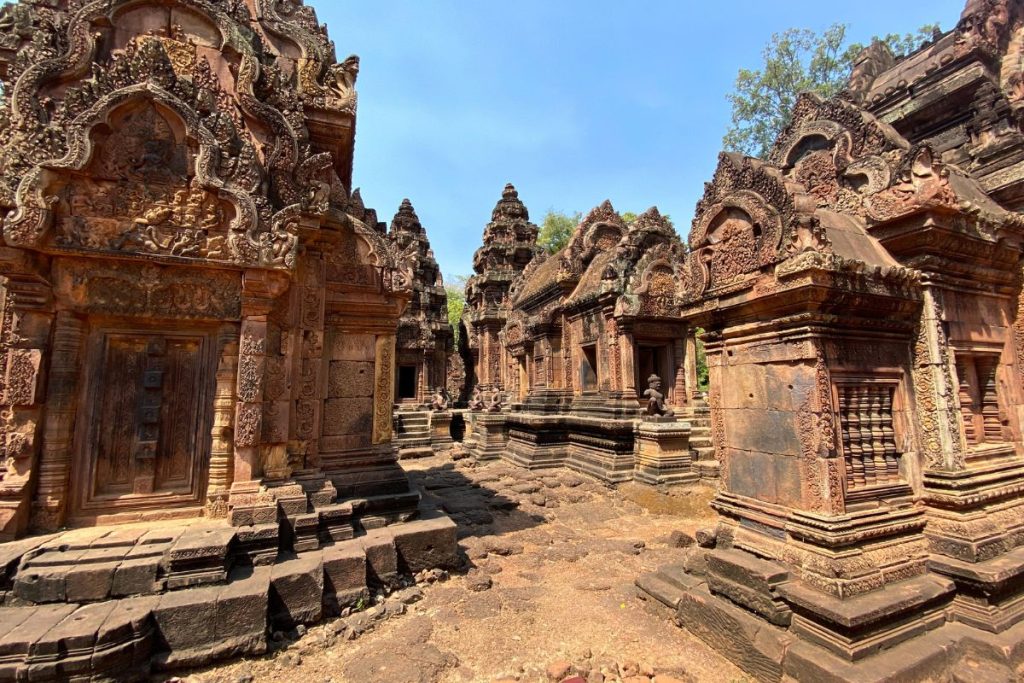
The name roughly translates to Citadel of Women, or Citadel of Beauty. One popular story says the carving was so delicate that women must have done it. Treat that one as tour lore. The buildings are miniature by Angkor standards. The sanctuary doorway is only about 3.5 feet (1.08 meters) high.
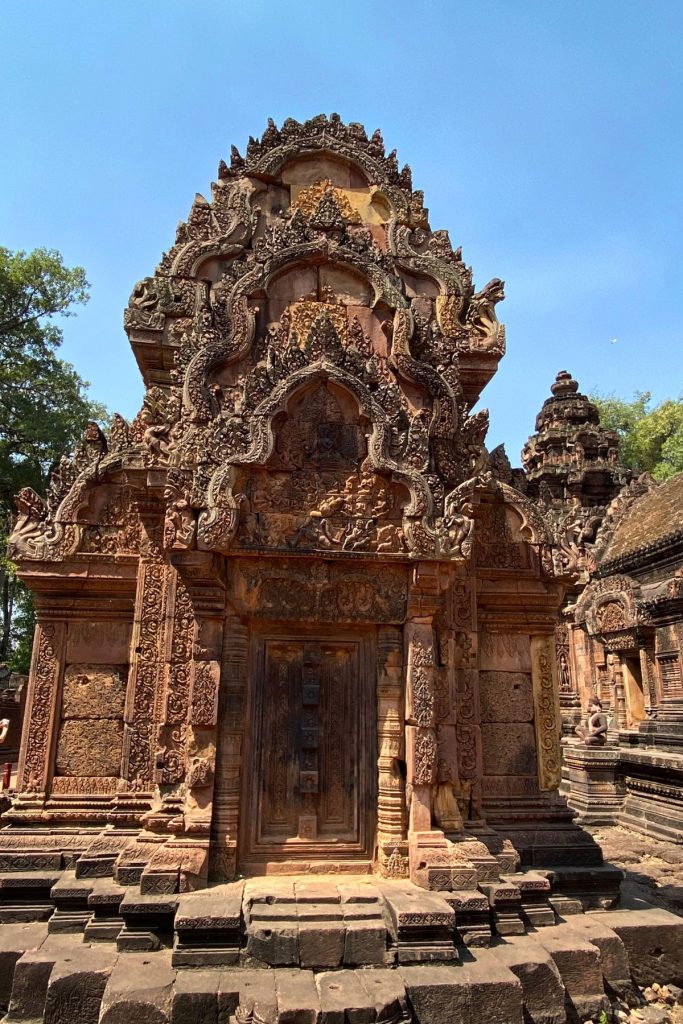
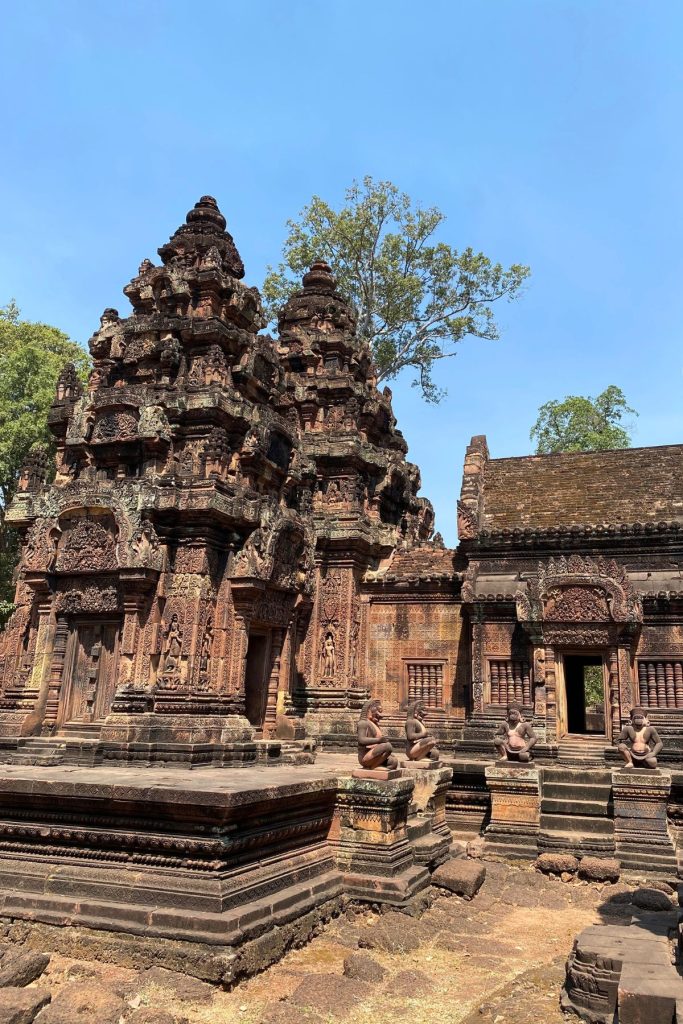
Unlike most Angkor temples, no king commissioned this one. Two courtiers, Yajnavaraha and Vishnukumara, built it. The carvings still look freshly cut, and the temple is more than 1,000 years old.
Apsara Dance Performance
I also saw an Apsara dance performance while I was in Siem Reap. Apsara is part of the classical Khmer dance tradition, also known as the Royal Ballet of Cambodia. It uses slow, deliberate gestures, elaborate costumes, and live music to tell religious stories and classical myths.
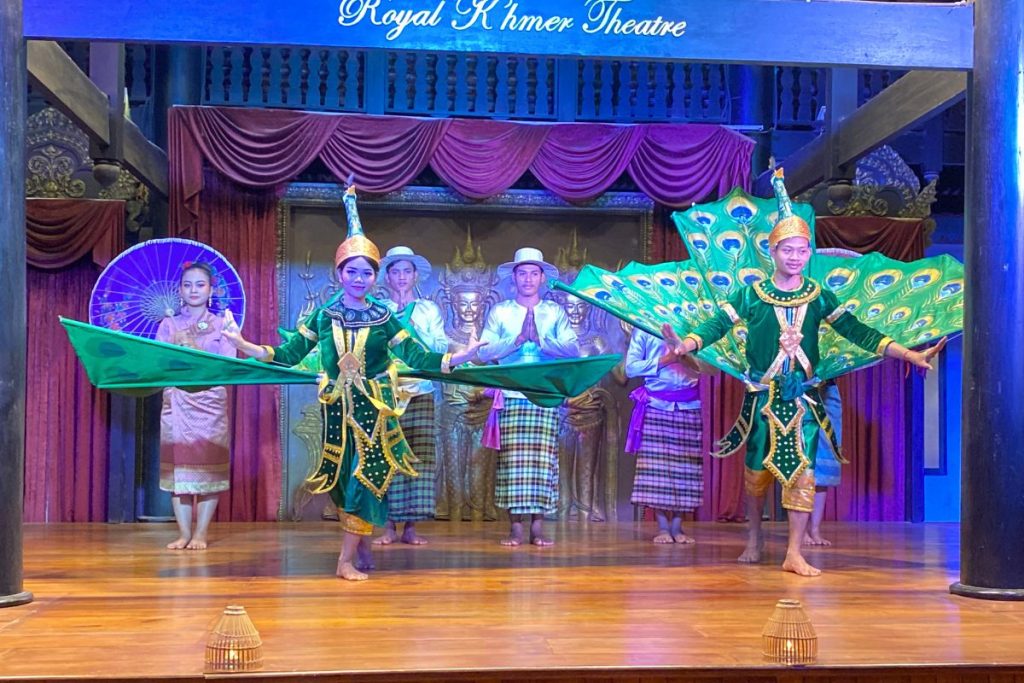
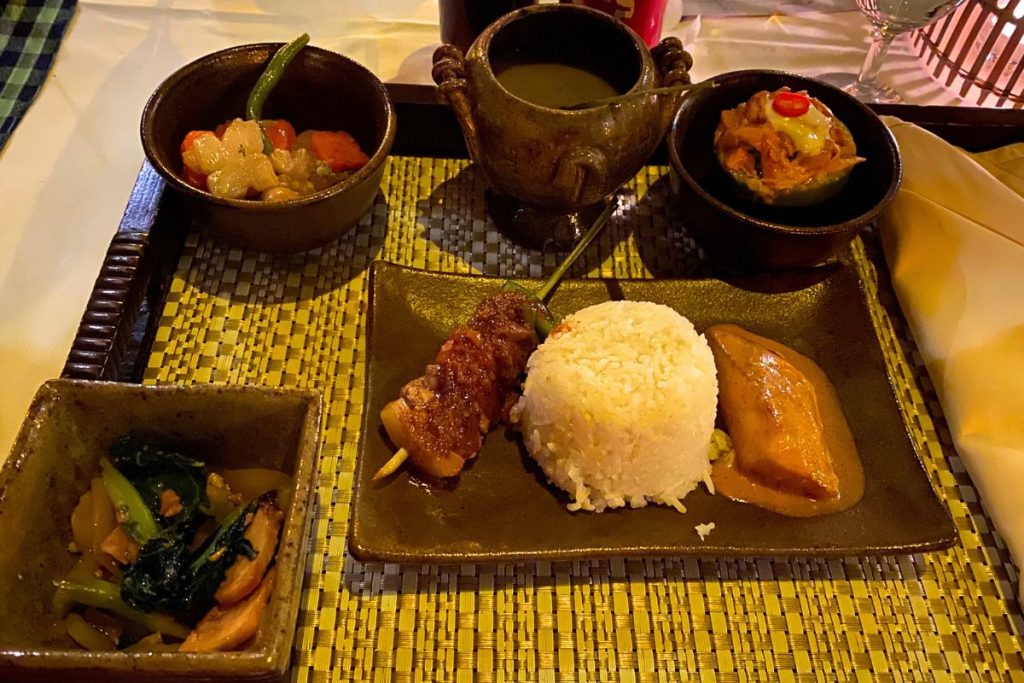
We ate a three-course dinner while watching four traditional dances: Peacock, Mekhala, Fishing, and Apsara.
The costumes and crowns come straight from the carvings at Angkor. Apsaras are celestial dancers who entertain gods and kings. The movements are slow, controlled, and symbolic. Hand positions, finger bends, and eye and head movements all carry meaning.
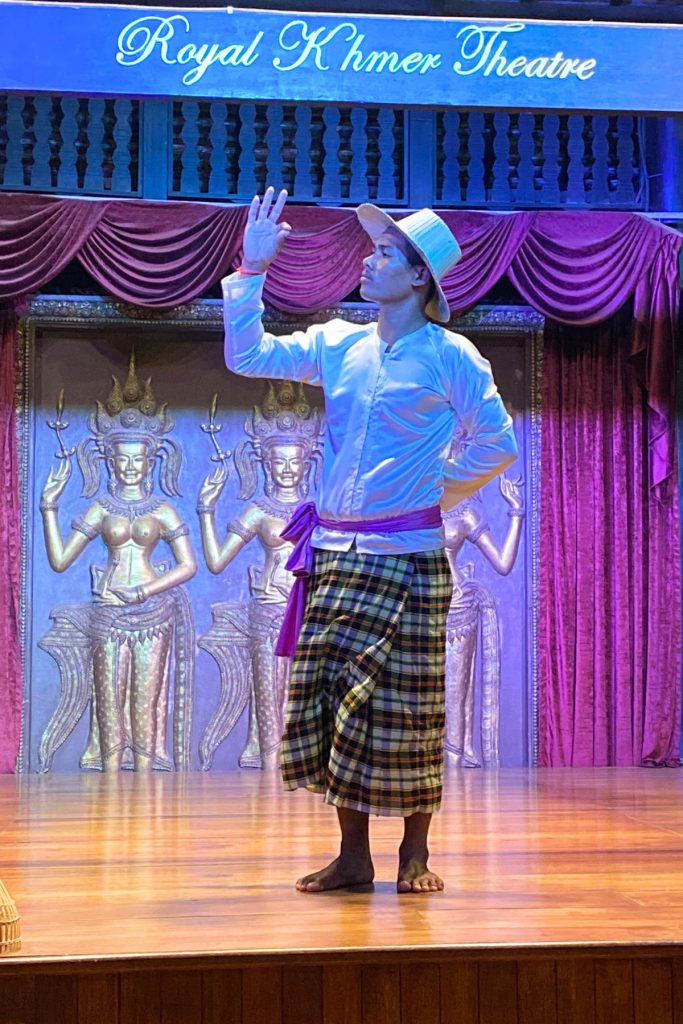
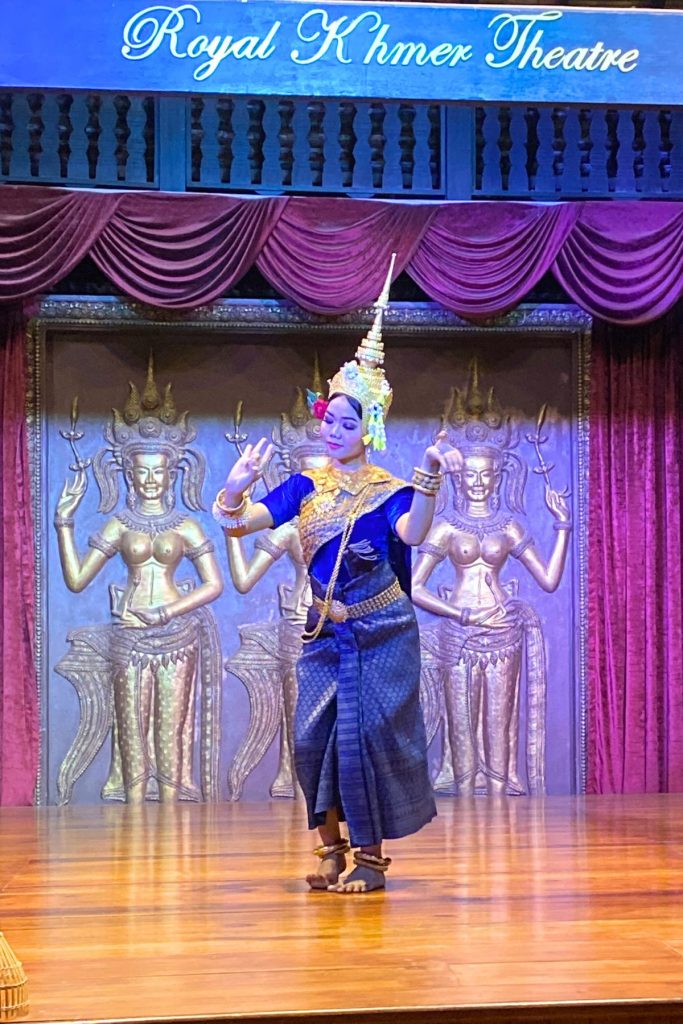
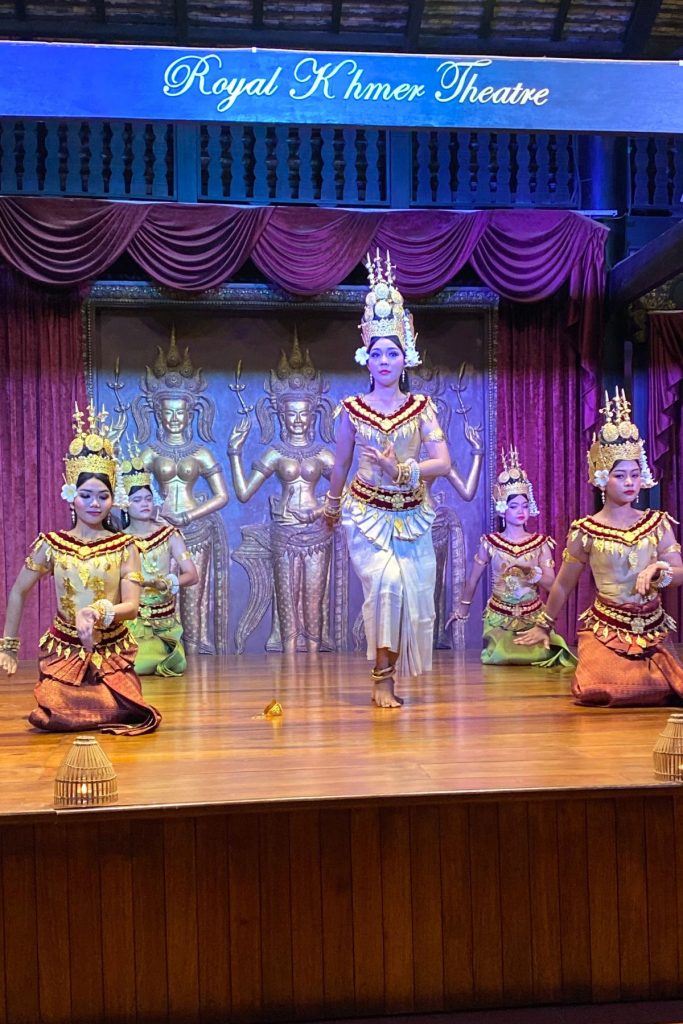
Dancers train for years, often starting in childhood. The dance was traditionally performed at royal ceremonies such as coronations, weddings, and funerals, not for tourists. The tradition nearly disappeared under the Khmer Rouge, who killed most of Cambodia’s classical artists. Survivors regrouped after 1979 and rebuilt the repertoire. UNESCO first recognized the Royal Ballet of Cambodia in 2003. It was listed as Intangible Cultural Heritage of Humanity in 2008.
Phare Circus
The other evening show was Phare, the Cambodian Circus. It comes with a mission. The circus supports Phare Ponleu Selpak, a school in Battambang. The name means roughly “the brightness of the arts.” Nine young men returning from a refugee camp after the Khmer Rouge years founded it in 1994. An art teacher had used drawing classes as therapy, and they wanted to pass that on. The art school grew into a free public school. Music and theater schools followed, and finally a circus school. The Siem Reap show opened in 2013 as a social enterprise. It employs graduates and helps fund the school.
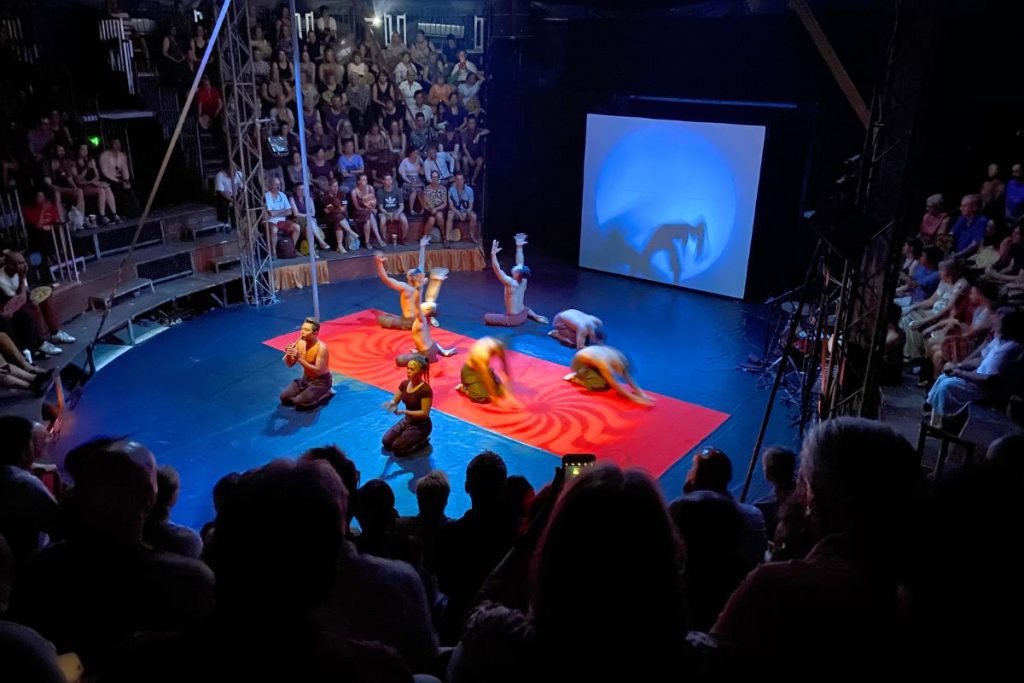
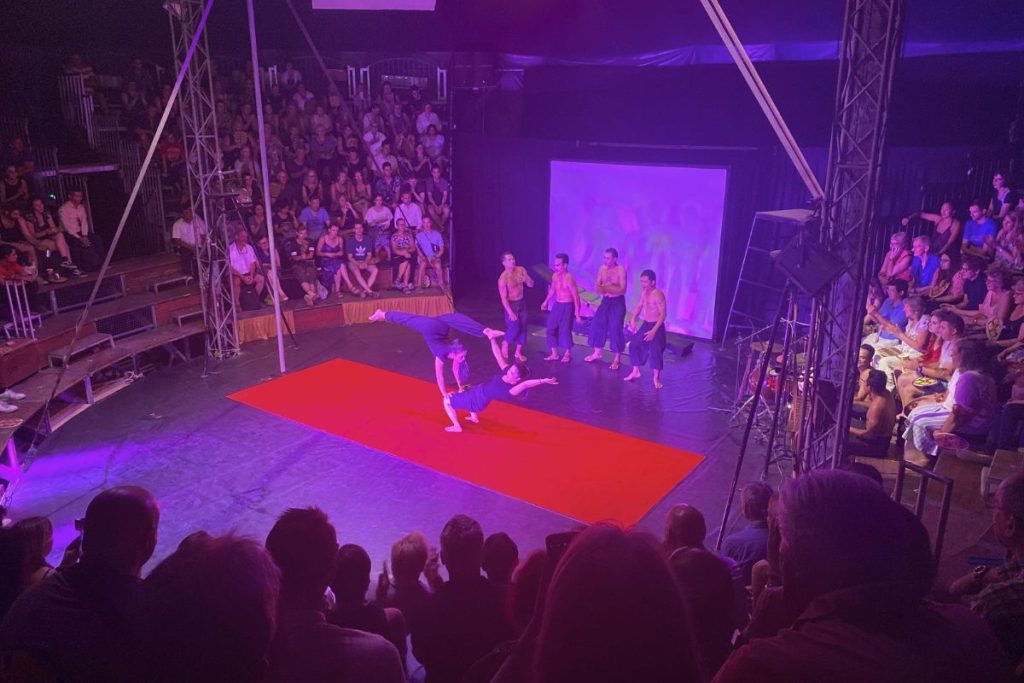
There are no animals. Acrobatics, juggling, dance, live music, and acting carry the story. The audience sits on tiered seating around a red mat. It is intimate and fast-paced. One performer balanced on a stack of pipes. Another hung from a rope above the stage.
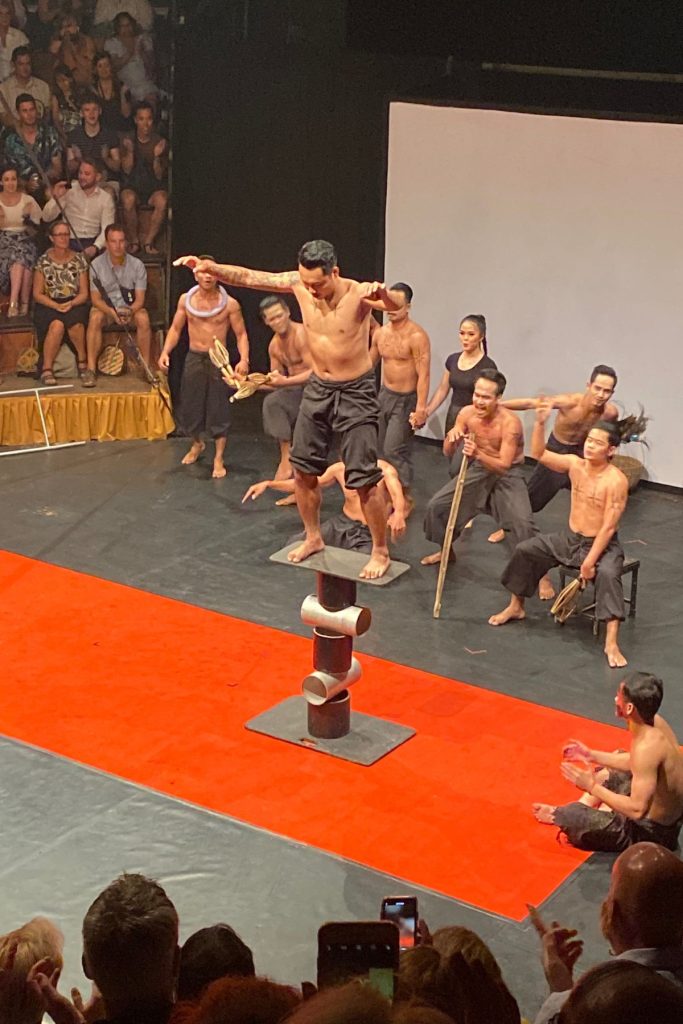
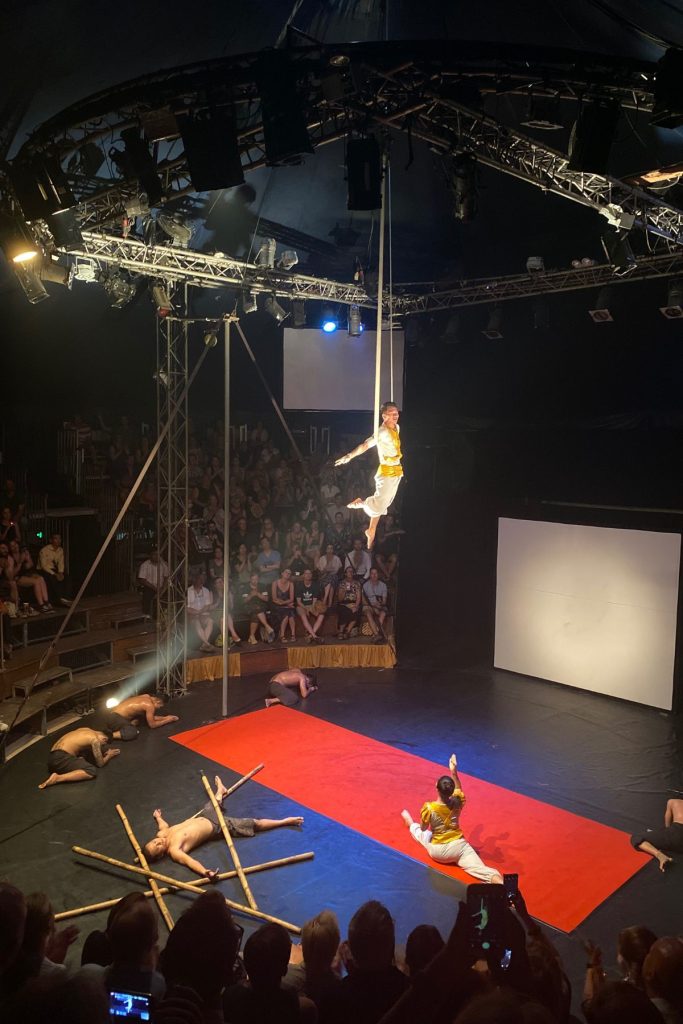
The stories combine Cambodian history, folklore, modern life, and social issues. The tone ranges from funny to political to deeply personal. Students at the Battambang school typically come from poor backgrounds. According to the school, its students and graduates have toured, taught, or performed in 24 countries.
The Bags Took a Different Route
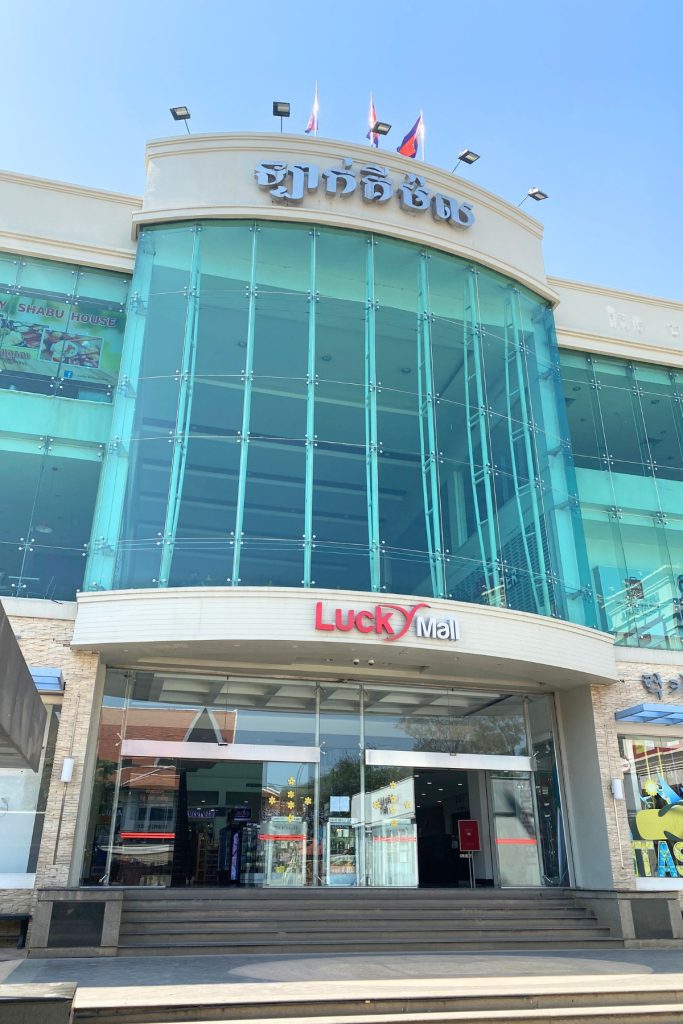
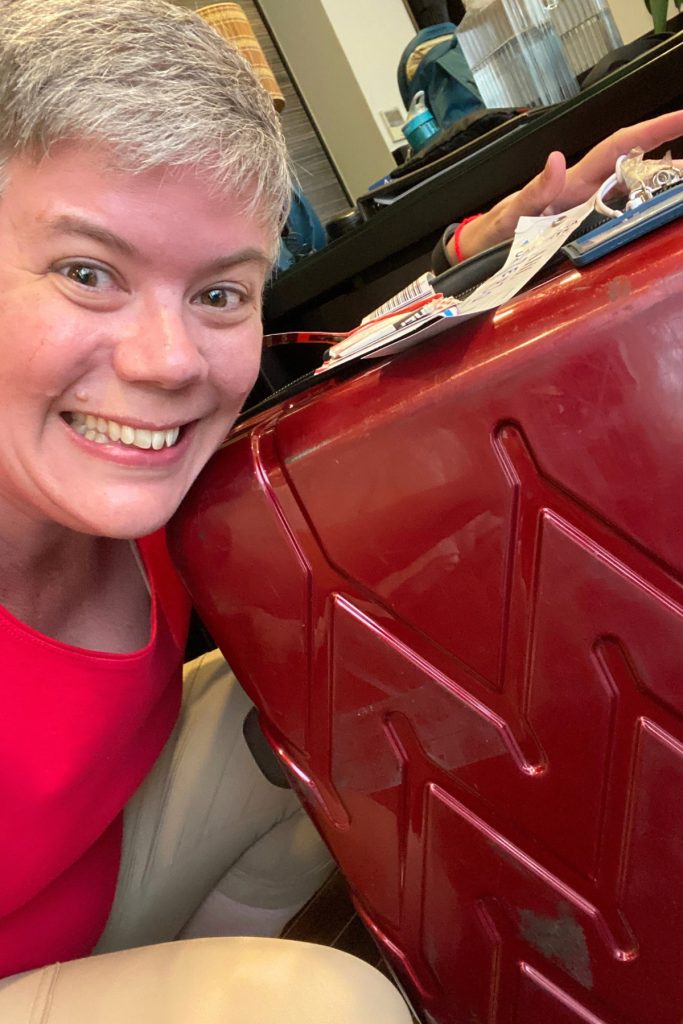
One part of this trip did not make the highlight reel. My luggage did not arrive in Siem Reap with me. I had a short layover in San Francisco, and the bags did not make it onto the plane. I spent most of my free time in Siem Reap on the phone with the airline. The rest went to a local shopping center called Lucky Mall, where I bought a few replacement items, including a pair of elephant pants. The cruise director showed me where to find it. It was within walking distance of the hotel. I would never have gone there if I had not needed to.

The bags took five days to reach me. Once I was on the ship, I was a moving target. That made the whole thing an ordeal. My suitcase, it turns out, had taken a side trip to Seoul. Siem Reap has a fully functional shopping center. I can confirm this from personal experience. Pack a spare shirt and the essentials in your carry-on. Short layovers eat bags. For the full story, see Detours Welcome: Turning Travel Mishaps into Life Lessons.
Worth the Time If You Have It
I followed the set tour, so these three stayed on my list for next time.
- Tonle Sap Floating Villages. Tonle Sap is the largest freshwater lake in Southeast Asia. Its water level swings by about 26 feet (8 meters) between seasons. Boat tours visit floating villages such as Chong Khneas and Kampong Phluk. The rainy season is considered the best time to go, when the water is high.
- Angkor National Museum. Many visitors recommend going before the temples, since it gives context on Khmer history and art. A gallery of about 1,000 Buddha images is included.
- Cambodia Landmine Museum. Aki Ra, a former child soldier who later cleared landmines for the United Nations, founded this museum. It sits near Banteay Srei, so the two combine easily.
Closing Thoughts
Siem Reap packs a lot into two days. Angkor Wat earns its fame. Bayon watches you from every angle. Ta Prohm let the trees win, and it was my favorite of the four. Banteay Srei is small and red and carved from top to bottom. The dance dinner and the circus rounded out the evenings.
My luggage took five days to catch up. The temples had been waiting for centuries and did not seem bothered.
Common Questions
Planning Your Time in Siem Reap
I spent two full days. I visited four temples and enjoyed two cultural experiences in the evenings. That was a good amount of time for what I wanted to do. Some travelers prefer a slower pace or more temples. A three-day Angkor pass covers any three days within a seven-day window, which makes that easy.
It depends on what you want. The dry season runs from November to April. November through February is cooler, with highs of about 70 to 90°F (21 to 32°C). These months are also peak season, so expect crowds and higher prices. From February to May, highs can pass 104°F (40°C). The rainy season runs from May to October. Highs average around 86°F (30°C). Rain usually falls heavily once a day, often near sunset. September is the wettest month. Crowds are far smaller, hotel rates drop, and the moats fill and the temples turn mossy and green. April and May are hot but quiet. October is still wet but lush.
Getting Around and Getting In
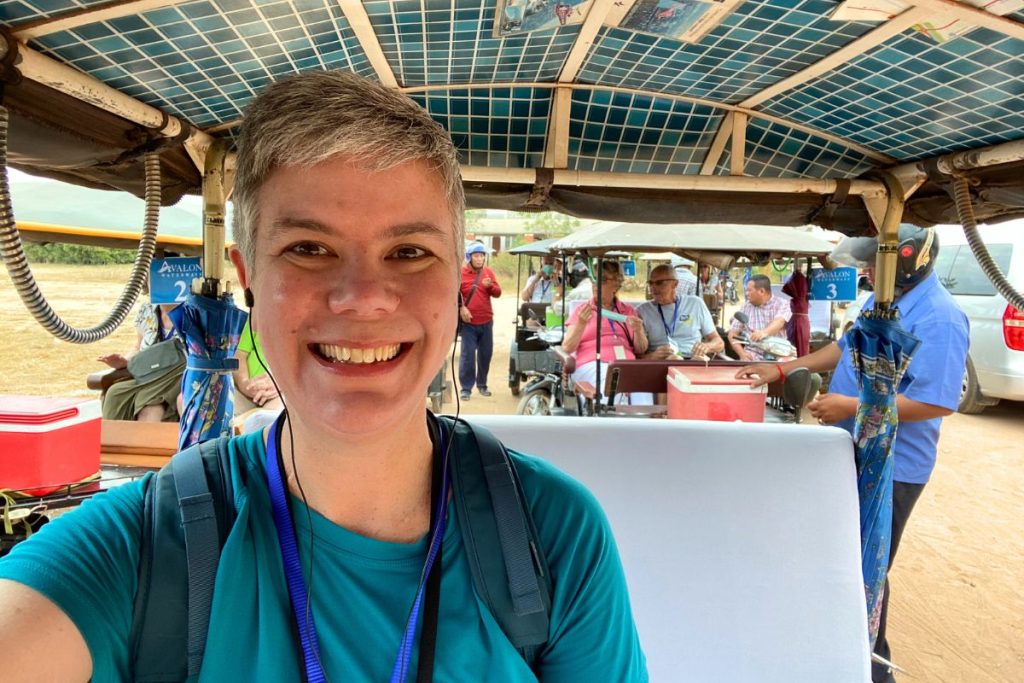
Yes. Tuk-tuks are the main way to get around. A tuk-tuk in Cambodia is a motorbike pulling a covered passenger carriage. They are easy to find and inexpensive. You can hire one for a short ride or for a full day of temples. Agree on the price and route before you go. Travel guides put a full-day rate at roughly $20 to $25 US.
Yes. Angkor Archaeological Park requires a pass. As of August 2026, a one-day pass costs $37, a three-day pass costs $62, and a seven-day pass costs $72. Staff scan the pass at each temple, so keep it handy. Buy it from the official site, the Angkor Pass app, a kiosk, or the ticket office. Tickets from other sellers may not be valid. Check current prices before you go.
Cover your shoulders and wear long pants, or a long skirt or dress. Ticket checkers can turn visitors away at some temples. A T-shirt works. A shawl does not.
Keep Wandering
Choose the Best River Cruise for You